A flowering strip grows at the edge of the field. Grazing animals graze on species-rich grassland. A moor stores water again. What sounds like classic nature conservation is also Agriculture - one that is sustainable. This is exactly what a new statement jointly prepared by two federal scientific advisory bodies shows: the Scientific Advisory Council on Biodiversity and Genetic Resources (WBBGR) and the German Advisory Council on the Environment (SRU). On May 12, lead author Prof. Dr. Sabine Tischew from Anhalt University of Applied Sciences presented the paper to Federal Minister Rainer.
Flower strips, grazing animals, rewetted moors: how Agriculture and nature conservation win together
-
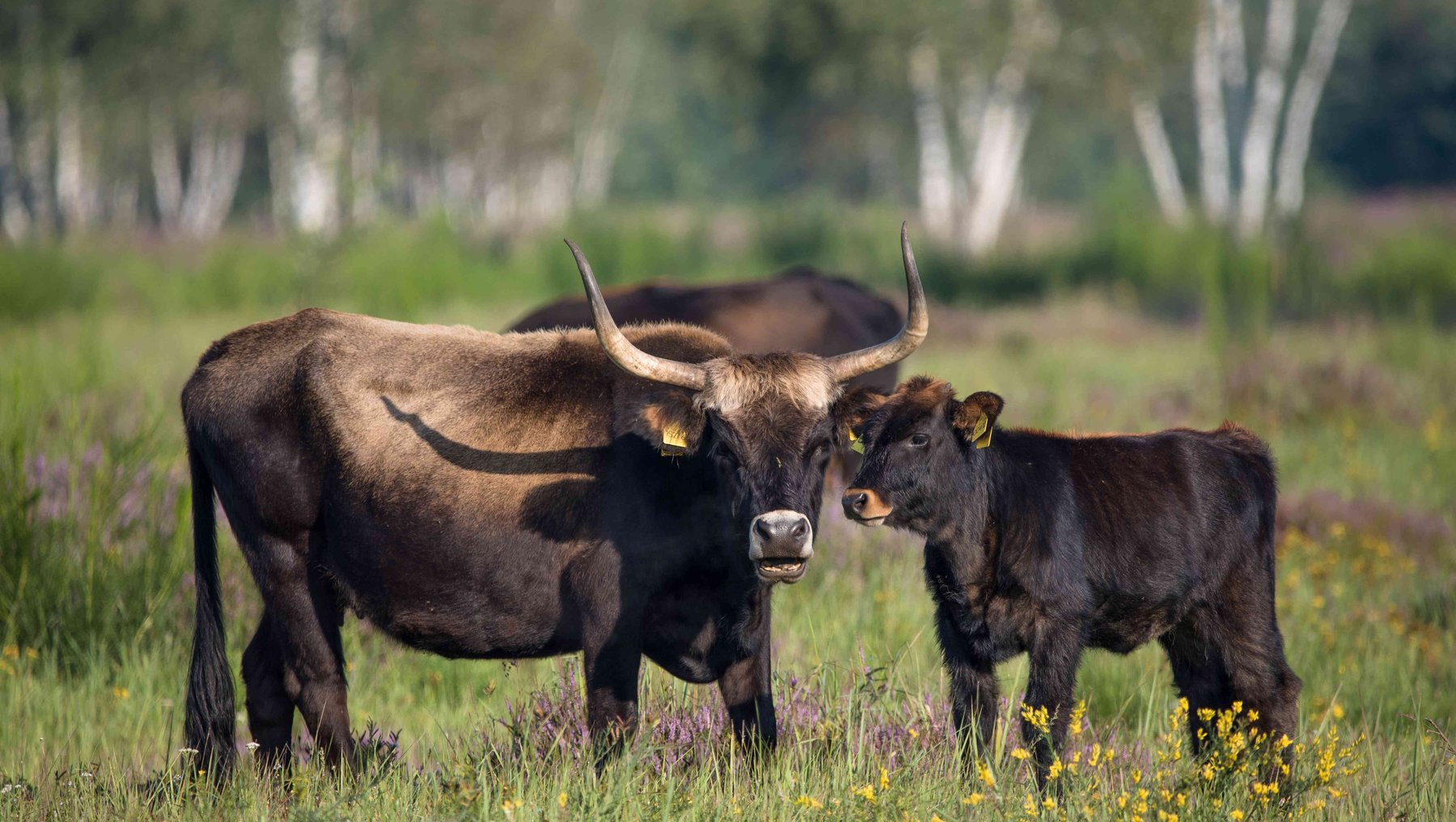 © hochschule anhalt | catherin nolte
In der Oranienbaumer Heide gehören landwirtschaftliche Nutzung und Artenvielfalt zusammmen.
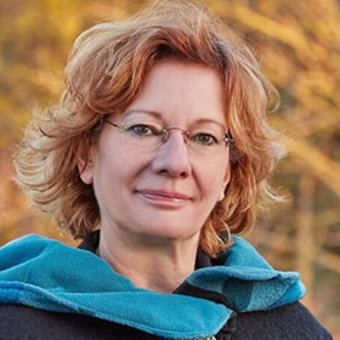
Climate adaptation works much better with biodiversity structures in the landscape.
Prof. Dr. Sabine Tischew
The reason is concrete: Germany is currently developing its National Restoration Plan on the basis of the European Restoration Regulation (RR), which has been in force since August 2024. It obliges EU member states to gradually restore damaged ecosystems. This applies, for example, to areas that have lost their ecological quality due to drainage, intensification of use and abandonment. Agriculture accounts for around half of Germany's land area. Nothing can be achieved there without the farmers.
Pollinators, erosion protection, stable yields
"Climate adaptation works much better with biodiversity structures in the landscape," says Sabine Tischew. Preserving hedges and field margins protects the soil from erosion. Rewetting moors stores water and carbon. If you create flower strips, you get back counterparts for pests and pollinators. Especially under the conditions of climate change, these services are the basis for stable yields.
The statement shows that the Restoration Regulation and a renewed EU Common Agricultural Policy (CAP) only work if they are considered together. The CAP regulates how farmers in Europe are supported. It will be renegotiated after 2027. This window must be used, according to the statement's message: with measures that actually make a difference and support farmers. This will continue to require comprehensive and stable funding for environmentally effective measures through the CAP as well as corresponding co-financing from the federal and state governments.
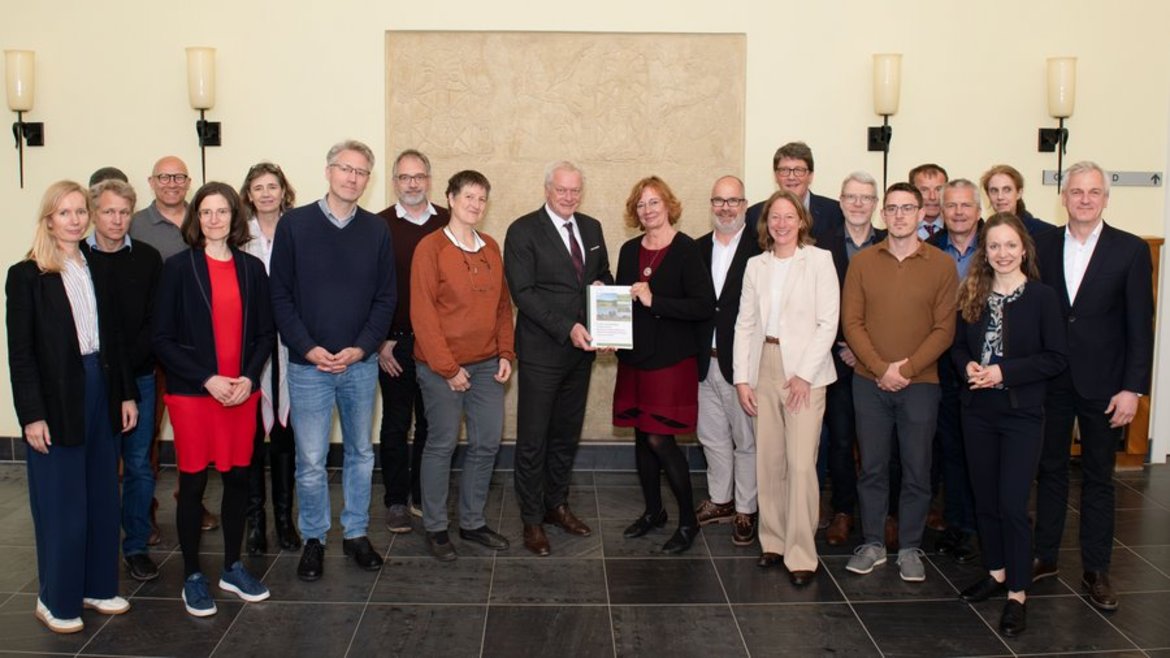 © IPK Leibniz-Institut J. Himpe
Three approaches that work in practice and should be expanded
The statement identifies specific ways forward.
- Results-oriented remuneration: Farmers are paid for what they achieve. Those who demonstrate a certain number of characteristic plant species in grassland receive staggered funding. This creates incentives without being prescriptive.
- Landscape cooperatives: Several farms join forces to develop larger sections of landscape together. A bundled application for funding reduces the administrative burden. Saxony-Anhalt is a pioneer here. The Saxony-Anhalt Cultural Landscape Foundation, of which Prof. Tischew is a member of the board, is already implementing this model.
- Real-world laboratories: Farmers, researchers and administrations work together in regional projects to develop, implement and evaluate restoration measures. What works is transferred. What does not work is adapted.
For GAP and W-VO: Making positive examples visible
Sabine Tischew and her Advisory Board colleagues discussed the statement in depth with Federal Minister Rainer on May 12 - with mutual understanding. "There are already good examples of farms that take responsibility and show that they can still do business," she says. However, this requires economically adequate remuneration for their ecological services, less bureaucracy and better advice. The negotiations on the CAP after 2027 and the development of the national recovery plan are currently running in parallel. This is a rare opportunity to coordinate funding policy and nature conservation law in such a way that they strengthen each other.
The full statement is available here: https://www.genres.de/fileadmin/SITE_MASTER/content/SITE_GENRES/downloads/docs/Beirat-GR/Gutachten_Stellungnahmen/05-2026_WBBGR_SRU_Stellungnahme_Fuer_eine_zkf_LW_GAP_und_W-VO_zusammen_denken_nbf.pdf
Biodiversity in research at Anhalt University of Applied Sciences | Prof. Dr. Sabine Tischew
The restoration of biodiversity and sustainable land use are among the main areas of research at Anhalt University of Applied Sciences. Biodiversity in the city, species-rich grassland, ecological education: the projects have been bringing theory and practice together for almost 20 years. The researchers share their knowledge via the joint platform offenlandinfo.de.
The projects "Semi-open pasture landscape Oranienbaumer Heide" and "KompetenzGrün" were awarded UN Decade projects.
Prof. Dr. Sabine Tischew teaches and researches at Anhalt University of Applied Sciences, focusing on "Vegetation Science and Landscape Ecology". Numerous research projects and publications on the subject can be traced back to her initiative. Find out more on her personal page: https://www.hs-anhalt.de/hochschule-anhalt/service/personenverzeichnis/person/prof-dr-sabine-tischew.html
She has been active on the Scientific Advisory Board for Biodiversity and Genetic Resources (WBBGR) since 2025: https://www.bmleh.de/DE/ministerium/organisation/beiraete/bio-div-organisation.html
Redaktion
Claudia Aldinger
