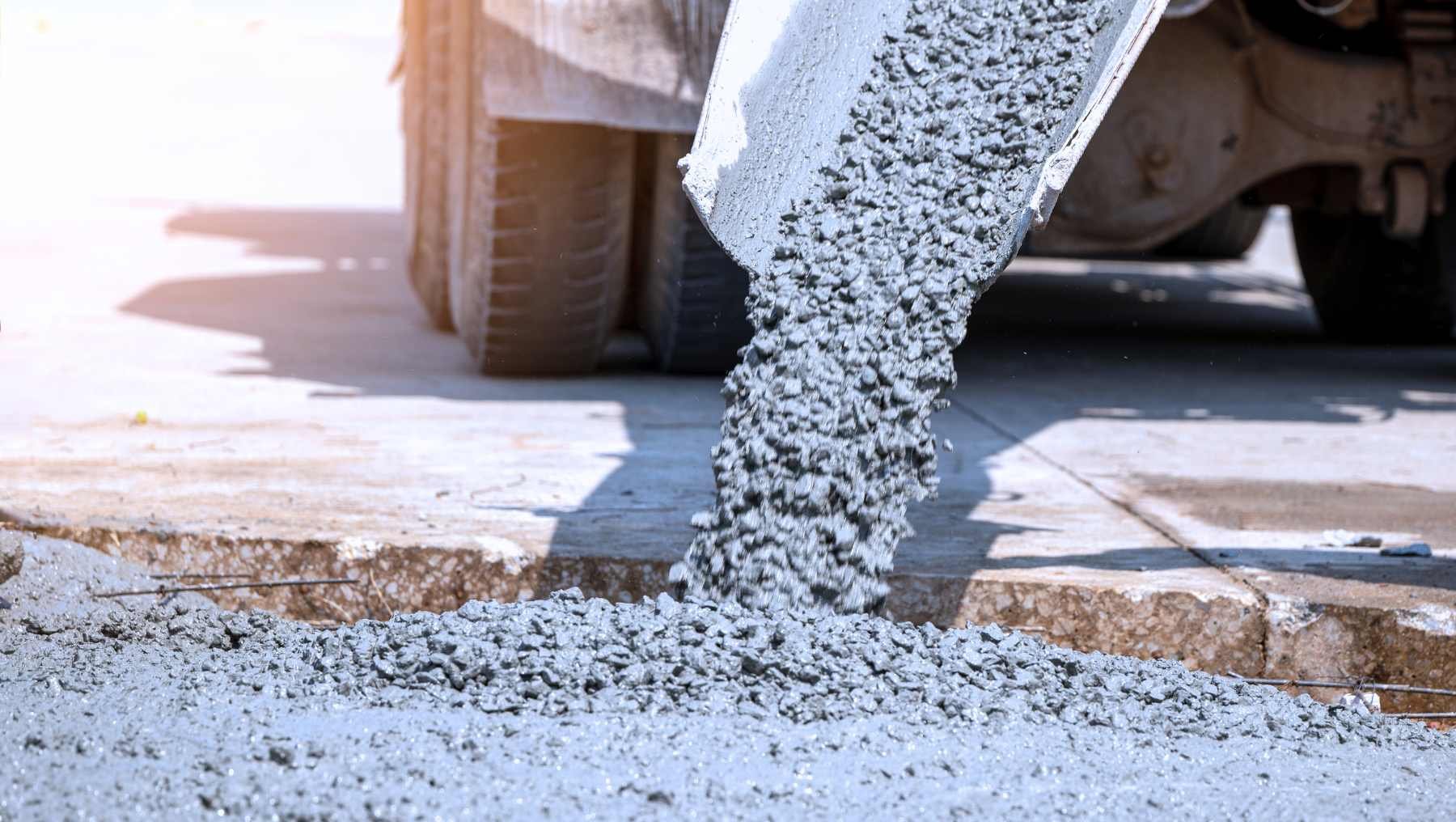
Extreme weather on one hand. Climate neutrality on the other. Road construction faces major challenges. Here on the Anhalt University of Applied Sciences climate blog, we explain how researchers are using their “Klikadiconcret” project to find market- and climate-friendly solutions for the construction industry.
Sustainable Concrete: Road Construction in the Face of Climate Change
-
 © Touch1976/stock.adobe.com
On the one hand, “Klikadiconcret” is about developing a new concept for the so-called “climate cabinet.” This technical testing device is designed to measure materials such as concrete more accurately than before using image-based analysis and software. “On the other hand, we’re looking for alternative additives for cement,” explains Steffen Hofmann from the Department of Architecture, Facility Management and Geoinformation. The Road Construction research group has been working for more than 25 years on solutions that are safer and good. The idea for the ZIM-funded “Klikadiconcret” project, led by Prof. Lothar Koppers and Prof. Wolfgang Weingart, emerged from an earlier research collaboration.
"We generate vast quantities of high-quality, processed, controlled, and recyclable material, but we still use only a fraction of it."
Steffen Hofmann
On the Trail of Dangerous "Highway Blow-ups"
Some time ago, the research team from Dessau made an interesting discovery in their laboratories while studying the aging process of various road construction materials: "“Optical imaging of the concrete slabs in the climate chamber showed that the material stores moisture even at the micro- and nano-scale and therefore releases it only very slowly,” explains the civil engineer. “And that could be one reason for the sudden bulging and cracking of concrete on the highway.” Such dangerous blow-ups have been occurring repeatedly for about ten years. So far, the only certainty is that they occur in warm weather. Steffen Hofmann: “Interestingly, however, they mainly occur in the spring. The fact that moisture plays a much greater role in such damage than temperature could be an explanation for this.”
Climate-controlled cabinet and foam glass
Prof. Lothar Koppers and his team wanted to follow up on their rather serendipitous discoveries and, together with partners from their scientific and business network, applied for the “Klikadiconcret” project. The researchers see groundbreaking implications for the construction industry—particularly road construction—in the project’s objectives:
Gaining More Knowledge from Optical Measurement Techniques for Building Materials
A climate chamber is a closed technical system in which various conditions can be simulated—for food samples or, for that matter, building materials. “We want to observe in three dimensions how the material deforms, for example, under specific increases in humidity. Until now, only longitudinal expansion has been measured,” explains Steffen Hofmann. To achieve this, the climate chamber is equipped with an external rail system on which a camera can be moved. The photos are then combined and analyzed using software. This could yield insights not only for conventional concrete mixtures but also for future ones.
-
 © HS Anhalt
-
 © HS Anhalt
-
 © HS Anhalt
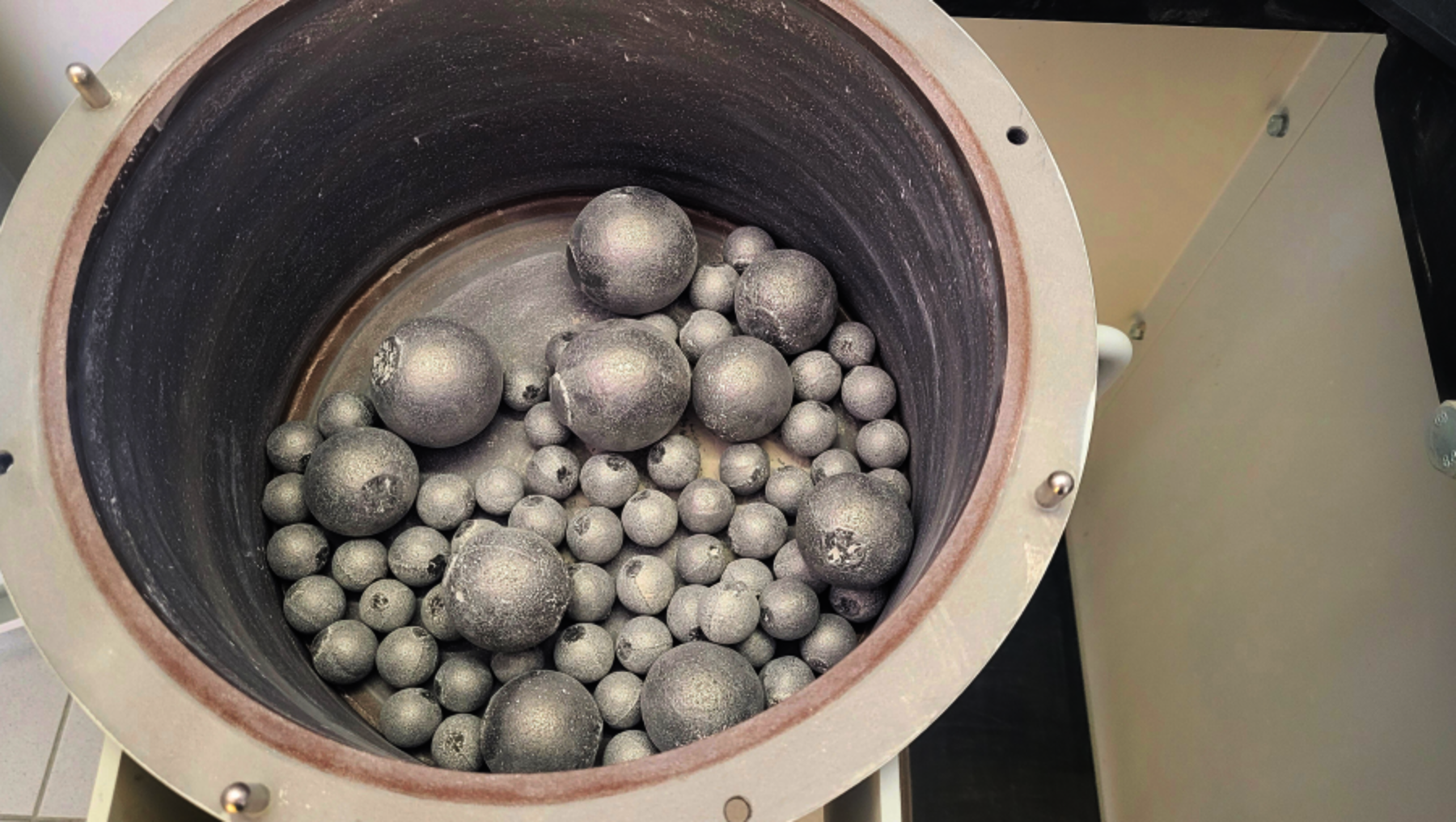
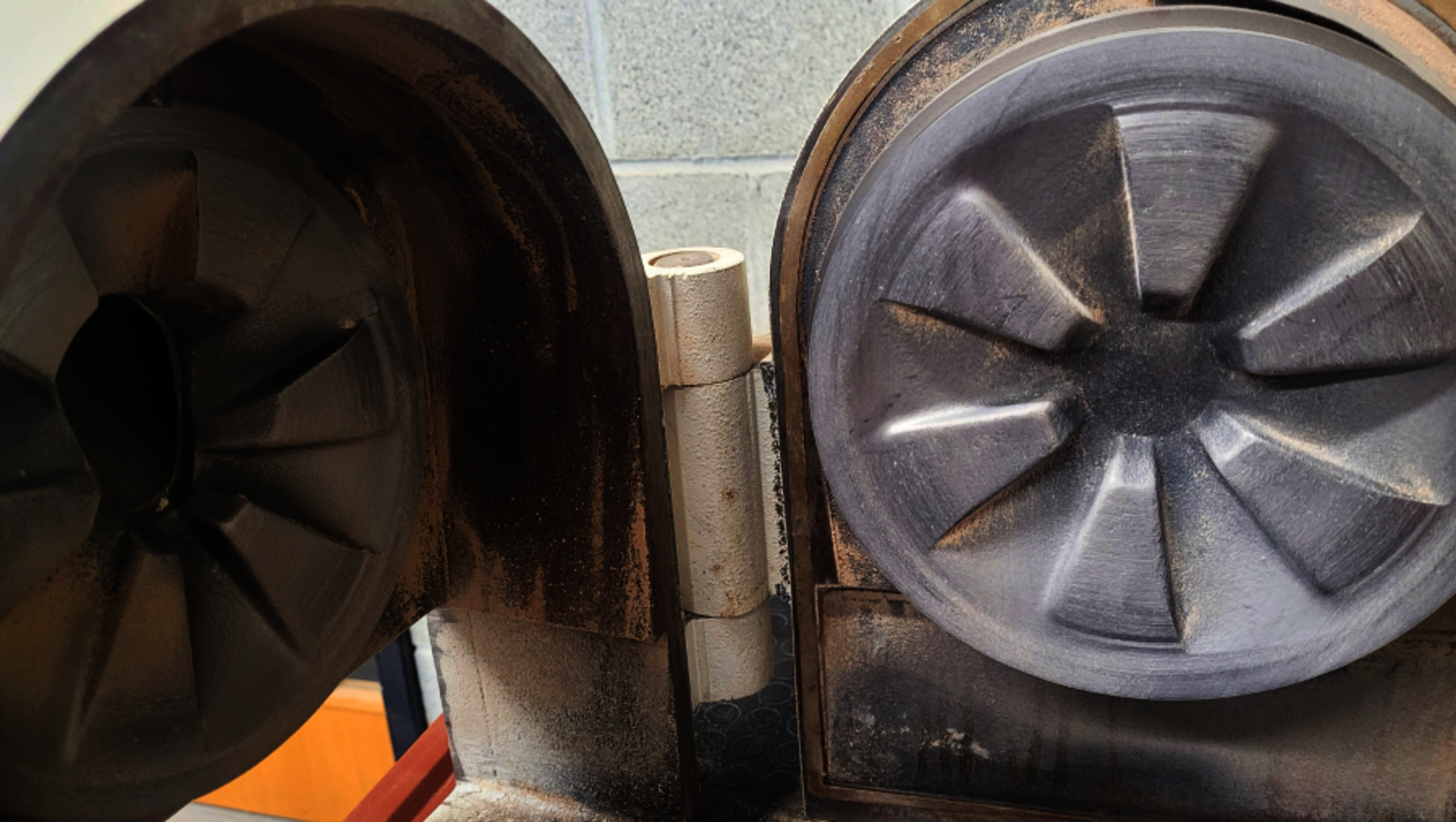
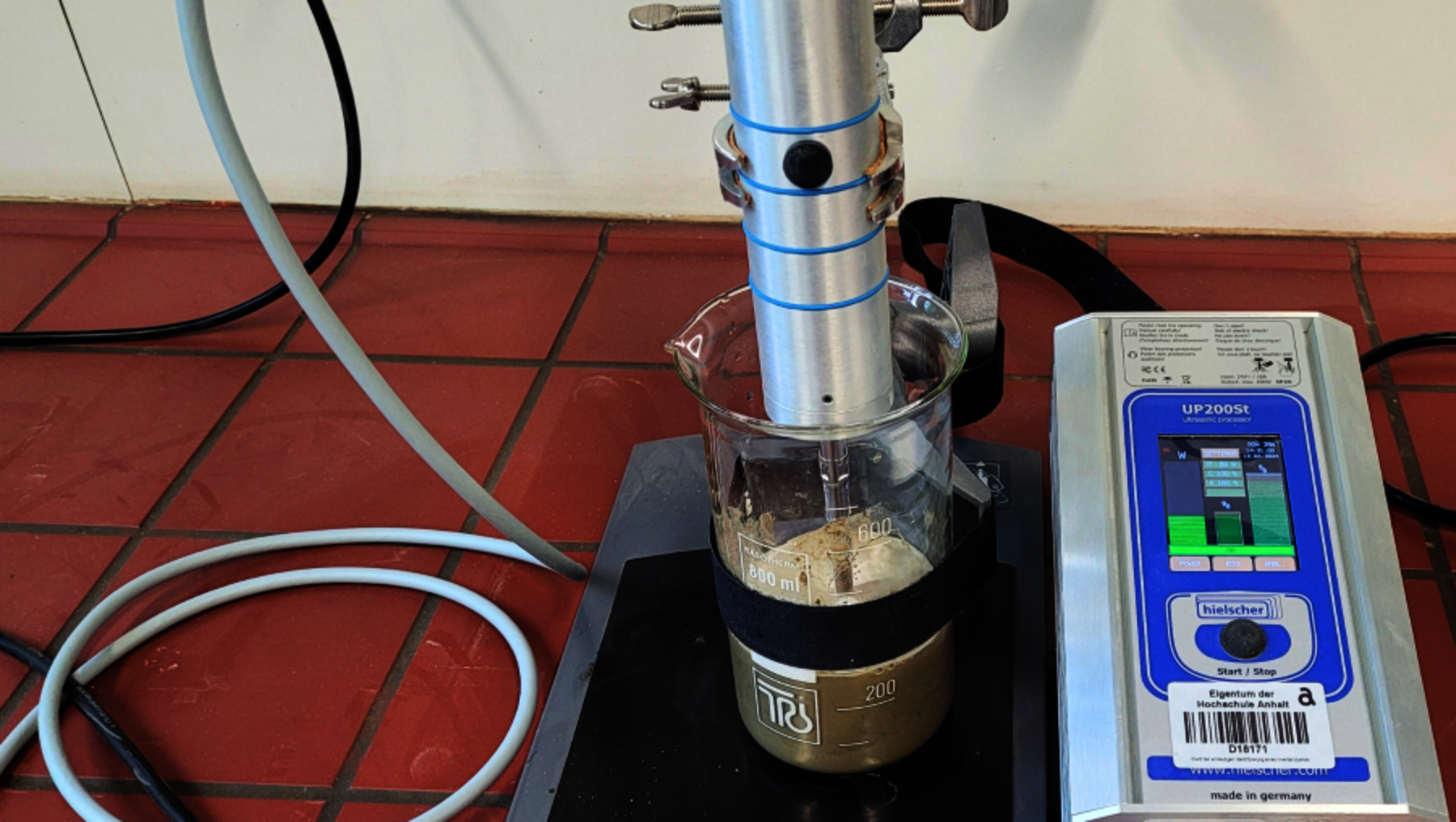
In the laboratories at Anhalt University of Applied Sciences, various experiments on building materials can be conducted using a ball mill (for fine grinding), a disc mill (for coarse grinding), and ultrasonic mixing methods.
More Recycling for Sustainable Concrete
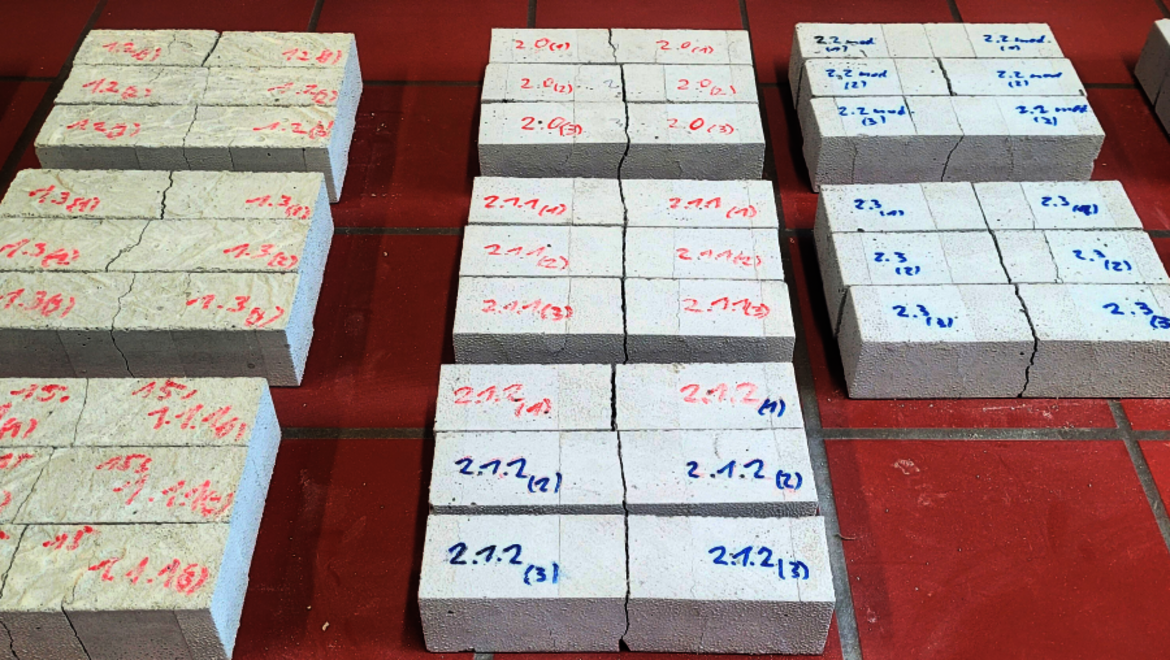
Reusing construction materials that are no longer in use and have been processed is certainly possible in Germany and is already being done. However, this is by no means the case in all sectors. The “Klikadiconcret” project aims to replace cement with foam glass, bricks, recycled concrete, and other materials. “In the construction industry, CO2 is primarily generated during the production of cement, which could be reduced in this way,” explains Steffen Hofmann. Ideally, this could also optimize the construction process—for example, by allowing the mixture to harden more quickly. To achieve this, materials from the recycling industry are ground very finely and processed in the laboratories using mixers, among other methods. The newly developed climate chamber will also be used in this process to demonstrate the feasibility of these materials.
More Efforts to Build Support for Innovative Road Construction
With an alternative mixture of foam glass, brick, and concrete as a building material for road pavements, Prof. Koppers and his team are breaking new ground. Before it can be used on a large scale, it would need to be approved by the authorities, certified, and introduced to the market by a company. This is the longer-term perspective of their project, of which they are well aware. In the short term—in addition to the findings from the new climate chamber—the focus is on raising awareness: “We’re generating vast quantities of high-quality, processed, controlled, and reusable material, yet we’re still only utilizing a fraction of it,” says Hofmann, reflecting on the past few years. The Dessau research group has also made numerous efforts to engage in discussions with decision-makers. And yet, in (too) many construction projects, natural materials are still preferred over recycled building materials. “And I think that every new project and every new piece of evidence can also help us rethink how we build on a larger scale and address climate change.” Much of this is already possible in theory, but also in practice, according to Hofmann.
 © HS Anhalt
Test specimens made from cement substitutes: In the laboratory, they are tested for flexural strength and compressive strength.
The "Klikadiconcret" Project
Since August 1, 2023, the Federal Ministry for Economics and Climate Action (BMWK) has been funding the "KLIKADICONCRET" research project as part of the ZIM Innovation Networks program. The acronym ZIM stands for Central Innovation Program for Small and Medium-Sized Enterprises. In addition to Dipl.-Ing. Steffen Hofmann, Dipl.-Ing. Heinzpeter Lüdike is also involved. Prof. Dr. Lothar Koppers is leading the three-year project. Other partners include: Feutron Klimasimulation GmbH in Langenwetzendorf, the Leibniz Institute for Photonic Technologies (IPHT) in Jena, and FBL Fläming Baustofflabor GmbH in Treuenbrietzen.
Questions regarding this article can be directed to: Dipl.-Ing. Steffen Hofmann, Tel.: +49 (0) 340 5197 1592, steffen.hofmann(at)hs-anhalt.de.
Redaktion
Many thanks to Dipl.-Ing. Steffen Hofmann for the interview about the "Klikadiconcret" project and the "Road Construction" research group.
Questions and inquiries regarding this topic can be directed to him: Tel.: +49 (0) 340 5197 1592, steffen.hofmann(at)hs-anhalt.de.
Cover image: Touch1976/stock.adobe.com
