Lithium batteries are found in almost every modern device and usually end up in the wrong recycling bin. A research team at Anhalt University of Applied Sciences is developing a process designed to close the raw material loop. The method: controlled heating. The team is currently demonstrating the current state of thermal recycling of lithium batteries at the Battery Recycling trade show in Frankfurt am Main.
Fewer Raw Materials, More Recycling: The Benefits of Thermal Recycling of Lithium Batteries
-
 ©
©
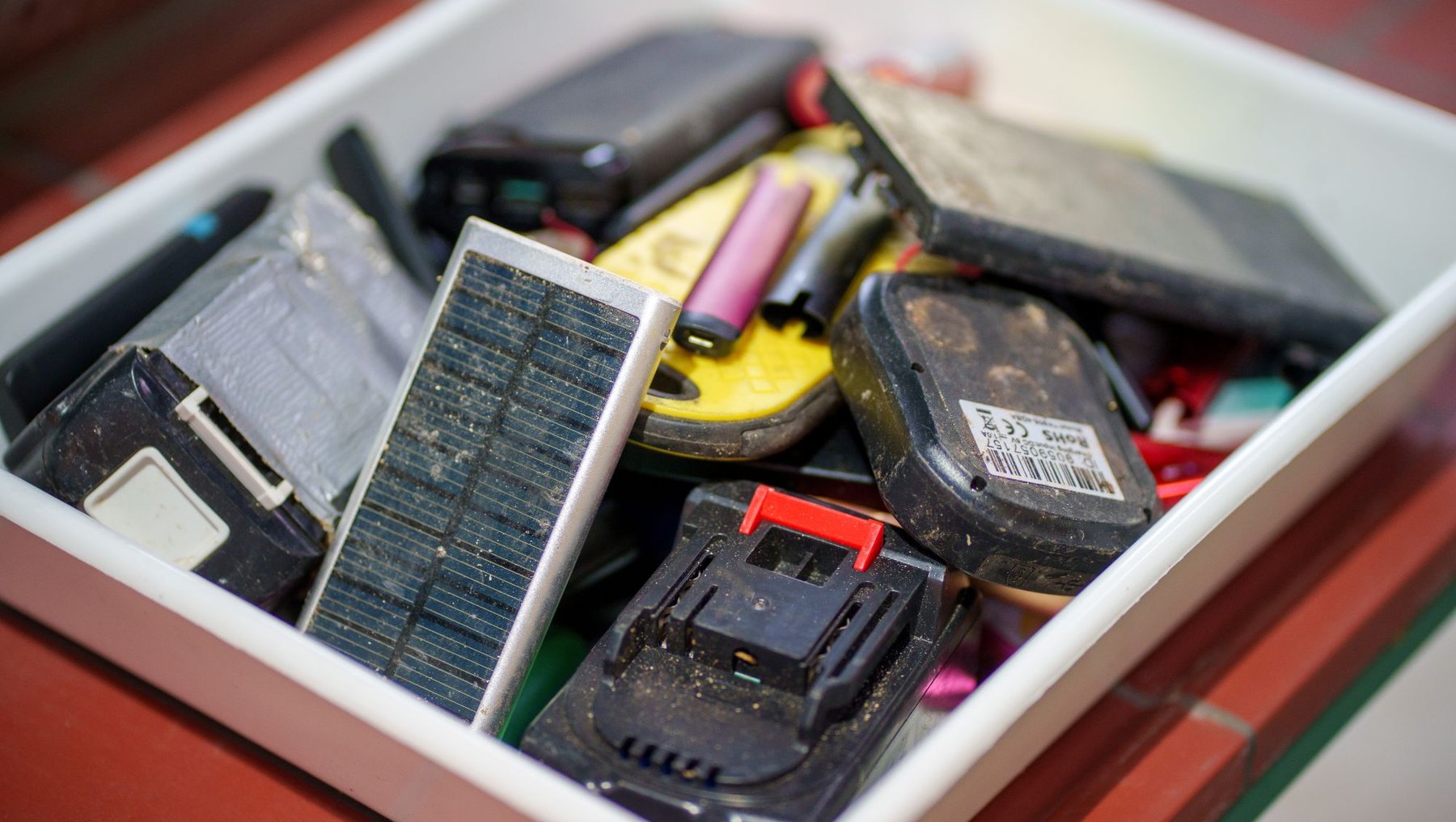
Die Analyse, welche Batterien sich für das thermische Recycling eignen, gehört zum Projekt.
Thermal recycling as an alternative to mechanical processing
Lithium, cobalt, nickel, copper, aluminum: a single lithium battery contains a handful of highly sought-after materials. Demand is rising because electric cars, e-bikes, and home energy storage systems require more and more of these batteries. At the same time, according to the Federal Environment Agency, less than half of all used lithium batteries end up in the recycling loop. The rest are lost.
A major reason for this is the lack of processes that are both economically viable and safe. Small device batteries from e-cigarettes, smartphones, or laptops, in particular, contain such small amounts of valuable metals that the workload involved in recycling them using conventional methods simply isn’t worth it.
Why Shredding Has Its Limits
Until now, lithium batteries have usually been mechanically crushed before recycling to release what is known as “black mass,” a dark powder in which the valuable metals are concentrated. The problem with this is that lithium batteries can catch fire if the anode and cathode are short-circuited during crushing. To prevent this, the batteries must first be completely discharged. However, many used device batteries can no longer be discharged in a controlled manner. “The spontaneous and uncontrolled release of energy—also known as thermal runaway—is one of the biggest challenges,” explains project leader Prof. Dr. Fabian Herz of Anhalt University of Applied Sciences.
In addition, before shredding, casings must be opened, plastic parts removed, and aluminum casings separated. This disassembly is labor-intensive, difficult to automate, and uneconomical for many small batteries.
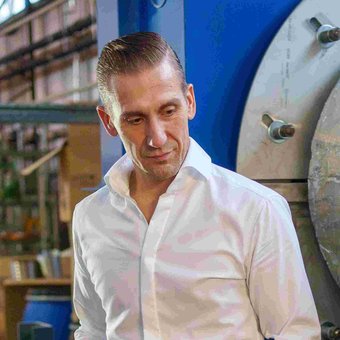
The spontaneous and uncontrolled release of energy, also known as thermal runaway, is one of the greatest challenges.
Prof. Dr. Fabian Herz
Heating as a Tool
The research team at Anhalt University of Applied Sciences is taking a different approach. The batteries are heated in a rotary kiln without being disassembled first—just as they are.
The process takes place in two steps. First, the temperature rises gradually until the liquid electrolyte—a chemical energy carrier inside the battery—evaporates. It can then be condensed from the gas stream and collected separately. In the second step, the temperature rises further. The separator membrane between the anode and cathode is damaged, a controlled residual discharge begins, and the black mass escapes from the casing. It can then be further processed.
“The goal is to process everything from individual batteries to entire battery stacks in the rotary tube exactly as they are installed,” says Franz Hoffmann. This largely eliminates the need for time-consuming pre-sorting.
What the rotating tube does and how the research is conducted
A rotary kiln is a cylindrical reactor that rotates slowly around its own axis. Inside, the material moves continuously from one side to the other, where it is heated, agitated, and treated. The closed system prevents gases or particles from escaping uncontrollably.
The Campus Köthen is home to rotary kilns of various sizes, including reactors up to six meters long and one meter in diameter, which reach temperatures of up to 1,600 degrees Celsius. For the battery project, temperatures up to 400 degrees are sufficient.
Research is currently proceeding along two parallel tracks. In the first, the team is investigating the thermal behavior of individual batteries. In what is known as thermogravimetric analysis (TGA), a single battery is suspended in a rotary tube furnace and heated gradually. A scale continuously measures the loss of mass, while sensors record temperature and exhaust gas composition. This allows researchers to track, step by step, exactly what happens at each temperature.
In the second strand, the team is analyzing the movement behavior of the batteries. In a transparent rotating drum—half a meter in diameter and 15 centimeters deep, with a glass panel at the front—they film how different battery types move inside the rotating container. The rotational speed and fill level are varied. The results are incorporated into simulation models that will later be used to precisely design a plant. “The dwell time is important for this, so that we can be sure every battery has truly been thermally treated—but not for longer than necessary. That would be a waste of energy,” explains Franz Hoffmann.
 © hochschule anhalt
Preliminary Findings and Open Questions
The measurements taken so far are encouraging: In laboratory tests, lithium can be recovered at a rate of up to 94 percent. These are laboratory values from individual measurements; they do not yet represent results from ongoing rotary kiln operations. The next step is to scale up the process to pilot plant scale.
Another open question concerns the feedstock. In recycling, whatever comes in gets processed: e-cigarettes, power banks, smartphone batteries, button cells—all mixed together. Their composition, shape, and weight vary greatly and influence the process. “First, we need to analyze what we actually have as feedstock,” says Franz Hoffmann.
Context: Why This Is Relevant
The project will run for three years and is funded by the European Union and the state of Saxony-Anhalt; it began in February 2024. Further development with industry partners is planned thereafter. At the Battery Recycling trade show on June 17 and 18 in Frankfurt am Main, the team will present its latest findings and specifically seek out recycling companies or manufacturers with a concrete need for such a facility.
The EU Battery Regulation, which mandates significantly higher recycling rates, provides the regulatory impetus. Thermal processes could play a role here, and in the future, potentially also for scrap tires, sewage sludge, or other waste streams. The team is aware that rotary kilns themselves consume energy. “The content of other projects in our research group is improving the energy balance of such thermal processes,” says Prof. Dr. Fabian Herz.
The project “Thermal Recycling of Lithium Batteries” is funded by the European Union and the state of Saxony-Anhalt. The recovery rates mentioned are based on laboratory tests; large-scale application has not yet been implemented.
More information about these research projects, the achievements, and the laboratories of the Thermal Process Engineering department at Anhalt University of Applied Sciences can be found on this website. Prof. Dr. Fabian Herz can be contacted directly by email at fabian.herz@hs-anhalt.de or by phone at +49 (0) 3496 67 2583.
Redaktion
Claudia Aldinger
On June 17 and 18, Prof. Dr. Fabian Herz’s team will present the project at the Battery Recycling trade show in Frankfurt am Main: https://www.hs-anhalt.de/hochschule-anhalt/aktuelles/fachmessen/battery-recycling.html
