Solar modules can generate electricity for 30 years or more. How well they actually perform depends on many factors: the quality of the modules, maintenance, the location, and technical details that can either reduce or ensure energy yields over the years. To understand these relationships, there is the SUMMED-PV-School, a practice-oriented continuing education program for researchers and professionals in the photovoltaic industry.
One week covering the entire photovoltaic value chain: SUMMED-PV-School in Dessau
-
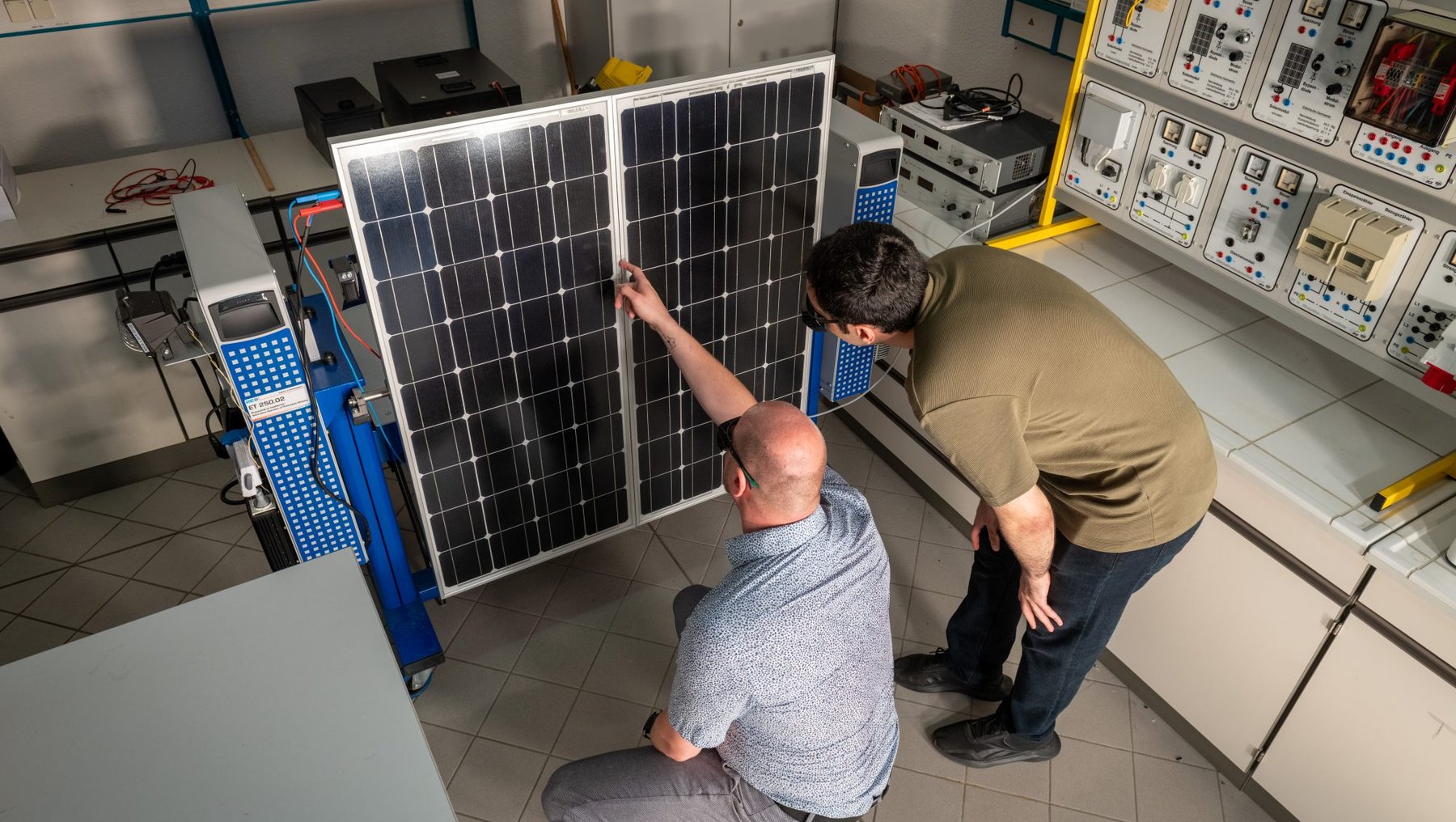 © hochschule anhalt | uwe jacobshagen
Einblick in die Labore der Hochschule Anhalt. Hier arbeiten unter anderem Torsten Büchner (l.) und Amin Yahya Khotbehsar (r.) an der Optimierung von Solarmodulen.
It will take place from September 7 to 11, 2026, at Anhalt University of Applied Sciences’ Campus Dessau. For five days, the focus will be entirely on photovoltaics—from planning a system to operating it over decades. The program is aimed at master’s and doctoral students, researchers, and professionals in the photovoltaics industry. The language of instruction is English.
“Here at the university, our master's degree program in Photovoltaic Engineering Science (MPV) directly links theoretical knowledge with practical application,” says Henny Grewe. “Our three campuses offer the ideal conditions for this: They provide direct access to modern indoor and outdoor laboratories as well as our AgriPVplus research facility,” the research assistant continues. Thanks to the university’s location near Germany’s so-called “Solar Valley,” her team is exceptionally well-connected. “This makes it easy for us to directly integrate leading research institutes like Fraunhofer CSP and innovative regional startups such as DENKweit, Maxxisun, and Solar Materials into our practical work.”
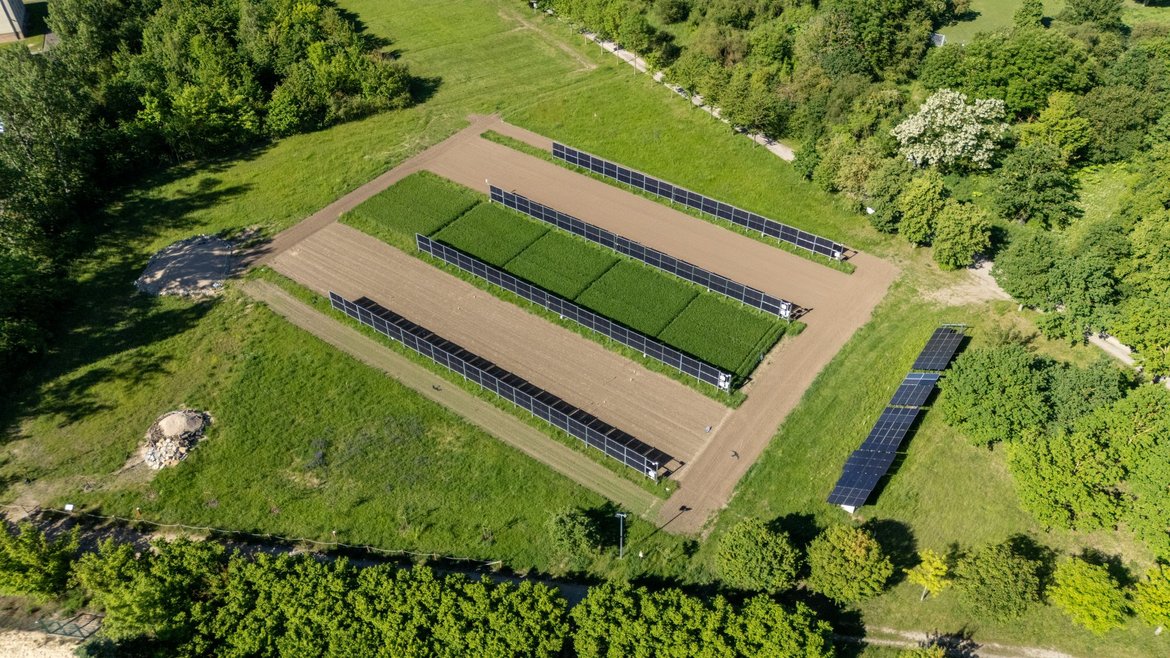 © hochschule anhalt | uwe jacobshagen
Photovoltaics: Theory and Practice—What Participants Can Expect
The focus is on the LCOE concept. LCOE stands for “Levelized Cost of Electricity.” This metric describes how much one kilowatt-hour of solar power costs over the entire lifespan of a system. It includes construction, maintenance, repairs, and energy yields. Anyone who wants to operate a system profitably must understand these costs and be able to reduce them.
The Summed-PV-School combines three elements. Seminars cover the theoretical fundamentals. On-site visits demonstrate practical applications, such as at agri-PV systems that combine solar power, Agriculture, and biodiversity on the same plot of land. And lab exercises using modern diagnostic technology make it possible to check the condition of solar modules without removing them.
The program concludes with a case study challenge. Participants analyze real-world operational scenarios. They develop proposals on how to improve a system’s performance and reduce the levelized cost of electricity. This task is similar to the work that engineers in the industry perform on a daily basis.
Professional Development Through Board Games and Industry Connections
One of the school’s unique features is gamified learning. A specially developed board game called “Solar Tycoon,” which focuses on photovoltaics, conveys complex concepts in a playful way. This makes technical and economic interrelationships tangible.
The week also offers the opportunity to network with industry experts as well as with national and international colleagues. For many participants, this is an important step in their future careers.
For more information and to register, visit the project page:
Redaktion
Claudia Aldinger
Summed-PV School- September 7–11, 2026, in Dessau
- Find everything you need to know about the program, registration, and contact information on this website: https://www.summedpv.eu/programme-2026/
