Climate change and intensive land use are severely affecting ecosystems. What can be done to combat the loss of species? The research team in the DFG project AgriRestore at Anhalt University of Applied Sciences is investigating which measures can revitalize and strengthen habitats used for agriculture. In this interview, project leader Prof. Dr. Christina Fischer explains why a holistic, interdisciplinary approach and funding from the German Research Foundation (DFG) are important.
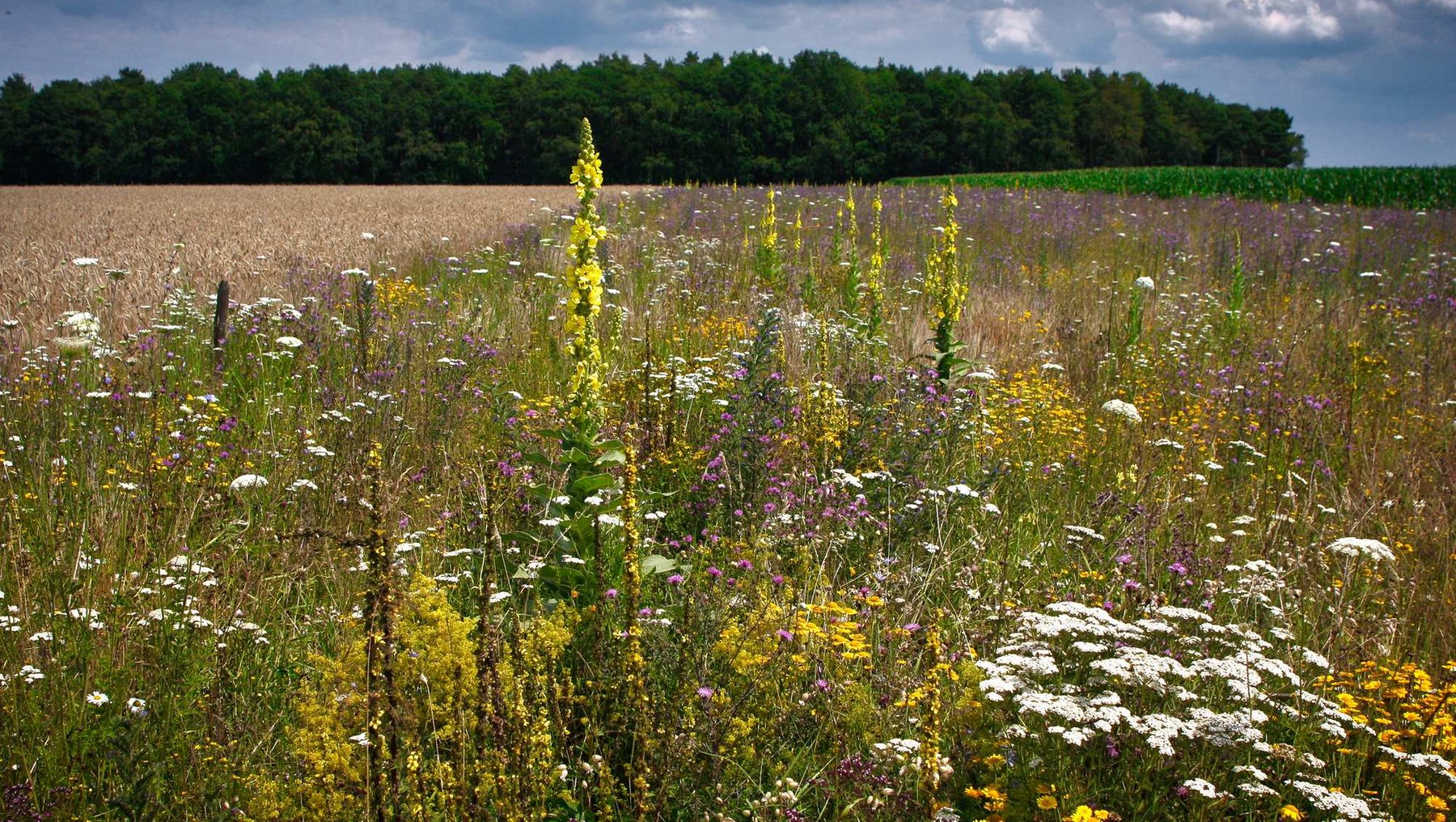
Flower strips: With research to more acceptance
-
 © HS Anhalt | Annika Schmidt
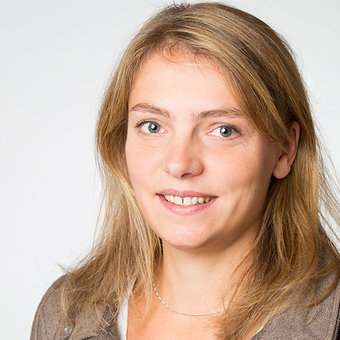
This would be the success of the project: being able to say how an ecosystem improves in the long term through biodiversity measures so that yields are also secured.
Prof. Dr. Christina Fischer
Prof. Fischer, the AgriRestore project was launched in April 2024. What specific studies have been carried out so far?
In 2024, we investigated biodiversity effects in flower strips, a frequently used renaturation measure in agricultural landscapes, and compared them with conventional field margins. Furthermore, we carried out our investigations at different distances from the field edge. We took soil samples to analyze the bacteria and fungi. We carried out vegetation surveys to correlate the plant species with the soil conditions and to investigate the establishment success of the plants in the flower strips and the weeds in the field.
We used traps to investigate which pollinators occur in the flower strips and at different distances from the field. We also recorded the pests and their antagonists in the field, especially aphids and ladybugs, ladybug larvae and lacewings.
We also counted mouse holes in the field and in the flower strips and recorded the damage caused by mice to the crop. We also looked at how many stalks had been eaten in the grain. And we used remote sensing to map the fields, i.e. we took aerial photos.
Are these already the most important factors that play a role at AgriRestore?
They are an important excerpt. On the one hand, we want to take a holistic view of agroecosystems across different spatial and temporal scales. We want to develop a methodology to determine the key factors for renaturation effects as well as Agriculture yields. From this, measures for future land management can be derived. We will also investigate the effects of woodland structures in a later project phase. From 2027, we will be investigating the effects of enhanced grassland on biodiversity in addition to arable farming.
Climate adaptation is also an important topic in our research project. In a controlled field experiment, which we have set up on our campus at Anhalt University of Applied Sciences in Bernburg, we are investigating various flowering mixtures that are climate-adapted because more and more farmers are struggling with drought and higher temperatures.
The German Research Foundation is funding AgriRestore's holistic approach: Are flower strips as biodiversity measures still a black box?
This is true in many respects. At the very least, we still know too little about the interaction of the different effects.
For your studies, you are working with farmers who have used flower strips in recent years. How many have you already been able to win over?
Last year, we had 12 plots of land from Agriculture farms at our disposal. Next year there will be 20 - all in Saxony-Anhalt.
With more than 10 project members and 9 participating professors from Anhalt University of Applied Sciences, you lead a large team. What is important here?
I have a really great coordinator who takes on most of the coordinating tasks in close consultation with me. The key to successful collaboration is solid communication. We have established various communication channels, and the doctoral students and postdocs have regular meetings. Furthermore, the entire consortium meets every six months, and there are meetings of the individual working groups and project leaders as required.
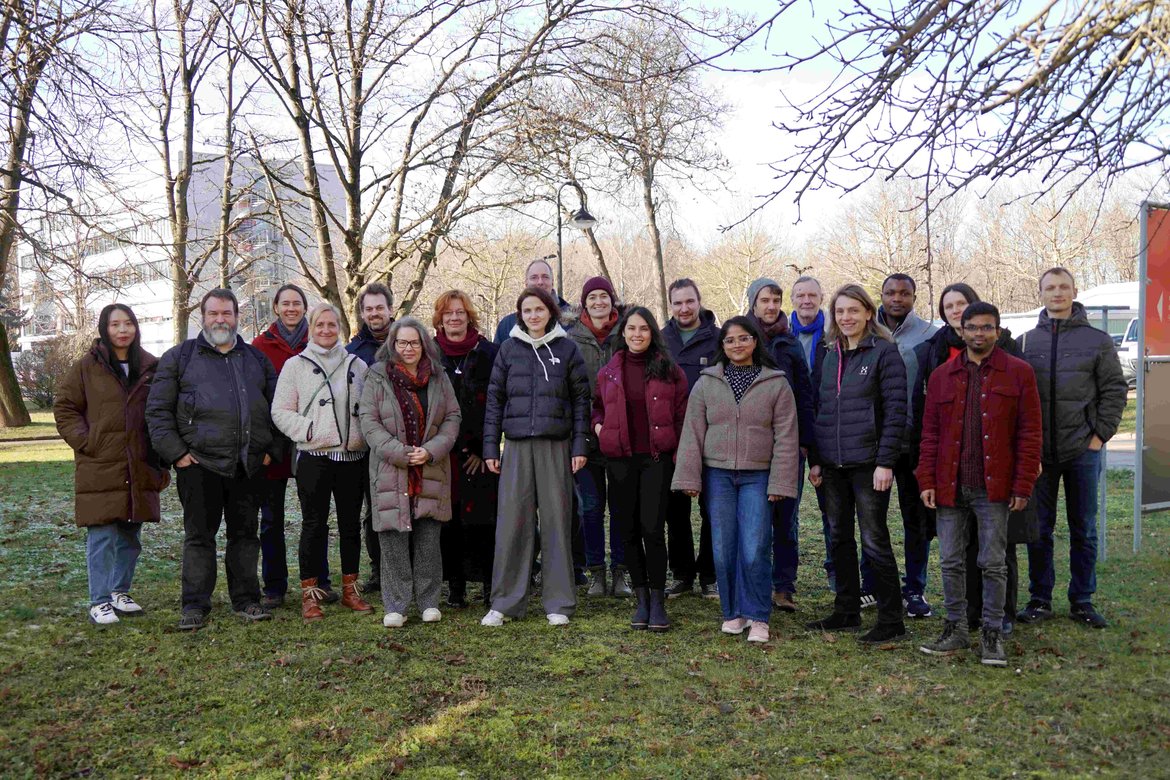 © hochschule anhalt | Renate Geue
Project meeting in February 2025: More than ten doctoral students and postdocs as well as nine professors are conducting research in the interdisciplinary AgriRestore team. Photo: Renate Geue | HS Anhalt.
Your research focus has been agroecology for many years. What has changed in this discipline over the years?
Due to the biodiversity crisis, more and more working groups across Europe are addressing the issue and are well networked. I regularly exchange ideas with some of them. What has changed is that it is less about individual studies and more about the complexity of the topic, similar to how we approach it in AgriRestore. This is also made possible by new technical possibilities such as digital recording methods and artificial intelligence. I am glad that we have data scientists on board who are involved in evaluating and synthesizing the large amount of data.
And do you think that this increased knowledge of biodiversity measures can also contribute to greater acceptance in practice?
Definitely. Yes. You have to explain to the farmer why he should give up a piece of land in order to create flower strips. And also the next step: where is the best place to create the flower strip and how? What really helps the pollinators - for example, to create a network in the landscape so that the insects can get from A to B safely and don't get lost in the vast agricultural desert?
This would be the success of the project: being able to say how an ecosystem improves in the long term through biodiversity measures so that yields are also secured. And this despite decreasing rainfall and higher temperatures. Another important result would be the development of practical remote sensing methods to monitor the condition of fields from a distance and take targeted measures to improve yields or promote biodiversity. These are big goals, but fortunately, thanks to funding from the DFG, we will be able to work on these topics for five years until 2029.
Prof. Dr. Christina Fischer...
has been Professor of Faunistics and Species Conservation at Anhalt University of Applied Sciences in Bernburg since 2021. Previously, she was a research associate at the University of Salzburg, the Technical University of Munich and the Leibniz Center for Agricultural Landscape Research (2010-2020). She completed her doctorate at the Georg-August-Universität Göttingen (2007-2010). She completed her biology studies with a focus on ecology, zoology and medical microbiology at the Friedrich Schiller University Jena (2000-2007).
In her research, she investigates which processes and patterns determine the occurrence and functions of vertebrates and invertebrates in agricultural landscapes. One focus is on the further development of nature conservation measures to promote biodiversity in cultivated landscapes. She also researches how changes in land use affect the behavior, movement and recolonization of animal species. Her work combines approaches from agroecology and movement ecology and deals with topics such as agri-environmental measures and seed predation, i.e. the consumption of plant seeds by animals, which can influence the natural spread and germination of plants.
More details on her personal page.
The AgriRestore project in a nutshell:
The AgriRestore research project is investigating how measures to restore ecosystems can improve biodiversity and climate resilience in agricultural landscapes. In Saxony-Anhalt, field and mesocosm experiments are combined and remote sensing techniques are used to analyze spatial patterns. Meta-analyses and knowledge graphs help to synthesize existing studies and evaluate risks and success factors of renaturation measures. The aim is to derive key indicators for resilient agroecosystems and to understand their long-term impact. The DFG-funded project will run from 2024 to 2029.
Redaktion
Prof. Dr. Christina Fischer
... is available for inquiries and requests by phone: +49 (0) 3471 355 1197 or by e-mail: christina.fischer(at)hs-anhalt.de
... current publication: Challenges and opportunities when studying movement ecology in science and practical conservation / Fischer, Christina. - Included in: Basic and applied ecology, vol. 81 (2024), pp.59-65.
... more about her topics and tasks at Anhalt University of Applied Sciences at the end of the interview.
Cover picture: Annika Schmidt | HS Anhalt.
