How does a single moss plant become moss seeds for many hectares? After algae dominated research at the Department of Applied Biosciences and Process Engineering for a long time, researchers are now turning their attention to a very different type of green organism: sphagnum mosses. We explain why the successful cultivation of sphagnum moss is an important step toward using peatlands for climate protection on Anhalt University of Applied Sciences’ climate blog.
Mires for Climate Protection: Using Cultivated Moss from the Lab
-
 © HS Anhalt
 © HS Anhalt
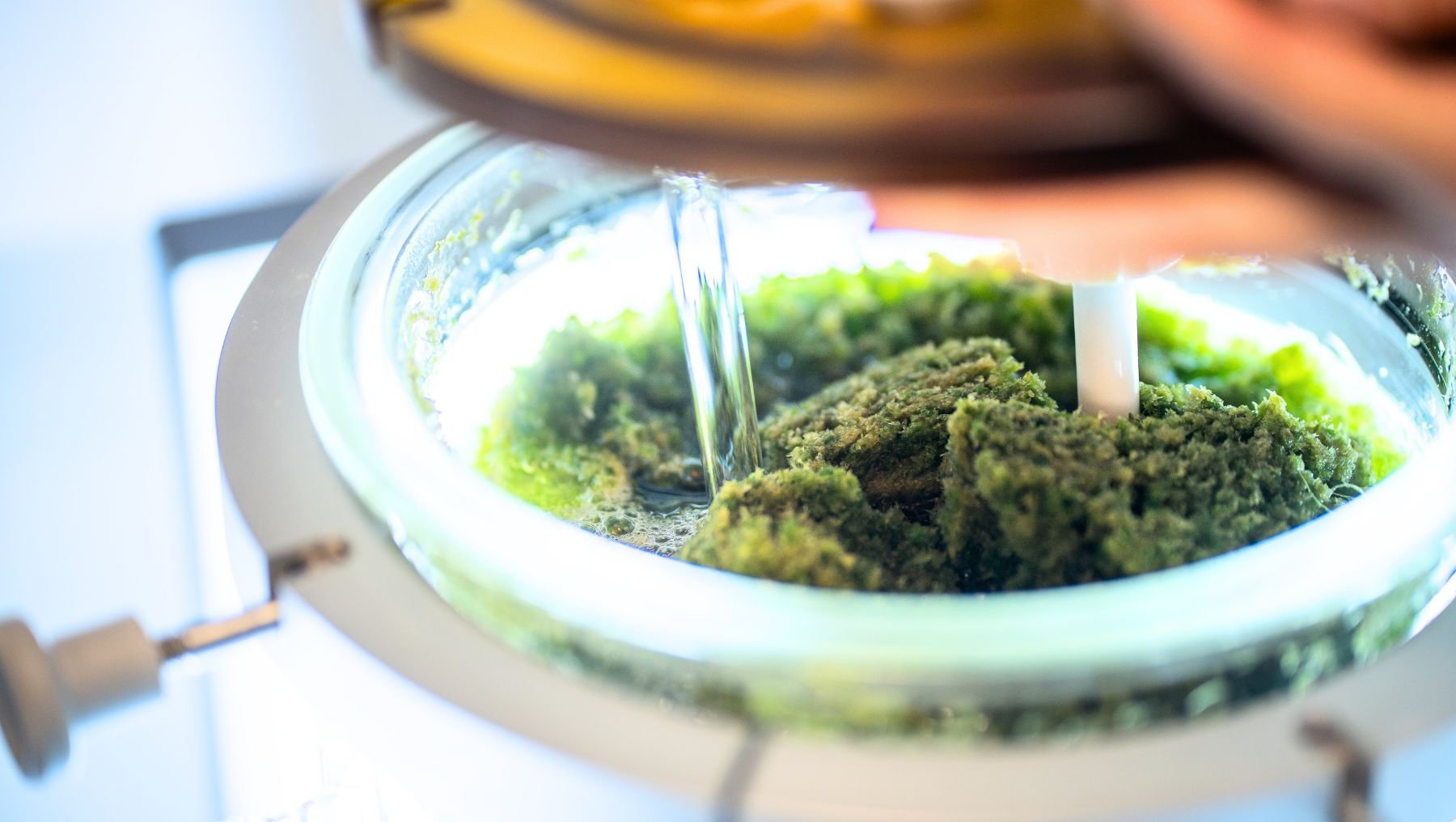
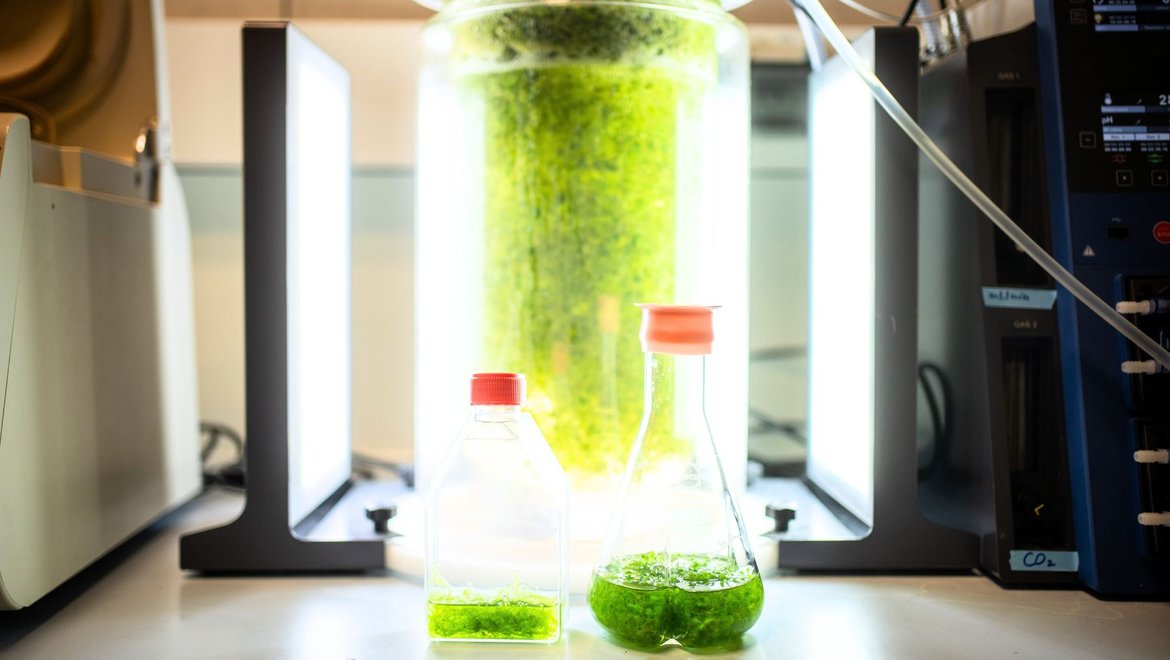
Using methods from Process Engineering, researchers at Anhalt University of Applied Sciences are working to cultivate peat moss on a large scale. Step by step.
Professor Grewe, what do algae and peat moss have in common?
Both use sunlight as their primary energy source through photosynthesis. As a result, their growth allows carbon dioxide from the atmosphere to be converted into biomass. Algae and, later, peat moss evolved on this planet long ago; they have a simple structure and are hardy. This is why they can be specifically cultivated in environments such as photobioreactors. In addition, they share a place in Agriculture, where they can be used as environmentally and climate-friendly alternatives to conventional products. Both contain interesting, under-researched compounds that hold promise for new applications in the future.
What insights from your research on algae can you bring to the MOOSstart project?
During my time in the industry, I was involved in the development of innovative, cost-effective photobioreactors and oversaw the scale-up to industrial production levels as well as productivity improvements as part of process development. These are all processes that are now also relevant to the development of a suitable moss photobioreactor and the propagation of sphagnum moss. My experience in production is now having a positive impact on the selection of reactor materials and the design of the reactors.
MOOSstart is about finding the most efficient and profitable way to produce peat moss. To what extent do energy consumption and climate neutrality play a role in this?
Both of these aspects are very important to us. The energy consumption per kilogram of moss produced must be minimized; however, climate neutrality is a matter of greenhouse gas emissions per kWh of energy required. We can meet this goal by using energy sources that are produced in a climate-friendly manner. Of course, greenhouse gas emissions should be lower than the amount of carbon dioxide sequestered by the growing moss. Climate neutrality also plays a major role in the implementation of paludiculture, since the sphagnum moss multiplies many times over in this process and permanently stores carbon dioxide from the atmosphere in the form of peat.
Paludiculture has been the subject of research for more than 20 years, but has not yet been put into practice. How does MOOSstart contribute to this idea of combining climate protection and Agriculture?
MOOSstart lays the foundation for scalability in Agriculture by translating basic research into applied research. The project is now focused on expanding peat moss production on an even larger scale even more quickly.
 © HS Anhalt
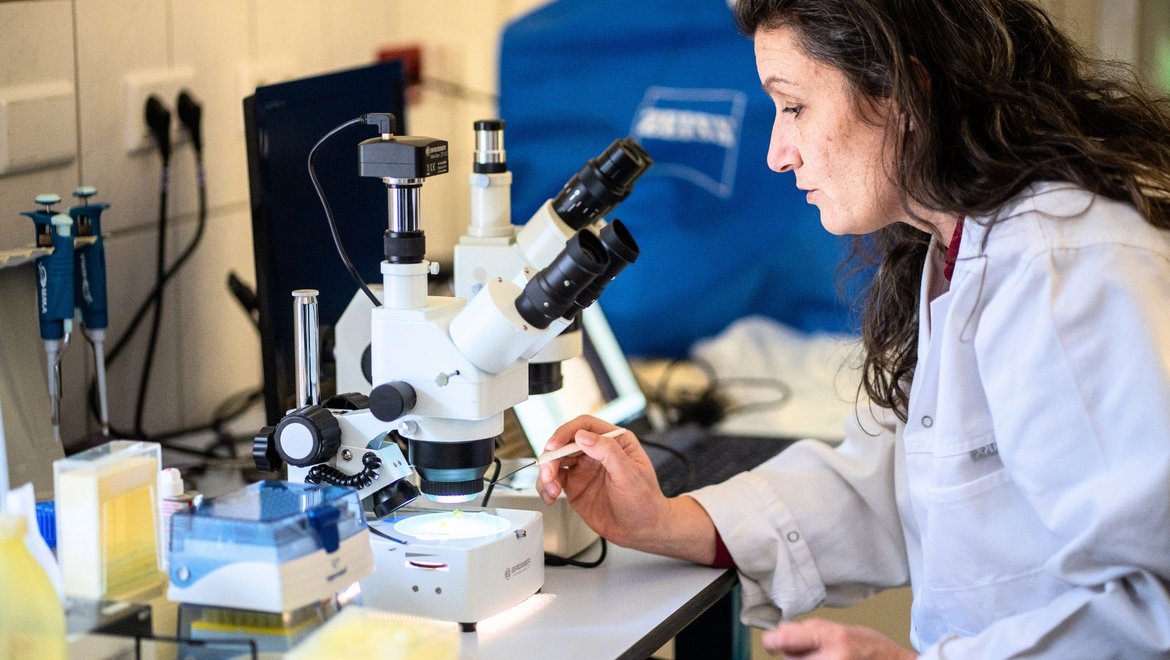
Prof. Dr. Claudia Grewe leads the MOOSstart project.
The goal of the MOOSstart project...
...is the development of a bioreactor. It is designed to produce several kilograms of peat moss daily—as cost-effectively as possible, without being tied to a specific location. Researchers at the University of Freiburg were the first to successfully cultivate individual species of peat moss in the laboratory and develop a technical method for propagating them. As one of four project partners, the university also supplies the moss plants to Köthen, where they are received by doctoral candidate Maria Glaubitz.
Ms. Glaubitz, what is the challenge of cultivating sphagnum moss on an industrial scale? What do you deal with on a daily basis?
One of the key tasks is to design the process to be economically efficient in order to minimize financial barriers during later implementation. This means that all aspects of the process must be optimized in terms of material and energy use. In biotechnology, these optimal conditions are already known for common production processes using yeast, microalgae, bacteria, etc. Such data does not yet exist for peat moss. We are collecting this data here through laboratory experiments in our photobioreactors. For example, we’re testing how to increase the product yield by adjusting the use of light and nutrients. Since we’re working on using increasingly larger reactors for moss cultivation, my responsibilities include, for instance, planning supply lines and harvesting equipment. In practical terms, this means getting my hands dirty and “tinkering” with things myself.
How much moss do you need for an area of one hectare?
This requires about 80 m³, which is roughly equivalent to the content of a large ocean-going container.
What successes have you achieved so far, and where do you stand now—at the halfway point?
A major achievement was the successful development of a photobioreactor and its cultivation on an industrial scale. In addition, we were able to clarify important questions regarding the moss’s carbon dioxide uptake during cultivation. We now want to determine how nutrient dosing and light energy input can be optimized. Personally, this progress makes me very happy and motivates me to continue working on improving the process.
 © HS Anhalt
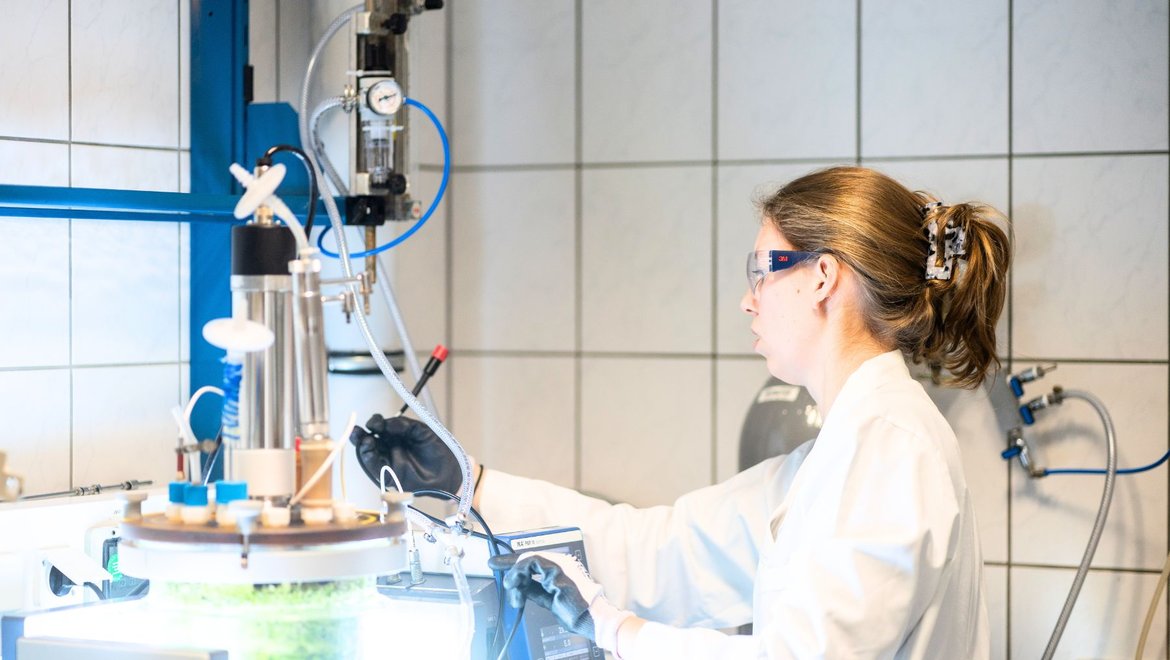
Maria Glaubitz is pursuing her doctorate at Anhalt University of Applied Sciences on the topic of cultivated moss and is conducting research on this subject in the bioprocess engineering laboratories.
Through the end of 2025...
...the Federal Ministry of Food and Agriculture is funding the MOOSstart project. By then, a low-cost bioreactor is expected to have been developed and to have produced sphagnum moss seeds in initial tests. The industry partner for these field trials is Niedersächsische Rasenkulturen NIRA GmbH & Co. K. How quickly and to what extent the project can contribute to widespread paludiculture—that is, the management of wet bog areas with moss—depends on various factors. For one thing, the restoration of drained bogs for climate protection is now enshrined in law. In addition, researchers at the University of Greifswald have demonstrated that moss can be successfully planted on rewet bogs. These ecological biologists laid important groundwork for MOOSstart and are also partners in the project. This approach would allow carbon to be sequestered considerably faster than through renaturalized or set-aside areas, where mosses grow only about one millimeter per year. The economic benefit: sphagnum mosses can be harvested and used as an alternative in substrates for gardening and landscaping. This could help protect intact bogs from peat extraction. However, this is a contentious issue among farmers: too uncertain, too unprofitable. They currently use about 80 percent of Germany’s drained bogs as pasture or cropland.
Prof. Dr. Claudia Grewe...
...has been a professor of bioprocess engineering at Anhalt University of Applied Sciences since 2020 and leads the MOOSstart project. She also studied in Köthen, earned her doctorate at Martin Luther University Halle-Wittenberg, and, among other things, headed the research and development division at Salata AG. Her work has primarily focused on research into microalgae for industrial applications. Her most recent publications can be found on her personal website.
Maria Glaubitz...
...is a doctoral candidate at the "Life Sciences" Doctoral Center at Anhalt University of Applied Sciences. She previously studied chemical and environmental engineering at Merseburg University of Applied Sciences. Sustainability was already a key focus in her master’s thesis, which she wrote in collaboration with, among others, the Fraunhofer Center for Chemical-Biotechnological Processes (CBP). Learn more on her LinkedIn profile.
Wetlands for Climate Protection:
In Germany, there are 1.4 million hectares classified as peatlands. Of these, more than 80 percent have been drained over the past few centuries for peat extraction, agriculture, and forestry. When dry, bogs release large amounts of greenhouse gases: according to the Federal Environment Agency, 53 million annually, accounting for 7.5 percent of total emissions. To reverse this trend and restore bogs to their role as powerful carbon sinks, various legislative initiatives are underway at the federal and state levels. In addition, research on peatland conservation—including ecological and economic approaches—is being funded: https://www.bmel.de/DE/themen/landwirtschaft/klimaschutz/moorbodenschutz.html
Redaktion
Many thanks to Prof. Dr. Claudia Grewe and Maria Glaubitz for the conversations and insights into their lab.
This press release regarding the MOOSstart project was published in January 2024.
Additional explanatory websites and contacts are linked in the article.
