News-Detail

Fungal Mycelium as a Material: What a "Mycothek" Company Holds in Store for the Future

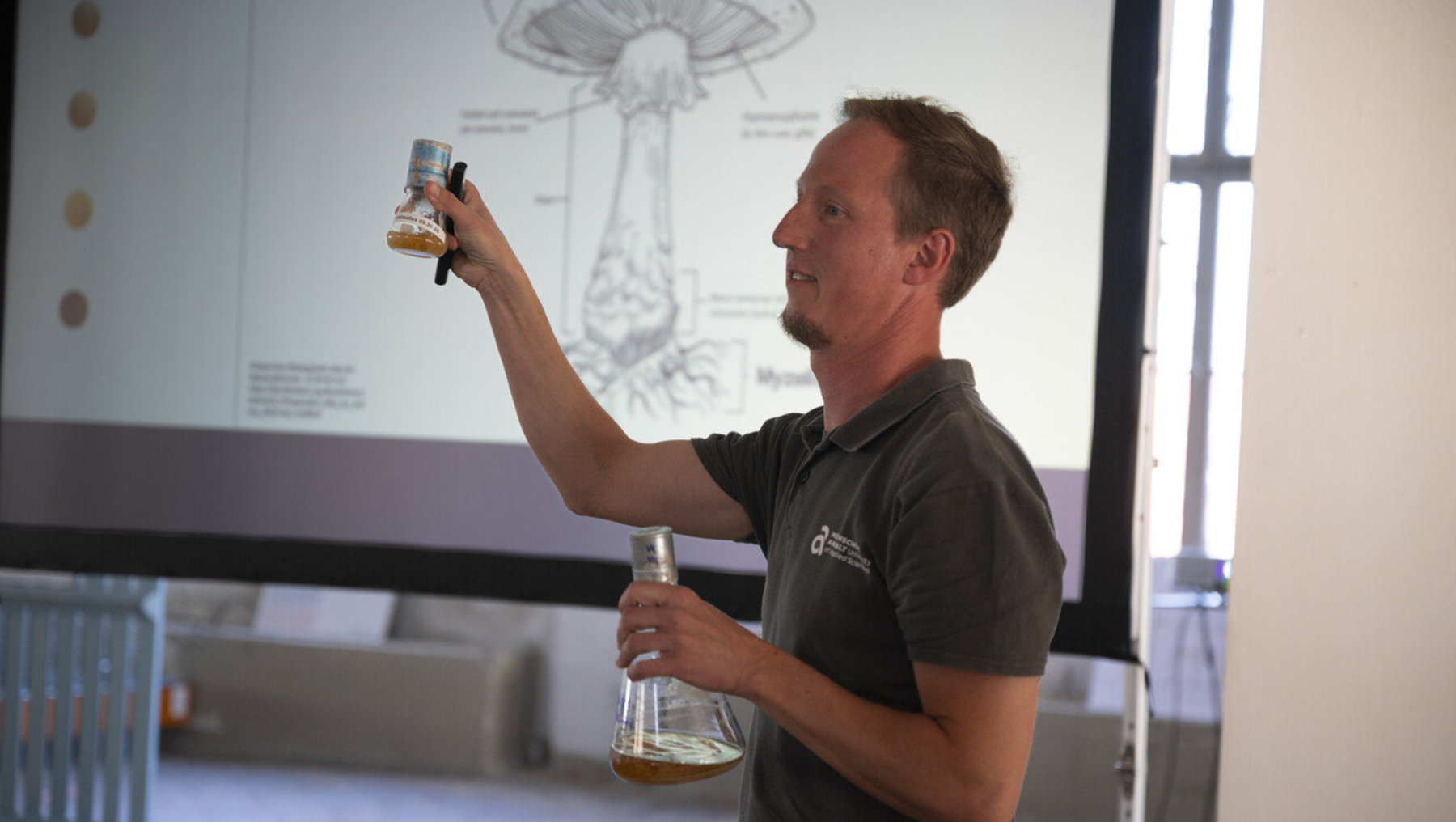
  • Ein Mann hält ein Glas mit einer gelben Flüssigkeit hoch und präsentiert es vor einer Leinwand mit einer anatomischen Zeichnung des menschlichen Verdauungssystems. Dr. Marc Rüger von der Hochschule Anhalt zur Erklärung, wie aus Pilzmyzel Werkstoffe entstehen. © Stiftung Bauhaus | Alexandra Huth
    „Innovative Myzelmaterialien aus Nebenströmen": Dr. Marc Rüger stellt das Projekt “InMyco” der Hochschule Anhalt vor.

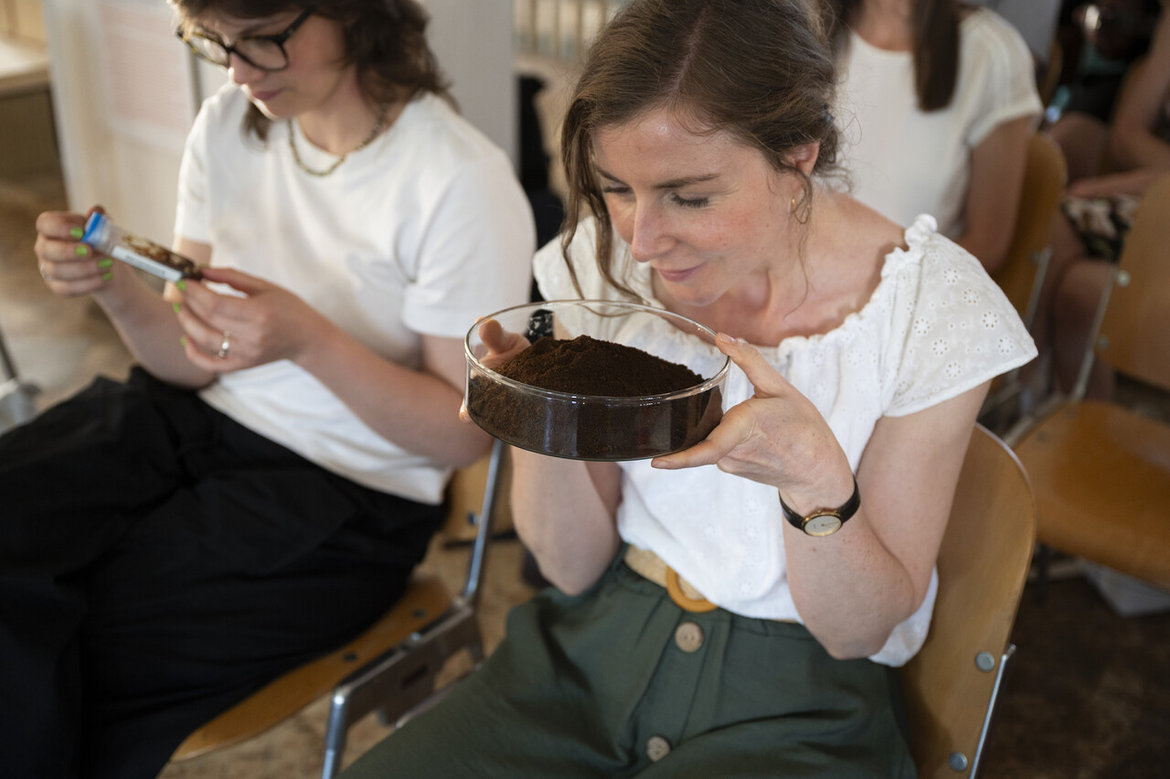
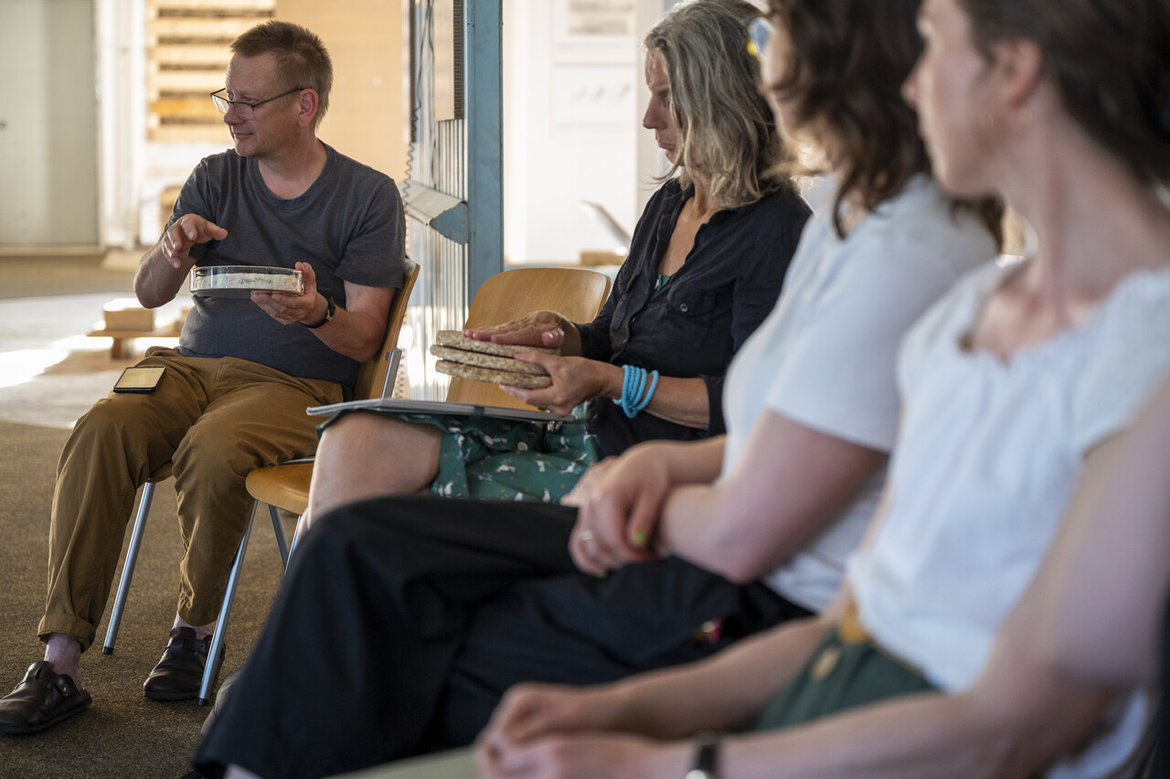
On the table are cubes and slabs made of an unusual material. Some smell like a damp forest; others, like fresh mushrooms. If you look closely, you’ll see a fine white network running through the samples: fungal mycelium, the root-like network of fungi. For industry, it’s already an interesting alternative to conventional materials. More research is needed for it to become established.

On June 19, 2026, visitors to the Zeeck department store were able to experience the world of fungal mycelium: to smell it, touch it, and ask questions. The invitation came from the “Waste + Resources” Friday Group of the Bauhaus (Building 10 - Dessau) Foundation for a lecture titled “Innovative Mycelium Materials from By-Products.” Dr. Marc Rüger from Anhalt University of Applied Sciences in Köthen presented the InMyco research project—short for “Innovative Mycolab / Mycothek.” He was supported by Abhilash Konda.
What is a mycotheque?

A mycotheque is a materials library. It collects material samples derived from mycelium. In the InMyco project, two research groups at Anhalt University of Applied Sciences are jointly building this collection: the Biotechnology Research Group (Prof. Dr. Jana Rödig) and the Materiability Research Group (Prof. Dr. Manuel Kretzer) from the Design Department. Biotechnology provides the expertise on fungal cultures and optimizes cultivation using a wide variety of substrates. The design team examines how the materials can be processed and shaped.

By-products serve as raw materials: residues from agriculture, forestry, the process industry, and commerce that would otherwise go largely unused. Straw, plant residues, sawdust, oilseed cake, coffee grounds, spent grain, and similar waste materials from Saxony-Anhalt form the nutritional basis for the fungal cultures. The mycelium grows through the material like a fine network of threads, binding it into a solid, moldable material. It can grow into any conceivable shape. Depending on the mushroom species and nutrient medium, different properties emerge: lightweight and insulating, or stable and durable. The Materiability Research Group has already demonstrated how good this is with a transport box for cargo bikes. The “Mycelium Bike Box” is biodegradable, has a water-repellent coating, and is designed to be particularly resource-efficient thanks to its modular construction.

Fungal Mycelium as a Material: Applications for Businesses

This example shows how companies can already use these materials today. “Mycelium-based materials are suitable not only for packaging and insulation, but also for larger components and design objects. They are grown from regional waste materials, are easy to produce, and sequester CO2,” says Dr. Marc Rüger. The fact that they are biodegradable makes them an alternative to plastics or Styrofoam, especially for single-use products or short-lived components.

Conversation with the Foundation Director

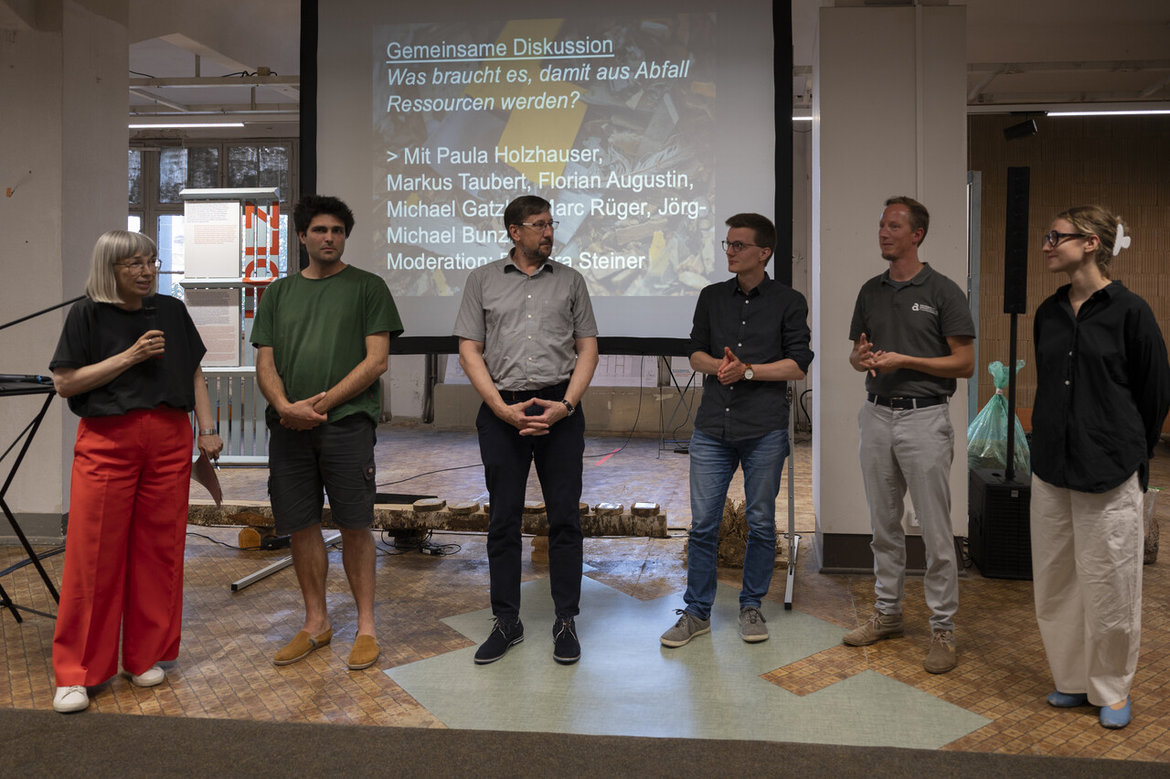
The presentation was followed by a panel discussion with the foundation’s director, Dr. Barbara Steiner. They discussed how research and design practice can be more closely integrated. Another topic was the widespread use of alternative materials—or, more precisely, building materials made from recycled materials: How can the acceptance of new materials be further promoted among manufacturers and consumers—for example, through lectures and exhibitions, or workshops like the one at the Zeeck department store? What areas require further research to enable the production of more products based on fungal mycelium?

Mycelium You Can Touch: Exhibition at the Zeeck Department Store

If you missed the material samples from Dr. Marc Rüger and Abhilash Konda’s presentation, you can still check them out: The InMyco project has set up an exhibition at the Zeeck department store featuring exhibits made from mycelium materials. It brings to light what is usually only seen in the lab: how waste materials are transformed into a new material that, depending on how it grows, feels like leather, foam, or wood. The exhibits were created by Anna Gronemeyer, Sofia Stateczny, and Louis Möckel.

Outlook

The Mycothek is also intended to promote the idea of direct material experience—with actual samples that visitors can touch and smell. In addition, it will be made accessible through virtual experiences. In particular, it is intended to provide companies in Saxony-Anhalt with access to alternative material options. This creates a tangible basis for determining whether and how mycelium-based materials can be integrated into their own products and, ideally, used to establish new value chains.

Program and details of the lecture organized by the Bauhaus Foundation at Kaufhaus Zeeck: https://bauhaus-dessau.de/veranstaltungen/freitagsgruppe-abfall-ressource/?dt=202606191800

The Bauhaus (Building 10 - Dessau) has also planned events for August and September in connection with the exhibition “Algae|Rubble|CO2”: https://bauhaus-dessau.de/ausstellungen/algen-schutt-co2/

The “Innovative Mycolab-Mycothek (InMyco)” project has been funded by the European Union and the state of Saxony-Anhalt since July 31, 2024, and will continue through December 31, 2027: https://www.hs-anhalt.de/projekte/project/innovative-mycolab-mycothek-inmyco-prof-dr-jana-roedig.html

Redaktion

Claudia Aldinger

Dr. Marc Rüger

... can be reached for questions and inquiries by phone at +49 (0) 3496 67 2614 or by email at marc.rueger(at)hs-anhalt.de.

The Bauhaus (Building 10 - Dessau) Foundation has also planned events for August and September in connection with the exhibition “Algae|Rubble|CO2”: https://bauhaus-dessau.de/ausstellungen/algen-schutt-co2/


Back to all KlimaBlog articles