Can conventionally farmed fields be a habitat for biodiversity? A twelve-year study provides surprising answers and shows which measures work. Questions for Prof. Dr. Christian Schmid-Egger, Honorary Professor of Taxonomy and Ecology of Pollinator Insects at Anhalt University of Applied Sciences.
Wild bees in the agricultural landscape: underestimated potential for biodiversity
-
 © Agustin/Stock.Adobe.de
Prof. Schmid-Egger, you spent twelve years studying wild bees on five farms in Germany. What surprised you the most?
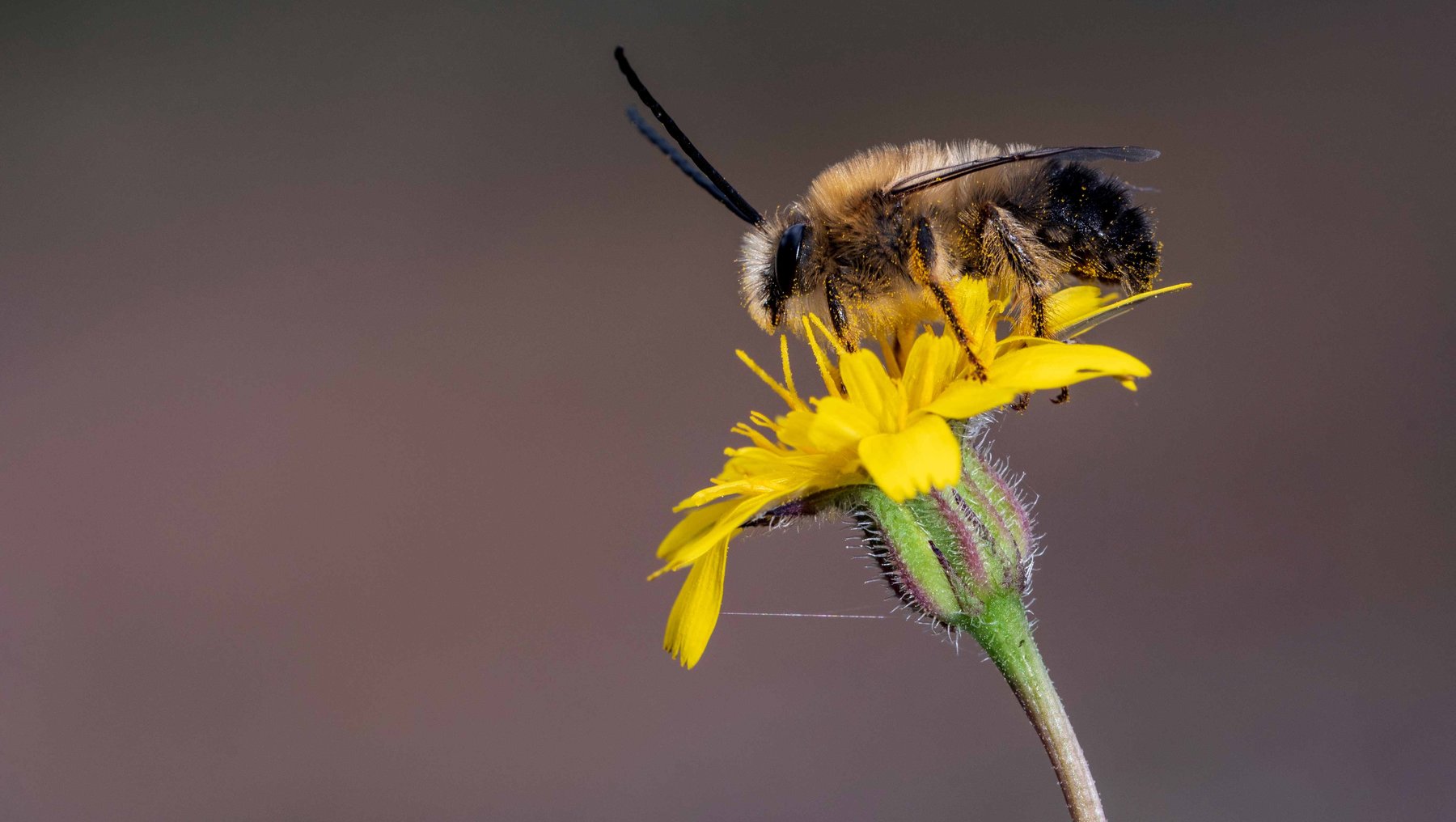
The number of species in eastern Germany. We recorded 201 wild bee species in Quellendorf in Saxony-Anhalt, 173 species in Weißensee and 168 species in Trebbin. The proportion of endangered Red List species was 21 to 24 percent. Nobody expected this on conventionally farmed arable land. The bees do not live in the crops themselves, but in a network of flowering areas, fallow land, roadsides and embankments. These small-scale habitats were previously significantly underestimated.

The bees do not live in the crops themselves, but in a network of flowering areas, fallow land, roadsides and embankments.
Prof. Dr. Christian Schmid-Egger
Where does biodiversity promotion work and where does it not?
The size and structure of the landscape plays a decisive role. Eastern German farms with 4,000 to 10,600 hectares offer enough space for structural diversity. In contrast, the farm in Münsterland with only 50 hectares had 43 species - without a single endangered species. Small scale and intensive land use leave little room for maneuver.
Perennial flowering areas of native wild herbs are particularly effective. In the first four to five years, the number of species increases to 25 to 35 species per year - sometimes even up to 79, provided that the areas remain rich in flowers. If they become grassy, the numbers drop immediately.
What role does climate change play for wild bees?
It is both a driver and a threat. Many species are advancing northwards and colonizing small-scale habitats that previously seemed inaccessible. We have observed that wild bees fly to highly isolated areas over long distances and reproduce there. This ability was previously unknown.
However, the dry years from 2018 to 2020 have significantly reduced the populations. The cool, damp weather in 2024 also had a negative impact. Climate change could become problematic in the long term.
Information | Contact
The complete study: Schmid-Egger, C. (2025): Surprising biodiversity of wild bees and wasps in the agricultural landscape - Summarized results from twelve years of nationwide monitoring. Ampulex 16: 1-60: http: //www.ampulex.de/images/ampu16.pdf
Contact: Prof. Dr. Christian Schmid-Egger teaches at Anhalt University of Applied Sciences in the degree programs Nature Conservation and Landscape Planning, Landscape Architecture and Environmental Planning and Agriculture. He has described over 150 new species of wasps and bees and is an internationally renowned specialist in wasps.
Redaktion
Claudia Aldinger
Prof. Dr. Christian Schmid-Egger... can be contacted for questions and inquiries by e-mail: christian.schmid-egger(at)hs-anhalt.de
... current publications and projects on his personal page.
... direct link to the publication "Surprising biodiversity of wild bees and wasps in the agricultural landscape - summarizing results from twelve years of nationwide monitoring", published in Ampulex 16: 1-60: http: //www.ampulex.de/images/ampu16.pdf
