Getting from A to B in a hassle-free and climate-neutral way: this will become a particular challenge for small cities in the future. The concept of autonomous driving could bridge the gap between the need for mobility and the lack of transportation infrastructure typical of urban areas. Here on Anhalt University of Applied Sciences’ climate blog, we explain how a team from the Campus Köthen is working to overcome these hurdles: Ready4Robots?
The Mobility Transition: How Can We Get Around Rural Areas Smartly?
-
 © HS Anhalt
At the moment, autonomous systems are being tested primarily in metropolitan areas. I see the greatest need in rural areas, and that is the direction we want to take in our next projects.
Prof. Dr. Sebastian Trojahn
Professor Trojahn, how might autonomous systems—such as smart bike-sharing stations or self-driving robots—be useful in the future, and in what ways? For example, in a city like Köthen?
I’m really hoping for a jack-of-all-trades. Each of us has to get around, and we all order things. Even when we’re still in good shape, we have to figure out how to get from A to B affordably. When we’re not quite as fit anymore, we’ll be glad just to get from A to B at all—and safely, too. And think about our orders from online delivery services—in the future, these goods will also need to find their way to our homes at an affordable price and relatively quickly. We need to start thinking now about the shortage of skilled workers and create suitable delivery solutions.
Could the concept of autonomous driving also be extended to surrounding, even smaller towns?
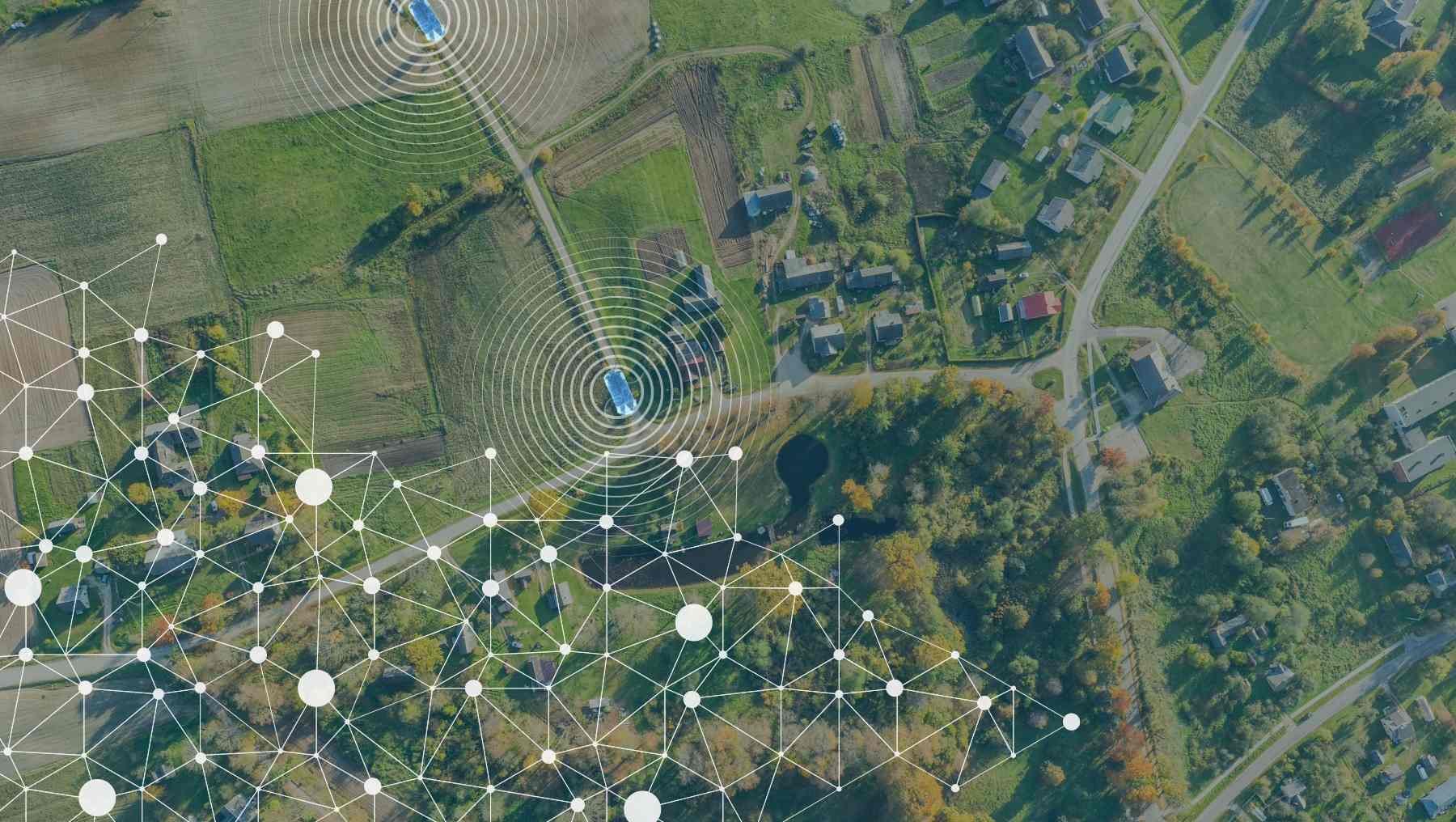
Right now, autonomous systems are being tested primarily in metropolitan areas—to learn in those environments. For example, how to navigate traffic lights, roundabouts, or complex road layouts. I see the greatest need in rural areas, and that’s the direction we want to take in our next projects. Autonomous systems are becoming faster and safer, the legal framework is being defined, and now these systems can serve as feeders for the infrastructure of major cities.
What do you think? How far are we from such a scenario? Are there any role models you look to for guidance?
I think in stages. Over the next five years, we’ll see autonomous systems that are remotely monitored by a control center. For this, we’ll need good 5G or Wi-Fi coverage, and then a person can help the autonomous system if it can’t find its way out of a tricky situation by intervening via remote control.
I can’t yet describe a definitive scenario for the time after that. We can see from the many major players in the autonomous driving market that implementation is no simple matter. I believe, therefore, that we’ll remain at a stage for some time where we drive pre-programmed, predefined routes and gradually expand this network. Once we’ve achieved that, we’ll already have taken a major leap forward in mobility and logistics.
 © HS Anhalt
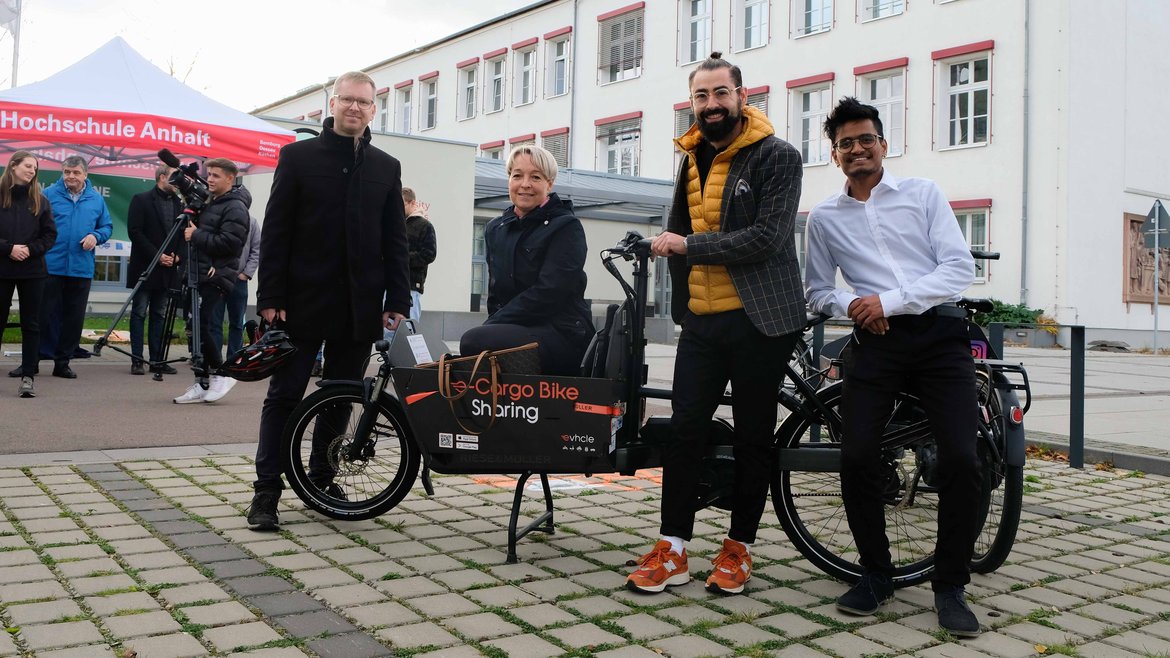
The first cargo bikes for Anhalt University of Applied Sciences’ Köthen campus: In November 2023, Prof. Sebastian Trojahn and his team presented their project to the public.
What needs to be done in the meantime? What challenges are you working on in the “Ready4Robots” project?
In the “Ready4Robots” project, we’re focusing on delivery processes—such as online deliveries—and want to have our robots move along sidewalks and bike paths. And that’s exactly where the data situation is still very poor. How high is the curb? Which traffic light applies to pedestrians? Is the robot currently on the street or on the sidewalk? These are questions we need to answer, and our first step is to create a digital map of Köthen so we can navigate using this detailed map. In other words, we first need data and transparency; then we can let our robots drive.
As a first step, cargo bikes equipped with sensors were made available for rent at various locations in Köthen. Have you been able to collect any data from them yet?
Our partner evhcle is gradually expanding its fleet, and we’re seeing that the bikes are currently good. We’re already collecting various types of data, but we plan to use a new generation of sensors (such as LiDAR sensors for distance, vibration, etc.) to generate even more and more precise data soon. This will allow us to gradually work our way toward the data quality we need.
Should the smart rental stations remain in place even after the project ends?
Unfortunately, we can’t say for sure. It depends primarily on whether this develops into a sustainable business model for our partner and whether demand for the bikes remains good. For now, we’ve only “reserved” the bikes until the end of our project, but we’re hoping for further positive momentum toward sustainable and smart mobility and logistics.
More about the "Ready4Robots" project:
The research will continue to be funded by the Federal Ministry of Transport and Digital Infrastructure (BMVI) through 2025. The project officially launched in June 2022. Prof. Trojahn and his team are collaborating with various partners from academia and Economics on this topic. Their findings will be incorporated into a comprehensive concept for mobility and logistics applications in rural areas, such as former lignite mining regions. Other partners in the project include: Technical University Bergakademie Freiberg, OvGU, Merseburg University of Applied Sciences, TINK GmbH, DigiPL GmbH, CyFace GmbH, PTV Planung Transport Verkehr AG, Endiio Engineering GmbH, and the District of Northern Saxony.
Visit the project’s website on Anhalt University of Applied Sciences’ research pages.
Visit the joint project’s website at the Technical University of Freiberg.
Prof. Dr. Sebastian Trojahn
... is a professor of Business Studies at the Department of Economics at Anhalt University of Applied Sciences, specializing in supply chain and operations management as well as digitalization. "Ready4Robots" represents only one aspect of his research interests. In "be-automated," he has already been focusing on automated shuttle buses based on open data. His current projects also include "TRANSFORM," which addresses the topic of digital Agriculture. Learn more on his personal website.
Redaktion
Prof. Dr. Sebastian Trojahn
... can be reached for questions and inquiries by phone at +49 (0) 3471 355 1369 or by email at sebastian.trojahn(at)hs-anhalt.de
... Recent publication: A scoping review on dynamic networks in supply chains / Rolf, Benjamin. - Included in: IFAC-PapersOnLine, Vol. 56 (2023), 2, pp. 203–214.
... more about his research topics and responsibilities at Anhalt University of Applied Sciences at the end of the interview.
