Agroforestry means that trees or shrubs share the same land with crops or grazing animals, and both benefit from this arrangement. Anhalt University of Applied Sciences has estimated that the hedgerows in the agricultural landscape of the Salzlandkreis district in Saxony-Anhalt store approximately 97,000 to 104,000 metric tons of carbon above ground. In addition, the team is assessing which fields are suitable for agroforestry. It will present its initial findings on November 25, 2026, in Bernburg-Strenzfeld.
What is agroforestry? And how much carbon do hedgerows store in the Salzlandkreis?
-
 © hochschule anhalt | matthias pietsch
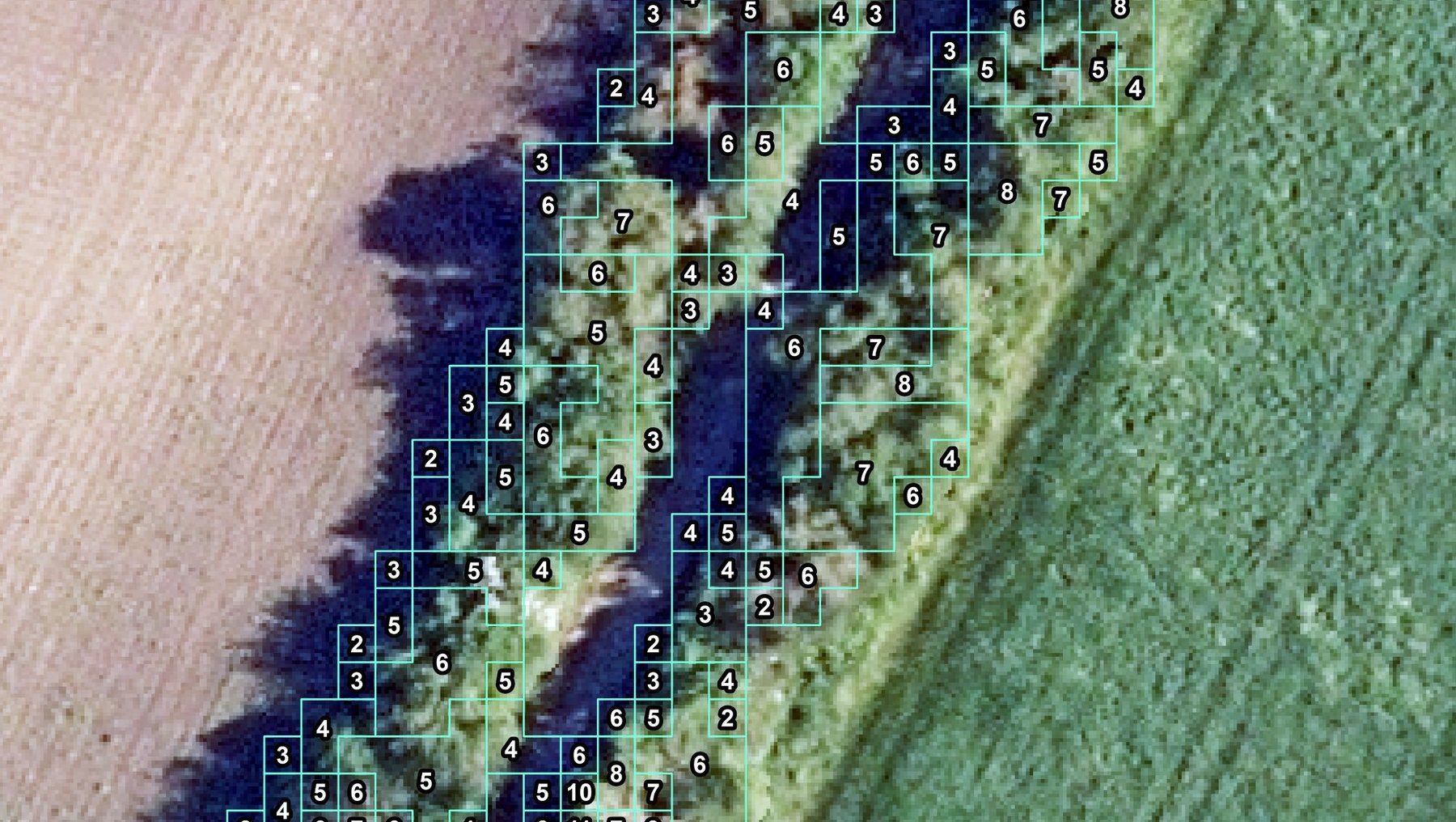
Hecken haben für Landwirtschaft und Naturschutz wichtige Funktionen. Forschende der Hochschule Anhalt haben sie für den Salzlandkreis vermessen.
What does agroforestry mean?
The German Professional Association for Agroforestry (DeFAF) describes agroforestry as a land-use system. Trees, crops, and livestock are arranged on a single plot in a way that yields ecological and economic benefits. Farmers deliberately take advantage of the interactions between trees and crops.
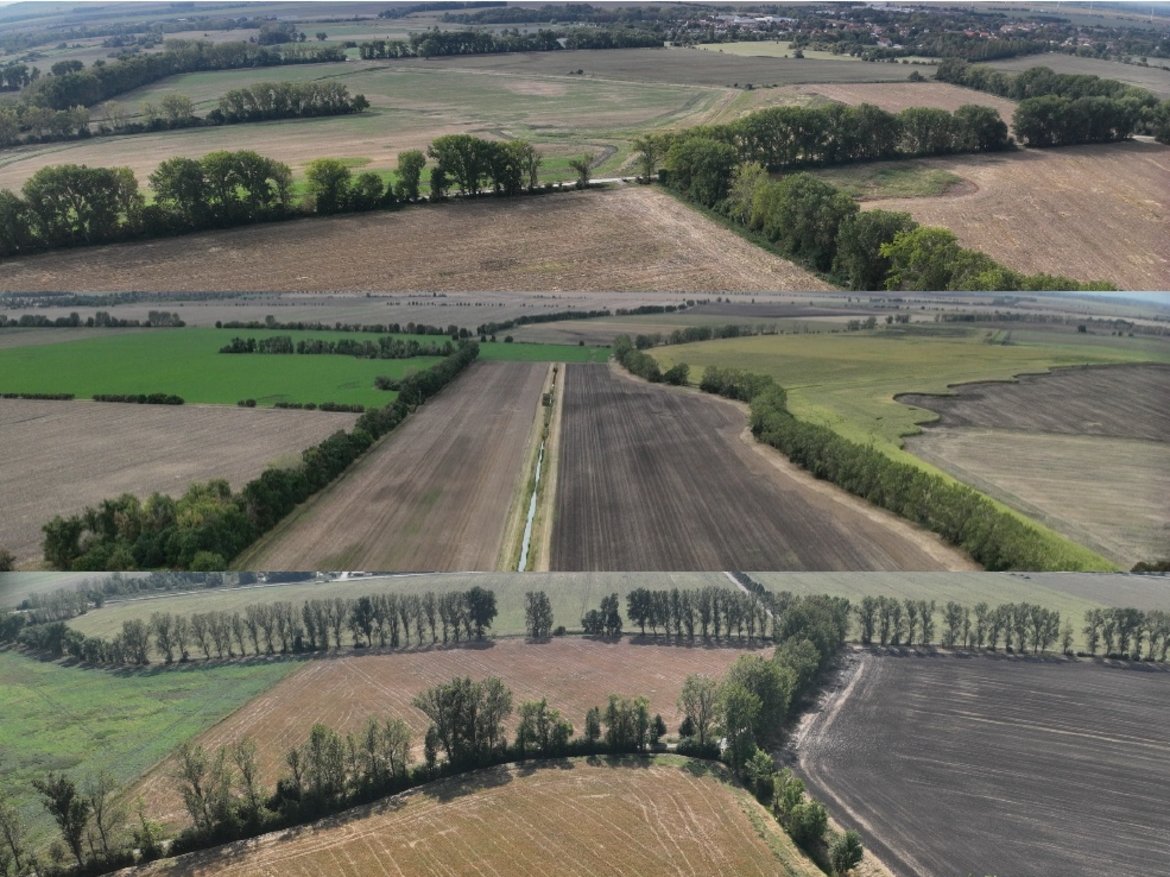
“Simply put, these are the rather inconspicuous shrubs and trees found among the croplands,” says Prof. Dr. Matthias Pietsch, who is leading the “Study on Agroforestry Potential and Natural Sinks for CO2 Sequestration and Storage in the Salzlandkreis.” The associated project has been funded by the European Union and the state of Saxony-Anhalt since 2024 and concludes this year.
 © hochschule anhalt | matthias pietsch u.a.
What are the different types of agroforestry?
The DeFAF definition distinguishes between three combinations. In silvoarable systems, trees are interplanted with crops. In silvopastoral systems, they grow on pastures alongside livestock. Agrosilvopastoral systems combine both. The age, distribution, and arrangement of the trees and shrubs vary, resulting in many different configurations.
“With climate change, agroforestry systems are increasingly the focus of discussion. There are good examples of conservation and utilization, as well as research, that we’d like to present in our workshop,” says Matthias Pietsch. Guests include representatives from the DiP-SMART Agroforestry project at Martin Luther University Halle-Wittenberg, an agroforestry innovation manager from the Leibniz Center for Agricultural Landscape Research (ZALF), as well as Wurzener Land-Werke GmbH and the Erfurtshausen Energy Cooperative (Energiegenossenschaft Erfurtshausen eG), who will share their practical experience.
Is a hedge considered agroforestry?
“Our study focused primarily on hedgerows and hedgerow management,” explains Pietsch. A hedgerow at the edge of a field does not, on its own, meet the definition of agroforestry, because for that to be the case, woody plants and crops must interact within the same area. Hedges are the existing structures of the agricultural landscape; agroforestry would be a new addition to the field. The study by Anhalt University of Applied Sciences was intended to take a more forward-looking approach to agroforestry. The team used established criteria to investigate which agricultural areas are suitable for agroforestry and can be combined with hedge management. The goal: sustainable use of biomass.
How much carbon do hedges store in the Salzlandkreis?
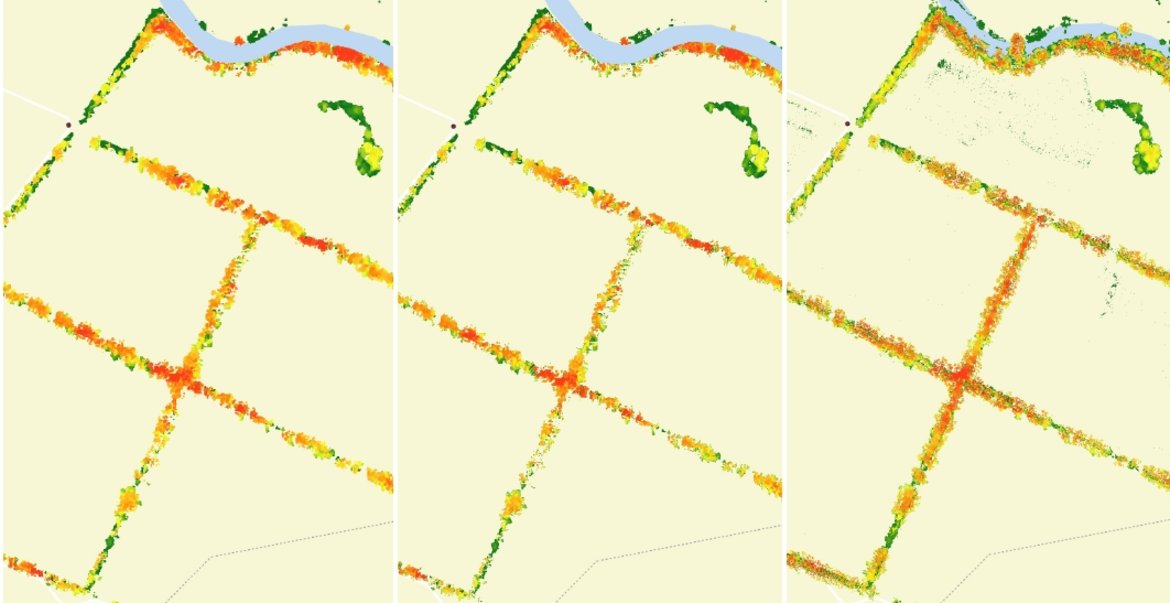
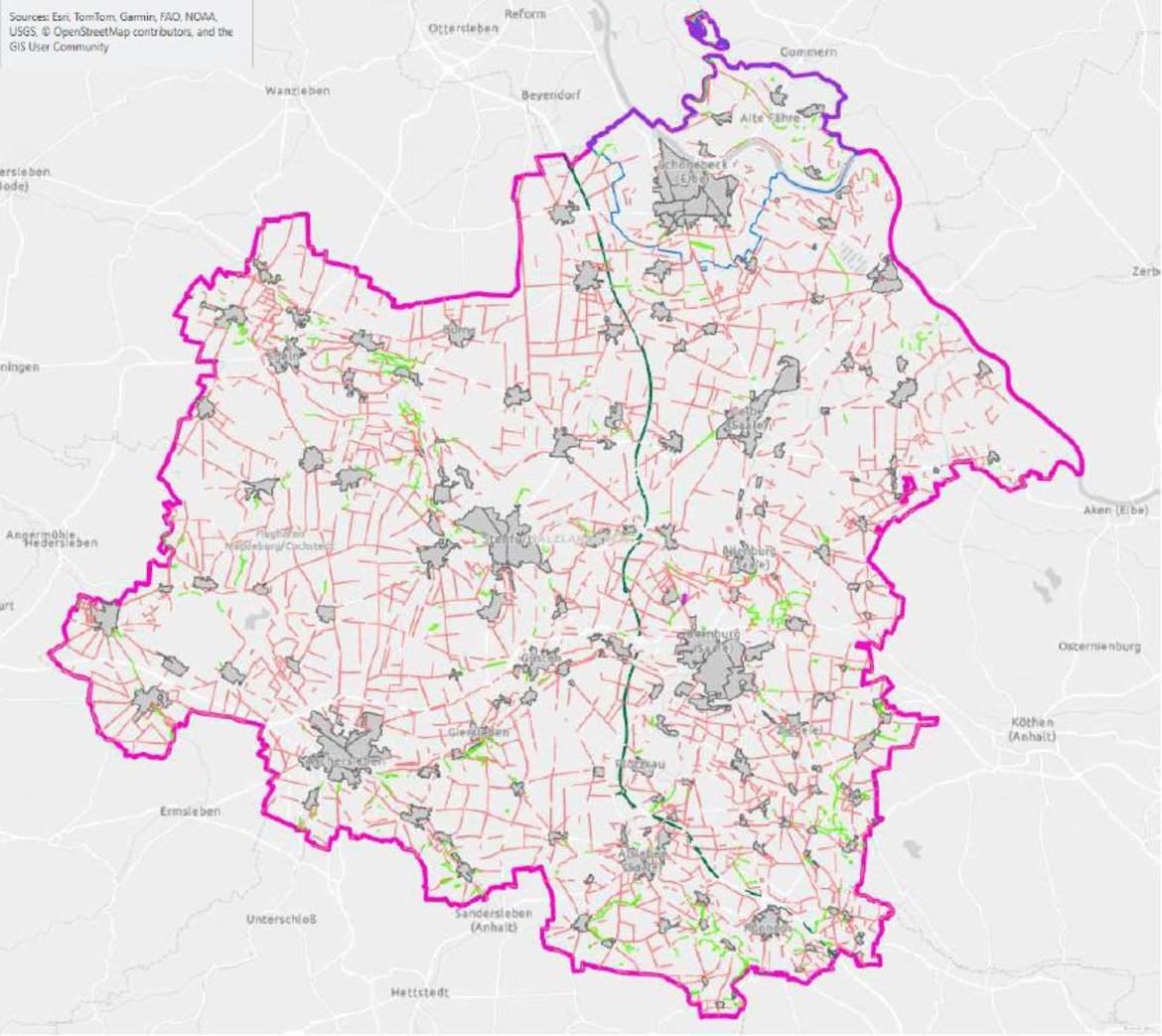
Scientists from the Campus Bernburg of Anhalt University of Applied Sciences surveyed 4,382 trees and shrubs with a trunk diameter of more than 3.5 centimeters at three locations. They recorded the tree species, height, and diameter and used this data to calculate the wood mass. The team applied the measurements to the entire district—covering 1,427 square kilometers—using drone data and aerial photographs from the Saxony-Anhalt State Office for Surveying and Geoinformation.
The result: The wood in the hedges above ground contains between 96,538 and 104,341 metric tons of carbon. Converted to CO₂, that amounts to 354,294 to 382,931 metric tons. The range arises because two aerial image datasets with different resolutions (1 meter and 20 centimeters) yield slightly different values. Depending on the dataset, the hedgerows cover between 1,484 and 1,690 hectares.
The actual carbon storage capacity of the hedgerows is even higher. Only the wood above ground has been accounted for; roots and soil are not included. The age and management practices of the hedgerows were not factored into the estimate. In this respect, the figures describe a stock, not annual sequestration.
 © hochschule anhalt | matthias pietsch u.a.
Why do hedges need care?
Many of the hedges in the Salzlandkreis, as well as in other regions, date back to the 1960s, when they were planted as windbreaks. These include, for example, rows of poplars that have reached the end of their lifespan. If they fall onto farmland during a storm, they cause damage. “That is why targeted management of these hedgerows—including a focus on their practical use—is important. Without replanting, the structure and function of the hedgerow will gradually disappear,” says Matthias Pietsch, who views the previously published findings on the extent and ecosystem services provided by hedgerows as a crucial foundation for such a discussion.
The study highlights the ecosystem services recognized in the scientific literature as being provided by hedgerows: carbon sequestration, habitat for animals and plants, protection against soil erosion, regulation of water runoff, and natural pest control. Because of these services that nature provides to humans and animals, hedgerows are protected. Interventions are reviewed by nature conservation authorities in accordance with, among other things, the Federal Nature Conservation Act. Various federal and state funding programs are available for the restoration or establishment of hedgerows.
 © hochschule anhalt | matthias pietsch u.a.
Hedge Maintenance and Agroforestry in Saxony-Anhalt: Prospects
On November 25, Dae Yong Kim will discuss the findings on carbon sequestration in hedgerows, while Sascha Fritzsch will outline the potential uses. The title of his presentation is: “Potential Analysis and Possible Scenarios for Biomass Yields from Hedge Maintenance and Agroforestry, Taking into Account Conservation Requirements.” How can cuttings from hedge maintenance be used for energy? Who manages the maintenance? How is the replanting of woody plants ensured? The workshop aims to discuss these questions and clarify possible next steps. According to Pietsch, the results of the study on quantifying ecosystem services and biomass are good for being applied by the Salzlandkreis to other areas.
Information About the Workshop and Publication
The workshop “Synergies Between Agroforestry and Hedge Management” begins on November 25, 2026, at 9:00 a.m. at the Innovationswerkstatt (Building 51 - Bernburg) in Strenzfeld. It is aimed at municipalities, government agencies, processors, and those interested in agroforestry. Click here to register: https://www.hs-anhalt.de/hochschule-anhalt/aktuelles/veranstaltung/termin/synergien-zwischen-agroforst-und-heckenmanagement.html
The study “Agroforestry Potential and Natural Sinks for CO2 Sequestration and Storage in the Salzlandkreis” is funded by the European Union and the State of Saxony-Anhalt through the European Regional Development Fund (ERDF): from January 1, January 2024 through December 31, 2026.
From the project team’s publication:
Additional articles on Prof. Dr. Matthias Pietsch’s research on the KlimaBlog in the areas of “Biodiversity and Nature Conservation” and “Climate Adaptation in Municipalities and Organizations”
Digitalization in Nature Conservation: The Example of Meadow-Breeding Birds
Climate Adaptation Through Remote Sensing: How Data Can Help
Redaktion
Claudia Aldinger
Prof. Dr. Matthias Pietsch... can be reached for questions and inquiries by phone at +49 (0) 3471 355 1140 or by email at matthias.pietsch(at)hs-anhalt.de
Back to the “Agriculture and Food” topics on the Anhalt University of Applied Sciences Climate Blog
Back to the Climate Blog homepage
