Reallabor ZEKIWA Zeitz (New European Bauhaus)
-
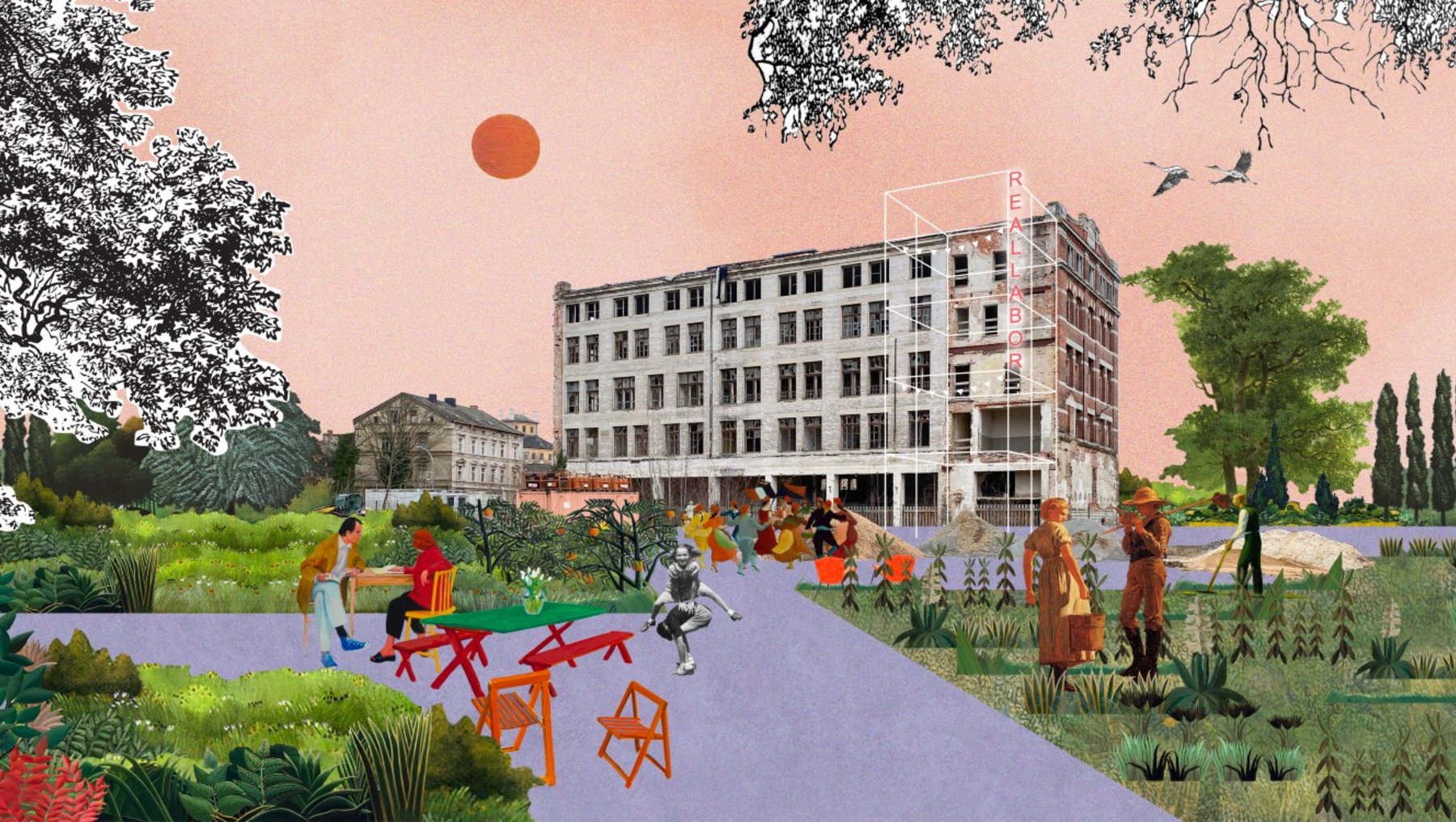 © Miriam Metz
Title: Reallabor ZEKIWA Zeitz. Sustainable energy-efficient circularinnovationsfor building, livingand working
Description:
Reallabor Zekiwa Zeitz - Transdisciplinary, inter-institutional consortium
The NEB ZEKIWA project brings together a wide range of partners from Zeitz and the region to shape the future of the city and its sustainable development. The network includes the city of Zeitz, Anhalt University of Applied Sciences, the Bauhaus Dessau Foundation, Burg Giebichenstein University of Art and Design Halle, Martin Luther University Halle-Wittenberg and Forum Rathenau.
Anhalt University of Applied Sciences is leading key work packages to transform the historic ZEKIWA site into a vibrant, forward-looking urban quarter - through Sustainable Urban Development and the use of innovative energy and material technologies as well as digital solutions.
Revitalization of ZEKIWA Building 42
Anhalt University of Applied Sciences is supporting the revitalization of ZEKIWA Building 42 with an approach that is divided into five central work packages: The first package develops sustainable conversion and expansion scenarios based on a student competition. The second package focuses on the development of sustainable energy and building technology concepts. The third package breaks new ground in Monument Preservation Management. In the process, monument protection requirements are combined with the principles of resource and climate protection. The fourth package includes model building physics calculations for different wall structures and building details. The fifth package designs and implements temporary and permanent room uses on the first floors, in particular the successive expansion of the first floor zone of ZEKIWA building 52 as a "space of possibilities" within the framework of student real laboratories. In addition, the city of Zeitz is being supported in an advisory capacity with its specific partial construction projects for ZEKIWA Building 42. The partial construction projects of the city of Zeitz include securing the building and restoring the façade, including the design of the temporary façade closure as a widely visible art and advertising campaign, the installation of an energy-generating roof, an experimental extension as a staircase-storage-viewing tower and a co-creative design process for the future non-profit use of the building.
Neighbourhood development and placemaking
Urban planning analyses and scenarios for possible developments, creative visualizations and participatory processes in stakeholder workshops lead to a jointly supported spatial image and ultimately a framework plan as a guide for the transformation of the current industrial wasteland into attractive, publicly and sustainably usable spaces in a key area between the railroad station, Weißer Elster and the city centre. The development of ecological potential and the potential for a municipal energy and heat transition are a particular focus. On the one hand, the project is investigating how these areas can be used for energy generation and a local heating network, including storage capacities. At the same time, these areas are intended to serve biodiversity, adaptation to climate change and the reconnection of fragmented nature, and to be accessible and usable by the public - as an experimental area for multiple use. Initial pathways, signs of appropriation and prototypes for energy generation will be harbingers of the district's development.
Design, sustainability and technology
In the interplay between design, sustainability and technology, extensive material experiments are being driven forward in which recycled materials and innovative processes are used to develop new, environmentally friendly and resource-conserving approaches in the construction industry. Climate-adaptive façades and wildlife gardens are used to improve air quality and the microclimate and increase the energy efficiency of buildings. In furniture construction, durable, regionally produced and adaptable products are being developed that combine traditional craftsmanship techniques with modern manufacturing processes to create sustainable solutions.
Digital participation and material sharing
The digital concept of the project is based on an app and a digital twin that transfer the real-world laboratory into the digital space and enable citizens to actively participate in neighborhood renewal. These two levels provide users with all the essential information about the project, interactive insights into augmented realities and the opportunity to retrieve and share regional, secondary materials in a digital material database. At the same time, the use of digital twins and simulations establishes a transparent participation process that allows the population and other stakeholders to vote on variants and actively participate in the design.
Funding period: 01.07.2024 - 31.12.2027
Funding body: European Union & State of Saxony-Anhalt
Funding program: New European Bauhaus (JTF)
Project partner:
- City of Zeitz
- Bauhaus Dessau Foundation
- Burg Giebichenstein University of Art and Design Halle
- Martin Luther University Halle-Wittenberg
- Forum Rathenau
City of Zeitz
Bauhaus Dessau Foundation
Burg Giebichenstein University of Art and Design Halle
Martin Luther University Halle-Wittenberg
Forum Rathenau


European Union & State of Saxony-Anhalt
FKZ: ZS/2024/07/188381
