The robot dog - or: the student's best friend
-
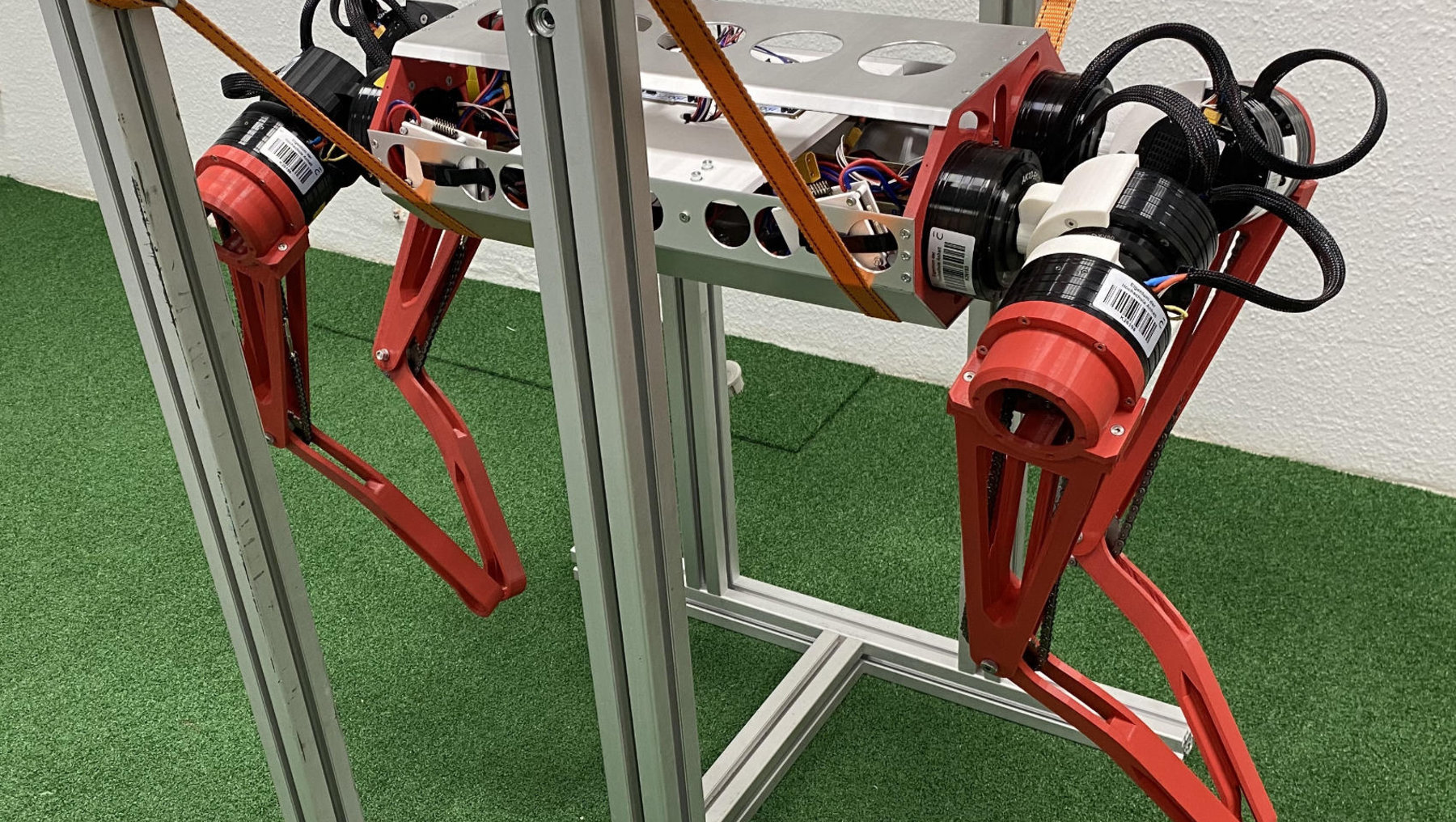 © Twieg, Mangatter
-
 © Twieg, Mangatter
Engineers want to develop technical solutions that can be put into practice and then used - with this in mind, students are developing a robot dog!
Under the leadership of Prof. Twieg, a number of students are working on a joint project to develop a robot platform for use in teaching and research. Various issues, particularly in robotics, but also from related areas of knowledge and expertise (such as automation, control technology, design and programming) are to be addressed and illustrated. Together, the students have considered that a robot dog would be particularly good for such a complex undertaking because it is very versatile. For example, it could also overcome obstacles when carrying out programmed tasks, which a wheel-driven robot would fail to do. Everything the students need to complete the robot is available on campus, from the 3D printer to the electronics workshop and the mechanical workshop.
After brainstorming and creating the concept for the robot dog, the next step was to divide it into work packages - just like a research project. Different students work on different topics such as design, simulation, control, sensor technology and others.
Student Dave Mangatter worked with great dedication on the electronics for the robot dog as part of his bachelor's thesis. Using the STM32 Nucleo board as a lower-level controller, Mr. Mangatter developed firmware based on the C programming language to control the motors. The dog has three servomotors per leg, which ultimately make it capable of movement and are controlled via a higher-level controller. The communication between the individual components of the electronic system and the motors had to be planned, designed and ensured via suitable libraries and communication protocols. From the voltage source and cable management to the sensible implementation of the hardware, including the data exchange between the components, Mr Mangatter selected and tested all parts independently and implemented his plans.
After successfully completing his bachelor's thesis, Mr Mangatter is continuing his studies in the Electrical and Computer Engineering master's degree program.
And there is more to come for the robot dog: students can work on it within their project modules and as part of their final theses.
And once the robot dog is finished, it can be used to derive and investigate various applications and suitability scenarios relevant to industry and science, for example in the areas of healthcare, exploration and cooperative working.

