cGTF - Curved GlassTimberFurniture
| Project sponsor: | AiF Projekt GmbH, Berlin |
| Funding: | Federal Ministry for Economics and Energy, Berlin |
| Duration: | 2023-2025 |
| Project partners: | Glaswerkstätten Frank Ahne GmbH, Pirna and Geilert GmbH, Leisnig |
| Project manager: | Prof. Dr.-Ing. Stefan Reich |
| Project assistant: | Sagar Vanapalli, MSc. |
This is a follow-up project based on the Glass Timber Furniture (GTF) project. In GTF, furniture is developed for use in the healthcare sector that combines a sterile glass surface with the high-quality appearance of real wood. However, it was only implemented on flat surfaces. In this project cGTF, this technique of laminating glass to wood is extended to curved surfaces. Cold and hot bent glass will be tested in this project.
Window ventilation with integrated latent heat recovery
| Project sponsor: | AiF Projekt GmbH, Berlin |
| Funding: | Federal Ministry for Economics and Energy, Berlin |
| Duration: | 2020-2023 |
| Project partner: | U.P.R. Hamel & Specking Fensterbau OHG, Naumburg |
| Project manager: | Prof. Dr.-Ing. Stefan Reich |
| Project assistant: | Alifa Naasan, MSc. |
The domestic ventilation standard DIN 1946-6 regulates the requirements for the ventilation of living spaces in order to limit CO2 content and humidity. In implementation, this is to be achieved either by window ventilation to be carried out by the user in the form of several bursts of ventilation over 24 hours per week per semester or by a user-independent ventilation system.
For user-independent ventilation systems, fan-assisted controlled ventilation systems with heat recovery are widely used and are generally the standard solution for new construction projects.
Decentralized ventilation systems, e.g. in the form of automatically operating window ventilation systems, are another option for new builds and refurbishments in particular. Such systems do not require any structural changes, effectively dampen outside noise and have low power consumption. There is considerable potential for optimization in terms of heat recovery and temperature stability of the incoming air, power consumption and sound insulation. In this project, a new innovative window ventilation system was tested, which is characterized by a controllable ventilation system with latent heat recovery integrated into the window frame. The decentralized design enables modern, user-independent ventilation without major structural measures, particularly for existing buildings in the course of façade and window renovations. Favorable values for power consumption, noise emissions and additional functions such as cross ventilation or alarm signaling in the event of a break-in supplement the performance parameters.
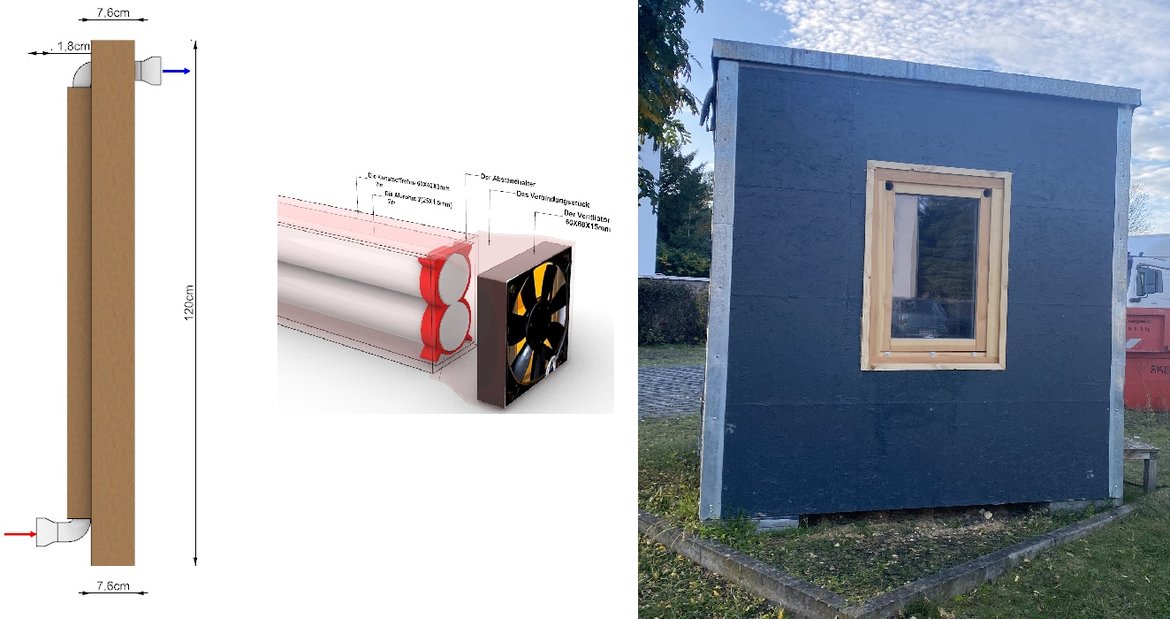 © BERG
GTF - GlassTimberFurniture
| Project sponsor: | AiF Projekt GmbH, Berlin |
| Funding: | Federal Ministry for Economics and Energy, Berlin |
| Duration: | 2020-2023 |
| Project partners: | Glaswerkstätten Frank Ahne GmbH, Pirna and Geilert GmbH, Leisnig |
| Project manager: | Prof. Dr.-Ing. Stefan Reich |
| Project manager: | Sagar Vanapalli, MSc. |
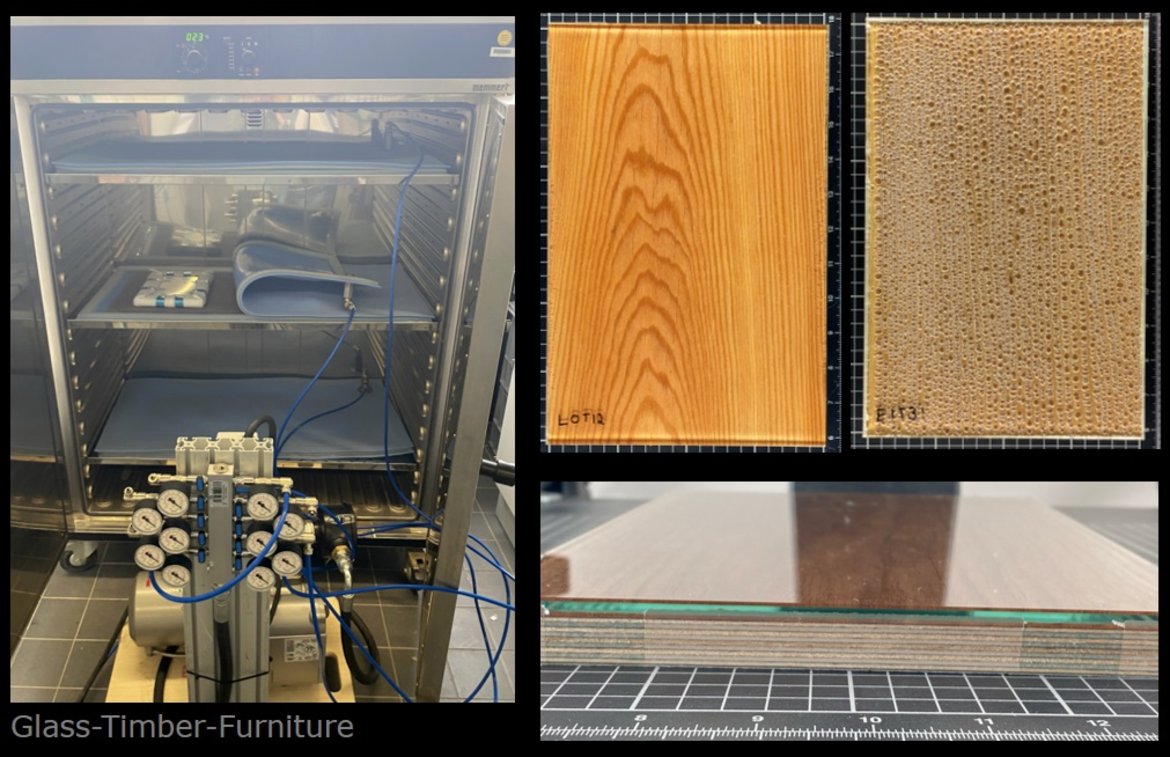
Hygiene and sterility are of paramount importance in the healthcare and welfare sectors. All surfaces must be impermeable to water, easy to clean and resistant to the disinfectants and chemicals used. As a result, only ceramic, metal or plastic surfaces are used in furniture and work surfaces. On the other hand, there is a strong desire to design prestigious public areas with modern, high-quality furnishings, using real wood for furniture, counters or cladding instead of plastic-coated panels. the overarching aim of the project is to combine the visual effect of fine, high-quality wood materials with the hygienic requirements of the health and welfare sector by developing appropriate furniture systems. the project aims to develop concepts and furniture systems in which real wood is laminated with a thin glass surface (approx. 2 mm). The resulting spatial laminates around solid wood combine chemical resistance with a high-quality wood look.
 © BERG
AkkustiFLEX
| Project sponsor: | AiF Projekt GmbH, Berlin |
| Funding: | Federal Ministry for Economics and Energy, Berlin |
| Duration: | 2018-2020 |
| Project partner: | Stegmaier Textile Solutions GmbH, Schemmerhofen |
| Project manager: | Prof. Dr.-Ing. Stefan Reich |
| Project assistant: | Dipl.-Ing. Henning Dürr |
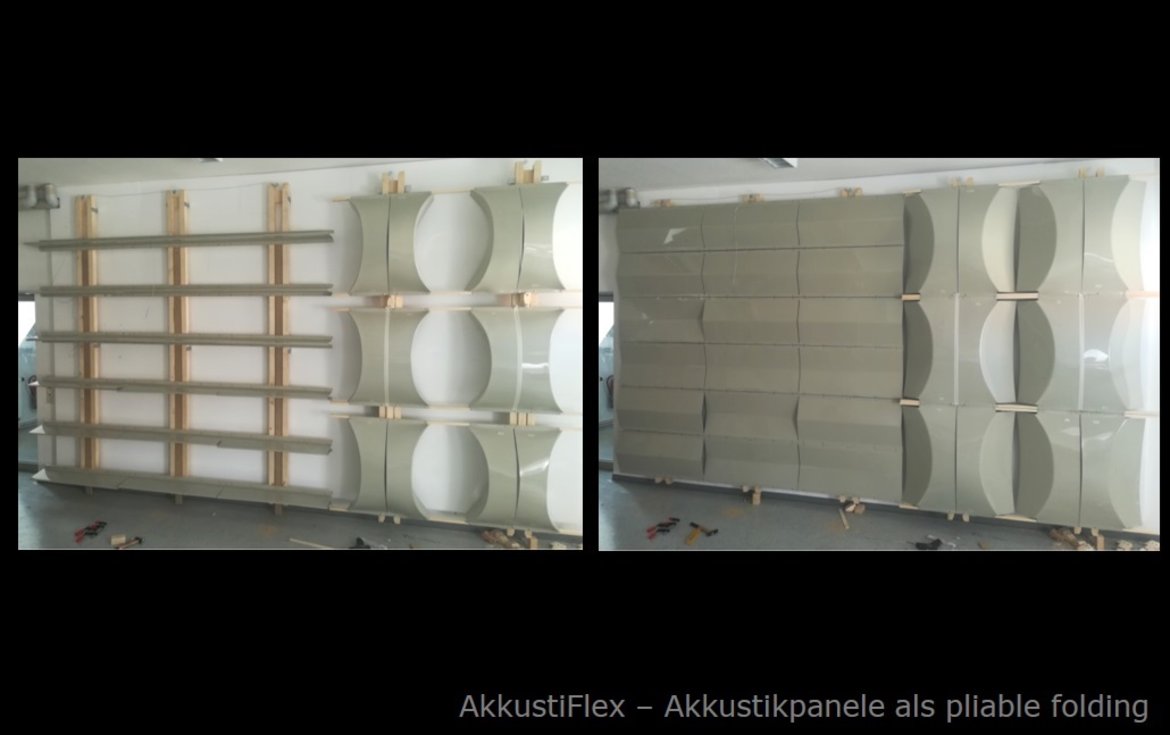
The need to develop adaptable components is of great importance in times of resource conservation and adaptation to different framework conditions. In the research project, a "bendable" acoustic panel is to be developed for different user scenarios, which can change its shape and function according to user requirements. Various acoustic principles of the panel are to be addressed (reflection, diffusion and absorption). By changing the panel geometry, it is possible to create different room acoustics.
The changeability of the panels is to be ensured by a special actuator. This actuator is integrated in the joint. It drives the folding movement/panel bending around an elastic, curved joint axis.
The fundamental work on the variety of shapes and geometric dependencies of the bending-folding surface is based on the results of the research project "Development of a process for the production and installation of bending-folding, space-enclosing surface modules made of flat plastic semi-finished products".
 © BERG
smartPV-Control - Validation of the application possibilities of shape memory materials in the field of photovoltaic module tracking of building-integrated photovoltaics (BIPV)
| Funding: | Land Saxony-Anhalt, Ministry of Agriculture, Environment and Energy, Berlin |
| Duration: | 2018-2020 |
| Project manager: | Prof. Dr.-Ing. Stefan Reich |
| Project assistant: | Lukas Guffler, BA |
The fulfillment of the energy saving targets promised by the German government as part of the last climate agreement requires a continuous increase in the proportion of renewable energies.
One path currently being pursued is the construction of new and the modernization of existing wind and photovoltaic systems (PV systems). The use of PV in outdoor areas is increasingly being supplemented by its use in the building envelope (BIPV). In addition to increasing the module surface area, increasing the efficiency is making a significant contribution to increased electricity generation from photovoltaics.
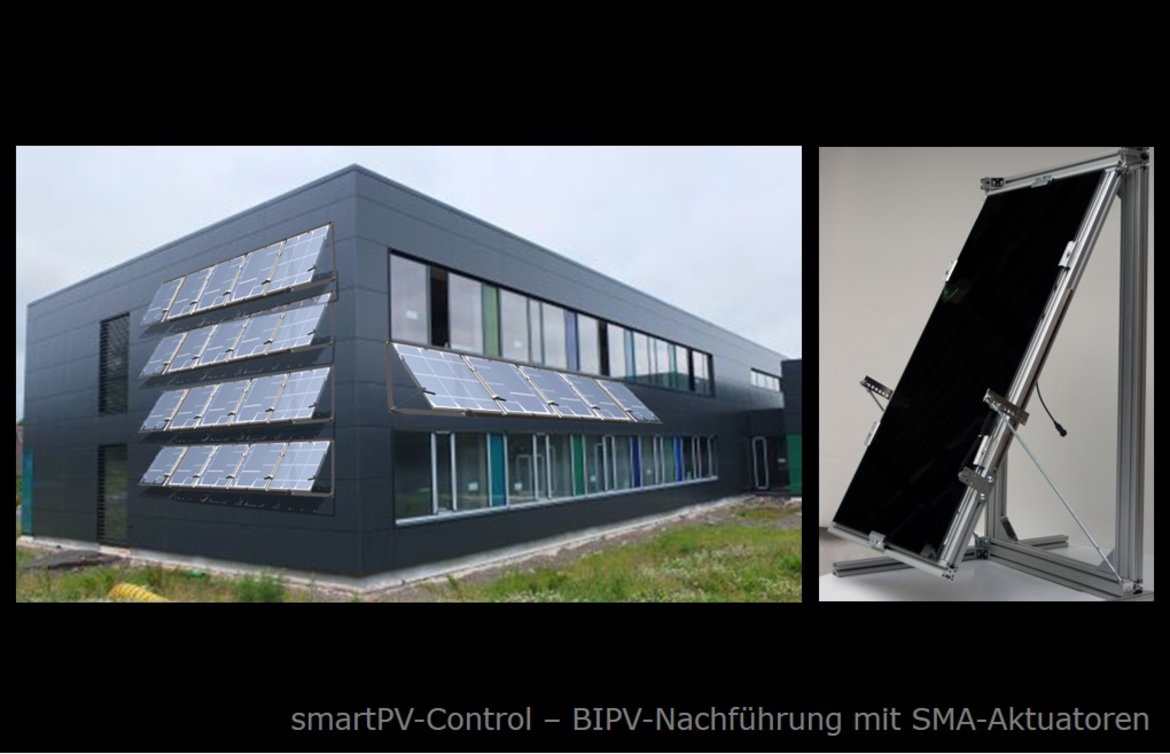
In the operation of photovoltaic systems, a key optimization point is the alignment of the photovoltaic cell to the position of the sun. As part of the funding applied for, the potential of shape memory alloys (shape memory materials) for use as a tracking system for building-integrated PV modules is to be investigated.
The SMA should align the PV modules to the position of the sun by electrical or thermal response. The use of SMA makes it possible to track PV modules on façades (e.g. vertical PV modules or slats), which can significantly increase the energy efficiency of these PV façades.
 © BERG
smartVENT - self-sufficient ventilation, weather protection and sun shading system
| Project sponsor: | AiF Projekt GmbH, Berlin |
| Funding: | Federal Ministry for Economics and Energy, Berlin |
| Duration: | 2017-2020 |
| Project partner: | MLL-Lamellensysteme GmbH, Hamburg |
| Project manager: | Prof. Dr.-Ing. Stefan Reich |
| Project assistant: | Sagar Vanapalli, MSc |
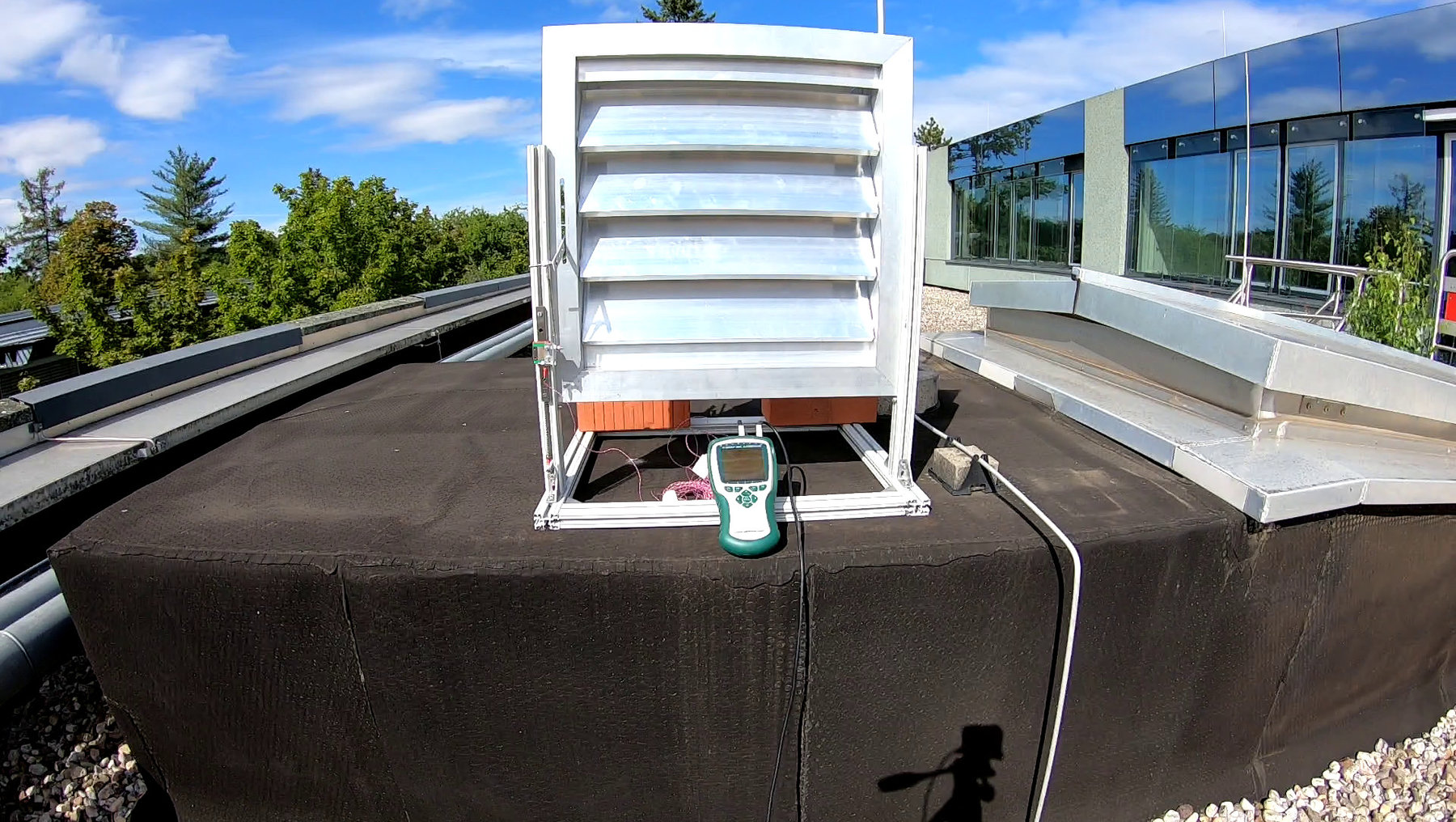
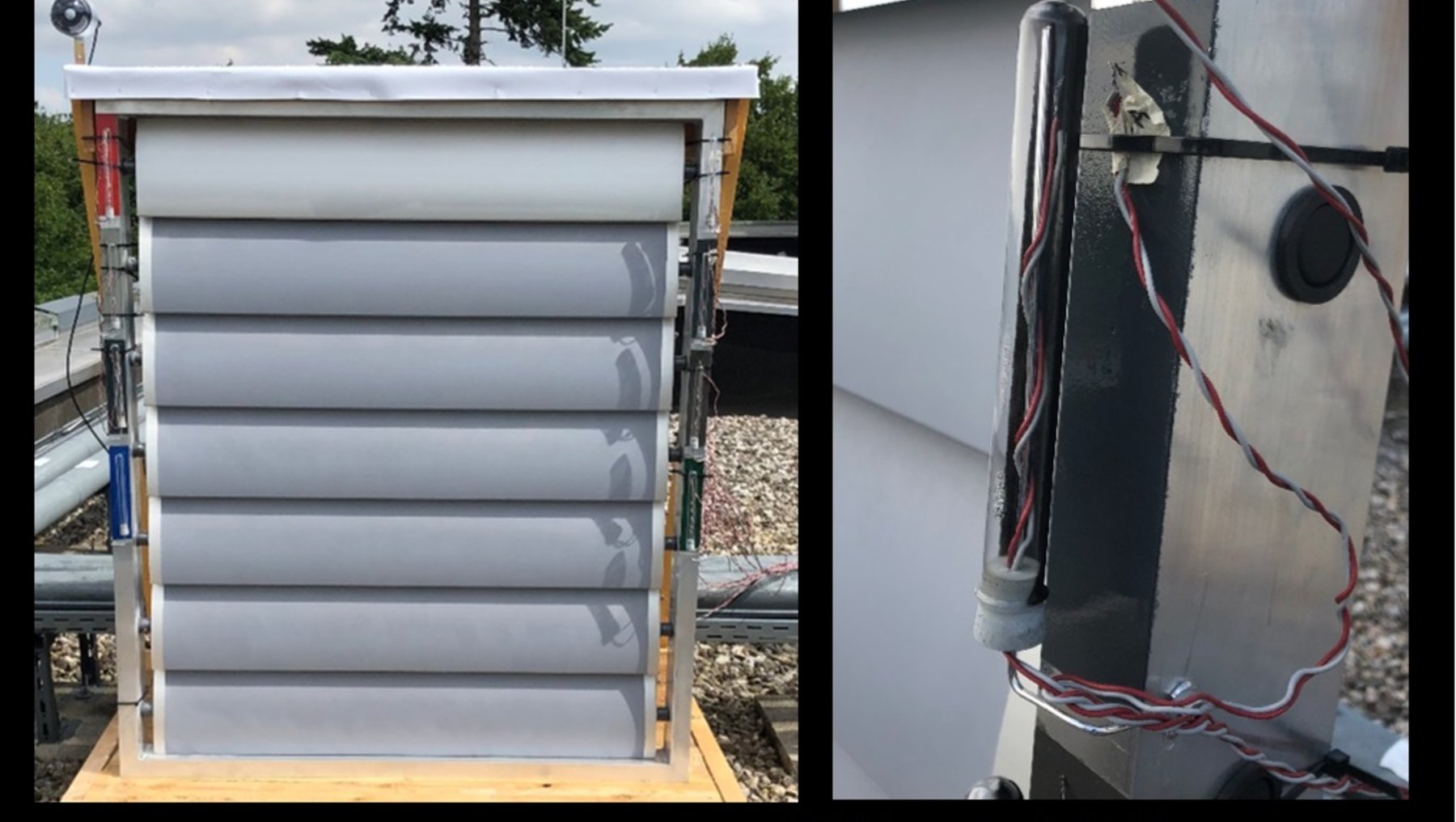
The aim of the project is to combine the advantages of natural ventilation with the benefits of mechanical ventilation. In addition to the development of ventilation systems, solar shading systems are also to be developed that lead to the optimization of shading surfaces through the independent rotation of the slats. Promising areas of application are the night cooling of buildings and external sun protection to reduce indoor temperatures without installing air conditioning technology.
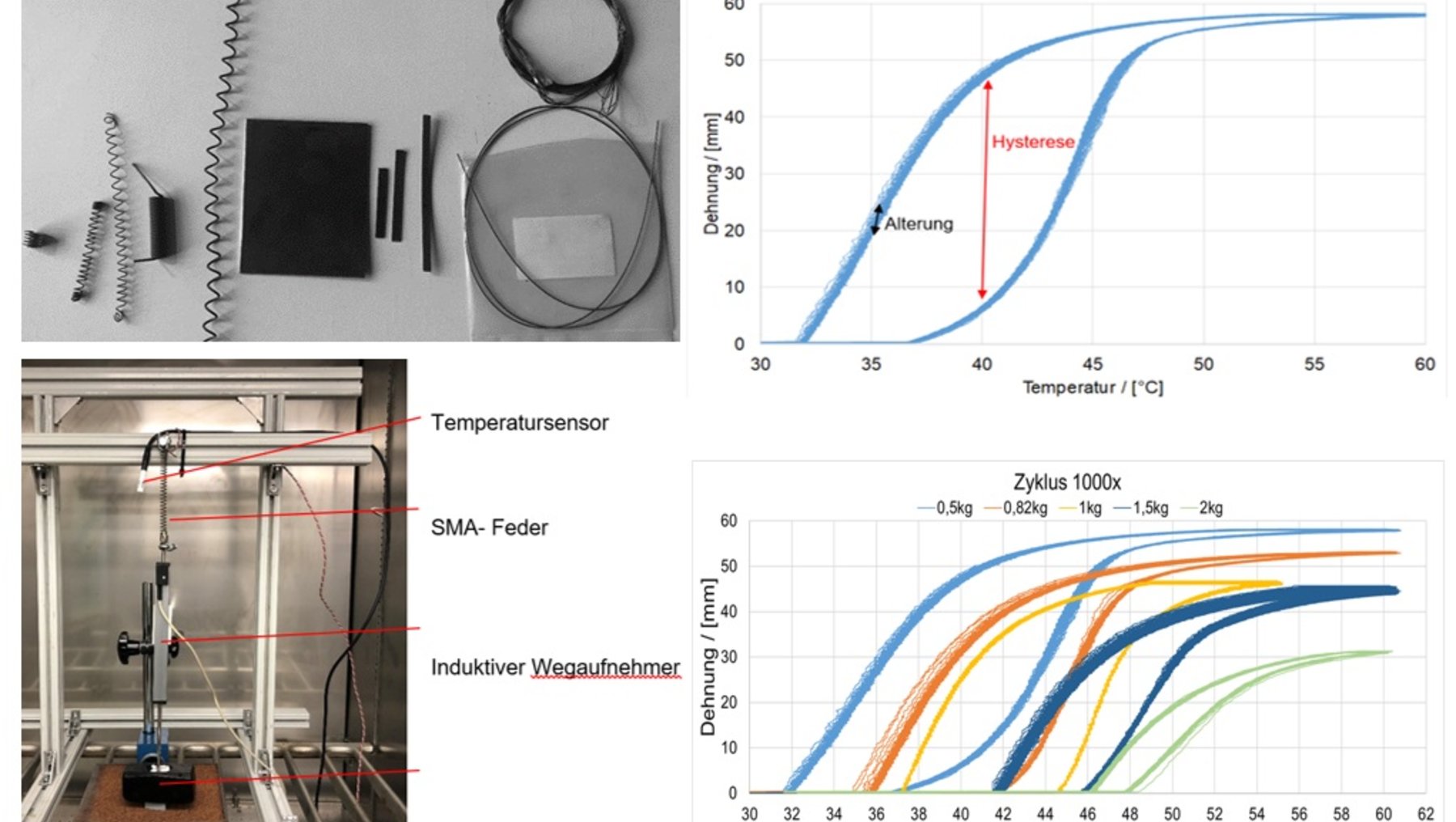
At the heart of the systems are energy self-sufficient actuators based on shape memory materials, whose temperature-dependent changes in stiffness are used to activate adjustment paths.
The developed ventilation, weather protection and sun protection elements regulate the physical building parameters such as air exchange or transmission/reflection using preset trigger variables, independently of manual or motorized control. The resulting components open and close independently despite not requiring a controller or motor drive and, as a unique selling point, allow the integration of a ventilation or sun shading automation system far below the other costs for a controller and motor-driven regulation system.
-
 © BERG
-
 © BERG
-
 © BERG
Climate-active house wall module
| Project sponsor: | AiF Projekt GmbH, Berlin |
| Funding: | Federal Ministry for Economics and Energy, Berlin |
| Duration: | 2018-2020 |
| Project partner: | Stein - Heizung-Sanitär-Lüftung GmbH, Querfurt |
| Project manager: | Prof. Dr.-Ing. Stefan Reich |
| Project assistant: | Julia Krüger, MA |
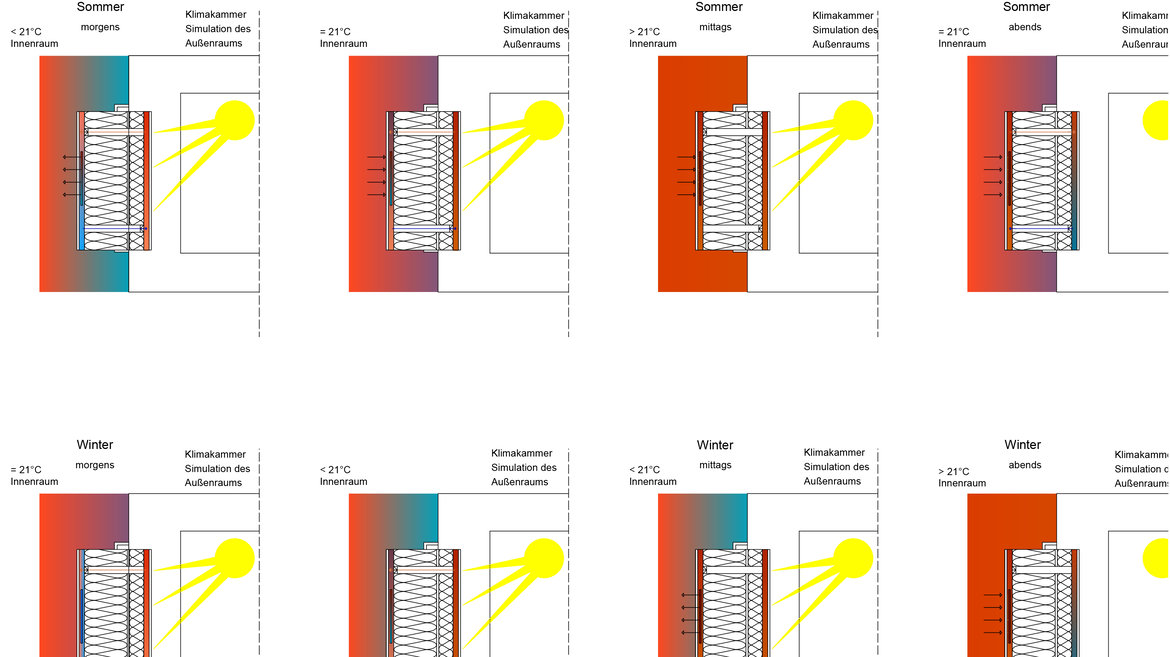
The new house wall module with latent storage functionality compensates for previous disadvantages of prefabricated house construction and opens up new possibilities for actively using the storage capacity of PCM modules to compensate for temperature fluctuations.
Thanks to the controllable air circulation in the climate wall, radiant energy from the sun can be directed from the outside of the house to the inside if required and used directly for heating or for intermediate storage. In summer, excess room energy can be temporarily stored during the day to reduce temperature peaks and then conducted outside and released at night. For this purpose, air-conducting layers are provided behind the exterior and interior wall cladding in the triple-skin wall construction.
Separately controllable heating pipes in the inner cavity are used as wall heating according to the hypocaust principle, eliminating the need for underfloor heating. The result is an innovative external wall module for prefabricated houses with active climate control properties and integrated wall heating at the price of comparable prefabricated house constructions.
 © HS Anhalt
Laminated safety glass with phosphorescent signs
| Project sponsor: | AiF Projekt GmbH, Berlin |
| Funding: | Federal Ministry for Economics and Energy, Berlin |
| Duration: | 2015-2018 |
| Project partner: | Glaswerkstätten Frank Ahne GmbH, Pirna |
| Project manager: | Prof. Dr.-Ing. Stefan Reich |
| Project assistant: | Dipl.-Ing. Shawn Ives |
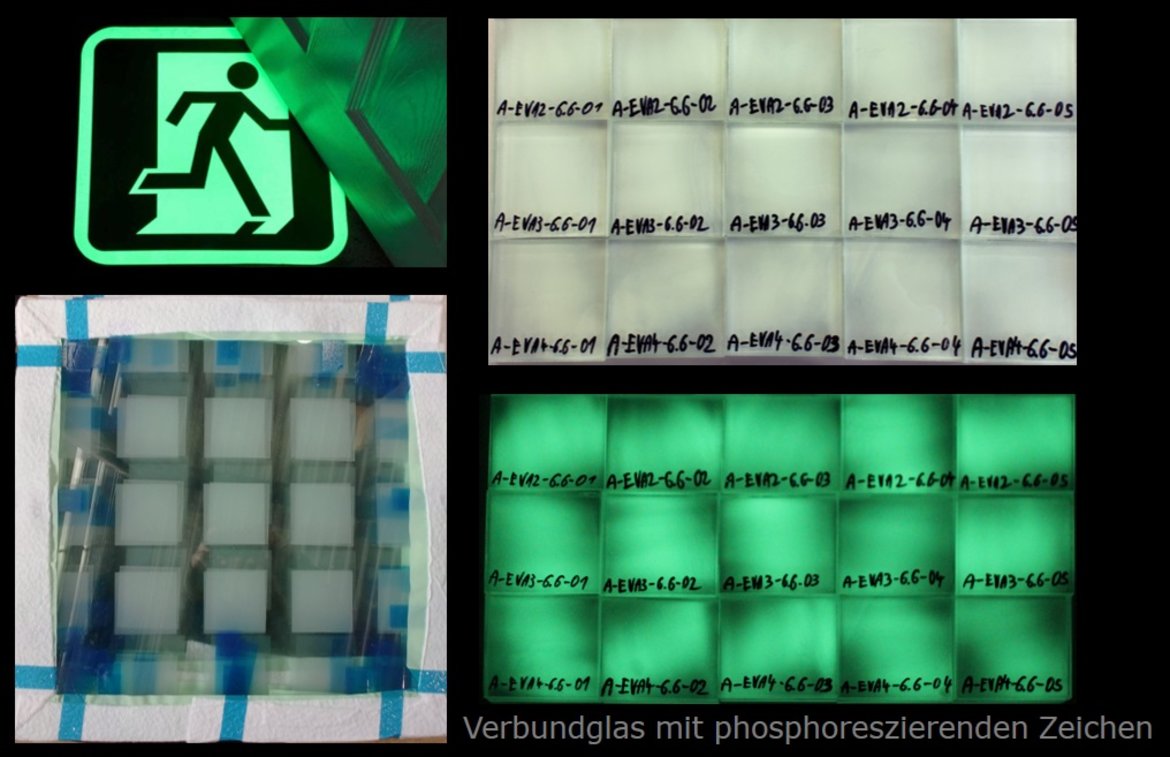
The topic of the research project is the development of self-luminous glass surfaces. These are used for emergency lighting or information displays that are integrated into visually high-quality and hygienic surfaces. Luminous colors in the dark with simultaneous invisibility in daylight significantly increase the potential for use and the variety of applications.
Our research approach is based on EVA composite laminates with phosphorescent colors integrated into the film layer. The application of the phosphorescent colors, the optical quality and durability of the laminate are the focus of our research.
Applications in the building envelope require mechanical properties that are comparable to laminated safety glass. The properties of the laminate are optimized for use in the building envelope by means of standardized test procedures in accordance with building regulations.
 © BERG
