Professional Training Center (PTC) Bambi – Vocational training for young people in Central Unguja, Zanzibar
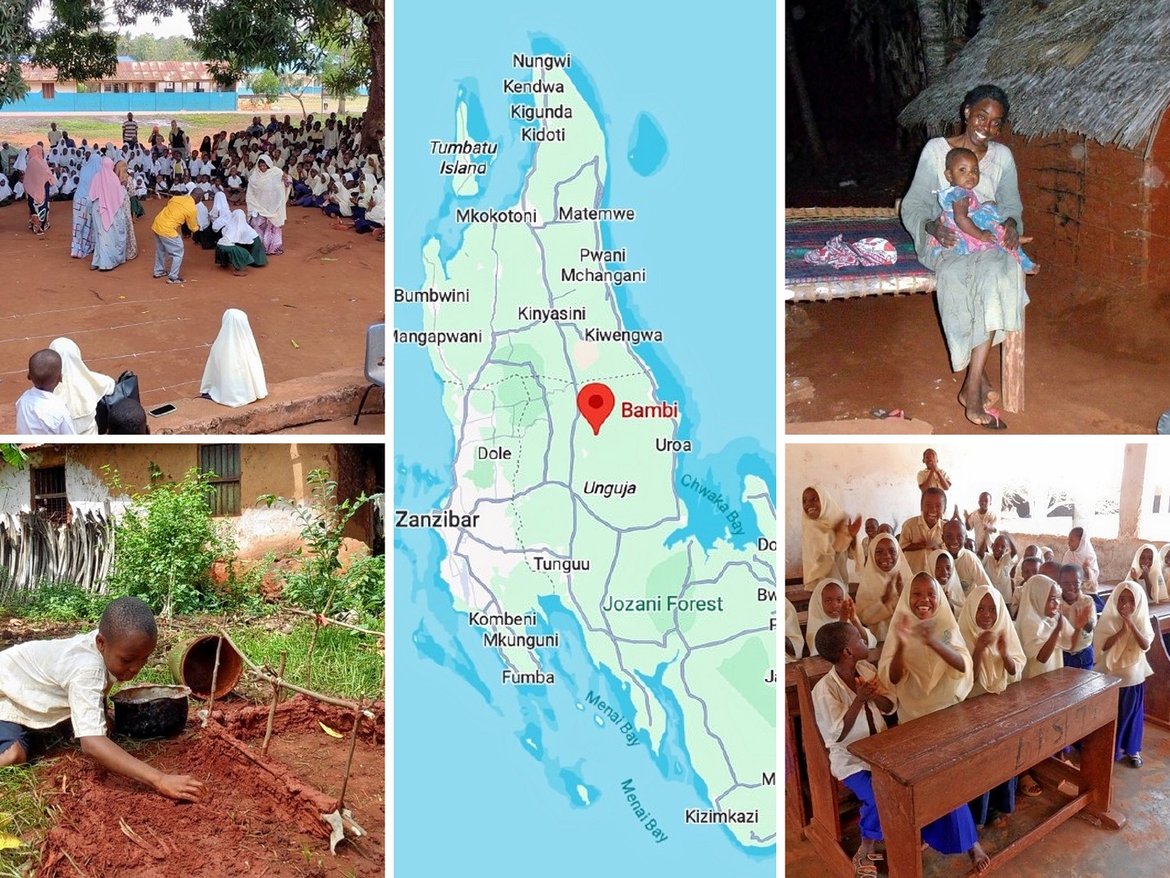 © Hochschule Anhalt
Designing, Building, Taking Responsibility
This project offers you the opportunity to become part of an international design‑build and development project in the heart of Zanzibar Island (District Unguja, Zanzibar, Tanzania). In the community of Bambi, a solid educational infrastructure already exists, including kindergartens as well as a primary and secondary school. What is still missing, however, is the crucial next step: clear vocational perspectives for young people after completing school.
This is exactly where the project begins. Together with local stakeholders—including the Village Development Committee, youth initiatives, and experienced partners in development cooperation—we are working to establish a Professional Training Center (PTC). The aim is to equip young people with practice‑oriented vocational skills that enable them to generate their own income, become self‑employed, or start a small business. The training center is conceived as a meaningful extension of the existing educational landscape and as a long‑term driver of the social and economic development of the community.
For students, the project offers an exceptional learning environment in which design, construction, organization, education, and social responsibility are closely intertwined. The starting point is an in‑depth engagement with the local context: climate, resources, building culture, social structures, and the needs of the people. Step by step, this leads to the development of a spatial, functional, and organizational overall concept for the training center—going far beyond the design of a single building.
A key focus lies on simple, climate‑responsive, and robust construction methods that can be realized using locally available materials. European standards are critically questioned, while local building practices are taken seriously and further developed. Sustainability here does not only mean ecological construction, but also low maintenance requirements, long‑term usability, and genuine local ownership.
The project is designed as a multi‑stage process: from analysis and concept development to design and detailed planning, and potentially to on‑site implementation. Work is carried out in interdisciplinary teams, in close collaboration with local partners. Workshops, expert inputs, and joint reflection formats accompany the process and open up new perspectives on architecture, global learning, and international cooperation.
The project is open to all students, regardless of discipline or previous experience, who are interested in engaging with a new context and working together on a real‑world task with social relevance. What is required are curiosity, commitment, openness, and team spirit—as well as a willingness to take responsibility and to broaden one’s professional perspective.
Anyone who wants not only to design architecture, but to apply it in a meaningful and impactful way—at the intersection of design, technology, social engagement, and global learning—will find in Project Bambi the opportunity to actively contribute to a sustainable future.
More information
 © Hochschule Anhalt
Design Studio WS 2026/27
Prof. Dr. Claus Dießenbacher
M.A. Michael Bieler
WiSe 26-27
Feasibility Study
SoSe 27
Design Development
WiSe 27-28
Construction Planning
SoSe 28
Construction management and preparation
Semester break 2028
Project Implementation on Site
Taking part in this international designbuild project means actively shaping real change – and it therefore calls for a strong level of personal commitment.
Participants are invited to take responsibility not only for the shared experience on site in Tanzania/Zanzibar, but also for the journey leading there.
Travel and accommodation costs during the implementation phase are to be covered individually; however, a range of support options may be available, such as applications through the Academic International Office, international scholarships, or collaborative student‑led fundraising within the project team. In addition, adequate resources should be planned for the design and preparation phase of the construction project, ensuring a solid foundation for a successful and sustainable realization.
What you gain in return is the opportunity to work intensively as part of an international team, engage directly with local partners, and contribute to a project that creates long‑term impact beyond the academic context.
