Bauhaus City in the Garden Kingdom
Dessau is home to the historic Bauhaus, the "cradle of modernity". The historical location’s magic can still be felt today - both in the artistic Masters’ Houses and the historical Mensa (cafeteria). The relaxed atmosphere, the inspiring dialogues with professors, and the short distances to travel - students are almost unanimous in their praise for the campus in Dessau.
The Departments of Architecture, Facility Management and Geoinformation and Design are located right next to the legendary Bauhaus. The modern study conditions impress the approximately 1,800 students, who are supervised by 47 professors. In nine professional workshops: Digital Workshop, Sculpture Workshop, SpaceLab, Wood Workshop, Photography Workshop, Video Workshop, Graphics Workshop, Metal Workshop, TimeLab, study projects are worked on and implemented, prototypes and models are designed and built. Afterwards, it's off to the cozy café on campus. And the city center is just a stone's throw away.
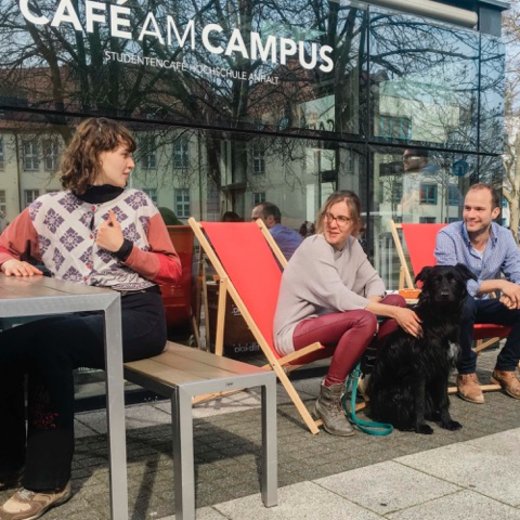 © Dokuteam | Henry Mertens
Dessau is associated with the historic Bauhaus far beyond Germany's borders. The "cradle of modernism" and the Dessau-Wörlitz Garden Kingdom are magnets for visitors from all over the world. Modern housing estates, innovative design, experimental art, technical innovations, reformed schools - accompanied by a rapidly growing industry, there was an enormous spirit of optimism in the region of today's Saxony-Anhalt after the First World War, despite all the political and Economics instability. At that time, a dynamic developed that catapulted the region into political, cultural and artistic modernity. Today's students are building on this dynamic period: Students have turned an old, empty school into a place where anyone can try out their ideas. There is space for start-ups, coworkers and joint projects.
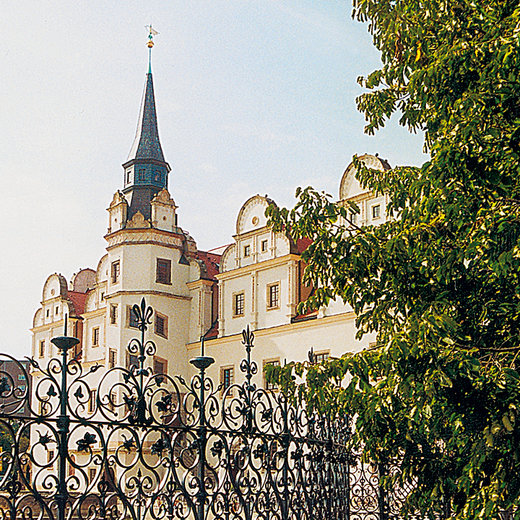 © Stadtarchiv-Dessau-Roßlau
Dessau is the city with which the Bauhaus is most closely associated. Founded in Weimar in 1919 by Walter Gropius, it was here that the school was active for the longest and experienced its heyday between 1925 and 1932. And it was there that almost all the Bauhaus buildings that are now icons of 20th century Architecture were created. Openness and curiosity were the most important guiding principles at the time. Anyone who came to Dessau was prepared to abandon established knowledge and learn to think anew. The same applies today.
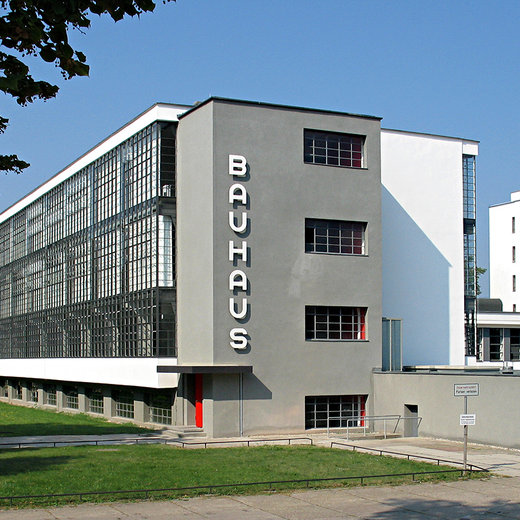 © Martin Brück 2005
Anyone coming to Dessau in the 21st century will experience a city in upheaval. Demographic change is palpable, empty buildings in the city center are waiting for a creative use, cuts in the cultural budget are part of the truth. These are challenges that Campus Dessau is also facing. Together with educational and cultural institutions such as the Bauhaus Dessau Foundation and the Anhaltisches Theater, Anhalt University of Applied Sciences is committed to the future of the region. Campus Dessau and the city of Dessau are both a field for experimentation and development. The aim is to shape the future together.
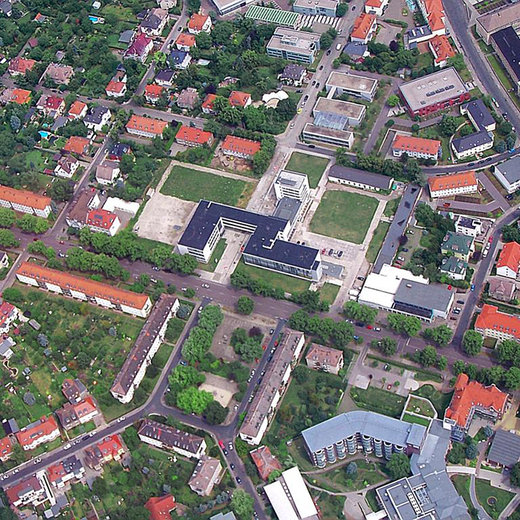 © Luftbild Dessau
Information from the Studentenwerk Halle and on the general accommodation on offer in Dessau
learn moreInformation on the wide range of leisure activities in Dessau and the surrounding area
learn moreInformation on student jobs at the university, job offers from external companies and current offers from the Continuing Education Center (WZA)
learn moreOnly perfect harmony in the technical function as well as in the proportions of the forms can produce beauty.
Walter Gropius (1955 in: Architecture)

