Erasmus Blended Intensive Programmes (BIP)
Im Rahmen der neuen Erasmus Programmgeneration fördert die Europäische Union Blended Intensive Programmes (BIP).
Hierbei werden kurze, intensive Lehr-Aktivitäten und Mobilitätscurricula entwickelt, die durch das Erasmusprogramm eine finanzielle Unterstützung erhalten können. Gefördert werden kurze, physische Gruppenmobilitäten mit einer Dauer von 5 bis 30 Tagen, kombiniert mit einer virtuellen Phase nicht definierter Dauer.
Dies können zum Beispiel Blockveranstaltungen, Sommerschulen, aber auch andere Veranstaltungen sein. An die Veranstaltung muss sich eine virtuelle Phase anschließen oder vorgeschaltet sein.
Voraussetzung für eine Teilnahme sind mindestens 3 Hochschulen/Universitäten aus EU-Programmländern (also die Hochschule Anhalt und mind. zwei weitere Hochschulen aus EU-Staaten oder an Erasmus teilnehmenden Ländern wie z.B. Albanien, Kosovo, Norwegen oder die Türkei).
Mindestteilnehmerzahl: 15 Studierende und/oder Hochschulmitarbeiter/innen (e.g. 5 Teilnehmende der HSA und je 5 Teilnehmende der anderen Hochschulen)
Im Rahmen der BIP müssen mindestens 3 ECTS vergeben werden.
Förderumfang der BIPs sind (Stand 01.12.2020) Reisekostenzuschüsse für die Teilnehmer/innen (gemäß EU-Vorgabe) - getrennt nach Stückkosten bzw. Tagessätzen für Studierende und Personal.
BIP werden zentral vom International Office bei der NA DAAD beantragt. Die Programmkoordination übernimmt dann der/die Organisator/in des BIP.
Damit ein BIP beantragt werden kann, bittet das International Office um Interessensbekundungen inkl. einer Kurzbeschreibung des geplanten Programms und Zeitpunktes. Wenden Sie sich hierzu bitte an das International Office.
 © Erasmus EU Emblem

 © DAAD
Blended Intensive Programs:
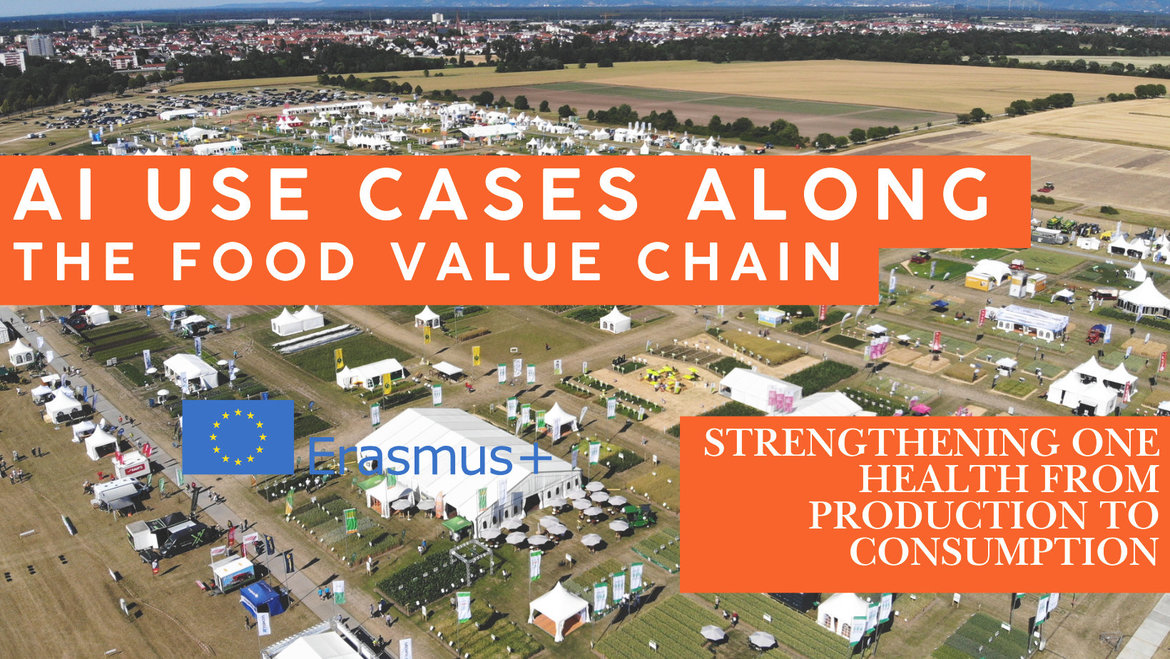
AI Use Cases along the Food Value Chain
16. - 18. June 2026
FIRST FUTURE SCHOOL
Future School in combination Erasmus Blended Intensive Programme by Erasmus+ organized by
- Germany: Hochschule Anhalt - coordinator/receiving institution
partner/sending institutions:
- Netherlands: Aeres University of Applied Sciences
- Lithuania: Vilnius University of Applied Sciences
- Poland: Akademia Humanitas University
Staff/Teachers/Professors delivering the program:
Location
Internationales Pflanzenbauzentrum
Am Gutshof 3
06406 Bernburg-Strenzfeld
https://www.dlg-feldtage.de/de/
Objectives and Description
Future School is a BIP (Blended Intensive Programme) Erasmus+ lead by Hochschule Anhalt - Unviersity of Applied Sciences. The Future School program is organized in three phases: an online preparation, an on-site intensive week in Bernburg-Strenzfeld, and an online analysis and presentation phase.
The central objective of the First Future School @ ONE THRIVE is to analyse and evaluate AI-enabled solutions along the entire food value chain, from primary production and processing to logistics, markets, and end consumers, through the lens of the One Health approach. Particular emphasis is placed on understanding how AI applications can simultaneously support human, animal, and environmental health while remaining economically viable and socially acceptable. Furthermore, the Future School aims to highlight how the One Health framework brings together fragmented interdisciplinary and transdisciplinary fields into one integrated pipeline, enabling a more holistic and impactdriven approach to innovation in the agri-food sector.
The Future School follows a three-phase structure. In the first phase, conducted through four interactive, virtual, online sessions in April and May, participants build a shared conceptual foundation in Artificial Intelligence, agri-food systems, and the One Health framework, complemented by training in qualitative research methods, stakeholder mapping, and interview design. The second phase consists of an intensive on-site week in Bernburg, planned to be aligned with the DLG Field Days (16–18 June 2026), one of Europe’s leading agricultural field exhibitions. This setting provides a real-world learning and research environment in which participants can engage directly with technology providers, agricultural practitioners, industry representatives and other stakeholders along the food value chain. During this phase, students attend impulse presentations by scientists and industry experts, observe innovative technologies and AI-related applications in practice, and can conduct guided field visits as well as semi-structured interviews with exhibiting companies and stakeholders. The DLG Field Days thus serve as the empirical foundation for the analysis of AI use cases, current challenges, bottlenecks and solution approaches within food and agricultural systems. In the third phase, the collected empirical material is systematically analysed and synthesised. Students develop structured AI use-case profiles and assess them from a One Health and sustainability perspective, reflecting on economic, societal, and market implication
Future School will offer a platform for research & collaboration to 35-40 students working in international teams formed during the preparative virtual phase.
The program will be structured into 3 main sections: Online interactive sessions [20h], On—site intensive week [40h], Online Analysis and presentation [40h]
ON—LINE interactive sessions
The program provides 4 interactive online sessions (4 × 90 minutes) to build shared conceptual and methodological foundation.
During the 4 online sessions the students of the universities will understand:
- Introduction to Artificial Intelligence and AI use cases along the food value chain
- One Health perspective: linking human, animal, and ecosystem health
- Ethical, social, and regulatory aspects of AI in agri-food systems
- Methods for qualitative research: stakeholder mapping and interview techniques
- Preparation of fieldwork: formulation of research questions and interview guides
Session 1: AI in Agri-Food, Unlocking the Future. 08.05.2026, 14:00 - 15:30
Speaker: Prof. Dr. Uwe Knauer.
Goal: this session will focus on AI Application in the plant production
Session 2: Healthy Planet, Healthy People: The One Health Framework. 22.05.2026, 14:00 - 15:30
Speakers: Prof. Dr. Tim Reuter (One Health Framework), Prof. Dr. Monika Brückner-Gühmann (Food Processing)
Goal: This session will focus on the relationship between food systems, sustainability, ethics, and health within the One Health perspective.
Session 3: Responsible AI – Governance, ethics, and sustainability. 29.05.2026, 14:00 - 15:30
Speakers: Prof. Dr. Sebastian Volkmann (Legal Frameworks); Adrian Schröder (AI Applications)
Goal: This session will build directly on the challenges identified in Sessions 1 and 2 and focus on how AI must be governed responsibly.
Session 4: Qualitative Research Methods and Field Research Preparation. 05.06.2026, 14:00 - 15:30
Speakers: Prof. Dr. Markus Meyer (best praxis - Project MeineWaldKI); Prof. Dr. Christiane Naumann (Qualitative Research Methods and Field Research)
Goal: This session should prepare students for fieldwork by giving them practical tools for structured qualitative research. The pilot Project “MeineWald KI” as KI application for enhancing sustainability,
Here is about attending lectures by teachers and experts, while obtain information and instructions to develop the onsites activities, present ideas and work together.
ON—SITE WORKSHOPS 40 hours of on—site activities
The on—site field Days will be held in 3 days of full—time experience in Bernburg-Strenzfeld (Germany) [16-18 June].
The workshops and activities include:
- Guided visits to Bernburg city
- Impulse presentations by scientists and industry experts on AI and digital innovation in agriculture
- Practitioner inputs on current challenges and real-world applications
- Field visits at the DLG Field Days (16–18 June 2026)
- Guided Interviews
- Small interdisciplinary student teams (2–3 persons) focusing on different segments of the food value chain
- Documentation and first synthesis of AI use cases and problem-solution patterns
ON—LINE Analysis & Presentations
Analysis and Presentations
- Systematic analysis of collected interview and field data
- Development of structured AI use-case profiles
- Assessment from a One Health and sustainability perspective
- Reflection on economic, societal, and market implications
- Final scientific-style presentations and discussion of findings
- Identification of future research, innovation, and policy implications
Methods and Outcome
The expected outcomes include enhanced student competencies in interdisciplinary analysis, a portfolio of validated AI use cases assessed from a One Health perspective, strengthened links between science and practice, and strategic knowledge on market acceptance and consumer value perception of AI-enabled food solutions. Successful participation will be accredited with 3 ECTS.
virtual component May 8, 22, 29, and June 5th 2026
Key dates
08.05.2026 – 1st online meeting
22.05.2026 – 2nd online meeting
29.05.2026 – 3d online meeting
05.06.2026 – 4th online meeting
Erasmus paperwork
All participants must register with their International Offices.
Erasmus paperwork:
1. Learning Agreement (LA):
All participants from our Partner Universities must sign an online learnign agreement (OLA) before the BIP workshop starts. Key data:
- Receiving Institution: Hochschule Anhalt - University of Applied Sciences
- Erasmus Code: D KOTHEN01
- ISCED-F Code: 0311/0410 Economics; 0510/0520 Biological and related sciences/environment not further defined
- responsible person at receiving institution: Prof. Dr. Elena Kashtanova - Elena.Kashtanova@hs-anhalt.de; Prof. Dr. Christiane Naumann - Christiane.Naumann@hs-anhalt.de;
- administrative contact at receiving institution: Christian Lippold; erasmus@hs-anhalt.de, +49 3496 67 5115
- Module title (Table A and B): "Future School"
- ECTS: 3/5
2. Grant Agreement (GA):
If you receive a financial support from your home University, your home University will provide you with an Erasmus scholarship agreement (GA). Make sure to sign it before your mobility (before the workshop starts)
3. Transcript of Records (TOR):
Will be issued at the end of the workshop (after the virtual part “after mobility”). The TOR will include the workshop title, duration of the workshop and a total of 3/5 ECTS. Please ask your home University on how to transfer these ECTS to your home University after the BIP is completed.
CREDITS AND PARTICIPATION
students from partner institutions:
Pelase check regulations for credit recognition at your home institution.
HSA students:
The BIP can be recorded as short term mobility in your Diploma supplement, which will be issued at the end of your study period at our Unviersity.
Financial Support & Organizational Issues
Your home University can provide you with financial support from Erasmus+ (Short Term Blended Mobility)
- Financial support: The daily support from Erasmus for students is to be defined EUR, + additional travel support according to distance between your hoem country and .
- Inclusion support: please contact erasmus@hs-anhalt.de if you are a student with special needs. We would be happy to help you organizing your trip to Anhalt.
- Travelling to Berlin: We strongly encourage you to use sustainable means of transportation. If you travel by bus / train or other electric vehicles, you will receive an increased financial support from Erasmus. HS Anhalt will not book or pay for any tickets. It's in your responsibility to do so.
- Sleeping in Bernburg: You are responsible for organizing and paying for accommodation. HS Anhalt will not book any rooms/hotels for you.
Erasmus requries some paperwork to be completed before your go abroad. This involves a Learning Agreement and a Grant Agreement. These documents must be signed before the mobility period. Pelase ask your Erasmus coordinator at your home University about the procedures.
Health Insurance and Visa
VISA:
If you hold a valid residence permit for studies or a student visa in another EU country, you can travel to Bernburg without an additional visa.
HEALTH INSURANCE:
Your European health insurance is also valid in Berlin, Germany (EHIC - European Health Insurance Card). Take it with you! In case you need to see a doctor in Germany you can use your card. All European countries and Germany have social insurance agreements. You won't have to pay for basic health services or emergency treatments in Germany.
Private insurance - Please check the conditions of your student health insurance. In case Germany is not covered, you have to take care of additional arrangements on your own!
Housing
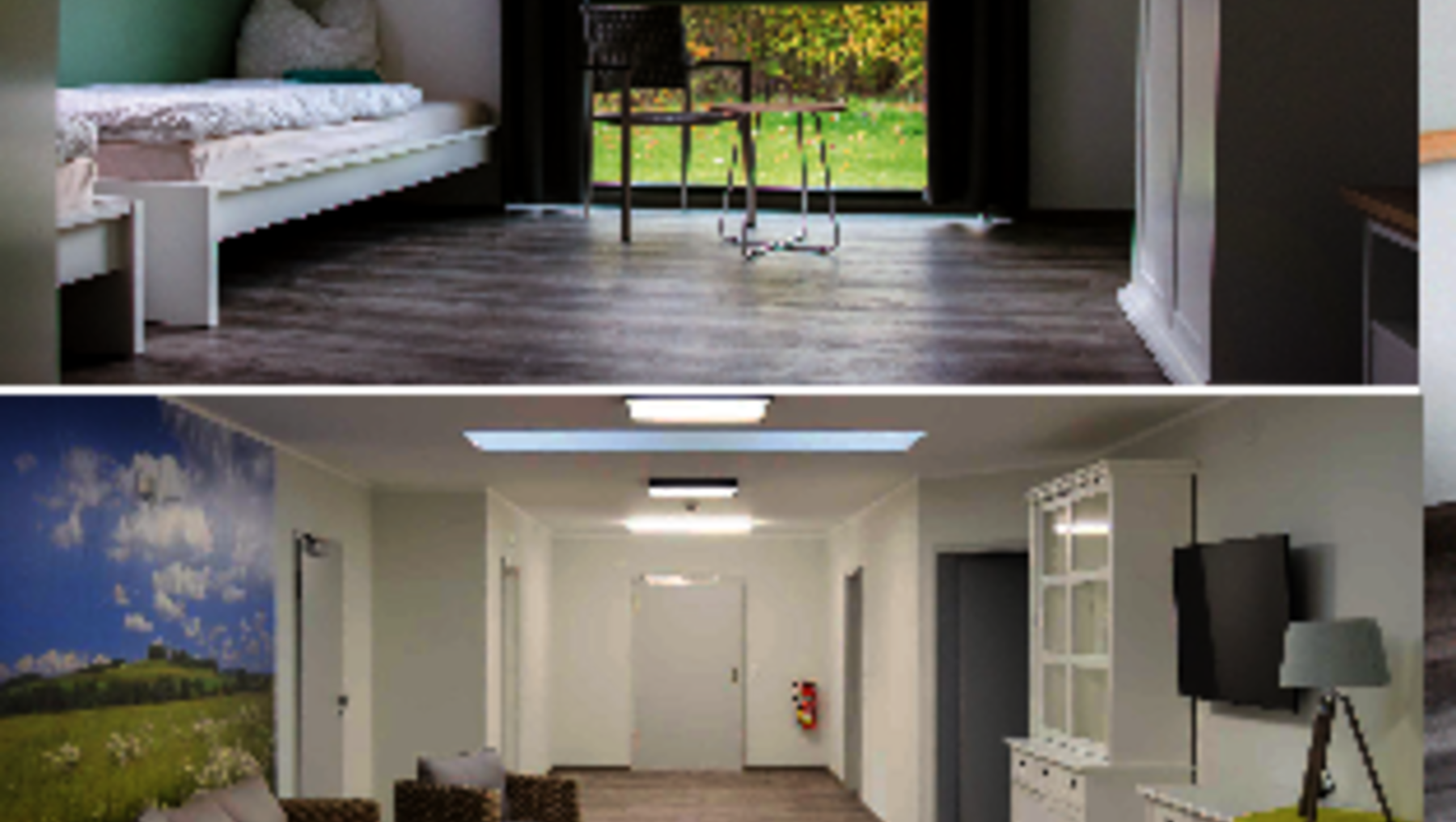 © Madiyar
Bernburg city has few hotels &pensions available. Here are for orientation few of Housing Options:
Cityhotel Bernburg https://cityhotel-bernburg.de/
SL´otel Bernburg https://slotel.de/
Pensionett Bernburg https://pensionnett.wordpress.com/
Hotel Fürsteneck Bernburg https://www.hotel-fuersteneck.de/
Pension Florion https://www.pension-florion-bernburg.de/
Askania Hotel Talstadt https://www.askania-hotel-bernburg.de/
SL´otel Budget Waldau https://slotel.de/slotel-budget/
Pension Am Werder https://www.pension-am-werder.de/
More recommendation in Bernburg and surrounding area are here to find: https://www.hs-anhalt.de/fileadmin/Dateien/Bilderpool_HSA/Standorte/Bernburg/Wohnen/uebernachtung_bbg.pdf
 © Madiyar

Autorin/Autor
15. – 19. June 2026
Partner Universities
More information on the project will follow shortly.
