News-Detail

Microalgae as a Resource for the Future: An Update

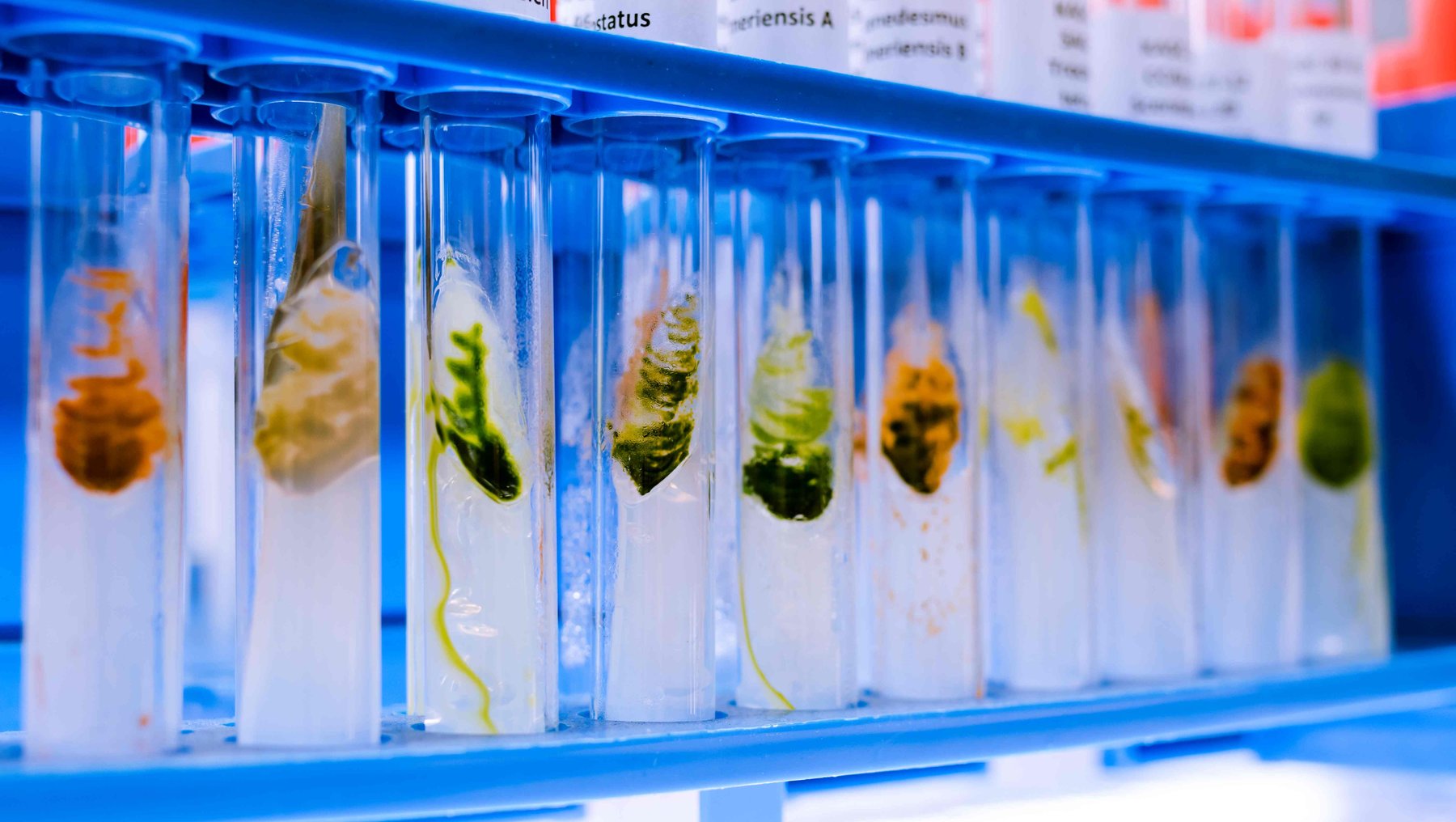
  • Symbolbild Algen in Wissenschaft und Wirtschaft zeigt Reagenzgläser mit verschiedenfarbigen Inhalten aus der Algenbiotechnologie der Hochschule Anhalt © HS Anhalt

On October 24 and 25, Anhalt University of Applied Sciences was all about microalgae. For more than 20 years, the Center of Excellence for Algal Biotechnology (CAB) has been researching this versatile raw material of the future here—and regularly hosts the Central German Algae Roundtable. On Anhalt University of Applied Sciences’ climate blog, we look back at key topics and program highlights.


In the spirit of applied research, the program for this third edition was shaped by:

  • new research findings from the algae labs and
  • current challenges facing the algae industry.

More than 100 interested participants accepted the invitation this year from Prof. Dr. Carola Griehl and her team—the “algae mastermind” and driving force behind algae research and the algae industry, as Jörg Ullmann emphasized in his opening remarks. Jörg Ullmann is the managing director of one of Europe’s largest microalgae production sites: Algenfarm Klötze GmbH & Co. KG in northern Saxony-Anhalt. Together with the Innovationsbündnis Anhalt e.V., the company served as a cooperation partner for this year’s Central German Algae Roundtable.
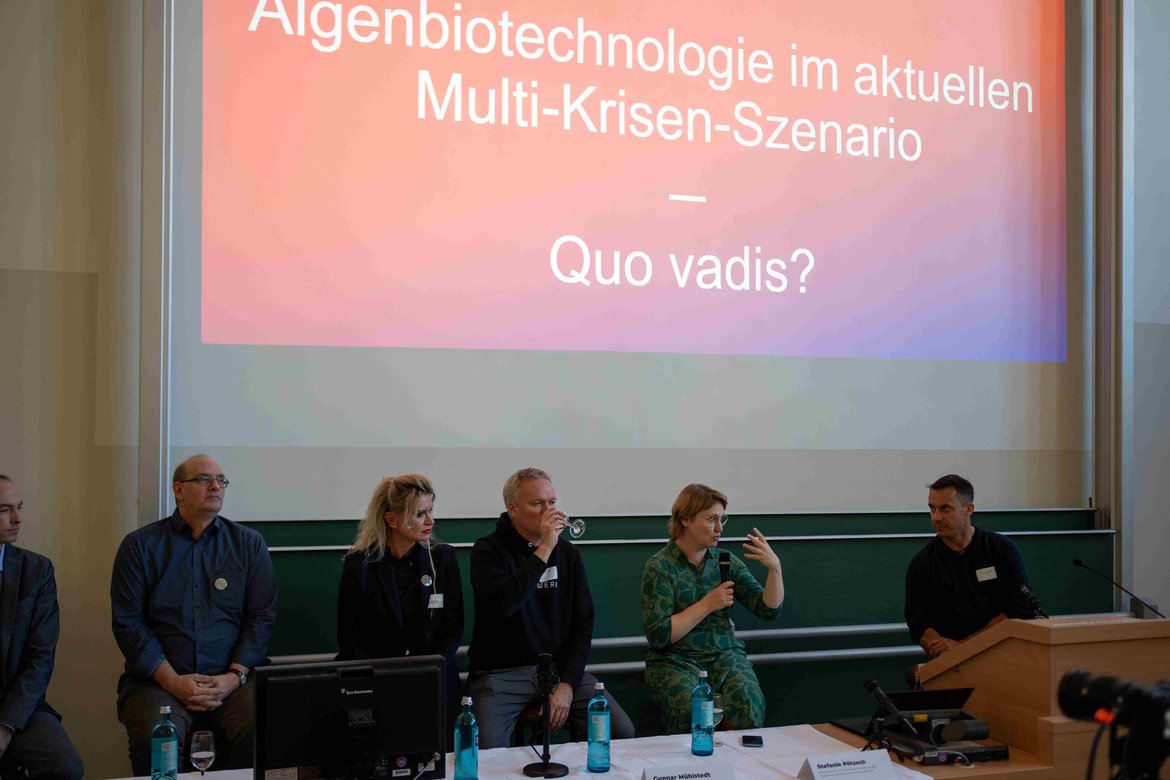
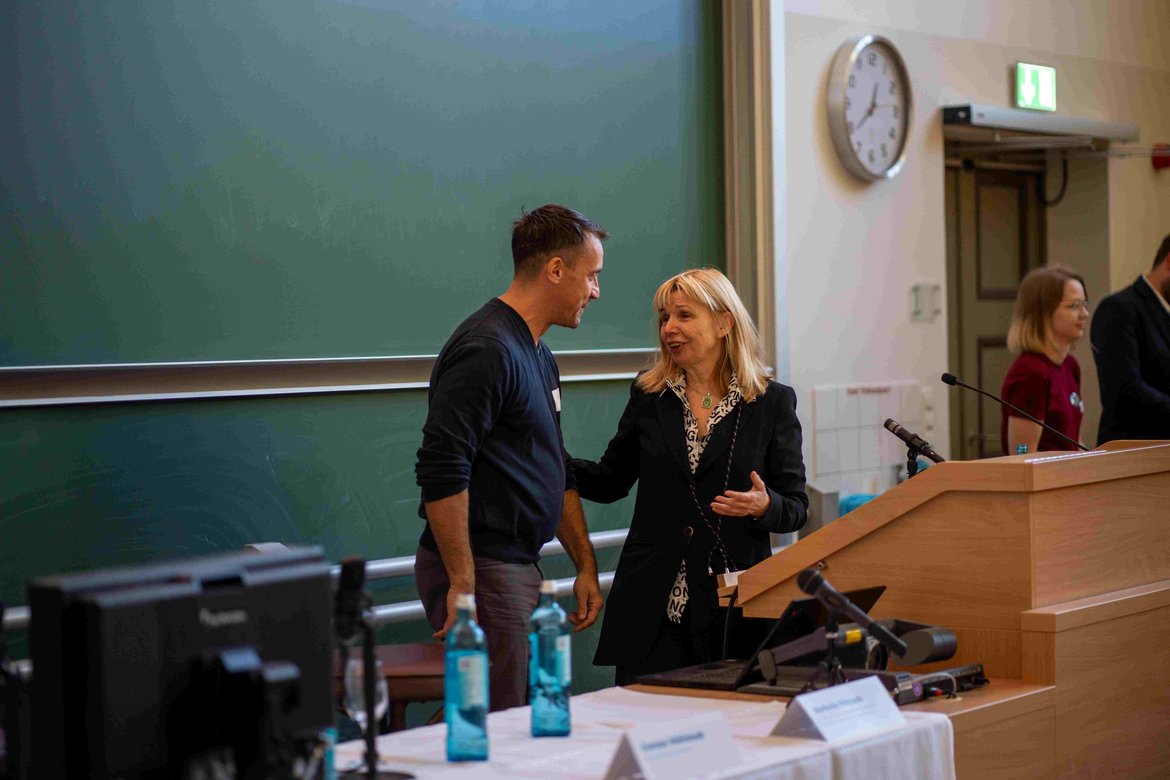
The latest developments in the algae industry were the focus of the panel discussion, which featured, among others, Stefanie Pötzsch, State Secretary at the Ministry of Economics, Tourism, Agriculture, and Forestry of the State of Saxony-Anhalt.

A Growing Market: Microalgae as an Economic Factor

At the start of the conference, Prof. Dr. Carola Griehl and Jörg Ullmann provided context for current developments:

  • As masters of photosynthesis, these ancient organisms are more important than ever for climate protection and a future without fossil fuels.

  • Proteins, polysaccharides, omega-3 fatty acids, active ingredients, bioplastics, hydrocarbon oils: the potential of microalgae as a raw material has already been demonstrated in many ways. Entire industries could utilize them in their product lines.

  • More and more research institutions are focusing on algae. This benefits their application, as only about 50,000 species of the estimated 500,000 micro- and macroalgae on Earth have been characterized.

  • Worldwide, approximately 10,000 natural active ingredients are currently being tested for their properties—ranging from antibacterial to tumor-suppressive effects. Only a few hundred have entered clinical trials so far. These trials are the prerequisites for their use in humans.

  • As early as 2022, the European microalgae market was worth 228.66 million USD, and forecasts project it will reach 355.48 million USD by 2030; the global microalgae market is projected to reach 1,394.95 million USD by 2030—ranging from startups developing new algae products to new economic pillars for Agriculture and large-scale industrial production (figures: Data Bridge Market Research).

  • Although there are more than 400 production facilities across Europe, a large portion of the algae required is currently imported. To change this, the European Commission launched the EU Algae Initiative in 2022.

  • In developing its own algae industry, Europe faces competition from the favorable production conditions in Asia. The following are considered promising avenues for distinguishing itself from this competition:

    • efficient production methods based on suitable algae species and technologies (using renewable energy)

    • high-value applications: specifically processed microalgae biomass with isolated components, such as serving as a carrier for special ingredients like phycocyanin as a food coloring or vitamin B12 for dietary supplements.

Prof. Dr. Carola Griehl and Jörg Ullmann co-hosted the 3rd Central German Algae Roundtable. They have a long history of research collaboration on numerous projects related to microalgae.

Entering a New Era of Algae with New Species of Algae

Chlorella and spirulina: They currently dominate the market. But other promising microalgae are on the horizon. Research into their active compounds, propagation methods, and applications is also advancing. At the 3rd Central German Algae Roundtable, the focus was, among other things, on:

  • The green algae Nannochloropsis oculata and Dunaliella salina: as natural therapeutics against inflammatory and bacterial diseases (Jana Klose, Anhalt University of Applied Sciences and Fraunhofer IZI)

  • Marine diatoms: are (alongside other species) a source of hope in the search for natural sources of antiviral lectins (Stephan Schilling, Anhalt University of Applied Sciences and Fraunhofer IZI)

  • The red alga Porphyridium sp.: of particular interest for the extraction of certain polysaccharides—to protect bees from parasites (Uta Demus, GMBU e.V.)

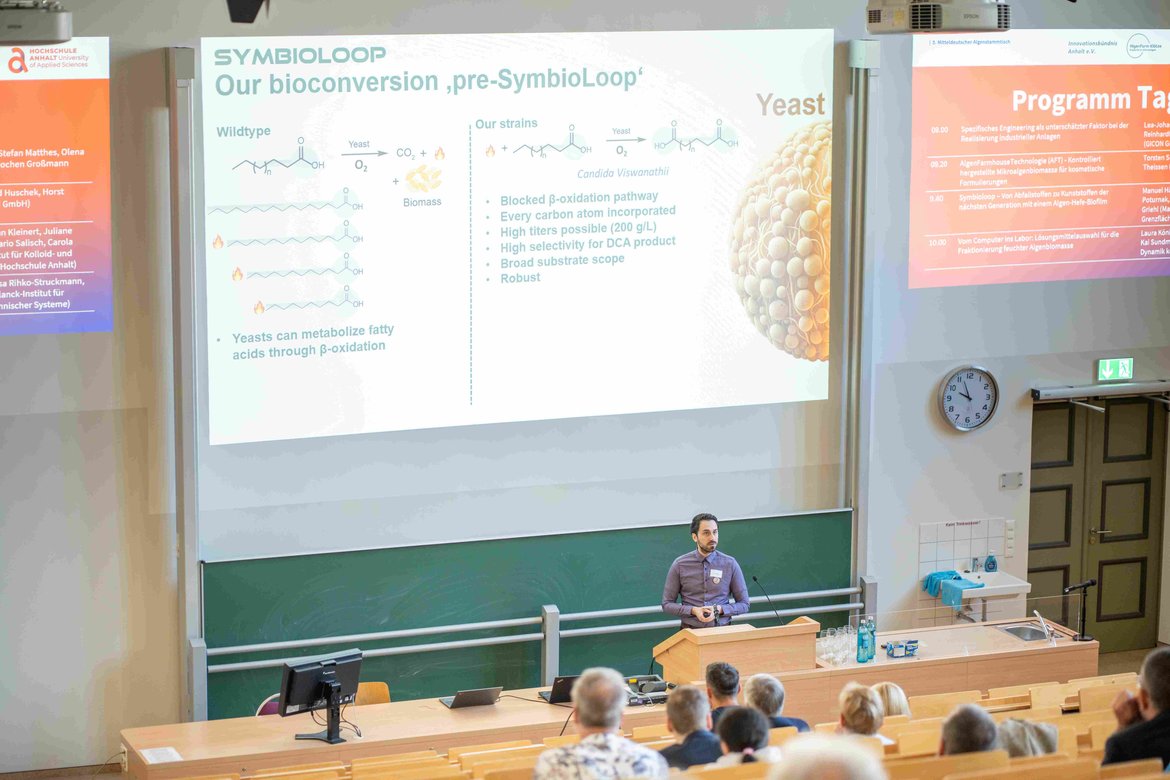
Due to the large number of interested participants, the 3rd Central German Algae Roundtable was held in the Audimax at Anhalt University of Applied Sciences.

Microalgae: Obstacles on the Path to Economic Viability

In the lab, the potential of these microorganisms seems limitless. But the road to developing them into medicines or food products is a long one. This became very clear from the perspective of the entrepreneurs who are already working with microalgae. At the 3rd Central German Algae Roundtable, they presented new ideas such as:

  • the “Algen-Filinchen” (Michael Heinemann, Weißenfelser Handelsgesellschaft mbH)

  • Algae ice cream (Gunnar Mühlstedt: PUEVIT GmbH) as well as a

  • training program to become an algae sommelier (Kirstin Knufmann, Christian Jahr, Jörg Ullmann, and Oliver Skoluda: Knufmann GmbH; IHK Bildungsakademie Magdeburg; Algenfarm Klötze GmbH & Co.KG)


At the same time, they discussed the associated challenges:

  • cost-effective production methods

  • new product developments

  • consumer acceptance.


Against this backdrop, the presentations at the 3rd Central German Algae Roundtable—which focused on production and extraction methods for microalgae—also made an important contribution:

  • Isolation of active ingredients using CPC-HPTLC-MS by Kolos Makay (Anhalt University of Applied Sciences)

  • Development of an UPLC-MS method for the differentiation and quantification of bioavailable and non-active cobalamins (vitamin B12) by Juliane Poturnak (Anhalt University of Applied Sciences; Algenfarm Klötze GmbH & Co.KG)

  • Specific engineering as an underestimated factor in the implementation of industrial plants by Lea-Johanna Liebscher (GICON GmbH)

  • The Production of Algae-Based Polymers for Textile Manufacturing in the AlgaeTex Project by Gordon Brinitzer (Fraunhofer IGB)

  • Symbioloop – From Waste Materials to Next-Generation Plastics Using an Algae-Yeast Biofilm by Manuel Häußler (Max Planck Institute of Colloids and Interfaces; Anhalt University of Applied Sciences)

  • From the Computer to the Lab: Solvent Selection for the Fractionation of Wet Algae Biomass by Laura König Mattern (Max Planck Institute for Dynamics of Complex Technical Systems)

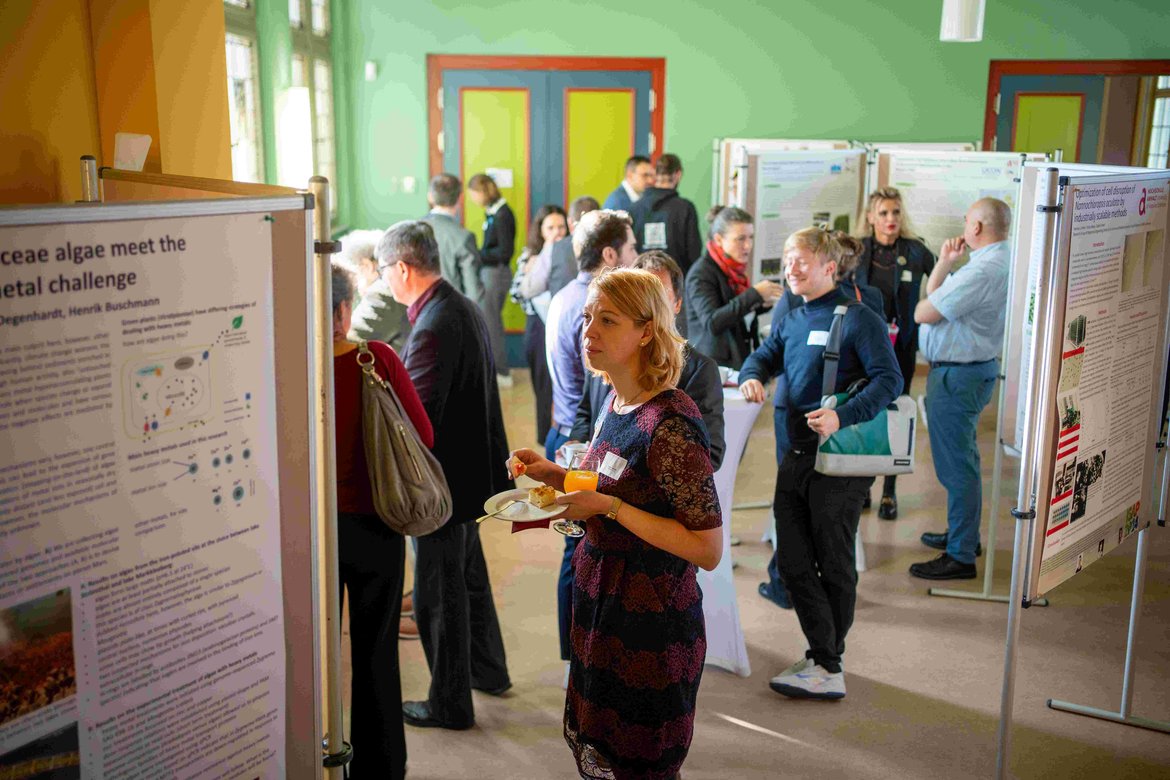
The presentations were available in the foyer for attendees to review and discuss further.

The Algae Economics in Central Germany: Networking and Positioning

The presentations at the 3rd Central German Algae Roundtable demonstrated that the early focus of the scientific and Economics communities on microalgae and their close collaboration currently give the Central German region a competitive advantage in:

  • further research into the potential of microalgae

  • the development of production and extraction processes

  • their utilization and new value chains

  • the establishment of additional players, such as AlgaeCytes Germany GmbH in Dessau-Roßlau. One of the world’s largest photobioreactor facilities is set to be built here in the coming years to produce omega-3 fatty acids from algae.


To maintain its position in a growing market, political action is also needed. This was the focus of the concluding panel discussion: What is the political stance on microalgae as an economic factor? What support is available—in the short, medium, and long term? Is Central Germany a good location for an algae-based economy? The following panelists addressed these questions in the university’s main lecture hall:

  • Kathrin Beberhold (Managing Director, KTS Alge)

  • Gunnar Mühlstedt (Managing Director, PUEVIT GmbH)

  • Jörn Saß (Project Manager, AlgaeCytes Germany GmbH)

  • Stefan Matthes (Head of the Biosolar Division, GICON GmbH)

  • Stefanie Pötzsch (State Secretary at the Ministry of Economics, Tourism, Agriculture, and Forestry, LSA)


Moderated by Jörg Ullmann (Algenfarm Klötze GmbH & Co. KG), the discussion made it clear:

Algal biotechnology is firmly anchored in the innovation strategy of the state of Saxony-Anhalt and will continue to be supported through established measures: project grants, R&D funding, investment incentives, and cluster support.

Central Germany’s pioneering role in the field of microalgae is recognized by federal policymakers. This is evident, among other things, in the funding of a new Central German Algae Center in Köthen, which will receive 30 million euros in funding, including federal funds.

Nevertheless, the field of microalgae remains fraught with uncertainties, particularly for startups and new companies—especially as they work toward achieving economic stability. They require venture capital from investors to tap into (new) markets.

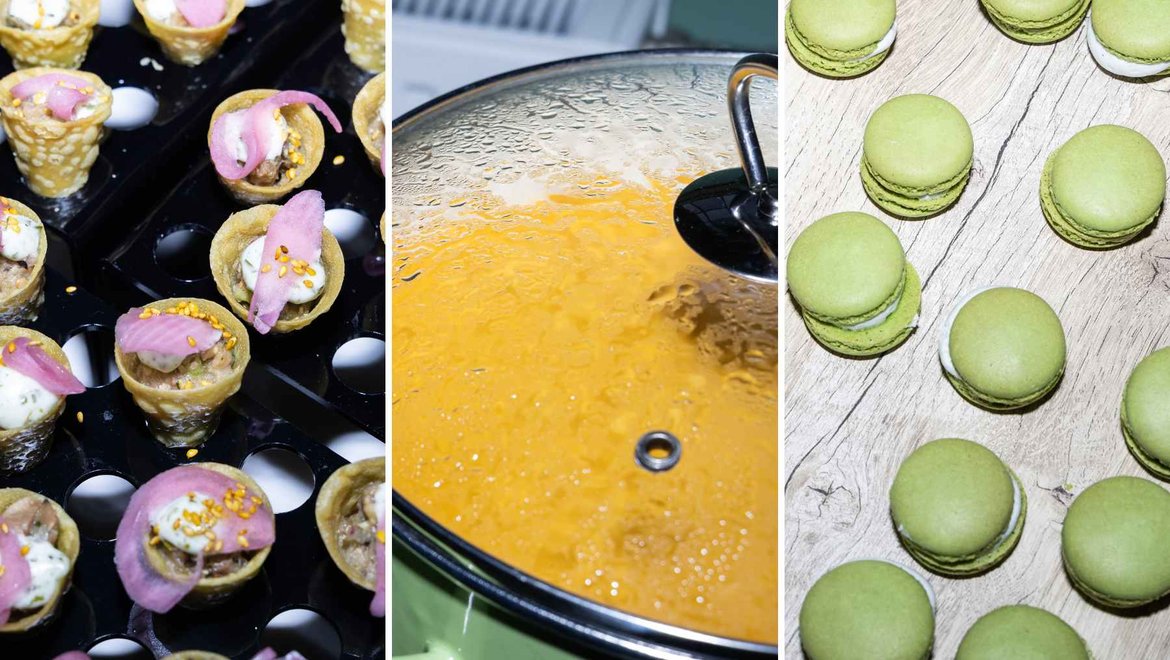
The culinary versatility of seaweed was also a topic of discussion, featuring, among other things, a lobster and crab soup and pistachio macarons.

Seaweed in the Kitchen: Health Meets Flavor

Spirulina blue, chlorella vitamin B12, sea vegetables—algae are already known for these. But that’s just a fraction of what they can contribute to our diet. Kristin Knufmann and Oliver Skoluda demonstrated how to bake and cook with this versatile ingredient. They have long embraced a vegan diet that includes algae and share their knowledge through lectures, books, and, most recently, an “Algae Sommelier” course developed in partnership with others—the first of its kind—conducted in collaboration with the Magdeburg Chamber of Industry and Commerce (IHK). The course covers the nutritional benefits of these organisms as well as their applications in the kitchen: as a source of omega-3 fatty acids and protein, for reducing salt and sugar, as a substitute for butter and eggs, and even as flavor enhancers ranging from sweet to bitter. Even vegan fish and meat dishes can now be made using algae, as Oliver Skoluda demonstrated. He organizes large-scale vegan catering events and reported a growing demand for healthy, sustainable alternatives.

Participants at the algae get-together also had the chance to savor a few dishes, including a lobster and crab soup and pistachio macarons made with algae.

Live Stream Schedule

The complete program for the Central German Algae Roundtable is available on the conference website:

https://www.hs-anhalt.de/forschen/aktuelles/veranstaltungen/3-mitteldeutscher-algenstammtisch-mista.html

If you’d like to watch the presentations later, you can find the livestreams at these links:

Thu, Oct. 24, 2024, starting at 3:00 p.m.: YouTube link to watch - https://youtube.com/live/QV3l2ugPOOY

Fri., Oct. 25, 2024, starting at 9:00 a.m.: YouTube link to watch - https://youtube.com/live/aQRiDB3XCts

Redaktion

Claudia Aldinger