For a long time, everyday objects were expected to be two things above all else: beautiful and useful. With the global crises, a third criterion has become inevitable: sustainability. How is sustainability changing design? Or does not much need to change at all, since sustainable ideas have long been factored into the design process? New questions for the Anhalt University of Applied Sciences climate blog, posed to: Martin Wiesner from the Department of Design. He has been passionate about issues of sustainability in product and industrial design ever since his student days. Now they are an integral part of his research at Anhalt University of Applied Sciences, his class in Mechanical Engineering, his work as head of the “interaction design” workshop, and his lectures.
Sustainable Design Today: For Aesthetics and Environmental Protection
-
 © Valeriia Miller | baseimage
Sustainable design is not a new concept. There is no shortage of methods for assessing sustainability; rather, the challenge lies in applying them simply and widely.
Martin Wiesner
Mr. Wiesner, when we talk about sustainable design today, what does it entail, and how can it ideally help protect the environment?
Sustainable design goes far beyond the traditional expectation that everyday objects should simply be “beautiful and useful.” This characterization falls short and barely reflects the broad spectrum of a designer’s responsibility, since hardly any serious designer would limit themselves to merely making things beautiful. Rather, it is the task of designers to solve problems through their work and contribute to the well-being of all, which today—more than ever—also includes consideration of ecological and social impacts.
Design for sustainability expands the focus of traditional design principles to include the dimensions of ecological and social responsibility. By “planetary boundaries,” we mean the ecological thresholds that must not be exceeded in order to ensure the long-term survival of ecosystems—a direct link to intergenerational justice. This principle requires us to practice design in a way that is satisfactory to people today without compromising the opportunities of future generations.
Social boundaries, on the other hand, relate to intragenerational justice—that is, the fair distribution of resources and opportunities within the current generation. The goal here is to create designs that take into account the needs of all social classes and, in particular, benefit disadvantaged segments of the population.
A planet-centered design, therefore, operates within these boundaries and aims to create products that are responsible both for our fellow human beings today and for our planet tomorrow. It challenges us to think beyond immediate benefits and instead consider the long-term impacts of our design concepts.
Sustainable design protects the environment by promoting design solutions that generate fewer emissions and reduce resource consumption. By moving away from physical ownership in favor of digital or service-based alternatives (sufficiency), using materials and energy more efficiently throughout a product’s entire life cycle (eco-efficiency), and creating products that are recyclable or compostable at the end of their useful life (eco-effectiveness), we minimize our environmental impact. In this way, we help ensure that current and future generations can live on a healthy planet.
The average household owns about 10,000 items
Design for greater sustainability—ideas in this area have been around since the 1960s. At the same time, annual consumption of natural resources has now risen to 2 to 3, and our mountains of waste have grown. Can sustainable design really make a differenc
Sustainable design is not a new concept; the challenge today lies less in accumulating knowledge about it and more in creatively and efficiently putting it into practice within companies and truly aligning everything we bring into the world with it. There is no shortage of methods for assessing sustainability, but rather a lack of their simple and widespread application.
In this context, designers have the opportunity to make a significant difference. They can not only measure sustainability and design for improvement, but also develop alternative product-use concepts (sufficiency) or fundamentally rethink material cycles (eco-effectiveness). While engineering focuses on the continuous improvement of eco-efficiency, designers pave the way for sustainable lifestyles through eco-effective circular concepts and principles of sufficiency. By developing new circular business models and collaborative forms of consumption, designers help reduce global resource consumption and minimize waste production and emissions. Finally, designers can successfully communicate sustainability, moving beyond greenwashing and tired stereotypes.
As a designer and engineer at an academic institution, I bear a special responsibility to advance sustainability in teaching, publications, and collaborative projects. In my role, it is crucial to convey to students the importance and application of sustainable principles and to encourage them to integrate these into their future projects. At the same time, it is my task to raise awareness and deepen understanding of sustainability through research and publications, thereby enriching the discussion. My goal is to share knowledge and innovations that form the foundation for shaping a responsible future. Through this integrated approach, I aim to make a contribution that extends beyond the classroom and the laboratory and has a real impact on society and the environment.
 © Martin Wiesner | HS Anhalt
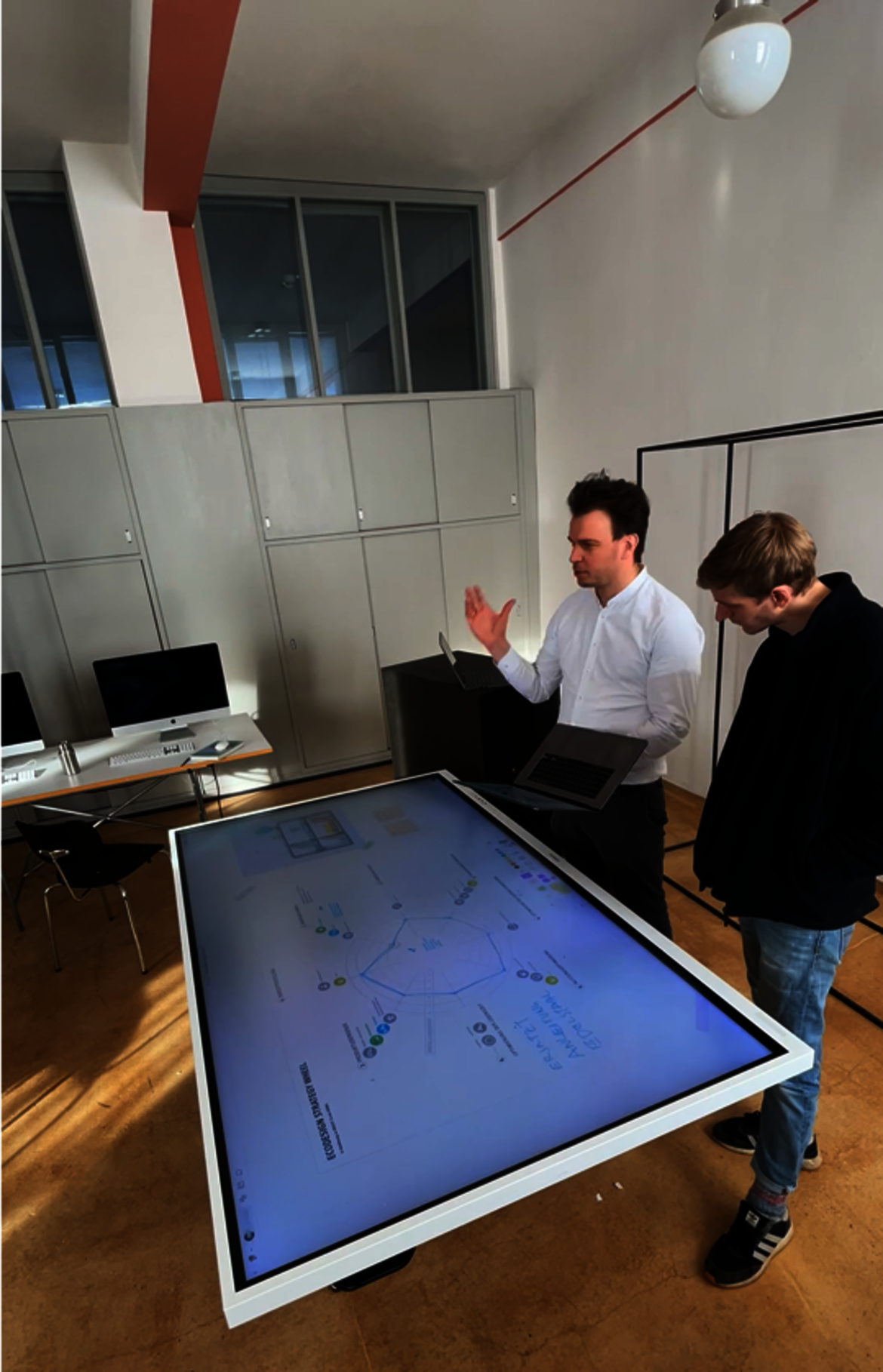
Sustainable design: For Martin Wiesner and his students, it's a matter of principle.
What principles and approaches are taught at Anhalt University of Applied Sciences to promote sustainable design?
At Anhalt University of Applied Sciences, students learn various principles and methods for practicing and promoting sustainable design. The curriculum includes an in-depth exploration of design theories focused on sustainability, as taught by Professor Hohl. In Professor Kretzer’s Materiability Lab, we explore innovative, environmentally friendly materials and focus on the social aspect in social design projects, as taught by Professor Hartwig. Practical projects, such as upcycling furniture, offer students the opportunity to deepen their knowledge through real-world applications.
In addition to the core curriculum, an interdisciplinary lecture series has been established that covers a wide range of sustainability-related topics to illustrate the breadth and depth of this important field.
To further deepen and specialize these course offerings, I am currently working on implementing a hands-on “Sustainable Design” practicum in my interaction design studio. The goal is to fully immerse students in sustainable thinking and design during an intensive week-long workshop and to make sustainability a central element of their design—moving beyond a superficial consideration of the topic.
In addition, I plan to establish an elective course in “Sustainable Design” within the Department of Electrical Engineering, Mechanical Engineering, and Economics (EMW), which will regularly familiarize students with the practical and theoretical aspects of sustainable design approaches. In this context, emphasis will also be placed on integrating sustainability into design tools and methods, thereby equipping students to meet the demands of an increasingly environmentally conscious industry.
What kinds of practical projects have students already completed?
Students have already carried out promising sustainability projects: The “Sauberkasten,” for example, allows students to make their own cleaning products using natural ingredients (Jeanette Schmidt), and a thesis presents tinder fungus as an eco-friendly alternative to leather for headphones (Jessica Bösherz).
These projects exemplify the broad-based approach to sustainability in Integrated Design, which could also shape the New European Bauhaus research project in Zeitz. The focus here would be on a materials database that applies the principles of sustainability and circular thinking to furniture making and the construction industry.
In this way, residents of Zeitz could list materials and end-of-life products for reuse or, alternatively, utilize existing items for their interior design or construction projects. The combination of decentralized traditional craftsmanship and modern design methods, such as generative design, will help process regional resources while generating value within the region, while simultaneously minimizing the carbon footprint of furniture production and offering citizens unique, aesthetically enduring solutions.
Should the New European Bauhaus project in Zeitz receive funding as planned, we are looking at an exciting initiative that democratizes sustainable design concepts as open-source designs and enables the testing of new circular processes in a real-world laboratory.
In my own current projects, I combine design and technology to advance sustainable solutions in Agriculture with partners. For example, we are currently developing and designing an easy-to-repair electric tractor for sustainable Agriculture, accompanied by the Tobi app to promote biodiversity and the AgriPVplus app, which uses augmented reality (AR) to facilitate the planning of agri-PV systems. These initiatives aim to combine ecological practices and technological innovations for more environmentally friendly land management.
 © Martin Wiesner | HS Anhalt
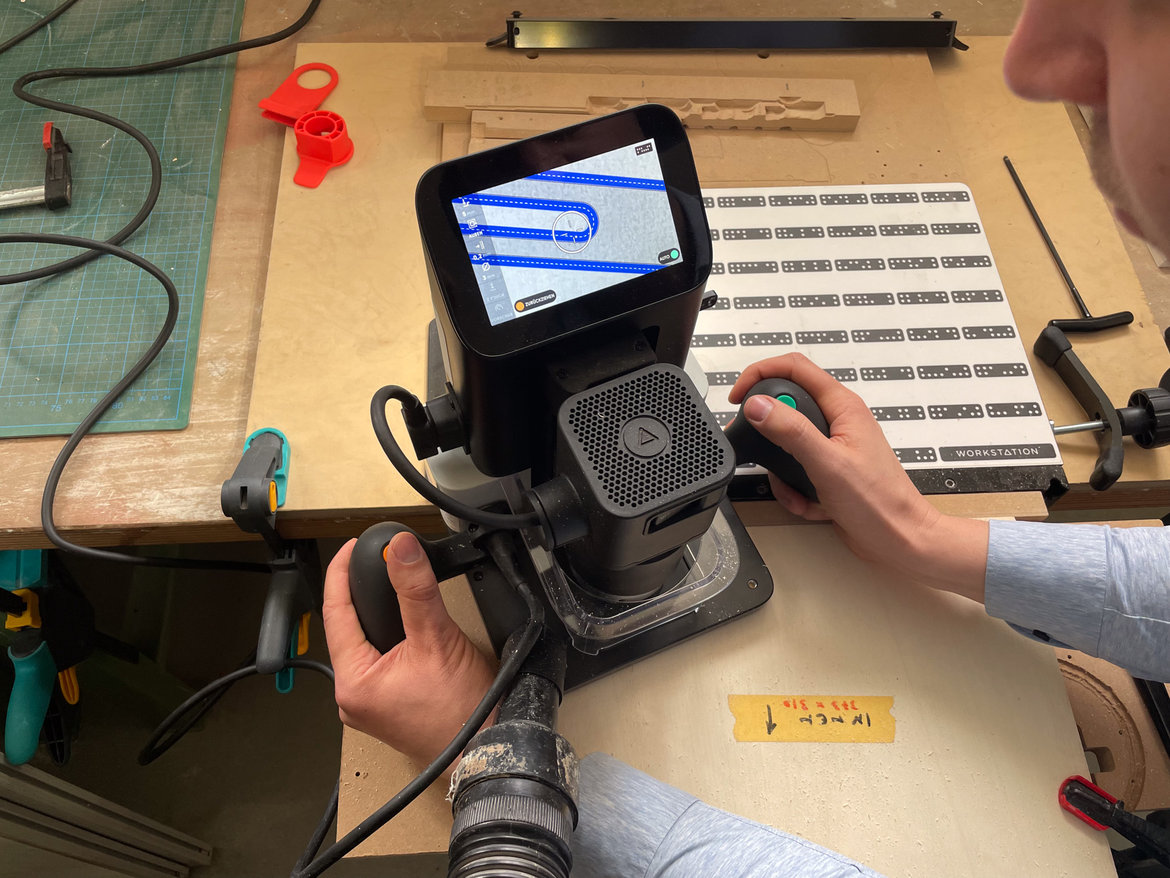
Putting Ideas into Practice: Ideas for sustainable design, as they are to be developed at the New European Bauhaus real-world lab in Zeitz. To create a component for a modular furniture system, Martin Wiesner uses a Shaper Origin—a special, hand-guided router that is fed a digital manufacturing plan. This allows for the flexible testing and prototyping of new concepts. The router uses these “Domimos” to orient itself in space.
Sustainable design requires a shift in thinking, but also making sacrifices. How does this affect the aesthetics of the products?
Sustainable design not only calls for a shift in thinking but also sometimes requires us to do without certain resources, such as fossil-based plastics. This approach fundamentally influences product aesthetics, since plastics have, of course, long afforded us great design freedom. The use of alternative materials, which often have a heterogeneous texture due to their natural structure, requires a subtle balance in product design. For example, designers must be more restrained in their shaping to highlight the material’s unique texture and beauty and to promote a kind of “material-honest” aesthetic.
However, minimalism can also mean making a life of material restraint fulfilling through design. When it comes to the relationship between aesthetics and material restraint, it is crucial to identify the factors that actually contribute to well-being. Given that the average household owns about 10,000 items, we must recognize that excessive ownership increasingly overwhelms us rather than making us happy. Important basic human needs—such as a sense of competence and connectedness—and the way we interact with products play a role here. For example, a physical product can even hinder a sense of competence—such as frustrating, overbearing fully automatic coffee machines— and a certain degree of simplicity—such as a much simpler product that simultaneously fosters a sense of competence, for example, a simple coffee filter paired with the skill to brew the perfect cup—can contribute to greater well-being. There is also a sensory component. The aesthetic appeal during the purchase is often visually driven, but the sense of touch and the auditory experience are also essential for long-term satisfaction.
Sustainable aesthetics are therefore multisensory; they foster a long-term positive emotional connection to the product through a deep understanding of what people need, and they use materials very deliberately—in a way that is not merely trendy but authentic, fostering a sense of connection. If a product brings joy to people across generations and acts as a carbon sink through its material selection and sustainable manufacturing, then we have succeeded, for example.
More on these topics...
... Sustainable Design: History and Legal Framework in the Ecodesign Directive
With new approaches to conserving resources and designing environmentally friendly products, issues of sustainability also began to influence design in the early 20th century. With the rise of environmental movements and growing awareness of ecological sustainability, the topic gained increasing significance in the 1960s and 1970s. Designers began to channel their creativity more consciously toward environmental protection and sought out materials and manufacturing processes that were less harmful to nature. Over the past two to three decades, sustainable design has ultimately become an integral part of design. The requirement that products be more sustainable and less harmful to the environment has also been enshrined in EU and federal law for several years. These requirements are set forth in the so-called Ecodesign Directive and will soon be expanded to include important principles.
… EcodesignKit
The Ecodesign Kit, for example, serves as a portal, guide, and toolkit for designers and companies. It provides guidance and helps users ask the right questions during the design process in order to fully capitalize on the challenges and opportunities of ecodesign. The kit helps designers create more sustainable products and services from the very beginning and offers practical tools for integrating sustainability principles into the design process.
… Charter for Sustainable Design
In addition, the “Charter for Sustainable Design” is an important document that encourages designers to embed sustainable practices in their work and to champion the principles of sustainability. The Charter provides a framework and guiding principles for sustainable design solutions and reaffirms the design community’s commitment to environmental, economic, and social responsibility.
Martin Wiesner...
- Currently heads the "Interaction Design" workshop in the Department of Design at Anhalt University of Applied Sciences and serves as teaching staff for special assignments in "Computer-Aided Design" in the Department of Electrical, Mechanical and Industrial Engineering
-
conducts research on decision support systems for sustainable design
-
In recent years at the university, he has, among other things, supported researchers in design-related matters when the goal was to achieve a higher-quality transfer of knowledge (FORZA project)
-
brings 7 years of experience teaching “Sustainable Design” at Otto von Guericke University Magdeburg
-
was already passionate about sustainable design during his studies
-
also gives presentations on the topic, such as at TASIMA (Conference on Municipal Wastewater Management).
Current publication: REFRAMING HEARING AIDS – EXPLORING THE DESIGN SPACE OF ANALOG FASHIONABLE HEARING AIDS FOR USERS WITH MILD HEARING IMPAIRMENTS / Klöckner, Hermann Wolfram. - Included in: Proceedings of the Design Society, Vol. 3 (2023), pp. 3045–3054.
... can be reached for questions and inquiries by phone at +49 (0) 340 5197 1748 or by email at martin.wiesner(at)hs-anhalt.de
... Recent publication: REFRAMING HEARING AIDS – EXPLORING THE DESIGN SPACE OF ANALOG FASHIONABLE HEARING AIDS FOR USERS WITH MILD HEARING IMPAIRMENTS / Klöckner, Hermann Wolfram. - Included in: Proceedings of the Design Society, Vol. 3 (2023), pp. 3045–3054.
... more about his research topics and responsibilities at Anhalt University of Applied Sciences at the end of the interview. Anyone interested in following Martin Wiesner’s activities can do so via his personal LinkedIn profile.
Cover image: 9gifts/stock.adobe.com
