With a two-minute video, the Department of Design at Anhalt University of Applied Sciences is breaking new ground. In an interview, the Dean, Professor Brigitte Hartwig, explains why the department is changing the registration process for the entrance exam and what skills designers need today.
“Everything can be shaped, right down to the way we want to live together.”
-
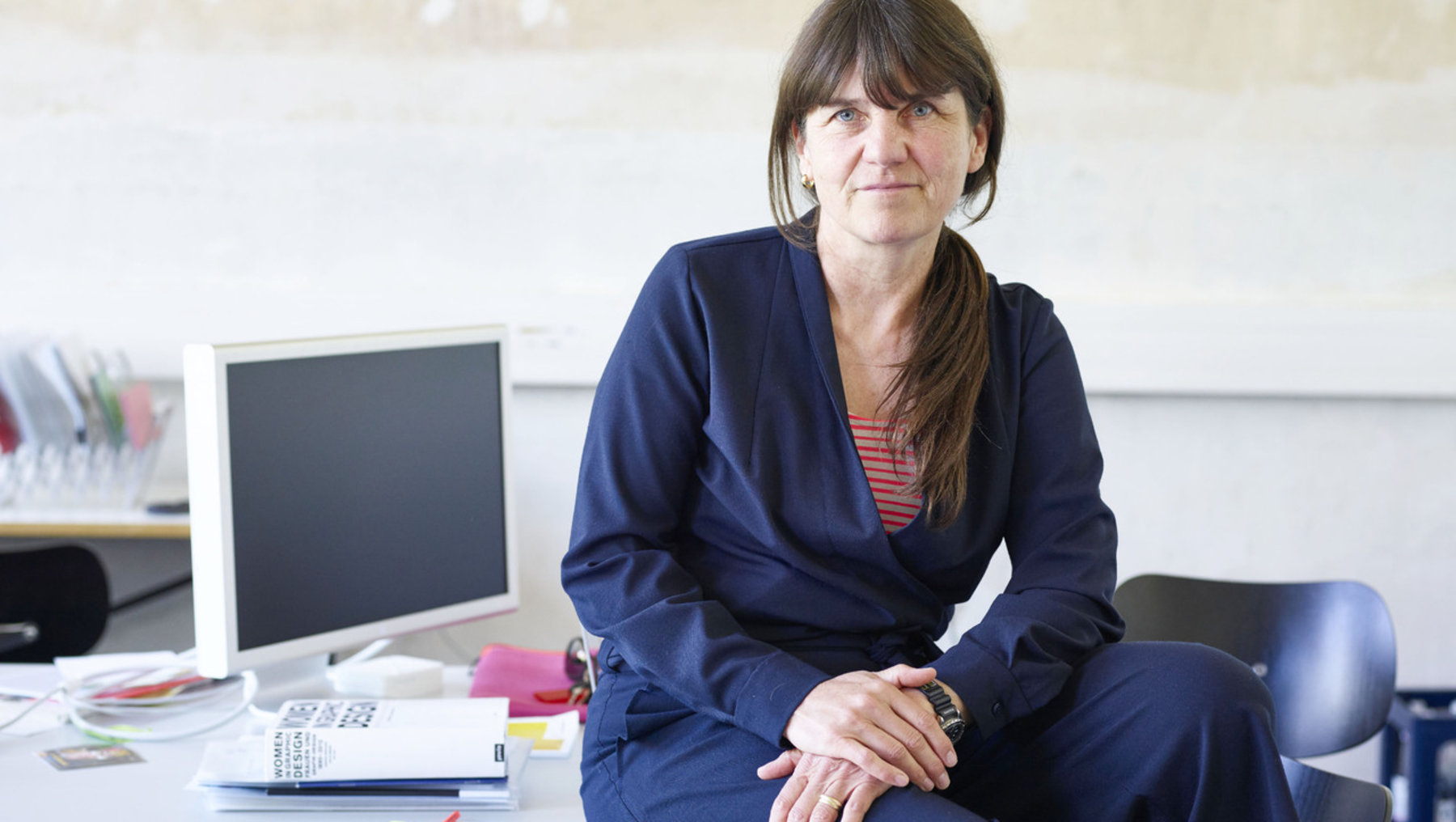 © Hochschule Anhalt/Uwe Jacobshagen
Brigitte Hartwig lehrt Visuelle Gestaltung/Grafikdesign am Fachbereich Design.
It is no longer about creating beautiful things in art class. Instead, the focus is much more on personal aptitude and motivation.
Brigitte Hartwig, Dean of the Department of Design
Professor Brigitte Hartwig, what prompted you and the Department to change the registration process for the entrance exam?
With the new process, we want to make access to the program more in line with today’s world. Digital media, such as videos, are part of young people’s everyday lives today. We’re responding to that.
We want to identify the skills that are truly relevant for future studies. It’s no longer about having created beautiful things in art class. Instead, the focus is shifting much more toward personal aptitude and motivation.
Of course, as a university, we, too, are competing for young people. We’re not lowering our standards; rather, we’re updating the entry requirements for the application process.
What does the new application process look like?
Prospective students introduce themselves in a two-minute video and explain why they want to study design. That is sufficient for us to invite them to an on-site aptitude test.
With the new process, aptitude—in its many different facets—takes center stage. Only after successfully passing the aptitude test do the formal application steps follow. The Student Service Center supports prospective students throughout this process.
It's important to us that prospective students come here and experience our campus.
Brigitte Hartwig
What can prospective students expect on March 12 in Dessau?
It’s important to us that prospective students come here and experience our campus. We’ll set a wide variety of creative tasks to find out, for example, whether someone demonstrates particular dexterity with their hands or can sketch on a large scale and put their ideas on paper. The ability to work in a team is also important to us. In addition, there will be guided tours of the campus and a get-together the evening before. This will give applicants the chance to meet the faculty and our students. They’ll learn about the opportunities our workshops offer and experience the special atmosphere of our campus.
I hear time and again from our students that they chose Dessau precisely because of its strong sense of community. We want to convey this feeling to prospective students as well. We don’t want to create a traditional exam atmosphere. Rather, we want it to be a lively and stimulating day for everyone—without the stress and pressure of an exam.
What skills should prospective students bring to a design program?
It’s about imagination, manual dexterity, and spatial reasoning, but also many other skills. Can someone improvise? Is the person a team player? Do they have an eye for composition and aesthetics? How do they express themselves verbally? How do they present themselves? Experience with digital and analog tools is at least as important as, for example, empathy—that is, the ability to put oneself in others’ shoes.
What sets the Integrated Design program in Dessau apart from other design programs?
What makes it unique is that you don’t specialize in communication design, product design, or time-based media right from the start. It’s a generalist program where you can explore your options during the first three semesters and gain insights into all areas.
For example, we see students who’ve never had any exposure to film before realize after the third semester: “Wow, I never would have thought this, but this is actually my thing.” And it’s the same in all areas. Starting in the fourth semester, students can choose to specialize in a particular direction, but they aren’t required to.
We also receive feedback from design studios and agencies that our graduates are in high demand. Especially in the age of artificial intelligence, when AI can take over certain specialized tasks, it’s all the more important to be able to think and work conceptually and across disciplines—and that’s what we teach here.
What role does the immediate proximity to the Bauhaus (Building 10 - Dessau) play in the program?
The sheer number of people from all over the world who come here every day to visit the Bauhaus (Building 10 - Dessau) shapes the atmosphere on our campus. But the historical and contemporary content plays a particularly important role: How do we want to live in the future? How can we manage our resources sustainably and shape the world around us? These questions have a major influence on what we do here. It’s not so much about designing yet another piece of furniture or a great poster—it’s about seeing the big picture. Everything can be shaped, right down to the way we want to live together.”
Many people associate design primarily with furniture, posters, or logos. What else do designers contribute?
Designers can play a role in many areas with their ideas. This includes addressing questions such as: What does something cost us as a society? How many resources does it consume? How can I return something to the cycle?
They try to simplify complex issues, visualize them, and break them down to their core so that everyone can develop a shared understanding of them.
I once worked for Düsseldorf Airport. From the employee at the baggage carousel to the executive team, everyone was supposed to develop a shared understanding of: Where are we actually headed? What makes us special? What is the core of our identity?
Only then do we move on to the visual level: What typeface can we use to make what we’ve discovered visible? What character should the visual language have? How do we present ourselves in photos? What colors can we use to stand out?
All of this is based on a very intensive dialogue with the client in question. To outsiders, this process usually remains invisible. In the end, they only see the logo or notice the typeface. For the client, this preliminary work is extremely valuable because it’s where company leadership and employees jointly define the cornerstones of their identity—and these are essential for fostering loyalty and a sense of belonging.
What new career fields are opening up for designers?
A promising new field is emerging for designers: the revitalization of urban communities. In other words, the design of spaces where people can come together without the pressure to consume. These are referred to as “third places”—spaces beyond home and work: open meeting places for exchange, culture, and community. This is becoming increasingly important because online retail is emptying downtown areas, and chance encounters are becoming rarer. Without them, social cohesion crumbles.
The role of designers here: we bring people together around a table, identify needs, test temporary uses of urban space, design public communication, evaluate the impact, and continue to learn through an iterative process. In short: working in a participatory, fact-based, and public-interest-oriented way—that is placemaking, and it’s growing rapidly. Our two-year research project, “Young City Makers,” is an example of this. It is made possible by the federal funding program “ZIZ—Sustainable City Centers and Downtowns.”
Another rapidly growing field is, for example, Circular Material Design—that is, the design of materials, products, and spaces for true circularity. It involves bio-based and recycled materials, disassembly, repair, and reuse, as well as take-back and sharing models, and demonstrating impact across the entire life cycle. In this context, designers are developing so-called second-use and urban mining strategies, creating life cycle assessments, linking product and service concepts, and implementing pilot projects in real-world laboratories. This is currently happening in our research project “Reallabor Zekiwa Zeitz” as part of the “New European Bauhaus.”
What advice would you give to young people who enjoy creative work but aren’t sure if studying design is the right choice for them?
I’d like to come back to what I said at the beginning: It’s not so much about having done well in an advanced art class. Curiosity and personal drive are much more important: I want to create something. I want to make a difference.
Applications for the bachelor's degree program in Integrated Design for the 2027–28 winter semester
Application period begins: December 1, 2026 | Application deadline: February 15, 2027
Aptitude test: March 12, 2027, at the Campus Dessau
Once your aptitude has been confirmed, you’ll immediately submit your formal application through the Anhalt University of Applied Sciences application portal.
Redaktion
Application for the bachelor's degree program in Integrated Design for the 2027/28 Winter Semester
Application period begins: December 1, 2026 | Application deadline: February 15, 2027
Aptitude test: March 12, 2027, at the Campus Dessau
Once eligibility has been confirmed, the formal application process begins immediately afterward via the Anhalt University of Applied Sciences application portal.
For more information and details on the new application process, please visit: www.hs-anhalt.de/design
