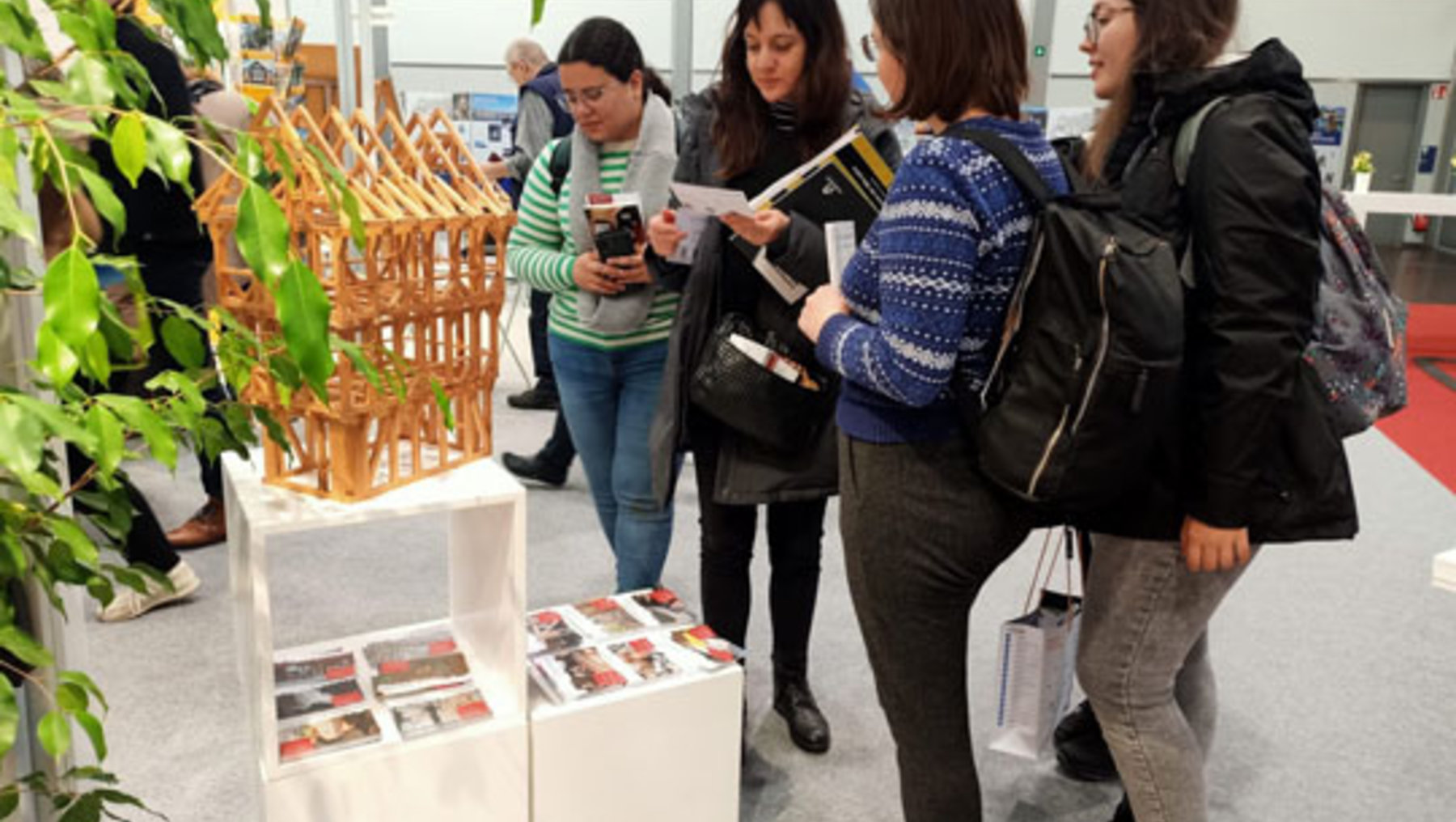
How can building materials be developed in a more sustainable way, and how can historic buildings be preserved for future generations? Anhalt University of Applied Sciences will address these questions at denkmal 2026. The trade show is considered Europe’s leading event for Monument Preservation Management, restoration, and the renovation of older buildings. At the joint booth “Research for the Future” in Hall 2, Booth I 50, the focus is on innovative materials for sustainable construction. The denkmal forum in Hall 2, Booth I 53, focuses on the preservation of historic buildings and new insights into cultural heritage.
The PALUDI MEDIA LAB is investigating how new building materials can be created from rewetted peatlands. At the joint booth in Hall 2, Booth I 50, the project demonstrates how plant-based biomass can be processed into building materials and functional materials. In this way, it combines peatland conservation, regional economic development, and climate-friendly construction. The Building Materials Technology/Sustainable Building Materials research group is also breaking new ground in the construction industry. It will present the development of liquid clay, which can be processed similarly to concrete. In the future, it could be produced directly on the construction site from excavated material.
Professor Karin Berkemann will showcase her projects in Hall 2, Booth I 53. The “Cultural Heritage Church” project focuses on the future of historic churches. How can they be assessed in a transparent manner and preserved for the long term despite limited financial resources? Annemarie Reimann will present projects on the revitalization of churches and castles, as well as research on new farmhouses.
Dr. Axel Schuhmann is investigating how historic preservation, climate protection, and resource conservation can be combined, using the ZEKIWA Zeitz real-world laboratory as an example. The focus is on the sustainable redevelopment of historic industrial buildings. Meanwhile, Professor Gunnar Schulz-Lehnfeld is focusing on medieval construction techniques: Together with partner universities, he is researching the construction and functioning of a historic slewing crane. The project provides insights into the technical capabilities of past centuries. Other presentations address Jewish sites in Saxony-Anhalt, Michelangelo’s building techniques, and Monument Preservation Management on site.
At denkmal 2026, Anhalt University of Applied Sciences will demonstrate how research advances sustainable construction and preserves cultural heritage. Visitors can learn about the projects and engage in conversation with the researchers.
