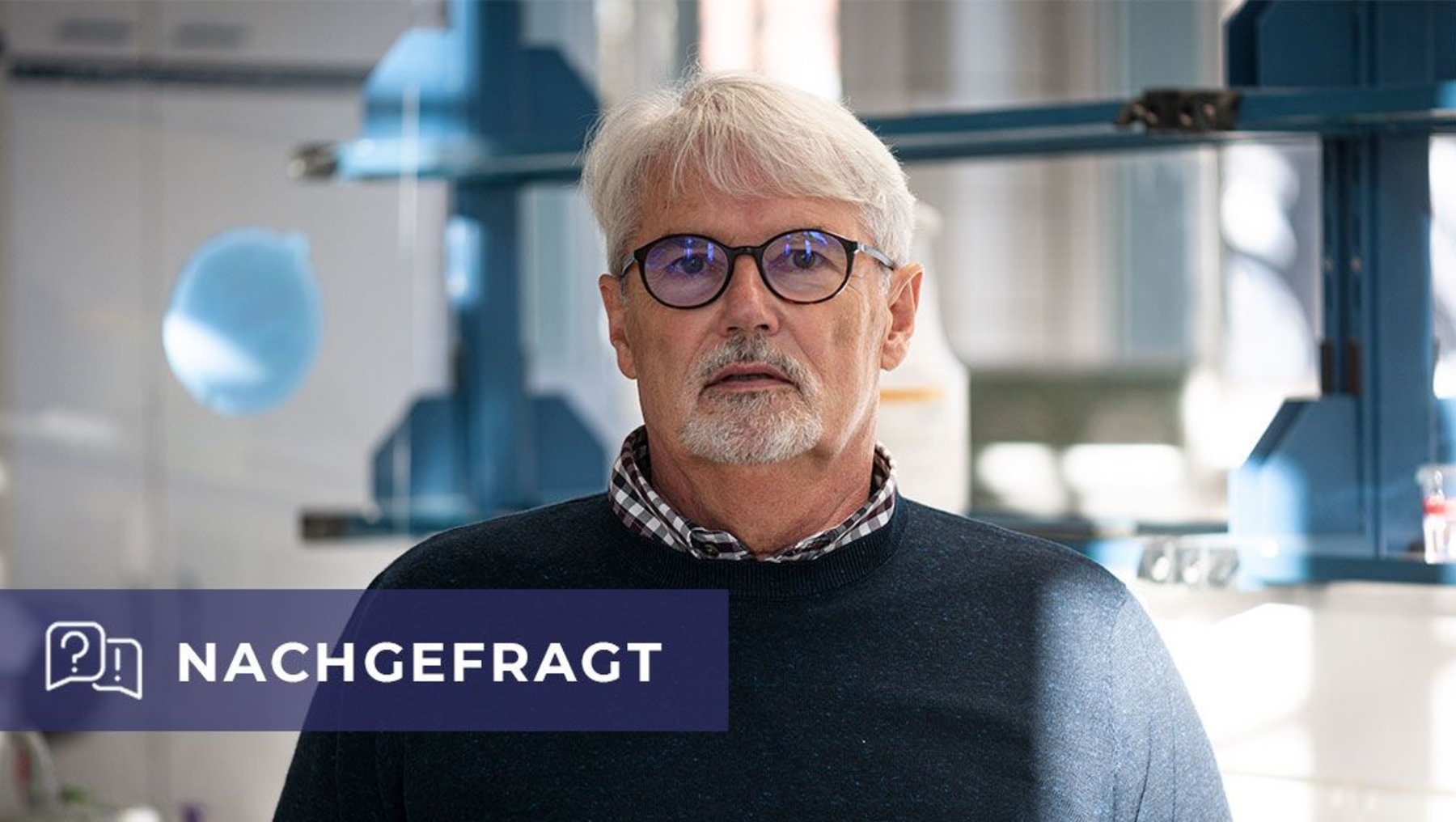
How can a COVID-19 vaccine be distributed fairly? The 26 members of the German Ethics Council have been working on this question over the past few months and are advising the German government with their opinion. Dr. Hans-Ulrich Demuth, Professor at Anhalt University of Applied Sciences, is one of the members. In this interview, he gives a brief insight into how recommendations for political and legislative action are drawn up for the Federal Government and the German Bundestag.
Professor Demuth, you were appointed to the German Ethics Council by Bundestag President Wolfgang Schäuble in April 2020. What is your remit and what responsibilities does your appointment entail?
Professor Demuth: I take part in action groups on medical-ethical and socially relevant issues, such as proof of immunity and umbilical cord blood storage. In order to reach a decision, we gather the opinions of the Council members in working groups. Normally, a joint position is then "refined" in writing by email, through meetings in Berlin or video conferences and is then incorporated in writing into a statement, which is then sent to the government or the Bundestag. Last month, the Council's opinion was presented at the Federal Press Conference and the text on the proof of immunity was handed over to Minister Spahn.
The Ethics Council is one of three high-ranking bodies that were asked by the Federal Government to make a recommendation on the distribution of the coronavirus vaccine. A position paper entitled "How should access to a COVID-19 vaccine be regulated?" was published on November 9. Were you involved in this task and can you give us a little insight?
Not directly, but in the final version. This much: The distribution will be fair and primarily based on need and necessity in vaccination centers. The focus here is on need (vulnerable people, e.g. in nursing homes), necessity (nursing staff, systemically relevant people) and equality (selection without regard to the person's status or wallet). Patients are therefore selected according to demographic guidelines and medical advice from the Standing Committee on Vaccination (STIKO).
You were nominated for election by the parliamentary group Die Linke. How did you get nominated and what role does politics play in your life?
Politics has always been important in my life. To be involved in such democratic decision-making processes now is an honor, a responsibility and a challenge. My former institute director, Professor Emmrich, nominated me for the Ethics Council. Then came the nomination, together with a presentation to the parliamentary group executive and the subsequent unanimous appointment by the Bundestag.
In 2006, you were appointed honorary professor of pharmaceutical biotechnology at Anhalt University of Applied Sciences by the Minister of Culture of the state of Saxony-Anhalt. Your duties include giving lectures and supervising students, graduates and doctoral candidates. What subjects do you currently teach at Anhalt University of Applied Sciences?
I teach protein biotechnology. My teaching essentially revolves around the fact that the majority of all biomolecules are proteins. I impart knowledge about their formation, function and properties. This helps students to understand "life", i.e. health and many diseases. I also provide information on the extraction/production of proteins and their purification. We also try to provide interesting application examples from biology, medicine and pharmacy.
Can your students benefit from your experience on the Ethics Council?
Not yet, because I've only been a member since May. But when the opportunity arises, I will weave examples of social commitment into the classes, for example animal welfare, vaccination certificates, etc.
Until February 2020, you were Head of Molecular Drug Biochemistry and Therapy Development at the Fraunhofer Institute for Cell Therapy and Immunology. Did this open up opportunities for final theses or student projects for the students?
I think more than 20 students at Anhalt University of Applied Sciences have been employed in institutions that I have managed over the past 30 years and, as I see it, this will continue under the leadership of Professor Schilling.
Professor Demuth, thank you very much for the interview .
