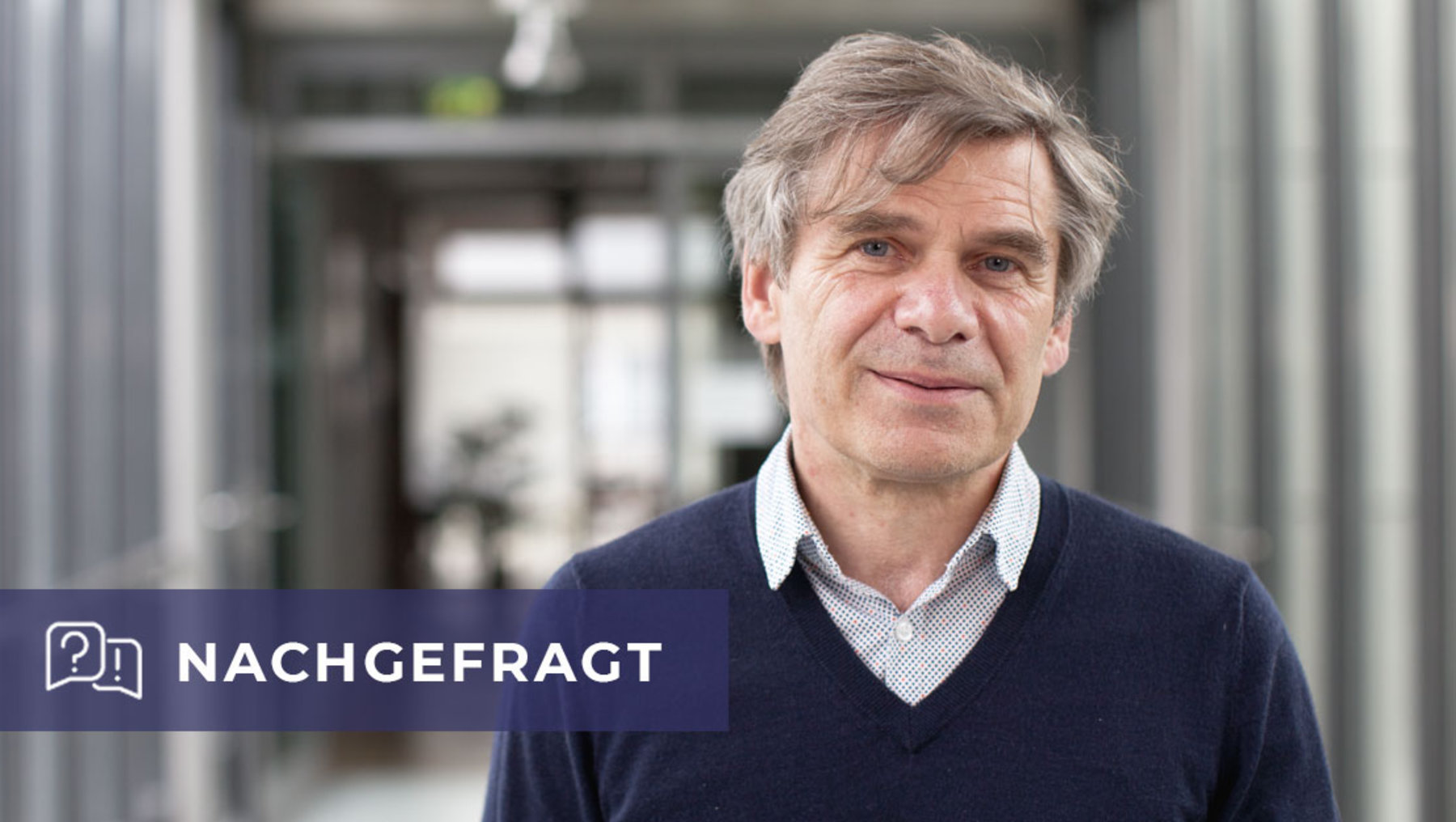
Prof. Dr. Matthias Höhne from the Department of Architecture, Facility Management and Geoinformation (FB3) at Anhalt University of Applied Sciences on sustainable teaching and a good knowledge base for students.
Prof. Höhne, what can students expect at FB3 in Dessau?
Prof. Matthias Höhne: With the three undergraduate degree programs, we are a very broadly based part of the university in terms of subject matter. Architecture with its creative and emotional side, construction management with its organizational skills and geoinformation with the precision of mathematical information best describe the very different requirements of the course. The bachelor's degree program in Architecture teaches the basics of design and construction as well as the planning of settlements. The internationally oriented master's degree programs, some of which are taught in English, convey the profession of architect and urban planner in all its demanding complexity. The architectural experiments provide room for new ideas. Monument Preservation Management preserves our cultural heritage. Both - experimentation and continuity - are two essential sides of Architecture. The Real Estate and Construction Management degree program combines construction, economics and information technology. The engineering activities in Surveying and Geoinformatics record and process computer data of our entire environment.
What is your favorite subject when it comes to building?
The answer is simple: building good Architecture. What characterizes good Architecture? It is Architecture that is optimally usable, beautiful, economical and durable. This would be sustainable architecture in the best sense of the word. Since I started my career in Cologne in 1989, I have been fascinated by the topic of ecological, or as we say today, sustainable Architecture. The new building of the German Federal Environmental Foundation, completed in 1995, was a very formative task for me. You can see from this project that the issues of energy- and resource-saving construction have not changed to this day.
Which topics are important to the students?
When we train students for five or more years, we naturally gain an insight into what interests they have. Students want to acquire the skills and knowledge they need to succeed in their careers. With the high demands made in the individual fields of study, this leads to the challenge of mastering the course. The discussions in the seminars also show that our students are not without a social position. Current topics such as energy-efficient design, affordable housing and resource-saving construction are actively addressed. With the Bauhaus anniversary omnipresent in Dessau, I wonder about the significance of the Bauhaus for the younger generation. Here I could imagine that the role models are not sought in a 100-year retrospective. This is shown by the discussions on the projects during the semester as well as our lecture series "Dessau Talks". The student contributions question current issues in Architecture, just as they did 100 years ago. Is calling up zeitgeisty trigger points already an attitude? It certainly requires more backbone if you counter the zeitgeist with your own position.
Would you like to give us an outlook on the future of your department?
Anyone who has built in the past centuries or even millennia has needed architects, surveyors, cost and organizational talents. Of course, this sounds pathetic at first. However, it gives us a certain serenity when looking to the future. Looking back, it is also noticeable that social positions are changing. Craftsmanship and intellect are the constants. This results in an obligation to impart skills and knowledge, as well as tolerance towards other professional viewpoints.
