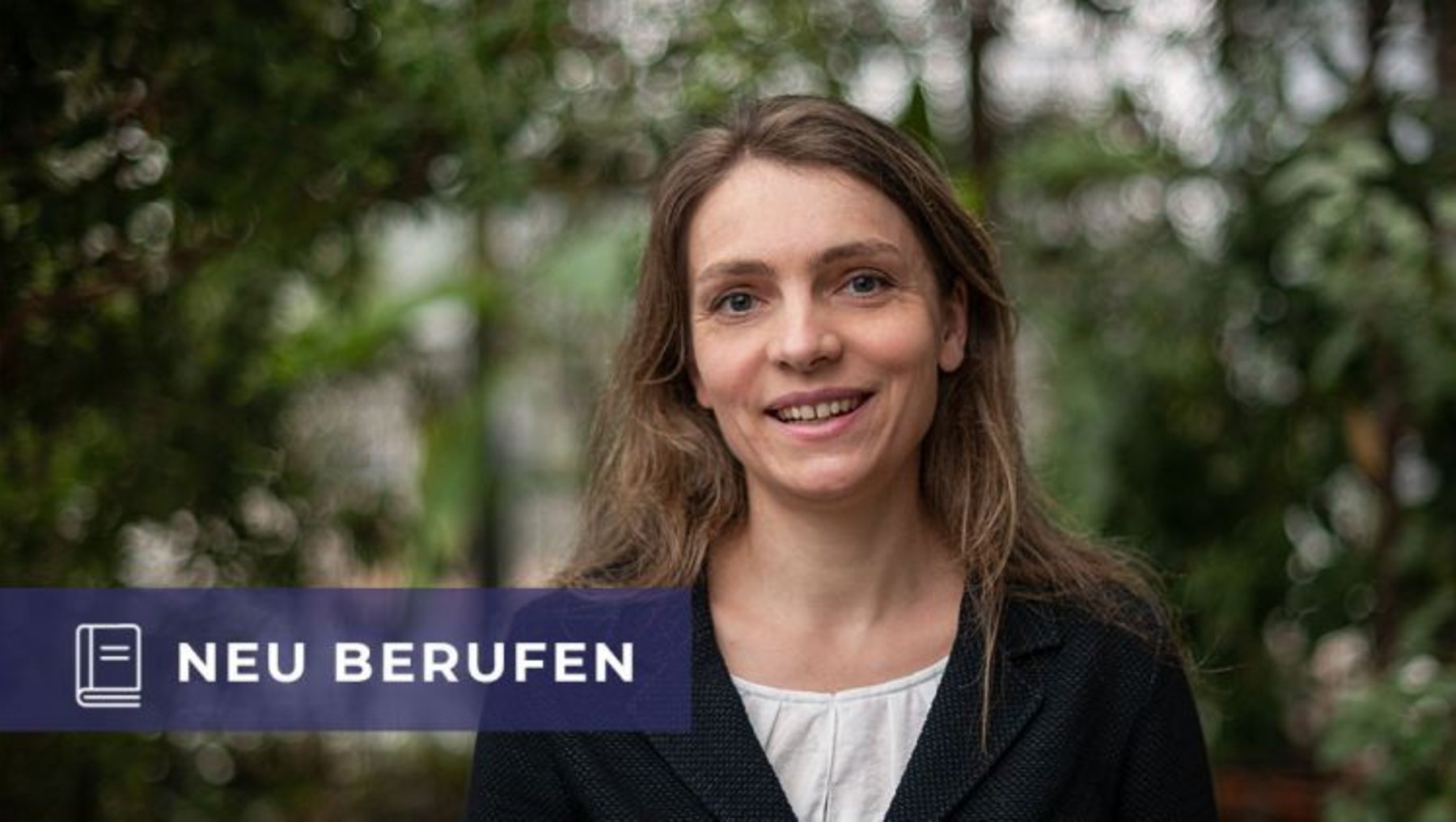
Prof. Fischer, after studying biology at the University of Jena, you completed your doctorate in agricultural sciences at the University of Göttingen. You then honed your scientific profile as a postdoc at the Leibnitz Center for Agricultural Research in Münchberg, before completing your habilitation and working at the Technical University in Munich. What were your tasks during this time?
Prof. Christina Fischer: My area of work at the Technical University of Munich was very diverse. In teaching, the focus was on population biology and nature conservation, the basics of agricultural and landscape ecology, as well as the statistical analysis and modeling of environmental data. In my research projects, I dealt with questions about the influence of land use change on biodiversity and related ecosystem processes in temperate and tropical agricultural landscapes and in semi-arid pasture landscapes. In 2020, I joined the Zoological Evolutionary Biology group at the University of Salzburg. Together with scientists from various European countries, I investigated the extent to which roadsides contribute to the conservation of biodiversity. Especially in cleared landscapes, connectivity through species-rich roadsides plays an important role in the possibility of recolonization and recolonization of areas. In addition to my scientific work, in 2020 I also had the opportunity to briefly deepen my practical experience as a biodiversity consultant in the district of Berchtesgadener Land.
You have now been appointed Professor of Faunistics and Species Conservation in the Department of Agriculture, Ecotrophology and Landscape Architecture. What will be your responsibilities?
One of my most extensive tasks will be teaching in this subject area. Among other things, I will give lectures and seminars on vertebrates and, together with my colleagues, teach the courses Faunistics and Fundamentals of Natural Sciences in the Bachelor's and Master's degree programs in Nature Conservation and Landscape Planning and in the Bachelor's Landscape Architecture and Environmental Planning. I want to use my experience in applied statistics to show students that theoretical principles are necessary for practice and that it is fun to recognize correlations with the help of sound evaluation methods. I am also currently setting up various research projects that deal with the effectiveness of nature conservation measures for biodiversity in open landscapes.
What goals are you pursuing?
First and foremost, I want to convey the joy of nature conservation topics to students in my teaching. Graduates should start their careers with a solid set of tools. In addition to technical knowledge, this includes knowledge of planning and implementing field experiments, the safe handling of monitoring programs and various technical supplementary materials, such as telemetry systems. I also need to be able to analyze data using current methods of environmental statistics. The aim of my research is to gain a better understanding of the causal relationships between environmental changes, the occurrence of organisms and their ecosystem functions in open landscapes and to find compromises between land use and nature and environmental protection.
What challenges might there be?
The transferability and implementation of such scientific findings in practice will be one of the most difficult tasks. On the one hand, it is sometimes difficult to implement research findings in a way that results in simple, practical nature conservation measures. On the other hand, there are often many conflicting interests, especially in the field of nature and species conservation, which makes it difficult to find real compromises.
What research projects are you currently involved in at the university?
In the coming summer semester, I will be working with Professor Sabine Tischew's research group on a project on the use of space by nightjars in the Oranienbaum Heath. The nightjar is a ground-breeding bird species that occurs in dry European heaths and sandy heaths. In Saxony-Anhalt, the species is classified as "endangered". We want to study the movement behavior of nightjars using GPS receivers to understand the influence of food availability, grazing and vegetation composition and structure, as well as predator density on the behavior of the species. From this, in turn, we can draw conclusions about population development. The aim is to develop landscape management measures for the conservation and protection of nightjars. Together with the State Institute for Agriculture and Horticulture, we also want to take a long-term look at small mammals in our agricultural landscapes. I myself will be investigating the ecosystem functions of mice and shrews in more detail.
How can students benefit from this?
As I make sure that the content I teach is application-oriented, students have the opportunity to gain insights into the latest developments in nature conservation research. Furthermore, many research projects would not be possible without the support of the students who are involved in my research as part of their projects and theses.
You will start teaching in the summer semester. What will your teaching be like?
I very much hope that I will have the opportunity to teach in person in April. Especially for the practical courses, it is much easier to convey the content in direct contact than via the various online tools. I see it as less of a problem for lectures, as the students have the opportunity to learn and repeat the content much more flexibly.
Professor Fischer, thank you very much for the interview.
