What does the future taste like? Anyone visiting Anhalt University of Applied Sciences at the International Green Week 2026 in Berlin will get a surprisingly clear answer: surprisingly colorful, sustainably conceived and full of ideas that could shape our food and our environment tomorrow. For the 100th anniversary of the trade fair from January 16 to 25, 2026, the university is inviting visitors to the Saxony-Anhalt Hall (23b) at the science stand (no. 243) to not only see research, but to smell, taste, feel and experience it.
Visitors to Anhalt University of Applied Sciences' science stand in January 2026 can look forward to a particularly colorful offering. The team led by Professor Carola Griehl from the Competence Center Algae Biotechnology is preparing a selection of products that show how versatile microalgae can be used today. These include blue algae smoothies, the now iconic algae beer, creamy algae ice cream and, for the first time, a crispy algae crisp. The characteristic blue color of many products is created by the natural colorant phycocyanin, which also has antiviral and anti-inflammatory properties. A drink containing egg liqueur with an algae-based note and microalgae strains for the extraction of valuable oils, with potential for sustainable packaging or particularly gentle cosmetic products, are also planned.
Another algae moment is offered by the Food Technology of plant-based products: Beatrix Parthey from Professor Jean Titze's team has developed algae crispies together with students. Hearty, crunchy snacks made from corn, oilseeds and nutrient-rich wakame algae. And those who like history can take a trip back in time with a product from the university brewery, the "Germanenbier". Jannis Böhlke has combined old herbal mixtures, traditional recipes and modern brewing techniques to create a drink that arouses curiosity and allows you to taste the students' craftsmanship.
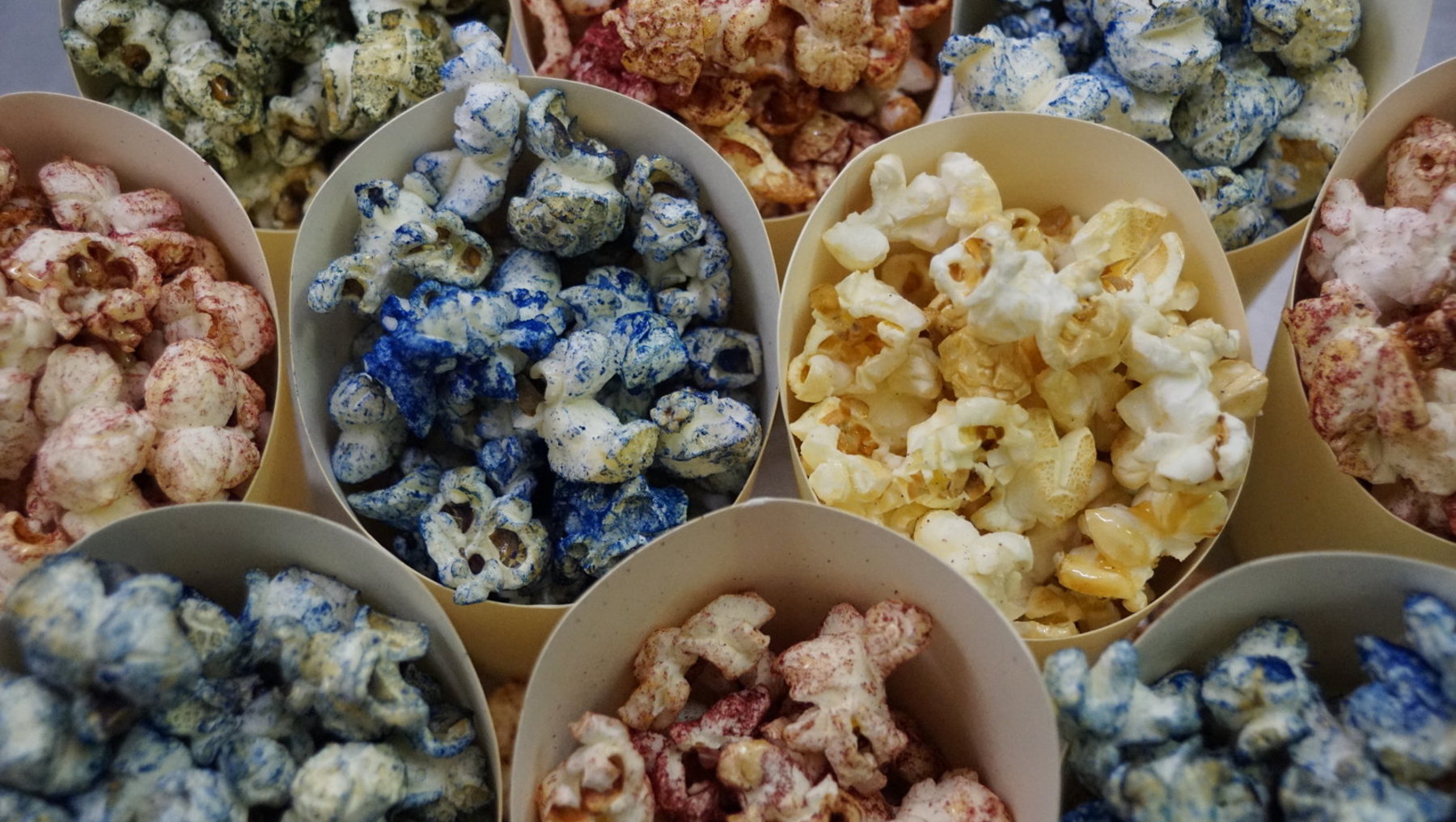
The Technical Center for Food Preparation under the direction of Robert Hanauska provides further moments of pleasure. Several eye-catchers have been created here: colorful shimmering algae-sheep's milk ice cream, colorful popcorn with natural algae pigments and an aromatic spelt-buckwheat sourdough bread. The latter shows that sustainable nutrition is not just about innovation, but also about taking a clever look at traditional raw materials. Buckwheat, for example, scores with valuable nutrients, serves farmers as a second crop and provides food for insects thanks to its long flowering period.
Professor Wolfram Schnäckel focuses on an almost forgotten raw material: rosehip press cake. What otherwise receives little attention as a by-product of oil pressing is developed here into fine flour and thus into a high-fiber ingredient for baked goods, dairy products, confectionery or delicatessen. The idea is simple, regional and has great potential for healthy and sustainable product diversity.
Professor Jana Rödig's Tempeh+ project shows how Biotechnology can further change our food supply. The researchers are not only refining pulses in the traditional way with the fungus Rhizopus oligosporus, but are also experimenting with a vitamin B12-producing microorganism. The aim: plant-based proteins that are not only filling, but also provide real added value through natural vitamin B12 by enriching the vitamin B12 contained mainly in animal foods in the classic vegan product.
However, Anhalt University of Applied Sciences is not only bringing samples to Berlin, but also insights into modern Agriculture. Under the direction of Professor Kathleen Schlegel, research was carried out into how dual-purpose hens actually use their run in the mobile barn. To this end, the site was divided into different zones in order to precisely record walking routes, activity patterns and preferred locations. The results will help to further develop housing systems so that they meet the animals' needs even better.
Professor Uwe Knauer is also looking to the future of Agriculture. With his Transform project, he accompanies agricultural businesses on their way to modern and sustainable land management. Visitors do not have to travel far to get to know these projects: With the help of VR glasses, he brings his project work to life at the Green Week. The focus is on the transfer of knowledge and the further development of digital methods that help to make the cultivation of crops both ecologically and economically viable.
There is also a look to the future for cities: the KompetenzGrün project shows how species-rich flowering areas can be created on inner-city sites, company premises or open photovoltaic areas. The team brings together more than 20 years of experience in ecological renaturation and imparts knowledge about how green spaces can increase climate resilience, biodiversity and quality of life, from seeds to planning and maintenance. It was selected as one of the 10 best projects in the UN Decade Project competition.
Anhalt University of Applied Sciences also has its sights firmly set on international markets. If you want to know how food products can be successfully marketed abroad, the "Global Food Markets" project headed by Professor Elena Kashtanova is the right place to start. Working closely with international students, partner universities and companies, the team analyzes consumer trends, target markets and market barriers in countries such as Japan, the USA, Ukraine and China. The practical study projects not only provide well-founded market entry strategies, but also strengthen the export expertise of the food industry in Saxony-Anhalt.
Anhalt University of Applied Sciences thus presents a trade fair experience like a large future buffet: sometimes crisp, sometimes colorful, sometimes surprising, but always scientifically sound and sustainably conceived. Visitors are cordially invited to taste, ask questions and discover the variety of projects and the current state of research at Anhalt University of Applied Sciences.
More information can be found on the Anhalt University of Applied Sciences website at www.hs-anhalt.de/fachmessen
