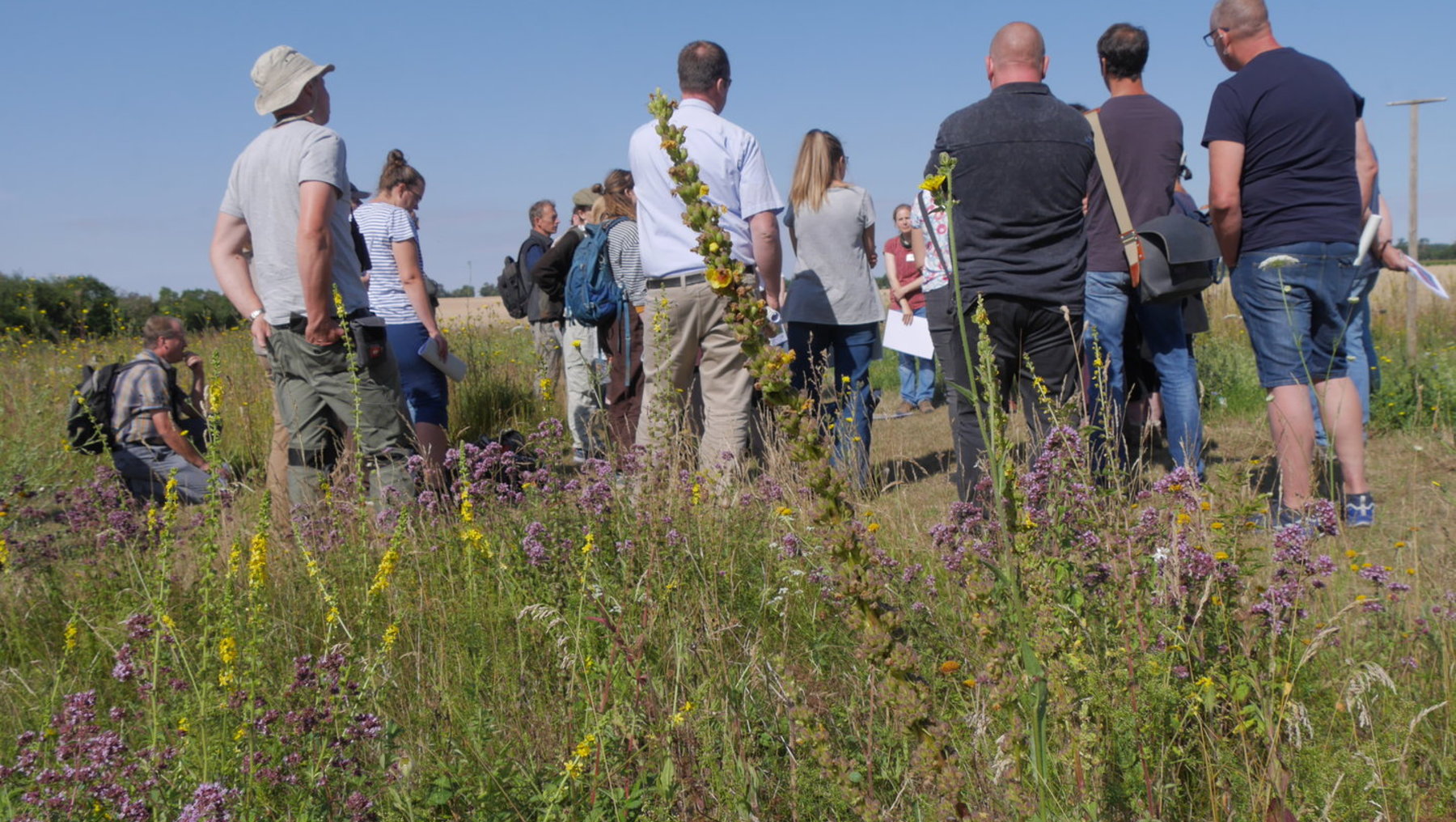
Ten Years of the Renaturation Network: Anhalt University of Applied Sciences is marking this anniversary by inviting experts from German-speaking countries to Bernburg. On July 1 and 2, 2026, more than 100 experts from academia and the professional field will gather on the Campus Bernburg. They will travel from Germany, Austria, Luxembourg, and Switzerland. The focus will be on current developments, practical experiences, and future prospects in ecosystem restoration.
The event will kick off on July 1 with an in-depth exchange of experiences. The focus will be on the planning, implementation, and scientific monitoring of measures to restore ecosystems and biodiversity. Dr. Alfred Herberg, Head of the Department for “Protection, Development, and Sustainable Use of Nature and Landscape” at the Federal Agency for Nature Conservation, will deliver the keynote address on the current status of Germany’s National Restoration Plan. The Renaturation Network will also be used for this event to present findings from the projects “Flower Diversity—Regional Wild Plants for Species-Rich Grasslands” (RegioProD) and “Alliance for Pasture Diversity in Saxony-Anhalt” (WeideVielfalt) to a broad range of stakeholders. In the afternoon, long-term experiments on biodiversity restoration will be presented on the Campus Bernburg. On July 2, excursions will take place to view renaturation measures on pasturelands in the Oranienbaumer Heide and the Wulfener Bruch.
10 Years of Exchange Between Science and Practice
Over the past ten years, the Renaturation Network has developed into an important platform for exchange between science and practice. It now has more than 500 members from associations, specialized agencies, administrations, planning offices, Agriculture, businesses, and universities. The network’s goal is to promote a cycle of innovation for renaturation and to strengthen the transfer of knowledge among different stakeholder groups. The annual network meetings combine keynote presentations with site visits to completed renaturation projects and provide a space for joint discussions of the results.
“Many ideas for further renaturation projects have already emerged from these network meetings. Through this work, the Renaturation Network is making an active contribution to the implementation of the EU Regulation on the Restoration of Nature,” emphasizes Prof. Dr. Sabine Tischew, who teaches vegetation science and landscape ecology in the Department of Agriculture, Ecotrophology, and Landscape Development at Anhalt University of Applied Sciences and a co-founder of the network.
The Renaturation Network is also a member of the European Society for Renaturation Ecology (SER Europe), which promotes Europe-wide cooperation.
Anyone can become a member of this free network—simply send an expression of interest via email to Dr. Annika Schmidt (annika.schmidt@hs-anhalt.de), a research assistant at the university and coordinator of the network.
Contact:
Prof. Dr. Sabine Tischew
Department of Agriculture, Ecotrophology and Landscape Development
Email: sabine.tischew@hs-anhalt.de
The projects (RegioProD) and “Alliance for Pasture Diversity in Saxony-Anhalt” (WeideVielfalt) are funded through the Federal Biodiversity Program by the Federal Agency for Nature Conservation with funds from the Federal Ministry for the Environment, Nature Conservation, Nuclear Safety, and Consumer Protection, as well as by the Ministry of Science, Energy, Climate Protection, and Environment of the State of Saxony-Anhalt.
