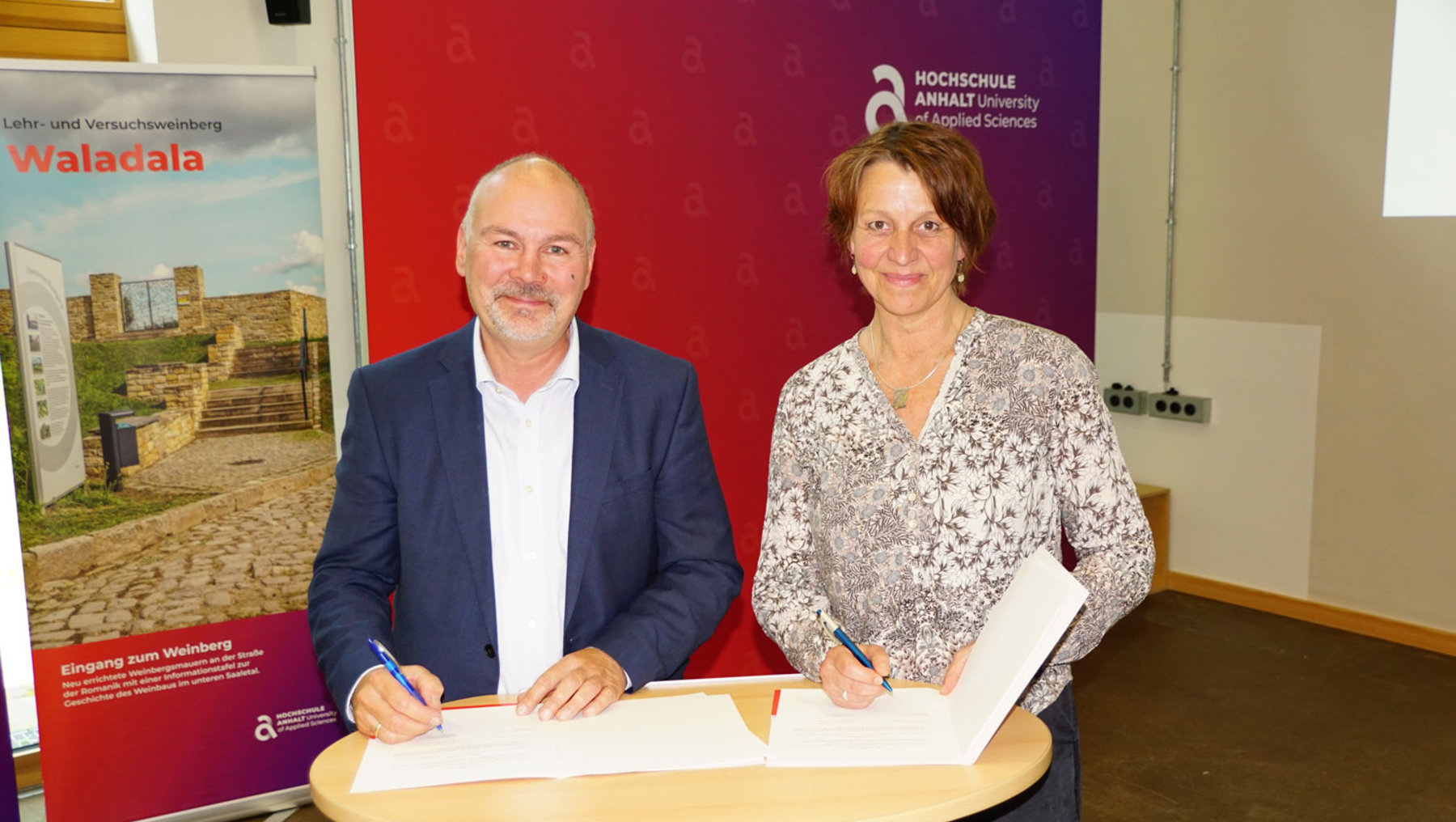
In mid-June, creative design concepts and project ideas were not the only focus of the landscape architecture summer party on the Strenzfeld campus: the signing of a new cooperation agreement between Anhalt University of Applied Sciences and the Saxony-Anhalt regional association of the Association of German Landscape Architects (bdla) was also an important step for the future direction of teaching.
Prof. Dr. Jörg Bagdahn, President of the university and representatives of the bdla sealed the agreement at the event. The aim is to prepare students even more specifically for the current challenges of the profession - from sustainable open space development to digital planning tools. "The demands on our profession are changing noticeably," said Prof. Dr. Elena Kashtanova, Dean of the Department. "It's about the sustainability of our living environment, concepts such as the sponge city and adapting to climate change. We want to integrate these issues even more directly into the course."
The new agreement lays the foundation for closer cooperation: in future, students will work on joint projects with the association, benefit from guest lectures and be supported in their search for internships. Competitions and exchanges on the Advisory Board of the Landscape Architecture and Environmental Planning degree program are also part of the agreement. A particular focus is on expanding digital skills. Techniques such as 3D printing, digital twins and the use of AI in planning processes are to be jointly tested and integrated into teaching. At the same time, traditional topics such as the use of plants will remain an integral part of the cooperation - especially in combination with new technological possibilities. "Our collaboration with the bdla has existed for a long time - now we are giving it a clear framework," said Prof. Dr. Jörg Bagdahn. "This creates reliability and opens up new opportunities for our students to grow professionally and practically."
The signing of the contract was part of the "Spektrum LA" summer festival, at which students presented current projects - from near-natural bathing waters to pop-up school gardens or AI-supported planning. A presentation by the bdla and a joint evening program rounded off the event and provided space for discussions and new ideas.
