What are algae?
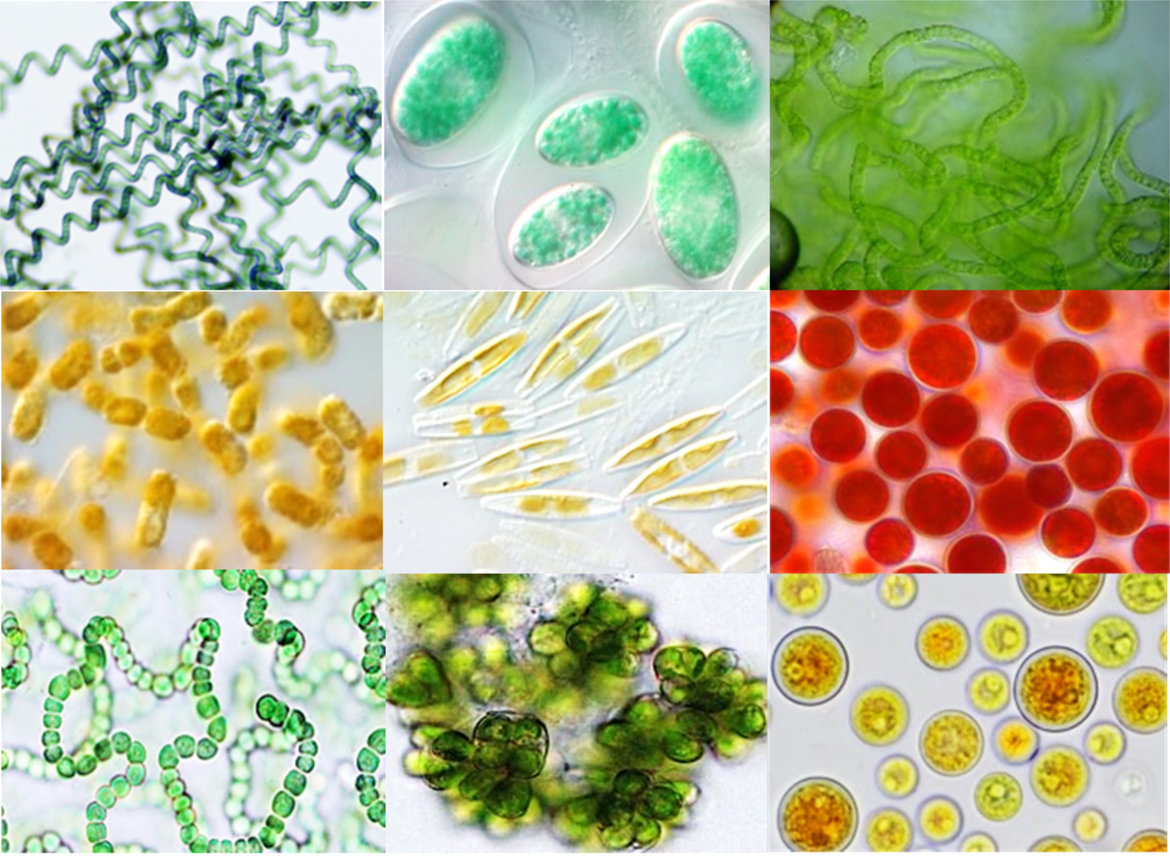
Algae are a large and phylogenetically diverse group of primarily photosynthesizing organisms that occur predominantly in aquatic habitats. Algae are often unicellular organisms whose fascinating forms become visible under the microscope (= microalgae). They can also occur filamentously or in multicellular associations. The highest degree of organization is found in seaweeds (= macroalgae), which form highly differentiated tissue thalli. The evolutionary history and the adaptation to the most diverse habitats means that the individual classes of algae differ greatly in properties such as cell structure, biochemistry, physiology, life cycles and ecology.
- Most important primary producers and basis of food chains in aquatic ecosystems
- Produce around half of the oxygen in the atmosphere and bind carbon dioxide
- Important role for the global carbon, nitrogen and sulphur cycles
- Fossil deposits (crude oil, chalk, limestone, diatomaceous earth)
 © AG Griehl
