The IMT - Competence Center Photovoltaics has carried out the following tasks as a subcontract within the framework of the cooperative research college StrukturSolar(www.struktursolar.de):
Computer-aided evaluation of experiments for statistical experimental design (DoE - Design of Experiments)
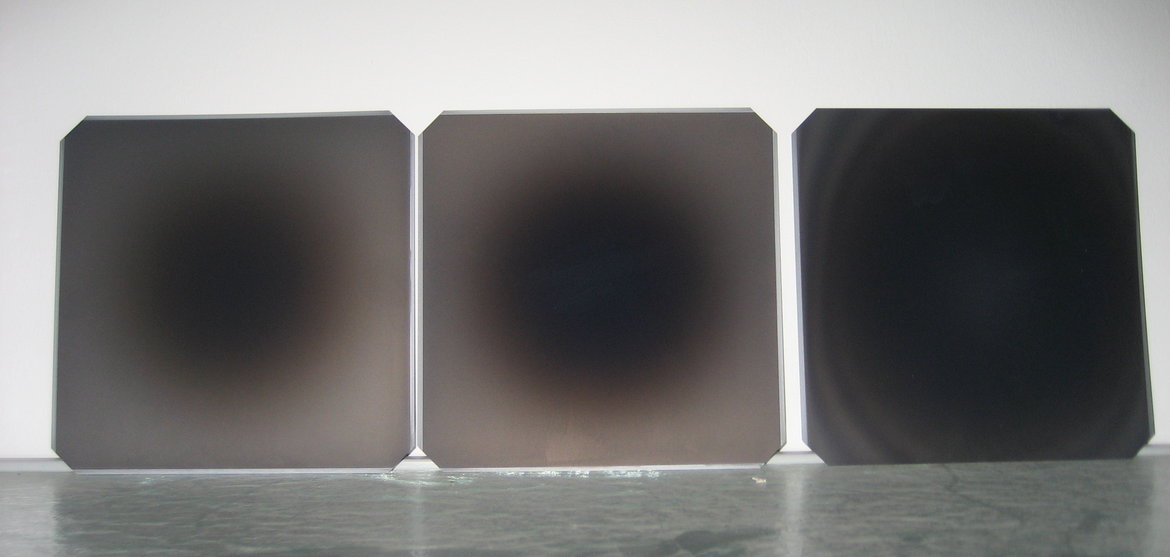
Process parameters of maskless plasma etching for the generation of reflection-reducing textures on silicon wafers for solar cell production were carried out by means of a statistical design of experiments and credited with regard to their reflection reduction and homogeneity. The main influencing parameters and their interactions were determined by evaluation with a DoE program.
 © IMT e.V.
Different homogeneities across the silicon wafer of different texturing etchings. The black coloration = reflection minimization is caused by microtexturing in the sub-micrometer range, which was generated by a maskless plasma etching.
 © IMT e.V.
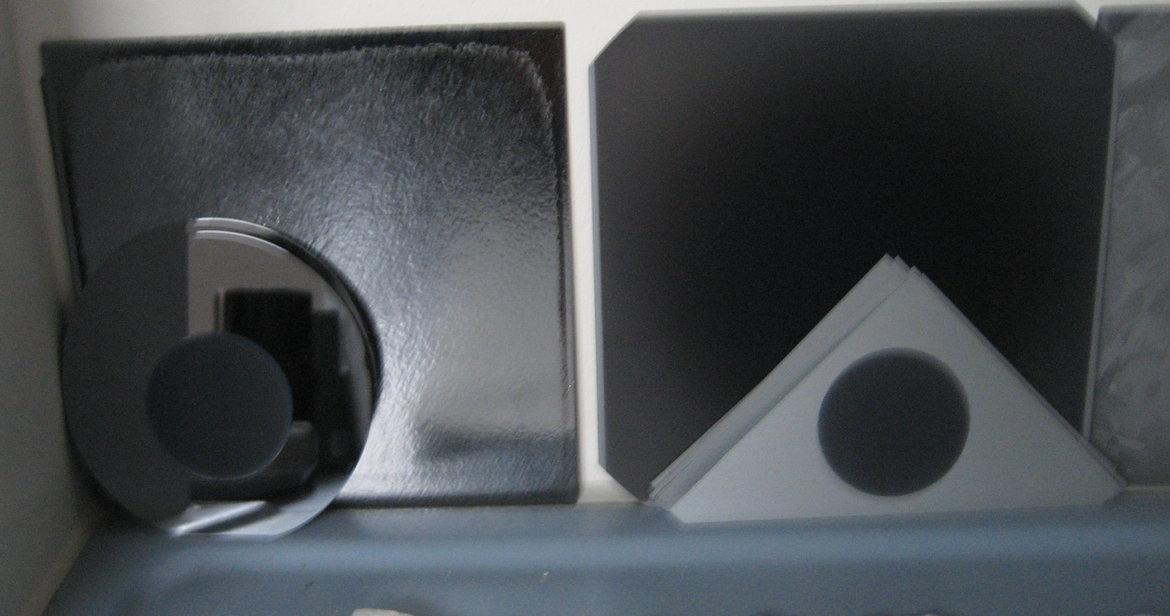
Etching on different substrate types. In contrast to wet chemical etching (industry standard), plasma texturing works independently of the substrate type or surface treatment (monocrystalline or multicrystalline; sawn or polished).
 © IMT e.V.
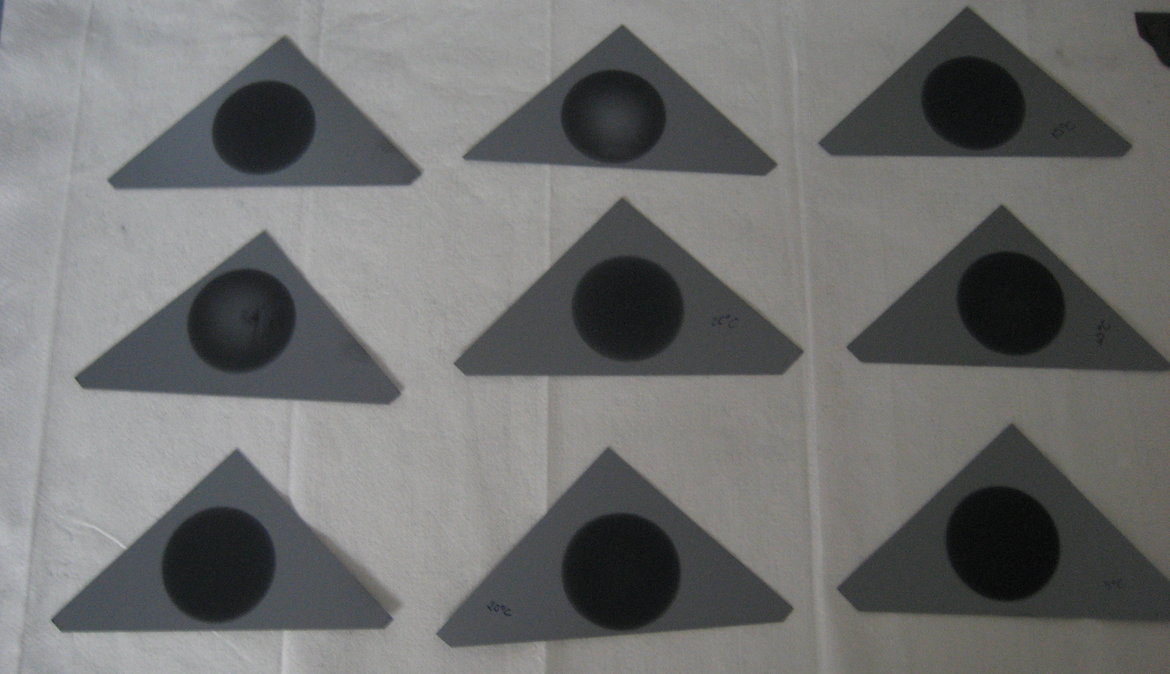
Excerpt from a parameter variation. The differences can only be vaguely recognized with the naked eye. They are determined more precisely by spectrally resolved reflection measurements. Half disks were used to save wafer material.
 © IMT e.V.
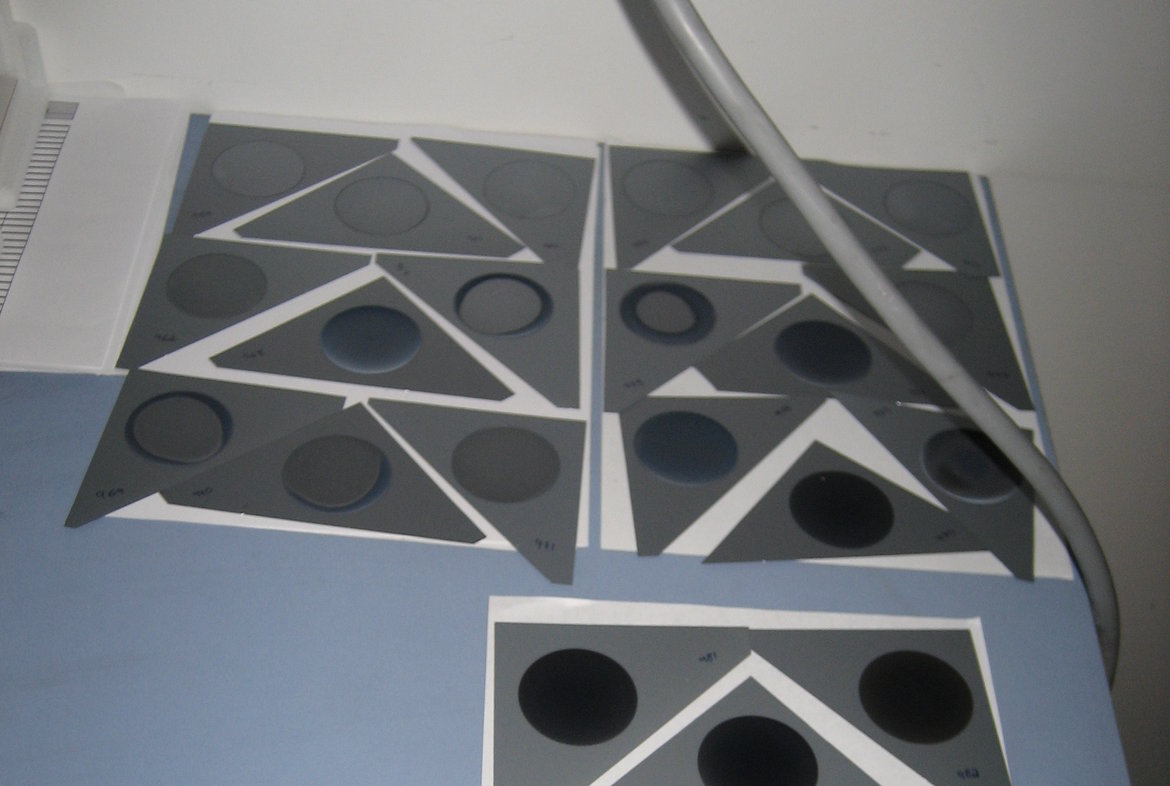
Comparison of different process regimes. Here, the differences between the three regimes are good to see even with the naked eye.
Technical support and installation optimization of the plasma etching system
The laboratory plasma etching system procured as part of the cooperative research college was optimized in terms of the cooling medium and compressed air supply as well as vacuum generation and maintenance work was carried out.
 © IMT e.V.
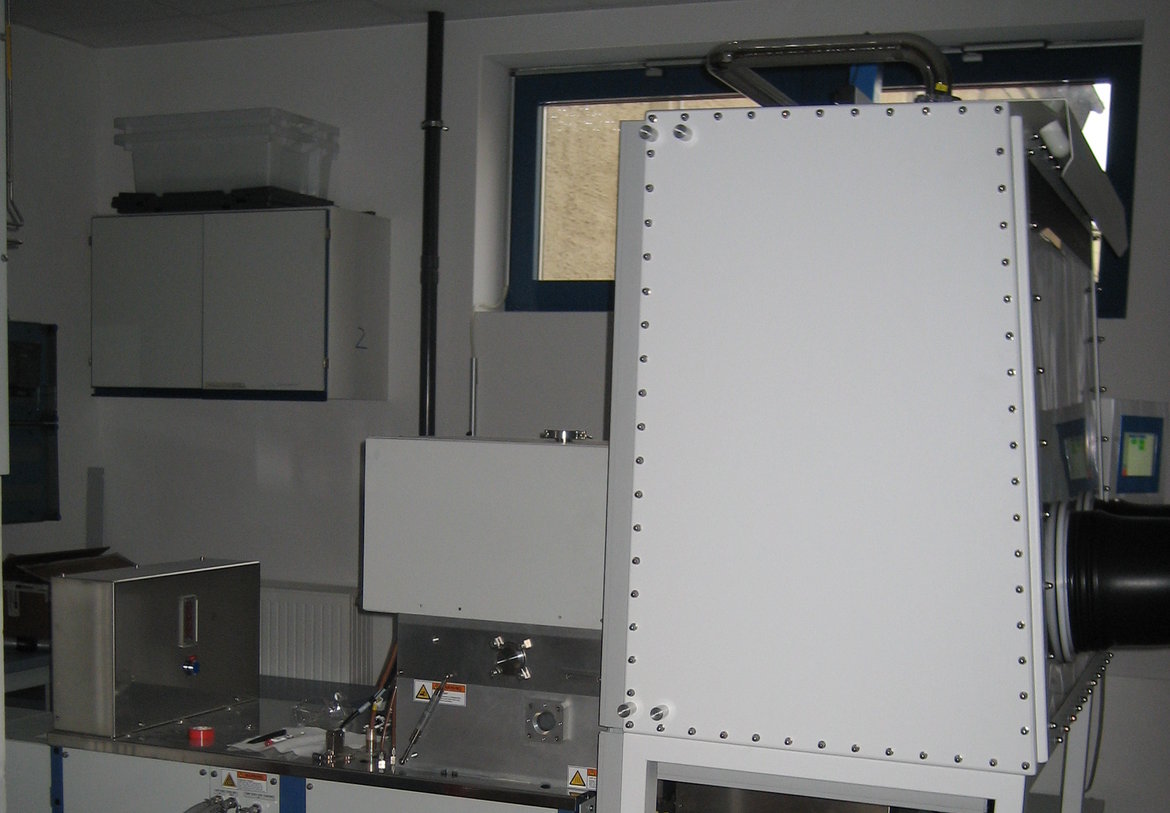
High-vacuum chamber of the plasma etching system (center) with high-frequency coupling from above and below, on the right loading chamber (for loading without interrupting the vacuum) under a glove box (for loading and unloading the samples without exposing them to oxygen or humidity).
 © IMT e.V.
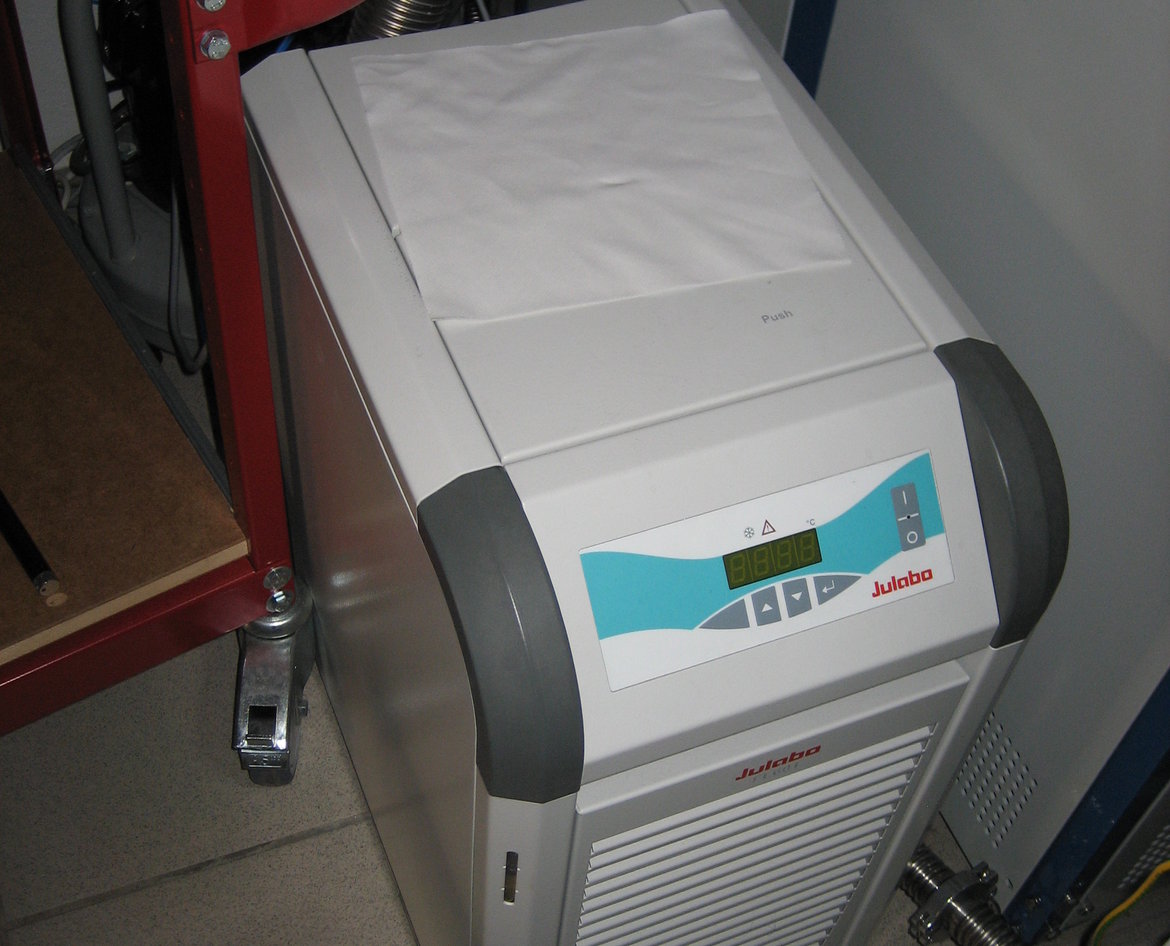
Compressor and heat exchanger unit for the coolant, through which a temperature stabilization of the substrate electrode and the sample holder between -20 °C and +30 °C can be achieved.
 © IMT e.V.
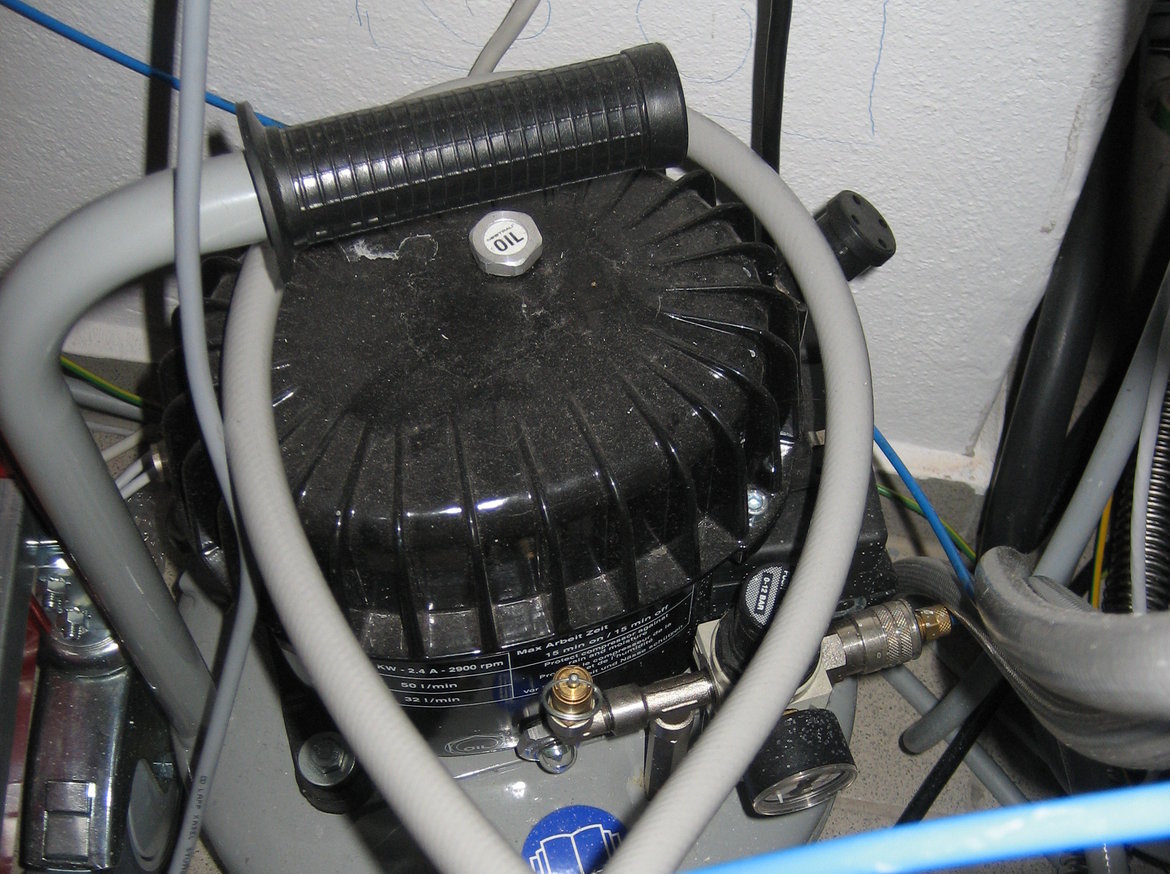
Extra-quiet compressed air compressor for the pneumatically controlled, high-vacuum-tight valves of the etching gases and the vacuum chamber. The compressed air itself is controlled via electromagnetic valves.
 © IMT e.V.
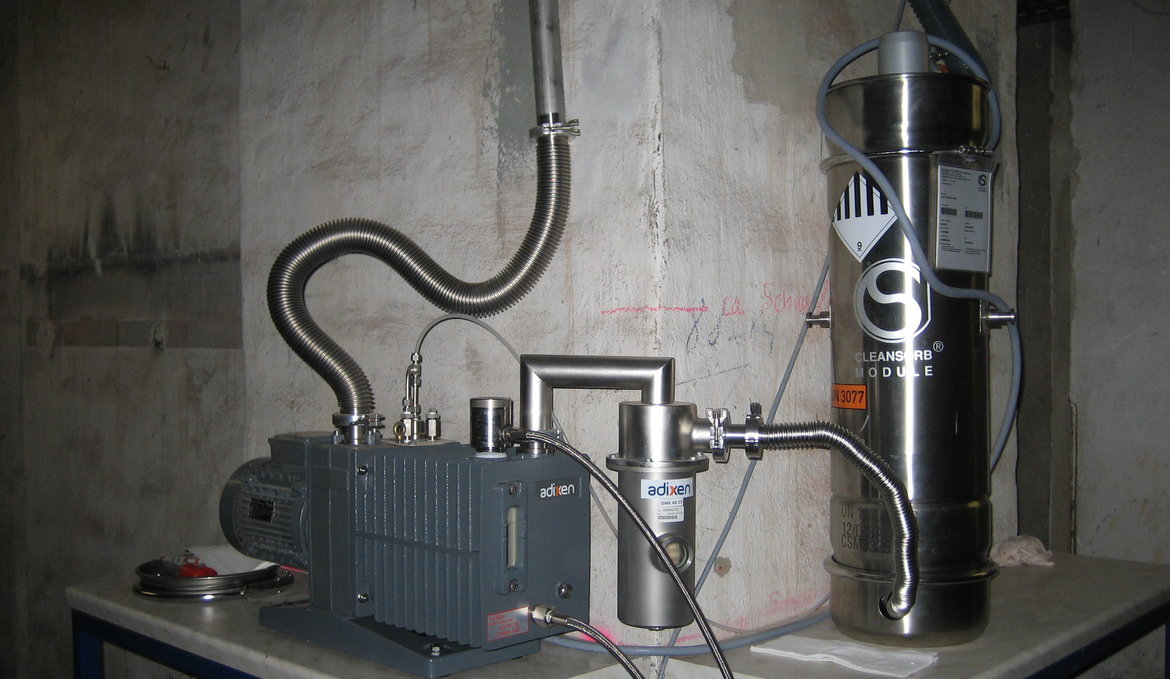
Rotary vane pump for pre-vacuum generation with oil separator and absorber column (for retaining etching products). As the pump runs relatively loudly, it is installed in the basement below the laboratory. The stainless steel corrugated hose leads upwards into the laboratory to the turbomolecular pump, which generates the high vacuum in the etching chamber without gas supply in order to minimize contamination during the etching process.
