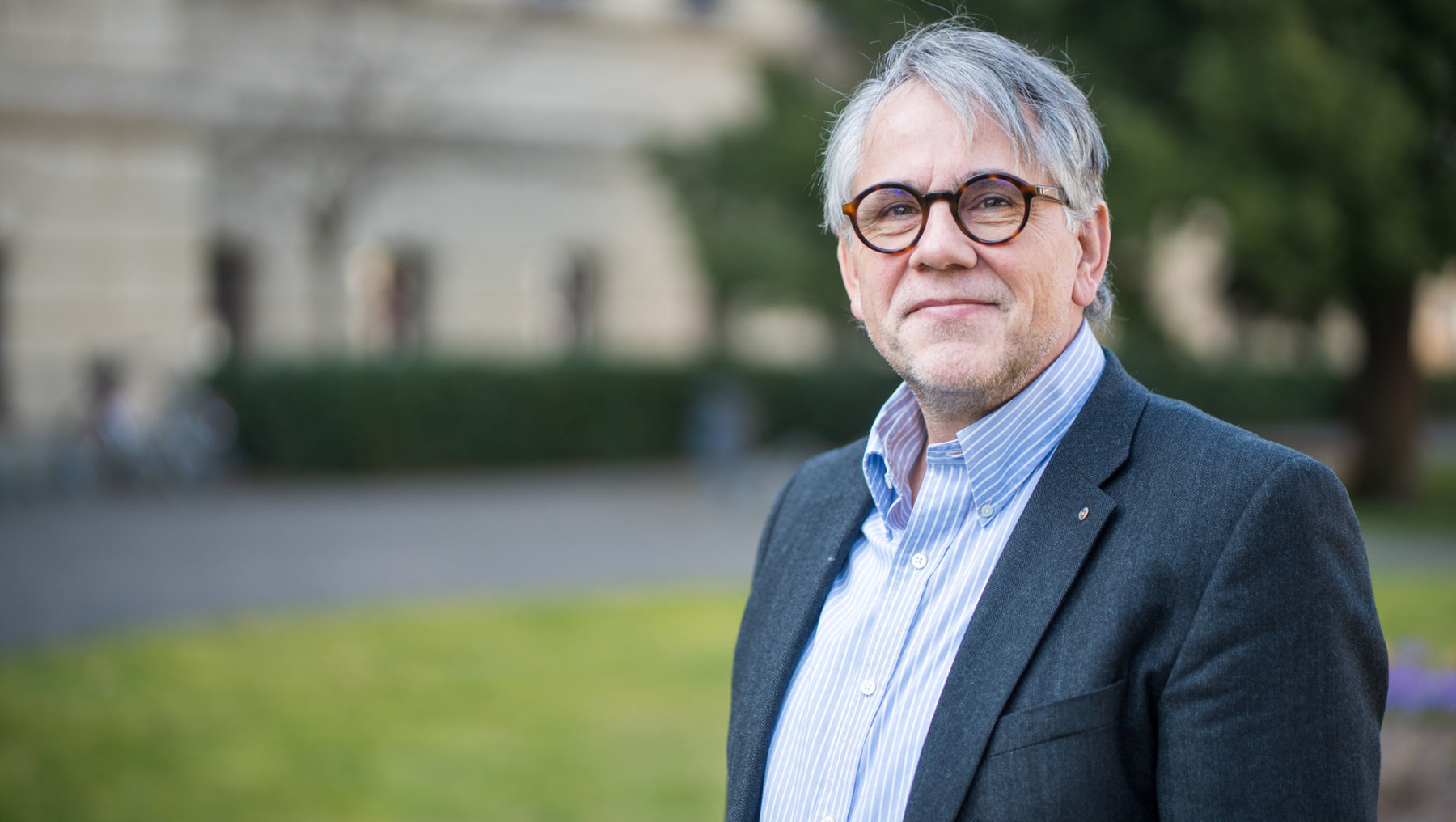
When medicine meets technology, things get exciting - and it is precisely at this interface that Prof. Dr. Peter Trommler operates as a newly appointed honorary professor at Anhalt University of Applied Sciences. The experienced anaesthetist and intensive care physician is not only an expert in his field, but has also been teaching students about medical technology for more than ten years. He enjoys teaching and demonstrates how crucial the interplay between technology and biology is for the development of innovative solutions. In this interview, he talks about his motivation, the special responsibility in medical technology and the value of "aha" moments in teaching.
Prof. Trommler, you have been working as an anaesthetist and intensive care physician for over 30 years and have been teaching at Anhalt University of Applied Sciences since 2012. What drives you to share your knowledge with students?
Quite clearly: the joy of it! I simply enjoy passing on knowledge - especially when I realize that the students understand the connections and the proverbial "aha moment" occurs. In medical technology, it's not about memorizing medical facts, but understanding the interfaces between technology and human biology. Knowledge of biochemical and physiological relationships helps to develop, operate or optimize technical devices in a better way.
You are not only an instructor, but also head physician at the Helios Klinik Köthen. How does your clinical experience shape the content of your classes?
Practical relevance is crucial for me. I have been training doctors for decades and have been teaching at Anhalt University of Applied Sciences for 13 years. Here I try to combine theory and practice. In my Master's course "Intensive Care Technology" in particular, part of the teaching takes place directly in the intensive care unit. There, students can experience the previously discussed content in a real-life environment: Trying out equipment "live", understanding procedures and gaining an impression of the technology. Theory alone is not enough - it's about practical understanding.
You offer specialist internships where students can try out medical technology devices directly. How do these work and what do the students learn?
The labs are always based on the topics covered in the lectures. For example, we present typical devices such as ventilators or monitors in an obstacle course. The students can then operate these themselves, discover sources of error and experience what happens if something is not set up correctly. It is particularly exciting when they try out applications on their own bodies, such as a non-invasive respiratory mask or an ultrasound examination. The aim is not only to understand how the devices work, but also how they interact with a person's vital functions. It is always fascinating to see how motivated the students are when they are allowed to touch the technology and try it out for themselves.
What skills do you think are essential for students who want to be successful in medical technology?
Curiosity is the be-all and end-all! If you want to know how something works - or why it doesn't work - then this is the right field for you. Particularly in times of rapid technical progress, it is crucial to get to the bottom of things and question them critically. How reliable is the data provided by a device? What risks could arise? Students should learn not only to use technology, but also to understand and improve it. A healthy critical eye - not doubting, but curious - helps to keep developing.
You mention responsibility in the development and use of medical technology. What would you particularly like to pass on to students in this area?
Responsibility for the patient does not end with the doctor or nursing staff. Developers and manufacturers of medical technology also have a moral responsibility. In my courses, I sensitize students to the fact that every technical innovation also involves risks. We talk about real examples where faulty technology has had serious consequences. My aim is to raise awareness of the importance of well thought-out design and risk management. Because in the end, it's not just a question of technology - it's about people's lives.
Prof. Trommler, thank you very much for the interview!
