Professor Zeynep Atamer has done research in three countries, co-initiated a “Memorandum of Understanding” with a top US university – and now calls Anhalt University of Applied Sciences home. Why this is really good news for all of us.
From Portland, Oregon, to Köthen: The woman who sees milk from a whole new angle
-
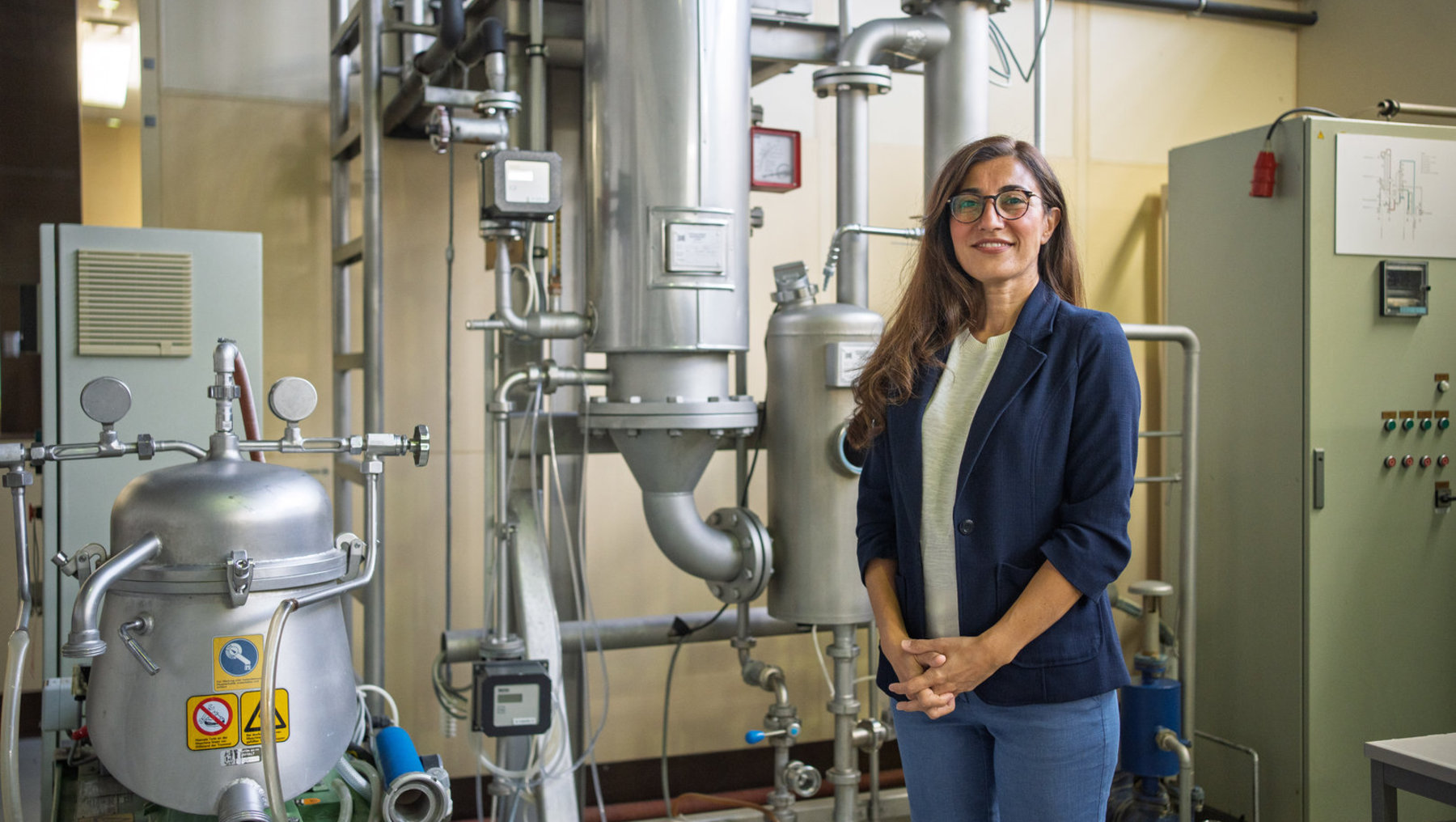 © Hochschule Anhalt - Sascha Perten
Ankara. Stuttgart. Portland, Oregon. And now Köthen. The career stops of Professor Zeynep Atamer read like a world tour through dairy science. The professor of food process engineering with a focus on dairy technology packed her suitcase and moved from the Pacific Northwest of the United States to – Saxony-Anhalt. This is like winning the lottery for Anhalt University.
Dairy science – what’s so exciting about that?
This is all about how we will eat in the future, how our intestinal health works and how food production can become sustainable and intelligent. Zeynep Atamer’s research is at the interface of microbiology, process engineering and digitalization – with a global perspective.
What sounds simple is in fact highly complex. Milk has a scientifically unique food matrix, a naturally structured system designed for growth and development. Initially, Atamer's research looked at the classic question of fermentation stability and product safety: How do you ensure the safety and shelf-life of yogurt and cheese? Today, her scope has widened. She asks about the role of dairy products in actively supporting our gut microbiome.
This is research of the future:
After all, personalized nutrition, microbiome-friendly products and sustainable food processes are topics that are catching on worldwide. These issues have been on Zeynep Atamer’s mind for quite some time.
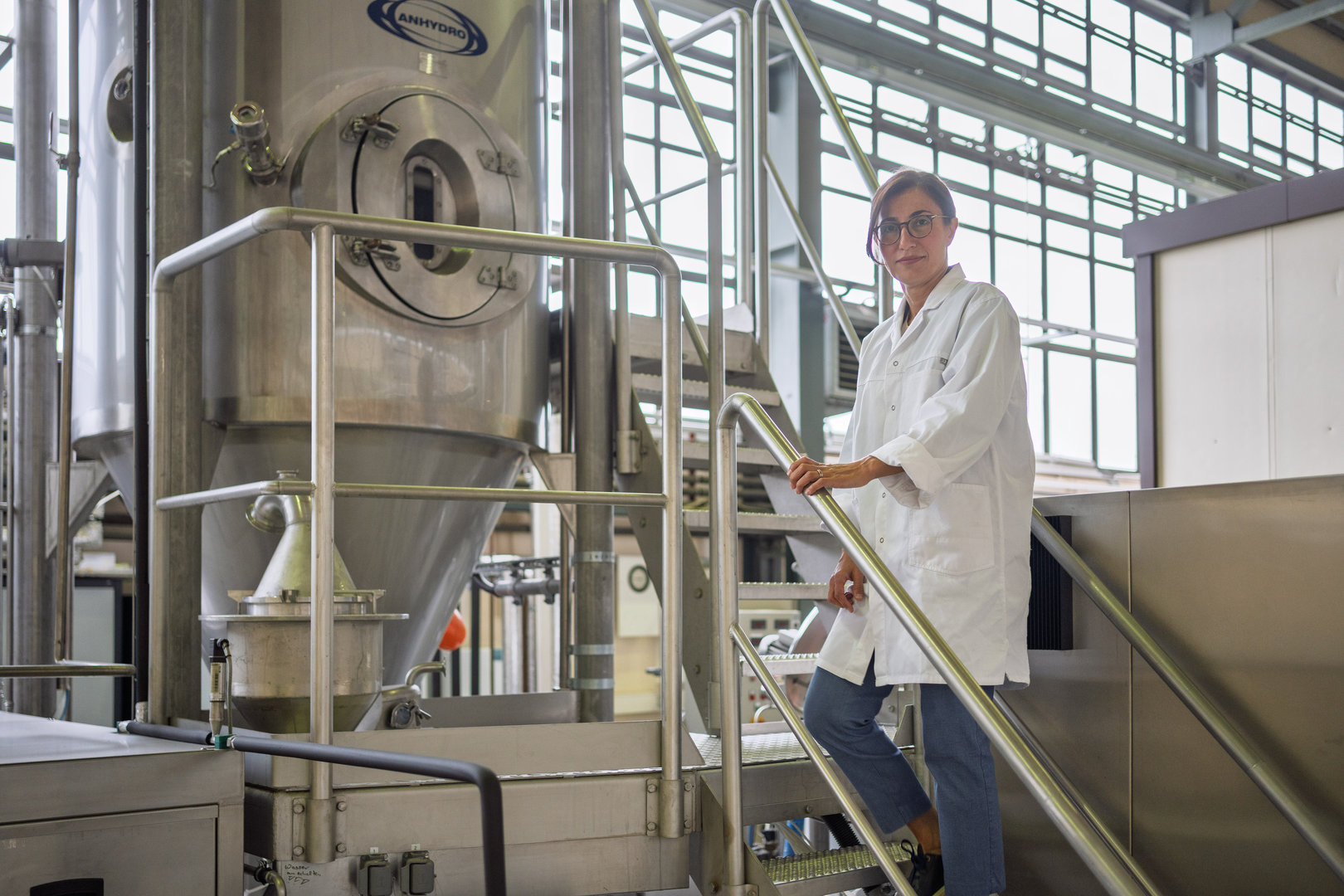 © Hochschule Anhalt - Sascha Perten
In Turkey, she learned to think like an engineer: broadly, system-oriented, technically sound. In Germany, precision was added - rigorous methodology, food safety of the highest standard, microbiology and process design as two sides of the same coin. And in the US? "Science became the driving force," she says. "At Oregon State University, I worked in an environment where third-party funding, start-up thinking and academic excellence are not at odds, but go hand in hand. Digital process monitoring and automation were not futuristic visions there, but standard procedure." Programs such as “BUILD (Building University-Industry Linkages through Learning and Discovery) Dairy” transferred research results directly into practice – fast, scalable, impact-oriented.
"The University of Anhalt engineering profile is the ideal basis for this – an environment in which process engineering, microbiome research and digital technologies can grow together."
Zeynep Atamer
Research that really makes a difference
And it is this network that she has brought with her to Anhalt University. Zeynep Atamer’s part in the “Memorandum of Understanding” between Oregon State University and Anhalt University of Applied Sciences was not insignificant. This means that there is now an official agreement that enables student and research exchanges between Köthen and Portland.
At Anhalt University, she intends to build on what she learned in three countries: application-oriented research that really makes a difference. "The university's engineering profile is the ideal basis for this – an environment in which process engineering, microbiome research and digital technologies can grow together," says Zeynep Atamer.
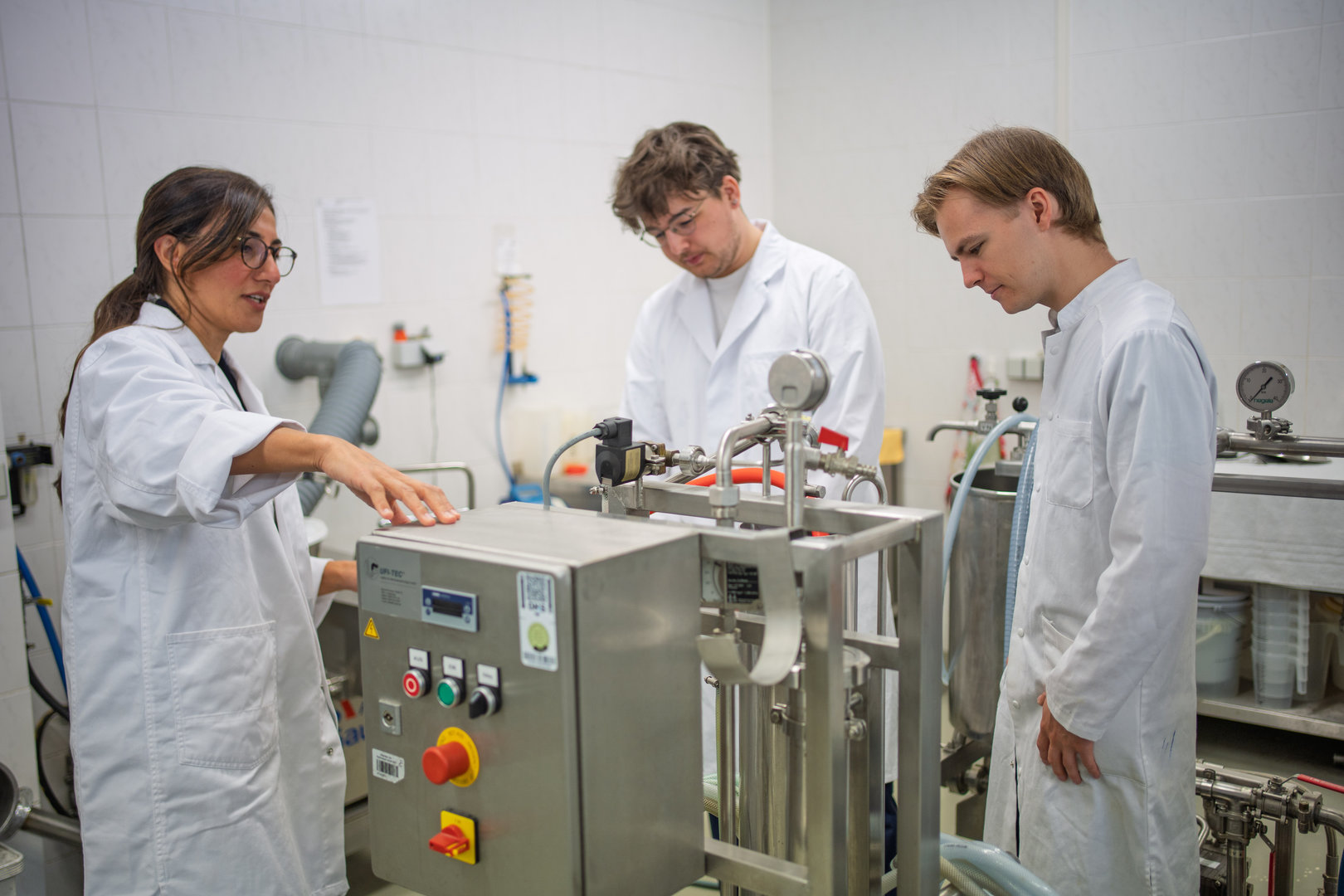 © Hochschule Anhalt - Sascha Perten
Atamer’s students not only gain specialist knowledge about milk proteins, membrane filtration or cascade processes. Those who study with her learn to combine scientific depth with practical applicability – something that’s definitely sought after on the job market. Food companies are looking for people who not only understand processes, but can also design them.
From Portland to Köthen – that sounds like an unusual move. But for a scientist who has always gone where the most interesting questions are being asked, perhaps it makes perfect sense. The most exciting questions about milk, the microbiome and sustainable food production are not being pursued in cities. They are waiting to be explored in the lab.
Without Zeynep Atamer, we would be missing an innovation-driven researcher.
She connects academic research with the industry while not losing sight of societal aspects.
Kontakt
Redaktion
Katja Wallrafen
About the ProgramAs the only university of applied sciences in the eastern German states offering this program, Food Technology (B.Eng.) combines academic study with a strong practical focus. Students gain hands-on experience by producing a wide range of food products themselves, including cheese, butter, sausages, gummy bears, and beer.
The program is based in Köthen, which is also home to the Interdisciplinary Research Center for Sustainable Food Production (InFonaL), led by Prof. Dr. Zeynep Atamer. This gives students the opportunity to participate in internationally recognized research while benefiting from state-of-the-art laboratory facilities and an excellent staff-to-student ratio.
