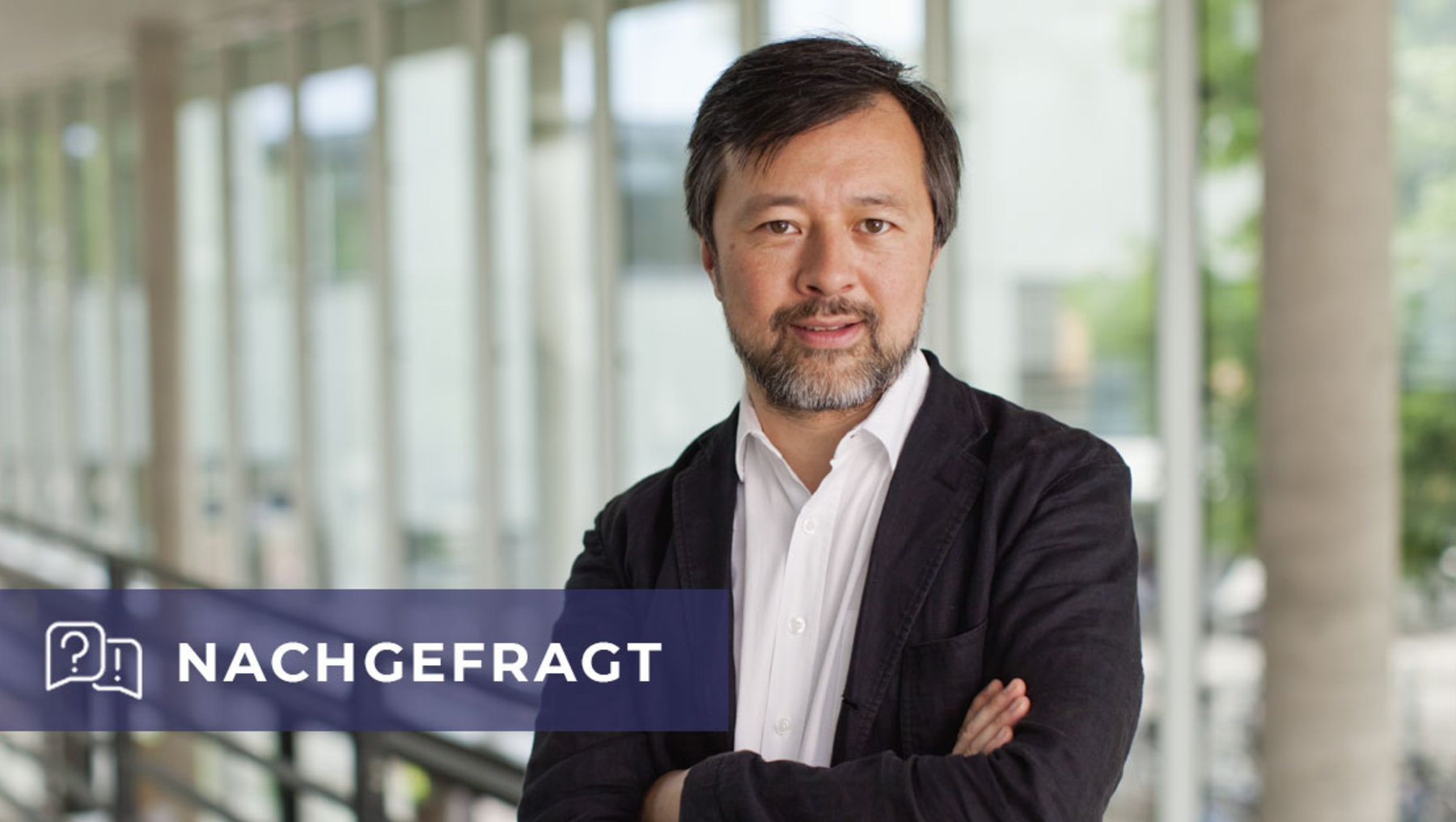
Prof. Severin Wucher, Dean of the Department of Design at Anhalt University of Applied Sciences, sees the Dessau department as a real laboratory for shaping the future.
Prof. Wucher, how does the Department of Design define its self-image and mission?
Prof. Severin Wucher: Good and sustainable design creates more than just beautiful surfaces. This is particularly evident in the Bauhaus anniversary year. We cultivate a broader concept of design in Dessau: we don't just design individual objects here, but also how we deal with them. We design the processes in which people communicate with each other or with machines. This approach of a comprehensive design discipline for all areas of life was established by the historic Bauhaus. We stand in this tradition and bring together the different dimensions of design in a single study program. Communication design, product design and media design cannot be considered separately - the current challenges are complex and can only be tackled holistically.
What are the students currently working on?
The Department of Design is embarking on the path to "bionic modernity". We are updating the Bauhaus idea, which still inspires us. But unlike 100 years ago, design today is no longer about giving the machine age a face. Design is now helping to shape the technological, social and cultural upheavals of the fourth industrial revolution: Digitalization, artificial intelligence and social and ecological sustainability. We are therefore the only design degree program in the country to teach bionics, where learning from nature opens doors for technological, social and ecological innovation.
Can you give us an example of current issues that are currently being discussed in the Department of Design?
Together with international, national and local companies and organizations, we are currently asking ourselves how we will capture memories when the smartphone has disappeared in its current form in 15 years' time? How we can support the car industry in reinventing itself to offer sustainable mobility for rural areas. How we can protect whales from noise as shipping traffic increases. What answers we have to demographic change and the contrasting lifestyles developing in urban and rural areas. We will never run out of challenges - hopefully!
You are lucky enough to teach in a place that evokes positive associations worldwide. Does Dessau still inspire you today?
The Bauhaus city of Dessau is a magnet for creative people from all over the world. Its location, just 100 minutes from Berlin, is ideal. Designers learn the most from other people, but designers also need some peace and quiet to clear their heads. Dessau is therefore a wonderful place for me to do research not too far away from one of the most important European creative centers, but also with enough distance from the hustle and bustle of the metropolis. Our campus is international, interdisciplinary and cosmopolitan. We have enough diversity here to develop clever concept studies for industry, applications for successful digital transformation and social innovations.
What characterizes the learning atmosphere at the Department of Design?
Students learn to shape everyday culture. And not alone in a quiet room, but in exchange with others. Networked thinking, the ability to analyze and criticize as well as open communication - this is what characterizes our learning atmosphere. It goes without saying that students are allowed to try things out without fear - unfortunately, fear is all too common in the education system. Unlike at school, university is not about cramming the expected answer. Students therefore first learn to understand the core of a question and possibly reformulate it. We take away their fear of making mistakes. If something goes wrong, we analyze it together and improve it together. This is the only way to get better, the only way to create innovation and knowledge.
