Professor Uta Seewald-Heeg is the spokesperson for Anhalt University’s campus in Köthen and Head of the university’s Language Center. In her role as Vice-President, she promotes international exchange and equity. Here, she shares insights into how she creates spaces where everyone can feel welcome at Anhalt University of Applied Sciences.
Understand. Don’t judge.
-
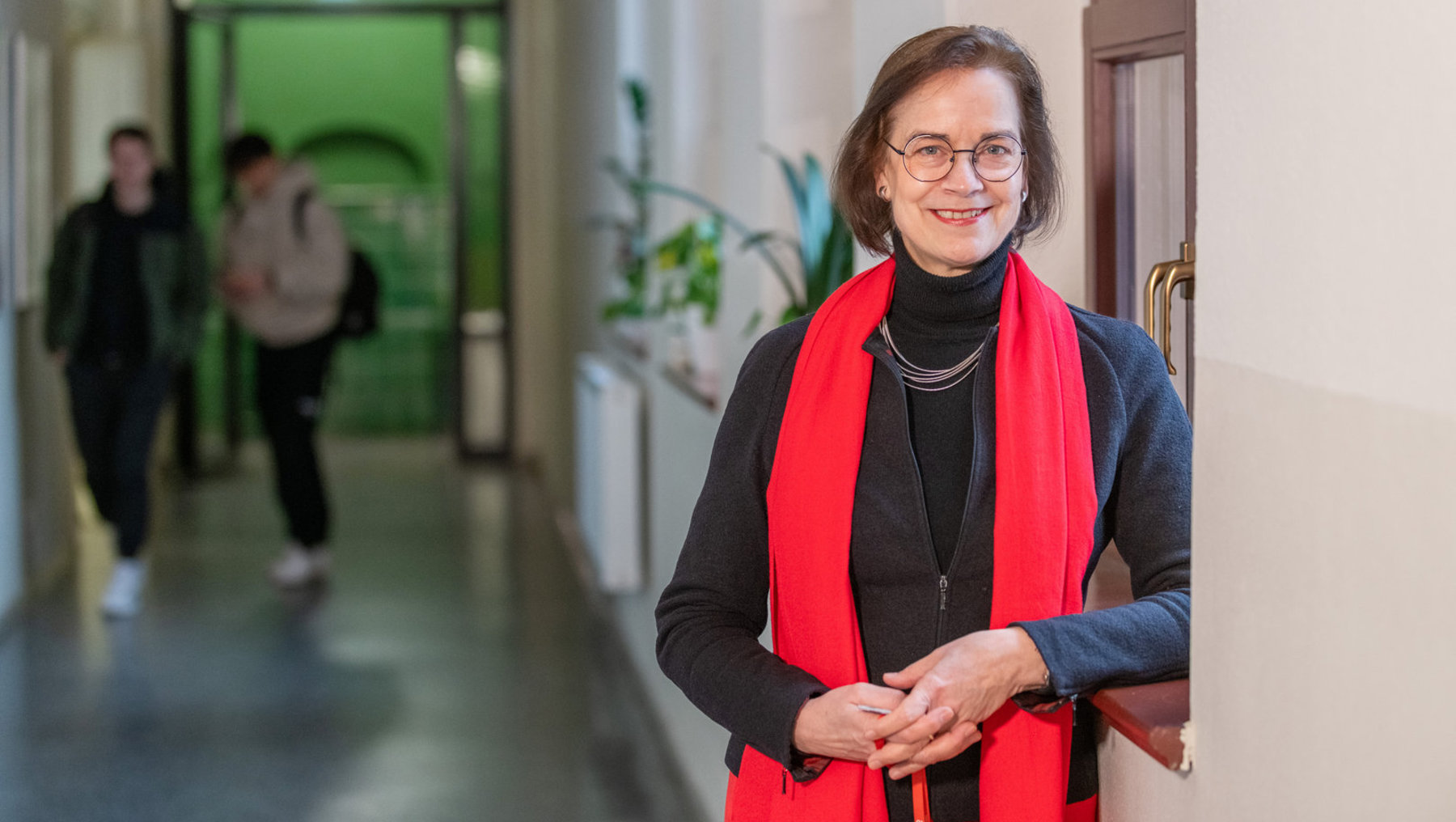 © Hochschule Anhalt - Uwe Jacobshagen
Professor Seewald-Heeg, you are responsible for both the topics of international relations and equity at the university. What does that mean for your work?
UTA SEEWALD-HEEG: International relations and internationalization mean much more to us than just exchanges with other countries – they are a central part of everyday university life. In my role, I support international collaborations, serve as a contact person for international students, and work closely with our International Office. It is particularly important to me that international students are not just seen as numbers or a growth factor. Everyone benefits from exchanges between different cultures and perspectives – science as well as society. My second important key focus, equity, is about making different perspectives visible and taking people with different needs seriously. Here, it is vital to listen, develop an understanding for one another and create an environment in which everyone feels equally comfortable – regardless of origin, gender or individual differences.
What role do international cooperations play in that?
We work with partners in Central Asia, China and Vietnam, among others. We are experiencing great interest in the German academic tradition in these countries, especially in practice-oriented training and dual degree programs. At the same time, we also learn from other viewpoints and perspectives. International cooperation is therefore not only a gateway to the world, but also a driving force for the further development of our university.
"It is vital to listen, develop an understanding for one another and create an environment in which everyone feels equally comfortable – regardless of origin, gender or individual differences."
Prof. Uta Seewald-Heeg
How are international relations and equity connected?
International relations and equity are inseparable, as both thrive on diversity. People bring different experiences, ways of thinking and cultural backgrounds to the table. That is why it is important to be open to other perspectives and not just take one’s own point of view for granted. Particularly in an international context, it becomes clear that students from other countries have different approaches to tasks. For example, I have experienced that Asian students do not dare to publicly criticize others, especially older people or lecturers, as it is culturally taboo and could result in a loss of face. However, if you want criticism to be expressed openly during projects, you first have to a create mutual basis for this. Such experiences show that much of what we take for granted is shaped by culture. But this is precisely what holds the potential for a great learning process.
You also oversee the female professors program. What’s happening there?
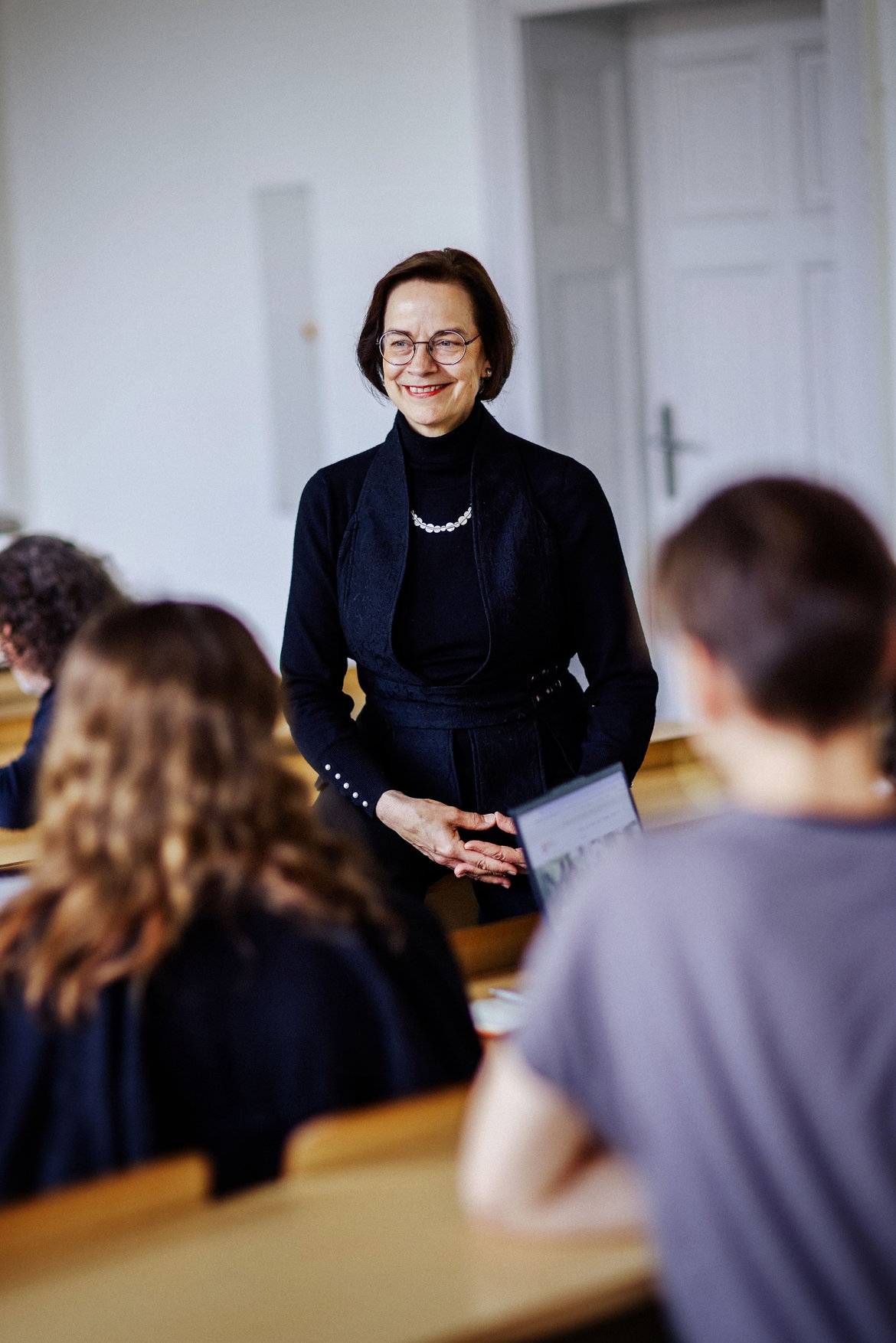 © Hochschule Anhalt
The female professors program helps to make women in science more visible and to systematically support them. It is not about giving women preferential treatment. It’s about specifically promoting and supporting outstanding female scientists. At the same time, young women should see that a professorship can be a realistic career path. Visible role models play an important part in this. There are still challenges, especially when it comes to combining having a family and pursuing an academic career. Flexible working models, support services and an open approach to different life realities are therefore important.
"International relations and equity are inseparable, as both thrive on diversity."
Prof. Uta Seewald-Heeg
What significance do internationality and equity have for society?
International cooperation creates understanding and long-term connections. People get to know each other, work together on projects and take their experiences back to their home countries. This is an important basis for mutual trust and peaceful coexistence. At the same time, Germany is an ageing society. That's why we need exchange, openness and specialists from across the globe. International students who get to know our culture and gain experience at our universities are a great asset – both for the university and for society as a whole.
If you look back on your own career: What experiences have shaped your view of equal opportunities?
As a child, I experienced what it was like to arrive in a new environment and not understand many things at first. During my primary school years, my family moved to the Swabian Alb in the south-west of Germany. Many of the teachers there spoke the local Swabian dialect, which was almost like a foreign language for me at the time. I came home crying after the first day of school and said that I didn't understand the teacher. In hindsight, this was perhaps an early indication of the importance of openness and mutual understanding. Not everything is immediately self-evident and not every way of thinking is automatically right just because one is used to it. That's why I think it's important not to moralize, but rather to create understanding for one another. Progress usually comes about when people are prepared to listen and take other perspectives seriously.
Where would Anhalt University be without Professor Uta Seewald-Heeg?
Without her, there would be a lack of exchange, diversity of perspectives and mutual understanding at the university. She is committed to bringing people with different cultural backgrounds, experiences and ways of thinking together.
