Where grass and shrubs take over the open sand, the sand silver-leaved saxifrage (Jurinea cyanoides) doesn’t stand a chance. To save this endangered plant, Anhalt University of Applied Sciences is participating in an international species conservation project. Since July 2026, seven partners from Germany, the Czech Republic, and Ukraine have been collaborating on this effort. The ten-year “LIFE for Jurinea” project aims to secure the long-term survival of the sand silver-leaved Jurinea and restore its habitats. Numerous other threatened species are also expected to benefit from this effort.
Professor Sabine Tischew from the Department of Agriculture, Ecotrophology and Landscape Development is leading the German subproject at Anhalt University of Applied Sciences. “By protecting the sand silverweed, we are not only preserving a rare plant but also valuable habitats for numerous other plants and insects. The project’s long duration gives us the opportunity to secure these habitats permanently,” explains the expert in vegetation science and landscape ecology.
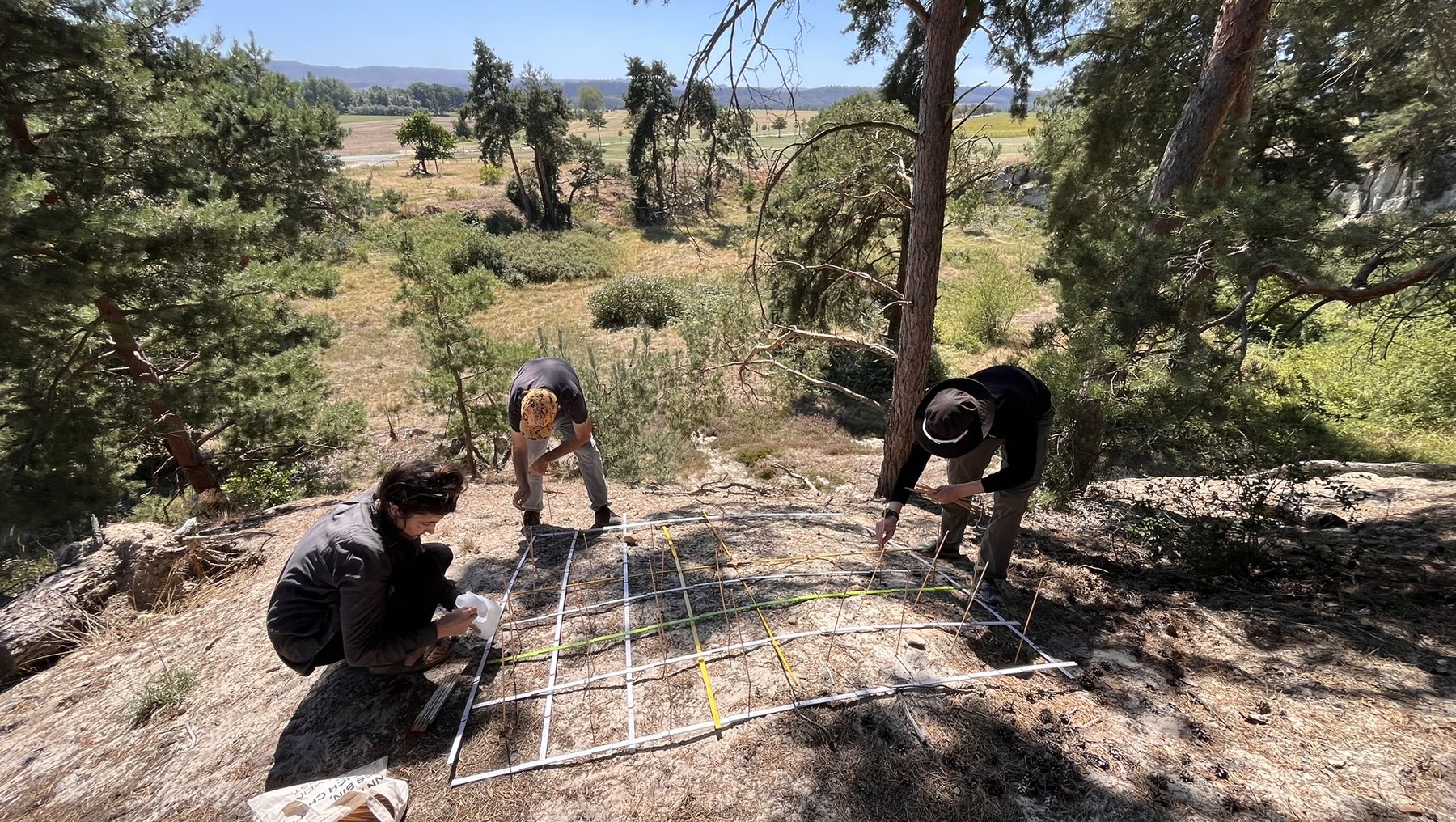
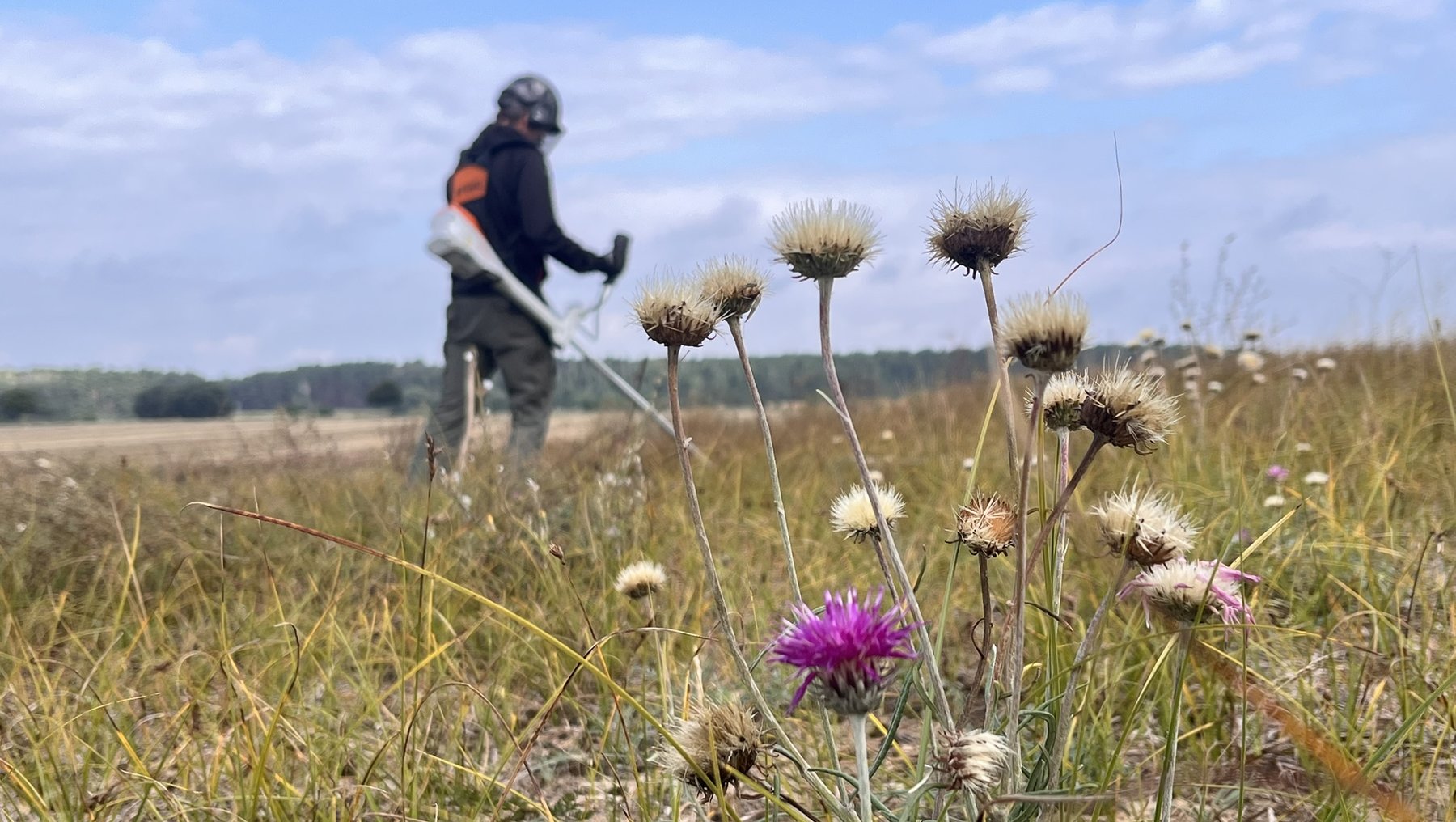
Together with her team and the field partner Biotopmanagement Schonert, Tischew has already implemented initial conservation measures in Saxony-Anhalt. Following intensive preparations and consultations with nature conservation authorities, selected areas along the Elbe River and in the northern Harz foothills were mowed. This gives the sand silver-leaved saxifrage—a plant that struggles to compete—more space and light again. In addition, the team has established small seeding plots in open sandy areas. Seeds collected previously in the respective areas were sown there. The plant is also expected to grow again in the future even in locations where it has already disappeared. Furthermore, discussions are underway regarding the resumption of grazing on a number of sites. Regular grazing can keep the areas permanently open and well-lit, benefiting the sand silver-leaved saxifrage and other rare species.
In total, conservation measures are planned for at least 22 sites in Saxony-Anhalt. The project team is supported by students in the Nature Conservation and Landscape Planning degree programs. They help survey the sites and collect seeds for propagation and reintroduction.
International Cooperation for Species Conservation
The sand silverweed is one of Europe’s specially protected plant species. It grows on open, sunny sandy areas. Its habitats are endangered in Germany and the Czech Republic. In Saxony-Anhalt, it is now found at only 18 sites. Some are far apart from one another. Often, only a few plants grow there. This threatens their survival, as small populations have low genetic diversity. In addition, pollinating insects have a harder time finding plants that grow in isolation.
Partners from the three countries are pooling their expertise. Together, they are studying the genetic diversity of the sand silver-leaved saxifrage. Their goal is to identify suitable plant populations from which to harvest seeds for planned propagation programs and reintroduction efforts. The findings are also intended to help save other species threatened with extinction in the future. The researchers are exchanging ideas with their Ukrainian partners primarily on regional nature conservation planning and the development of European nature conservation projects. This is also important in light of Ukraine’s aspiration to join the EU. In all three countries, they are also studying the pollinators of the sand silver-leaved saxifrage and other insects found in sandy landscapes. These species, too, are expected to benefit from the conservation measures.
Botanical gardens and other conservation gardens are intended to help propagate this rare plant. The public can also get involved. Plans include opportunities for public research participation, school sponsorships, and lab internships for students.
Background
The international “LIFE for Jurinea” project is led by the Botanical Institute of the Czech Academy of Sciences. In addition to Anhalt University of Applied Sciences, five other partners from the Czech Republic, Germany, and Ukraine are involved.
The subproject in Saxony-Anhalt is funded by the European Union’s LIFE program. The Ministry of Science, Energy, Climate Protection, and Environment of the State of Saxony-Anhalt is contributing to the funding.
Further information on the international project is available at https://www.csopvlasim.cz/life-jurinea. Information on the German subproject will be published in the future at https://offenlandinfo.de.
