Sustainability remains a central field of action at Anhalt University of Applied Sciences and continues to be visible internationally: In the current sustainability ranking "Green Metric" 2025, Anhalt University of Applied Sciences is ranked 178th out of 1,745 participating universities worldwide from all continents except Antarctica, making it once again one of the top 200 most sustainable universities worldwide. In a national comparison, it is in third place among German universities.
The international ranking, carried out by Universitas Indonesia, credits universities based on various sustainability criteria, including environmentally friendly infrastructure, energy and climate management, water and waste management, sustainable mobility and the integration of sustainability in teaching and research. In 2025, universities from 105 countries took part. It is very important for Anhalt University of Applied Sciences to compare itself nationally and internationally with other universities in order to receive external credits for its future strategic orientation. It has been continuously participating in the Green Metric ranking since 2019 and has significantly improved its position over the years. Being ranked among the three most sustainable universities in Germany confirms the consistent implementation of the university's own sustainability strategy and also serves as an important incentive for its further development.
The university's internal sustainability working group is already planning new steps for 2026 to further expand existing measures and make them more visible. The focus here is on updating the sustainability policy, additional measures to save energy and generate renewable energy and the further development of sustainability communication on the website. In addition, scientific staff will be further sensitized to the topic, conceptual approaches to the use of service water will be examined and the barrier-free expansion of the infrastructure will be promoted.
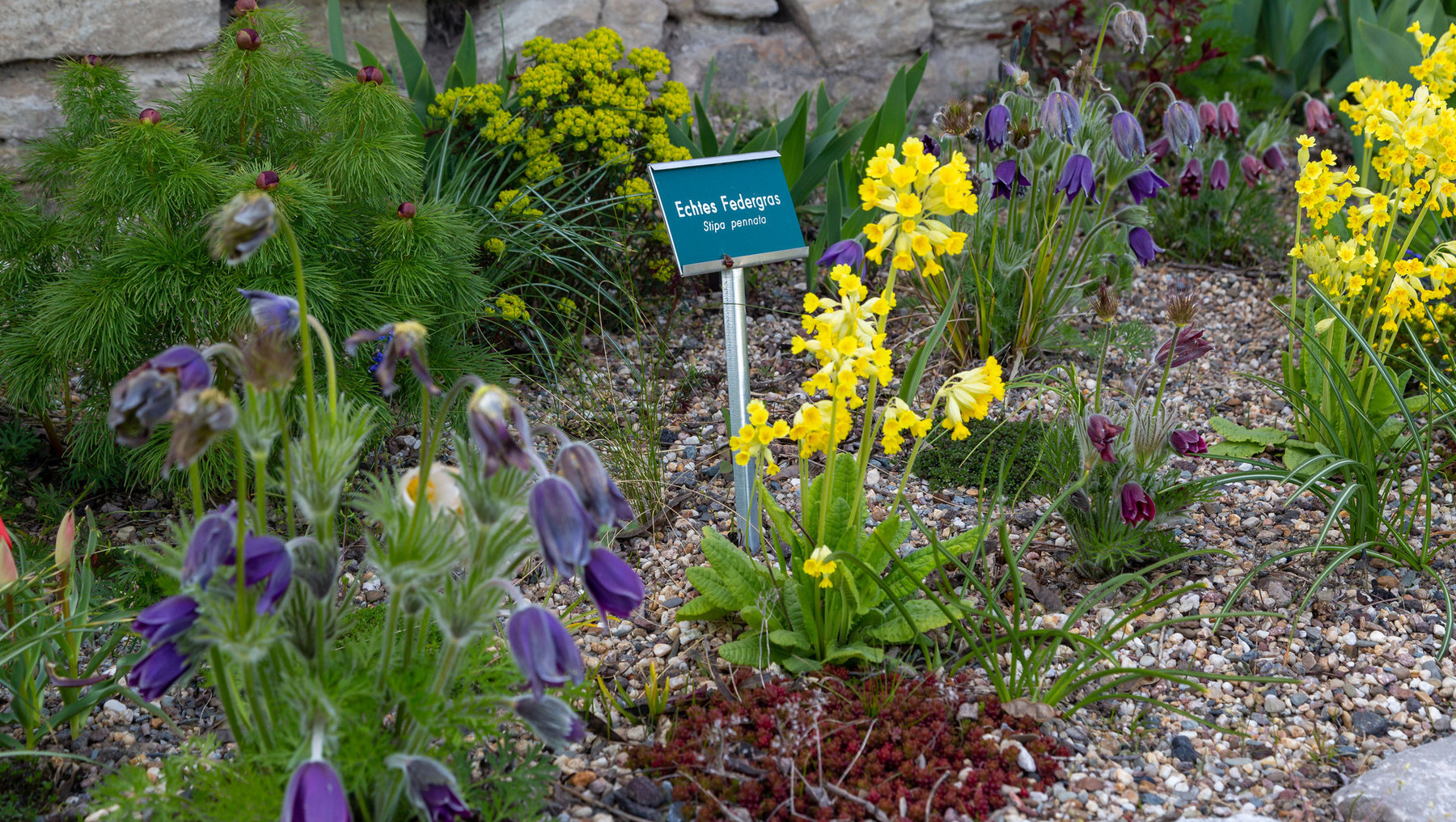
This will anchor ecological responsibility in all areas of university operations. Flowering vegetation areas in the grounds are evidence of a general rethink and provide a significant boost to increasing biodiversity.
Waladala teaching and experimental vineyard
The development of the teaching and experimental vineyard at Campus Bernburg is a particularly positive example. The scientific task focuses on the examination of suitable grape varieties for the lower Saale valley under the conditions of climate change. From the outset, the trials have been linked to issues relating to the promotion of biodiversity, in particular through the use of suitable flower strips between the rows of vines. The theme of ecological sustainability characterizes the entire vineyard site: flowering strips along the natural stone walls and flowering shrubs contribute to a high level of plant diversity and correspondingly species-rich insect populations. The "Anhalt insect nursery" is currently being set up in this context. The exclusive use of rainwater for irrigation experiments is a matter of course. Nesting opportunities for songbirds and a natural stone pile as a habitat for lizards complete the ecological focus. There are also plans to install photovoltaic modules to supply the vineyard and the vineyard garages with their own green electricity.
These examples show that much can be done to preserve our environment and nature using natural resources, even in limited properties.
More information:
www.hs-anhalt.de/nachhaltigkeit
Contact:
Sabine Thalmann
Director of Central Administration
E-mail: sabine.thalmann@hs-anhalt.de
