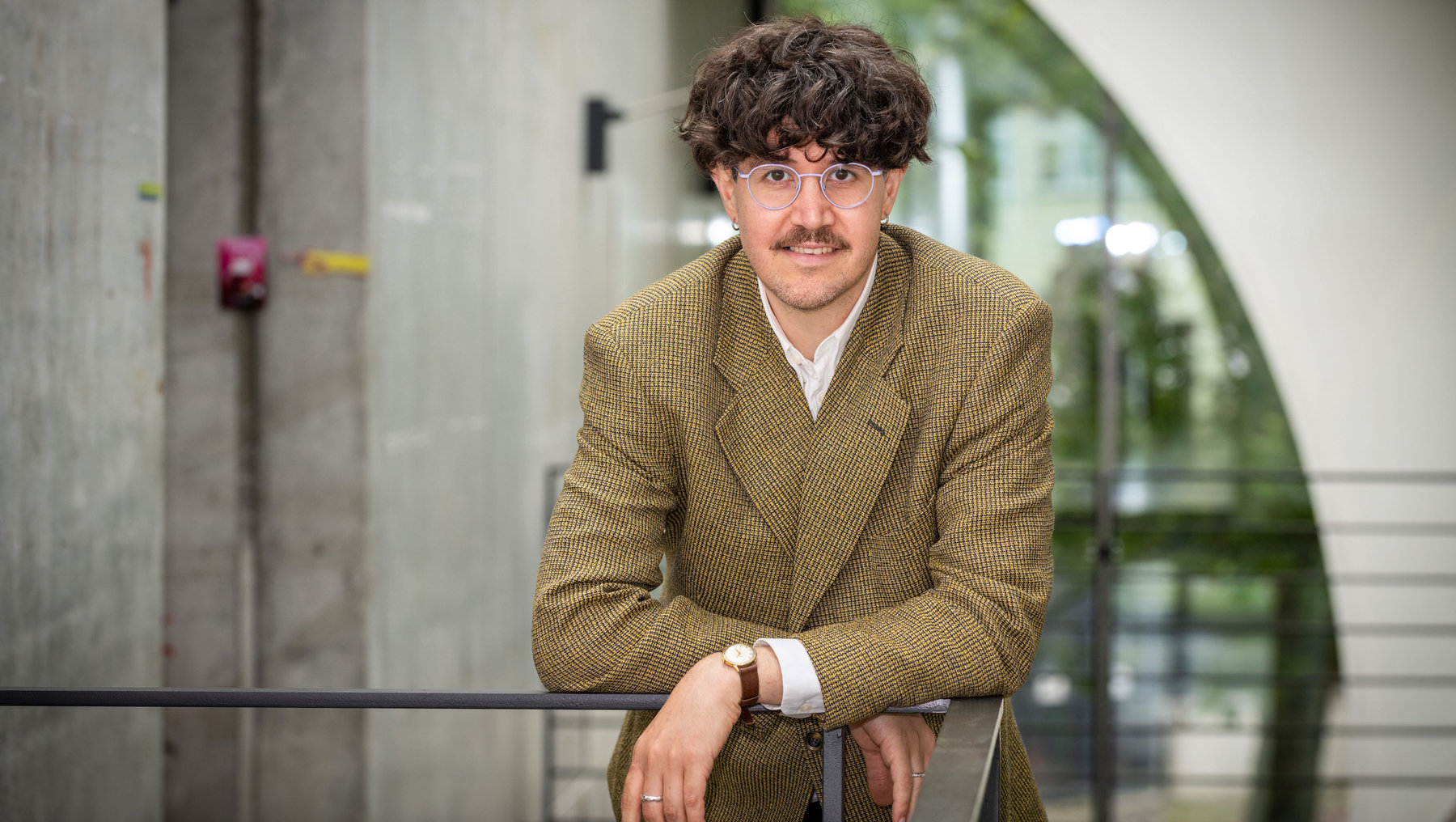
Alberto Iberbuden came to Dessau from Argentina – and stayed. As a doctoral student, he is researching how mindfulness can transform design education.
Hands-on thinking, mind-driven design
-
 © Hochschule Anhalt - Uwe Jacobshagen
When Alberto Iberbuden was still at school, he learned how to saw wood, shape metal and build electrical circuits. Not out of obligation, but because he was captivated by the things he could create with his hands. In his home town in northern Argentina, he attended a technical school that combined various disciplines. And while others were thinking about what they wanted to be when they grew up, Alberto knew: He wanted to understand how things are created.
From the southern winter to the German fall
He eventually studied industrial design at the Faculty of Architecture, Urbanism and Design in Córdoba, Argentina – designing products ranging from chairs to complex machines. Studying in Europe? That seemed unimaginable at first, but a small scholarship opened a door that he bravely walked through. In 2017, Alberto moved to Dessau to start the Master's degree program in Integrated Design. He left the eternal summer weather of the Argentinian north behind him and discovered something surprising in the four distinct seasons in Germany: a new way of thinking. "In a country with a colder climate, I see how people engage in different activities depending on the season," he says. "I really liked that." Dessau wasn’t just his place of study. It became his home.
Design and mindfulness: an unexpected combination
 © Hochschule Anhalt - Uwe Jacobshagen
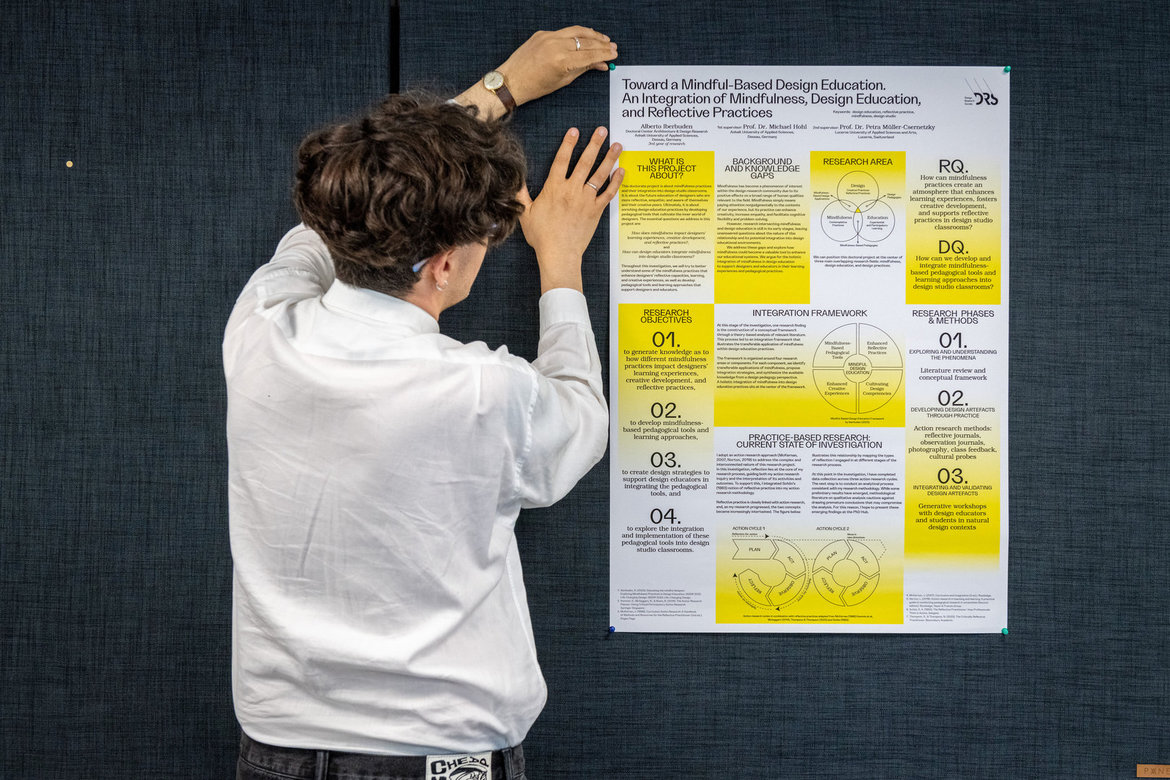
Today, Alberto is a doctoral student at Anhalt University of Applied Sciences and teaches design theory and design research in the master's programs. In his dissertation, he explores unfamiliar ground: The focus is on mindfulness practices and the question of how designers learn in the first place. Specifically, he asks how meditation – properly embedded in instruction – can strengthen creativity, attention and empathy in design studies.
His approaches are anything but conventional: "It's not just about closing your eyes and concentrating," he makes clear. He has developed experiments in which drawing, walking, observing, listening and creative projects are explored as ways to achieve mindfulness. In real design classrooms, with real students. His central hypothesis: These practices not only benefit learners, but also change the entire learning system.
"Empathy and collaboration"
What drives Alberto can be summarized in a few words: He wants to develop new ways of imparting knowledge based on empathy and collaboration. As a holistic designer, his interests range from philosophy to systemic thinking. "And I always keep coming back to the same question: How do designers think and act? And how can they become better at it?", he explains.
"And I always keep coming back to the same question: How do designers think and act? And how can they become better at it?"
Alberto Iberbuden
The dissertation is almost finished. The results of his experiments are currently being summarized. In June, Alberto will represent Anhalt University at the Design Research Society Conference in Edinburgh – one of the most important meetings of the design research community worldwide.
From the technical school in Argentina to the design faculty in Córdoba and a doctorate in Dessau: Alberto Iberbuden has never stopped asking how things are created – and how people can grow in the process. In this, mindfulness is not an afterthought.
What has Alberto Iberbuden brought to Anhalt University?
With Alberto Iberbuden, the University has gained someone who asks what goes on inside learners’ minds – and who makes a science out of it.
Kontakt
Redaktion
Katja Wallrafen
About the ProgramThe Integrated Design (B.A.) program explores the interdisciplinary nature of contemporary design and addresses the interaction of its many different disciplines. It fosters creativity, individuality, communication and teamwork skills, as well as the ability to make informed decisions and exercise sound judgment—qualities that are essential for long-term professional success.
The Dessau study model prepares students for a wide range of professional challenges by providing sustainable, future-oriented expertise. It equips graduates with the flexibility and interdisciplinary skills needed to adapt to evolving trends and opportunities across all areas of the design profession.
