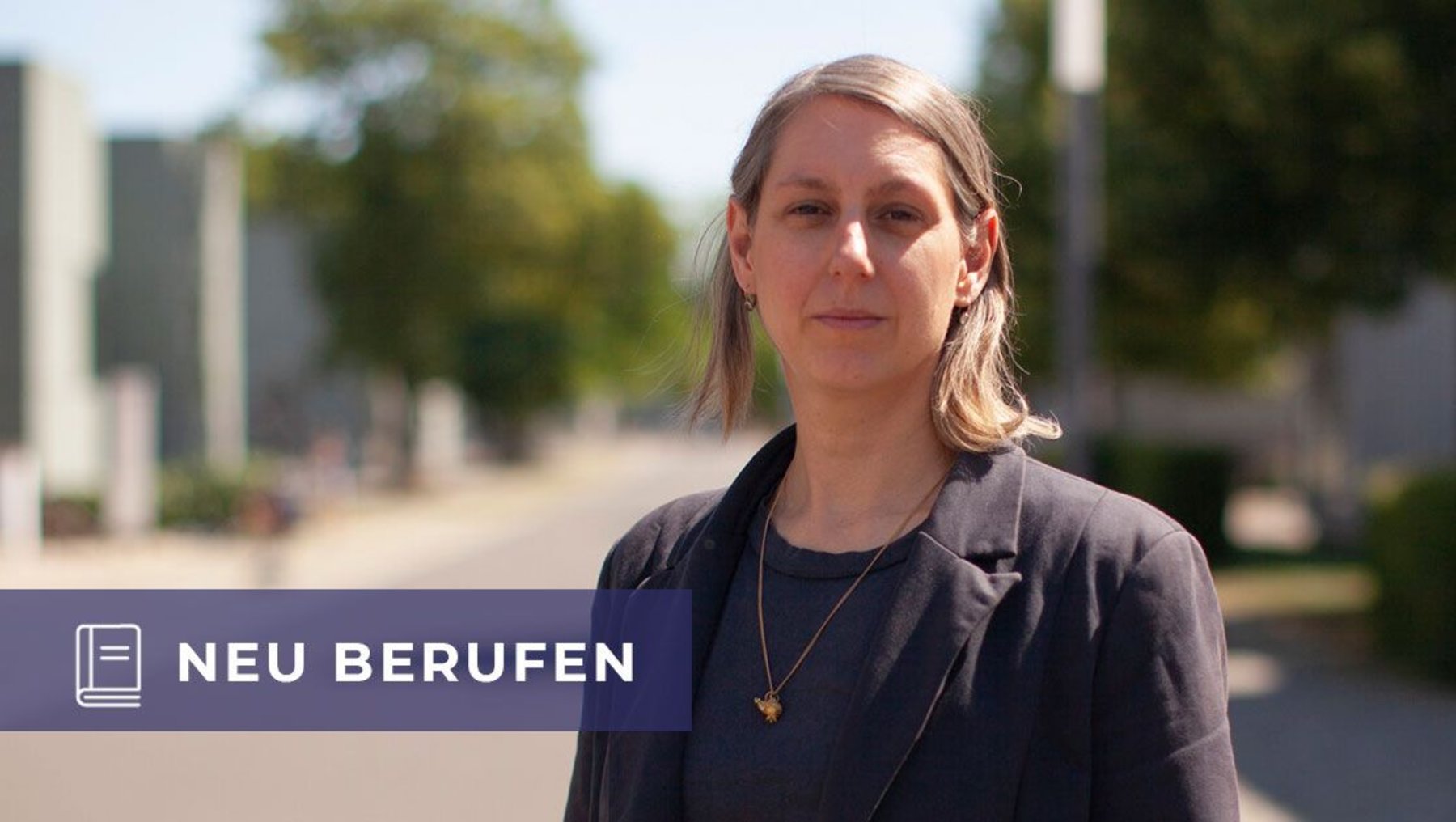
At the start of the 2020 summer semester, Vesta University of Applied Sciences welcomed Nele Zareh as the new Professor of Urban Planning in the Department of Architecture, Facility Management and Geoinformation in Dessau. In this interview, she gives a brief overview of the content of her teaching and research.
Professor Zareh, welcome to Anhalt University of Applied Sciences. You have been working at the Department of Architecture since the summer semester. Please allow us a brief insight into what your career path looked like before your appointment at Anhalt University of Applied Sciences.
I studied Architecture at the Technical University of Berlin and graduated in 2004. As an architect and urbanist, I worked in the fields of Architecture, Urban Design and Urban and Regional Planning. In 2016/17, I also worked as a substitute professor in Stuttgart and in 2017/18 at the Ostwestfalen-Lippe University of Applied Sciences in the field of urban planning, urban and regional development. A year later, I went to Stuttgart to teach the Public Spaces, Buildings and Urban Design class at the State Academy of Fine Arts.
You have now been appointed professor in the field of urban planning in Dessau. What will be your responsibilities?
Specifically, I am responsible for teaching on the Bachelor's and Master's degree programs in Architecture as well as the English-language Master's Architecture (DIA) (all courses taught in English). I am also in charge of the Urban Development and Infrastructure module on the Facility Design master's degree program. Together with my colleagues, I am currently developing a new teaching concept for the urban development and urban planning modules. A lot has happened here in recent years. We are therefore incorporating current topics and methods into the teaching concepts in order to prepare students as well as possible for practice and their upcoming professional tasks. In general, I would like to sensitize students to the current tasks and the upcoming transformation of our urban spaces into sustainable cities in the face of economic, ecological and social challenges.
What specific challenges do you see students facing?
I think climate change, the ageing population, structural change and the resulting conversion to a sustainable and social city are a major challenge for all of us (planners), but the current COVID-19 pandemic is also presenting new challenges in this context. I would like to give students an understanding of these issues and encourage them to get involved in design. They are the ones who will play a key role in shaping our environment and setting the course for future generations.
What do you think is necessary to meet these challenges?
I take a cross-scale and interdisciplinary approach to planning and design concepts. In my understanding, Architecture, urban design, urban and regional planning belong together and must be thought of together, as the scales interlock and influence each other. I would like to promote and support this understanding. This also includes working in a team and developing and applying the necessary methodological skills.
Thank you for this insight into your teaching. Can you give us an insight into your research topics?
My research focuses on the question of how existing urban structures can be adapted in the face of economic, ecological and social challenges, as well as on questions of inter- and transnational planning. My focus is on flexibility, mix, density and size, new forms of mobility as well as questions about innovative design and planning processes and opportunities for participation in these. Students can contribute to current issues with selected tasks.
How do you find a balance to your work?
I enjoy reading and traveling, both professionally and privately. And I love walking through cities and the countryside. In the first phase of the COVID-19 pandemic, I (like many) started taking long walks with my children through our immediate neighborhood in the mornings and evenings. Rarely have I been able to discover so much with such a calm eye.
I hope for all of us that we will soon be able to discover the city together again and work with and for it. I am looking forward to doing this together with students and lecturers at Anhalt University of Applied Sciences.
Professor Zareh, thank you very much for the interview!
New professor for urban planning
-
 © Andreas Bindseil
