Phyconomics, the economics of algae, has a twenty-year history in Central Germany. The 4th Central German Algae Round Table (MISTA) on May 5 and 6, 2026 at Anhalt University of Applied Sciences in Köthen will show what has already been created during this time. Researchers, companies, investors and politicians will also come together to look ahead: What can we expect from microalgae for Central Germany in the coming years?
Phyconomy on the move: What the 4th Central German Algae Round Table shows
-
 © hochschule anhalt
Conference and ecosystem
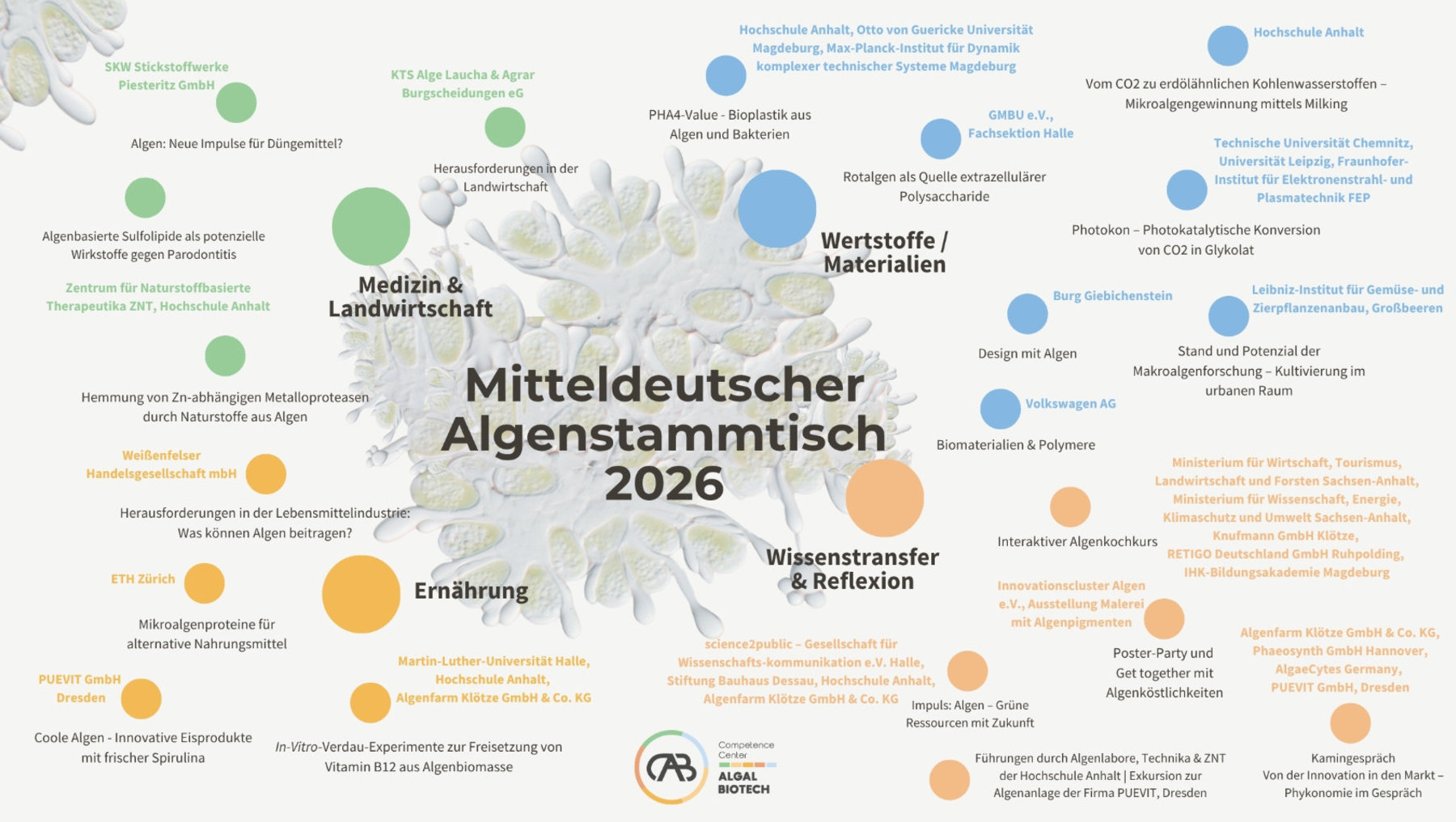
Anyone reading the program of the 4th MISTA will see a specialist conference at first glance. At second glance, they see an ecosystem. Three sessions, a fireside chat, a cooking class with state secretaries, a poster party and an excursion to the PUEVIT GmbH production plant in Dresden. This illustrates how microalgae research works in Central Germany: as an interplay between basic research, applied research, product development, entrepreneurship and politics.
"Central Germany is historically and currently one of the centers of applied algae research in Europe. It is not only home to Anhalt University of Applied Sciences with its competence center for algae biotechnology. It is also home to the first and one of the largest microalgae farms in Europe. And above all: the backbone of a genuine algae industry already exists and functions here. From here, impulses have gone out into the world - whether algae filling stations, vitamin B12 and active ingredient research, World Algae Day, the algae sommelier, even the term 'phyconomy' itself, much of what is discussed internationally today has its origins here." Jörg Ullmann, Managing Director of Algae Farm Klötze GmbH & Co.
The Competence Center Algae Biotechnology (CAB) at Anhalt University of Applied Sciences has been researching microalgae for over 20 years. Together with Algenfarm Klötze GmbH & Co KG, one of the largest production sites for microalgae in Europe, it forms the core of a cluster that has grown over the years. This includes research partnerships with Otto von Guericke University Magdeburg, Martin Luther University Halle, ETH Zurich and the Max Planck Institute for Dynamics of Complex Technical Systems, as well as industrial collaborations with Volkswagen and AlgaeCytes Germany GmbH. The Stammtisch makes this network visible.
 © hs anhalt
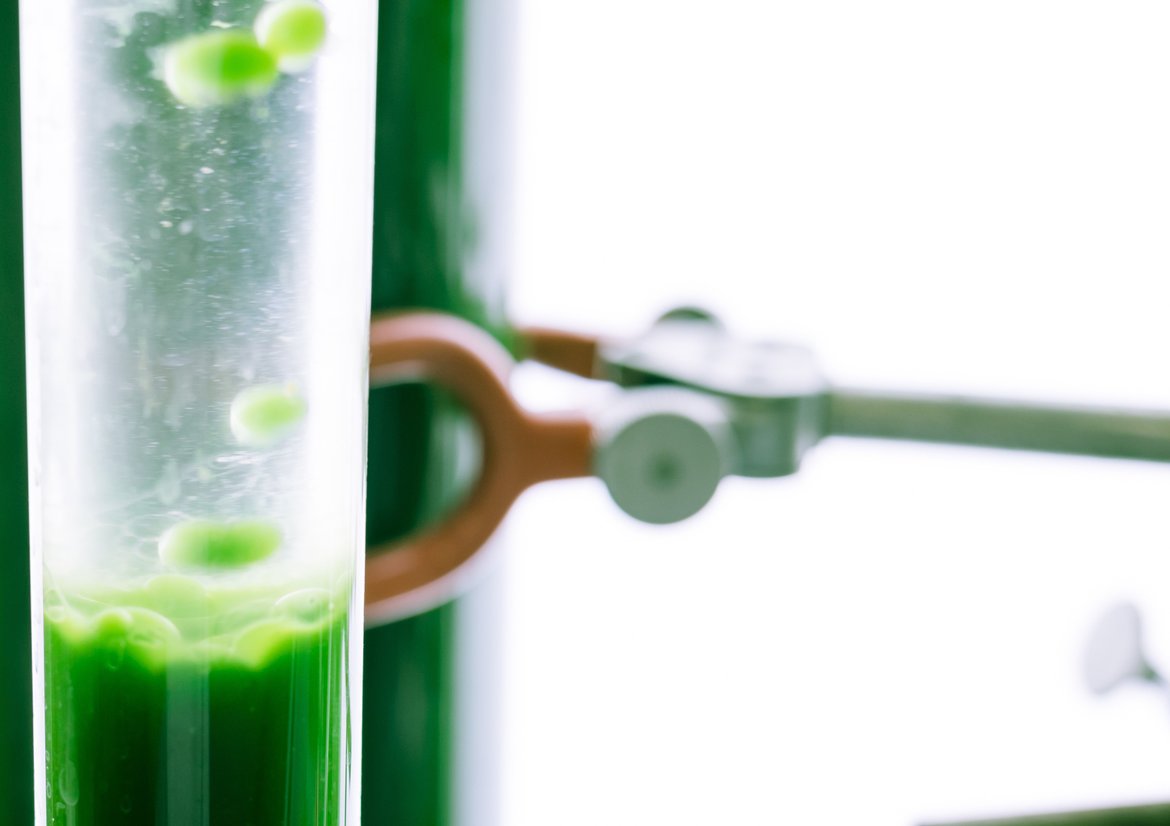
Microalgae as a substitute for crude oil: how close are we to industrial use? The milking process developed at Anhalt University of Applied Sciences is one of the items on the agenda of the 4th Central German Algae Round Table. This article on the Anhalt University of Applied Sciences Climate Blog explains the current status.
Three lines, one raw material
The program shows how broadly based microalgae research is.
Medicine and Agriculture//
Microalgae produce compounds that act as protective and signaling molecules in nature. Researchers at Anhalt University of Applied Sciences are investigating whether these substances can be used for medical and Agriculture purposes. Two examples: Algae-based sulfolipids, fat-like molecules from the cell membrane of algae, are being tested by researchers for their effectiveness against periodontitis. SKW Stickstoffwerke Piesteritz is testing whether algae are suitable as a basis for new fertilizers. Both questions are aimed at natural substance-based alternatives to synthetic products.
Nutrition//
Microalgae contain a lot of protein, relevant fatty acids and vitamins. The path from the laboratory to the plate is a long one. Two contributions show where research currently stands: Researchers from ETH Zurich present results on the processing of microalgae proteins for alternative foods. Another paper examines how good vitamin B12 is released from algae biomass in the digestive tract. This directly determines whether algae are suitable as a food supplement. There will also be a format that is unusual for a specialist conference: in the "Tasting the future" cooking course, representatives of state politics will be taking up the cooking spoon themselves. Stefanie Pötzsch, State Secretary at the Ministry of Economics, Tourism, Agriculture and Forestry, and Thomas Wünsch, State Secretary at the Ministry of Science, Energy, Climate Protection and the Environment, explore the culinary potential of algae - knowledge transfer and science communication in direct form.
Valuable substances and materials//
Under certain conditions, microalgae produce hydrocarbons that are chemically similar to crude oil. This could be a way away from fossil raw materials. Prof. Dr. Carola Griehl's team has been researching this promising milking process for several years. She will present the current status together with Dr. Christian Kleinert on 6 May. The PHA4-Value project is developing bioplastics from a combination of algae and bacteria. Volkswagen is making a contribution to biomaterials and polymers. The Photokon project is investigating how CO₂ can be converted into glycolate, a basic material for the chemical industry, with the help of algae and light. All three examples revolve around the same question: what does industry look like without oil and coal?
 © hochschule anhalt | richard schmitt
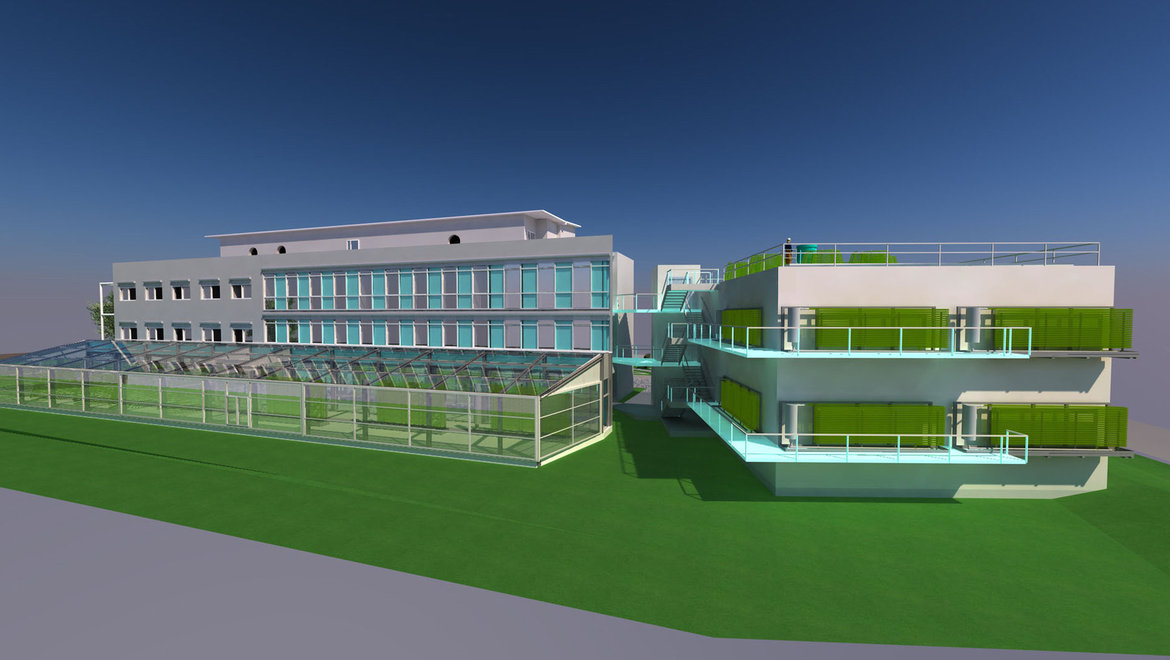
In December 2025, the Saxony-Anhalt state parliament approved the construction of the Central German Algae Center (MAZ) at Campus Köthen. 32 million euros will be invested in laboratories, algae technology and pilot production facilities. For the first time, the entire process chain of algae biotechnology is to be mapped at one location. To the press release.
A cluster on the move
The fireside chat on the second day is entitled "From innovation to the market - a conversation about physics". Founders and company representatives will discuss the path from research result to product. Jörg Ullmann from Algenfarm Klötze GmbH & Co. KG will moderate the question behind all program items: How do you bridge the gap between what works in the lab and what sustains itself on the market?
"The Central German Algae Round Table brings together science, Economics, start-ups, politics, creative people and multipliers - so close, so lively, so effective as I hardly ever experience elsewhere. This congress is as diverse as the world of algae itself. At a time when established industries are coming under pressure, geopolitical tensions are increasing and the climate crisis is forcing us to act, the crucial question is: How do we reshape the future - also economically? I am convinced that part of the answer lies here. In a sustainable algae economy that we are not only thinking about, but are already building," says Jörg Ullmann, who will open the conference on May 5 together with Prof. Dr. Carola Griehl.
In December 2025, the Saxony-Anhalt state parliament approved the construction of the Central German Algae Center (MAZ) at Campus Köthen. 32 million euros will be invested in laboratories, algae technology and pilot production facilities. For the first time, the entire algae biotechnology process chain will be represented at one location. The MAZ creates the prerequisites that the cluster has lacked up to now. As with the previous Central German Algae Roundtables, the discussions on May 5 and 6 should also provide important impetus for the goals of the MAZ.
 © HS Anhalt
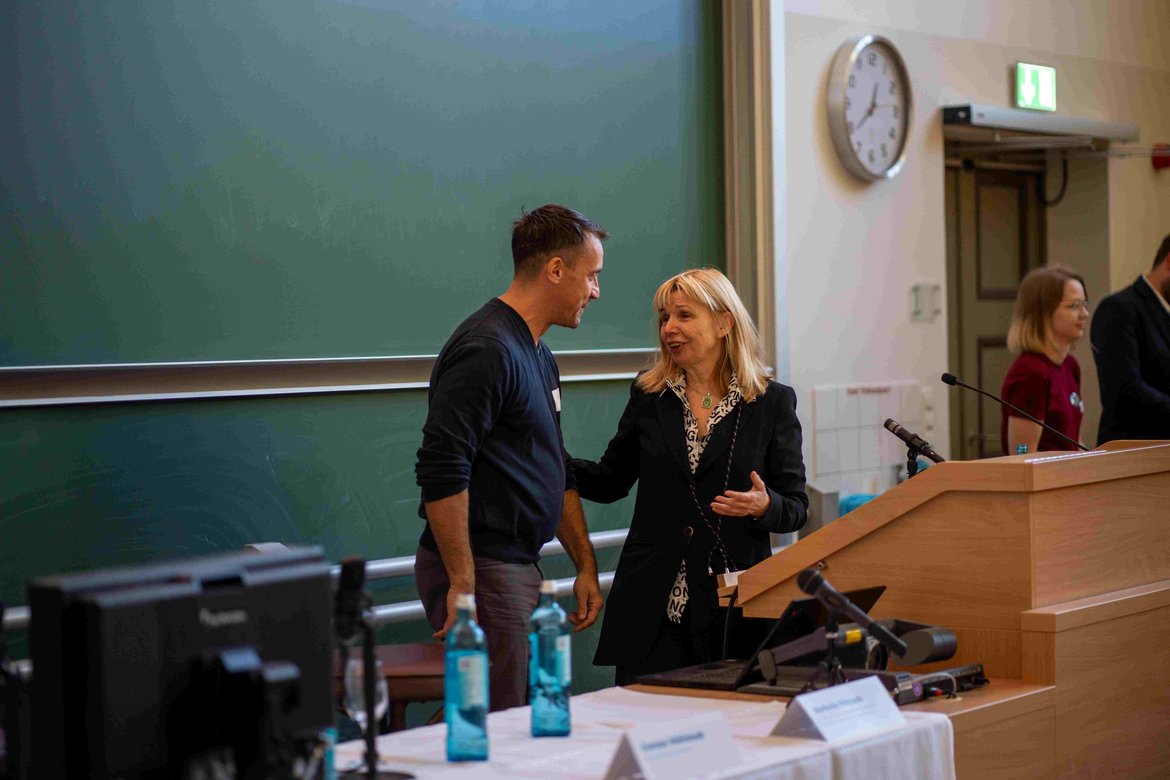
Prof. Dr. Carola Griehl and Jörg Ullmann have already jointly hosted the 3rd Central German Algae Round Table 2024 and have a long history of research cooperation across many projects on the topic of microalgae.
Participation and registration
The 4th Central German Algae Round Table will take place on May 5 and 6, 2026 at the Anhalt University of Applied Sciences in Köthen. Participation is free of charge. A fee of 30 euros will be charged for the evening event on the first day.
Registration and program: www.hs-anhalt.de/mista
Review: on the 3rd Central German Algae Round Table on the ClimateBlog of Anhalt University of Applied Sciences
Redaktion
Claudia Aldinger
5 and 6 May 2026
Mitteldeutscher Algenstammtisch
Registration and program at www.hs-anhalt.de/mista
Organizer & conference management
Prof. Dr. Carola Griehl, Anhalt University of Applied Sciences, Head of the Competence Center Algae Biotechnology (CAB)
Jörg Ullmann, Managing Director Algenfarm Klötze GmbH & Co. KG
The conference is part of the "100 Years of Grünes Gebäude (Building 02 - Köthen)" celebrations.
