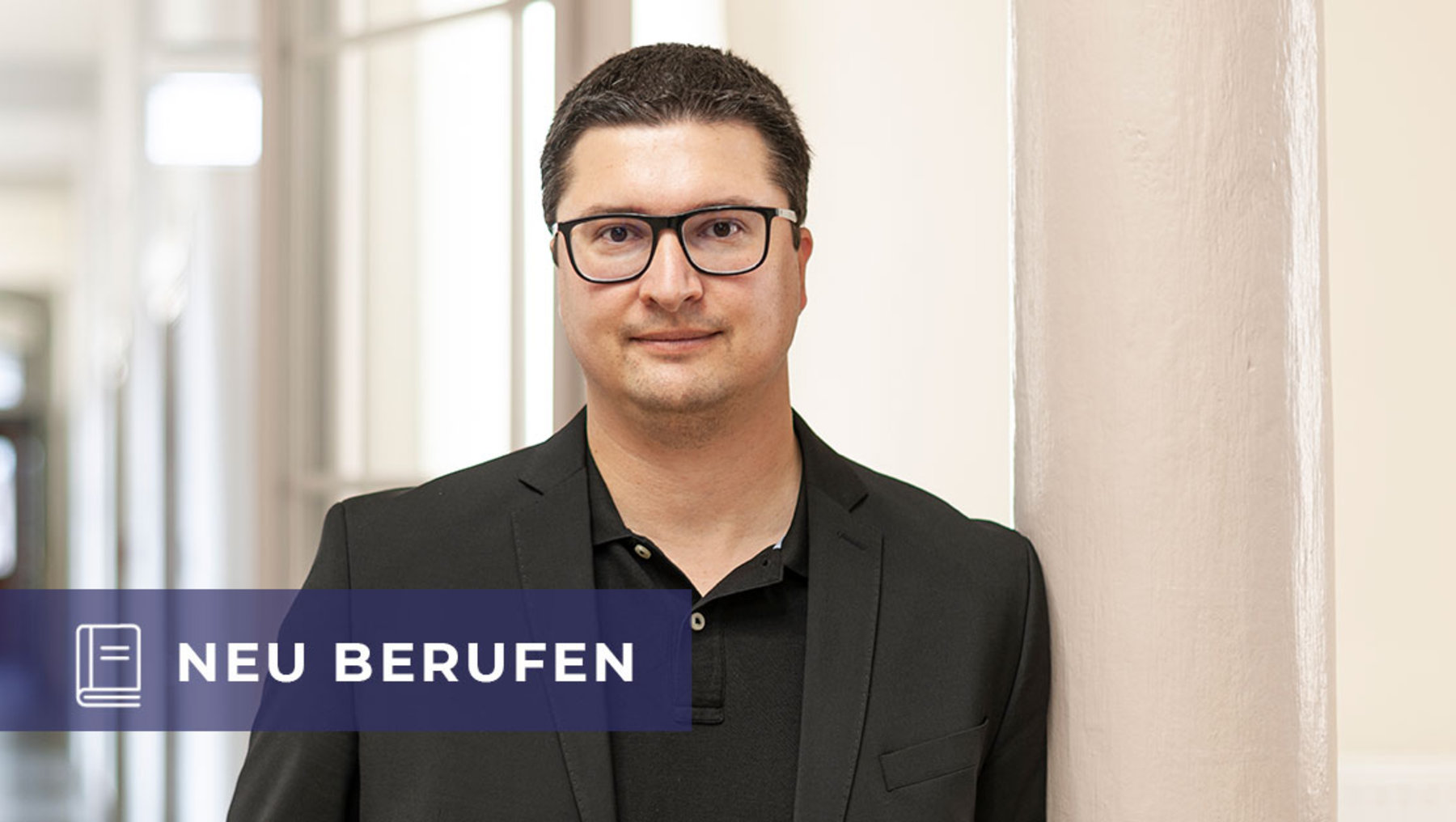
As the new Professor of Artificial Intelligence (AI) at Anhalt University of Applied Sciences, Christian Hänig wants to help reduce mistrust towards the use of AI and develop systems that can be used not only by large companies, but by everyone. In this interview, the Leipzig-based professor explains how he will focus his teaching in order to best prepare students for their careers in this rapidly changing field.
Professor Hänig, welcome to Anhalt University of Applied Sciences. What did you study?
I studied computer science in Leipzig. After graduating, I worked as a doctoral student at Daimler AG's research site in Ulm. This was an important step for me - I was able to apply the theory I had learned during my studies directly in practice and my interest in practical research was also awakened here. I worked a lot on machine learning in an industrial environment and on analyzing natural language of instruction - an important sub-area of modern artificial intelligence.
What important career stages followed?
I then worked in the research department of the ExB Group and led numerous projects in various application areas of artificial intelligence. These included methods for image recognition in medicine, for example for the detection of cancer cells. I also remained true to the topic of language processing and developed methods for the automated processing of visual documents with the aim of optimizing processes in the insurance sector. Most recently, I led the AI development team at FIO Systems AG in the field of real estate management and marketing.
You have now been appointed Professor of Artificial Intelligence at the Department of Computer Science and Languages. What will be your responsibilities?
In addition to basic lectures, I will establish new classes in the field of teaching that will introduce students to the exciting and impressive world of AI. In addition to teaching, interesting research projects are waiting to accompany the current transformation into an increasingly data-driven society and to demonstrate and exploit the potential for our society.
Can you tell us about some of the areas you want to focus on in your teaching?
I would like to focus on current developments in research and the challenges and opportunities presented by the use of AI in companies. The aim is to prepare students for their future tasks in the best possible way.
What fascinates you about your subject area?
I see AI as an interdisciplinary field of research and would like to realize the transfer of data-driven methods and approaches into numerous domains. There are many exciting potential applications: from autonomous driving to the future of our working world, AI will change our lives dramatically over the next few years. I want to help reduce mistrust towards the use of AI and develop systems that can be used not only by large companies, but by everyone.
Can you give us an insight into your field of research?
I am currently working on more efficient ways of using data. In many areas, access to sensitive data, such as patient records in hospitals, is extremely restricted or even impossible. Nevertheless, we can also benefit from future developments in such areas, such as personalized medicine and intelligent diagnostic assistants. I would like to contribute to this with my research.
How can students benefit from this?
I will integrate many practical elements into my teaching. Theory should be reinforced directly through application. Where possible, I would like to involve students in current research projects so that they can build up a large portfolio of methods and findings. This offers them insights into various areas of application and establishes contact with companies and institutes. This can lead to interesting opportunities for final theses and internships.
What challenges might there be?
Developments in the field of AI and machine learning are coming thick and fast. Ever larger models are being created faster and faster and challenges that were considered too complex for machines just a short time ago are being overcome.
This is leading to an imbalance in the use of AI. Small and medium-sized companies in particular tend to be reluctant to use AI due to the rapidly growing resource requirements and often leave the great potential untapped.
What does this mean for students?
We need to prepare students for a rapidly changing and primarily digital working environment. They need the skills to be able to independently assess and use new developments and thus actively help shape the workplace of the future.
What discovery, invention or insight would you like to see in the next ten years?
Regardless of my Department, I would like to see a sustainable approach to our environment. Issues such as mobility and logistics need to be rethought and resources need to be used more efficiently. Artificial intelligence methods may open up new perspectives for us here.
Do you have a motto that you would like to give students to take with them on their journey through life?
I would encourage all students to pursue their own ideas and to invest time in projects with an uncertain outcome from time to time. In the worst case, you will have learned something and gained new insights. In the best case, you have contributed to solving a problem and can be justifiably proud of your success. Only ideas that are never implemented lead to regret in the long term and the question of whether they might have been successful after all.
Where and how do you find balance when you're not at Anhalt University of Applied Sciences?
I live with my family in Leipzig. I like to spend my free time with my wife and children in the fresh air, hiking, cycling or swimming. If time permits, you can find me jogging.
