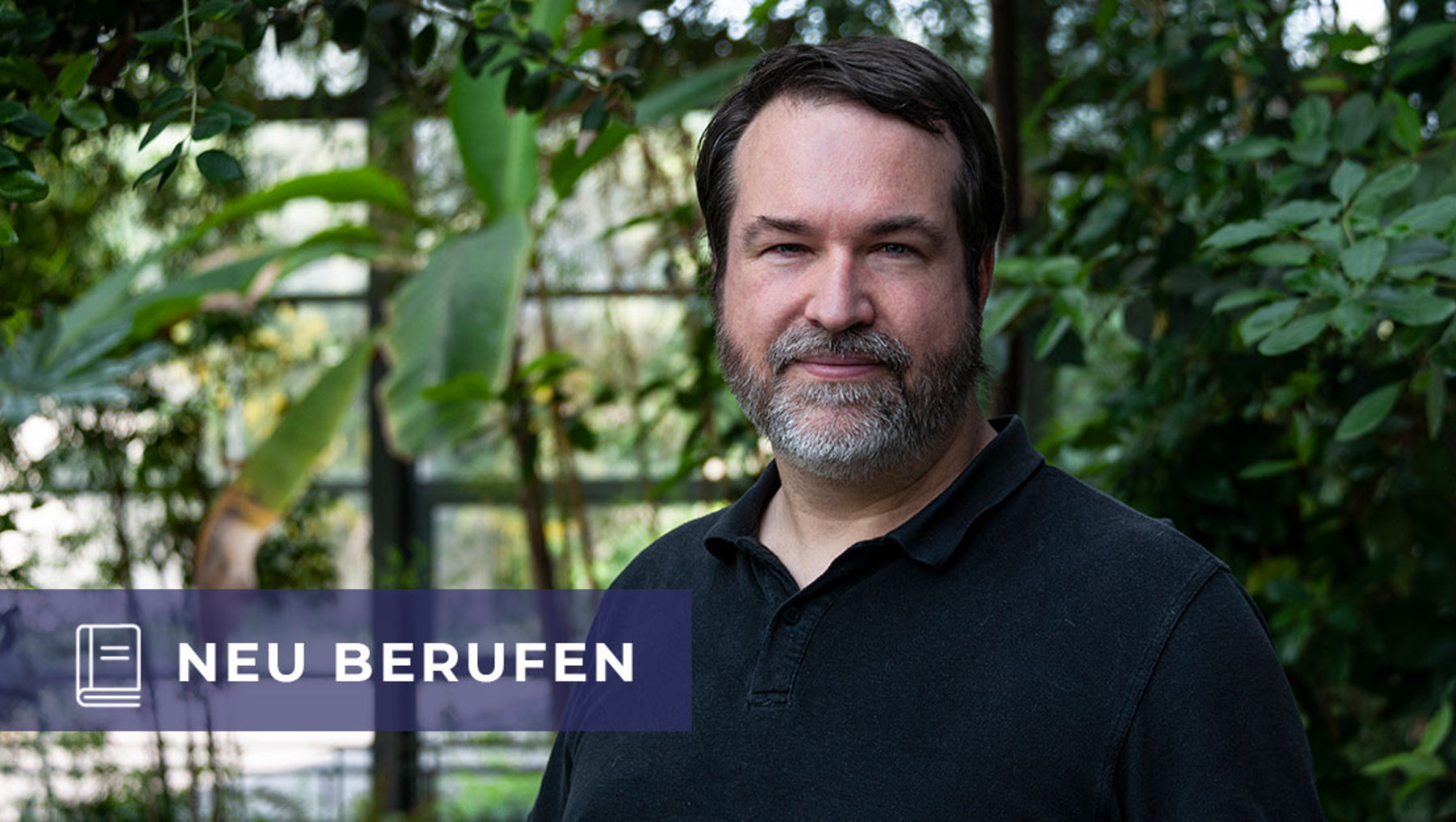
Anhalt University of Applied Sciences welcomed Dr. Wilfried Rozhon as the new Professor of Inorganic and Organic Chemistry at Anhalt University of Applied Sciences for the 2021 summer semester. Here, the Viennese-born professor explains what he wants to focus on in teaching and research at Campus Bernburg and why students should not rely on a one-way street when it comes to knowledge transfer.
Professor Rozhon, welcome to Anhalt University of Applied Sciences. You studied biology with a focus on genetics and analytical chemistry at the University of Vienna. What important stages were part of your career before your appointment at Anhalt University of Applied Sciences?
After graduating, I completed my doctorate in natural sciences on the subject of "GSK3/shaggy-like kinases in plant hormone signaling". I started my professional career at the Gregor Mendel Institute for Molecular Plant Biology GmbH, where I conducted research on regulators of plant growth. I then worked as a research assistant at the University of Vienna, first at the Institute of Microbiology and Genetics and then at Max Perutz Labs Vienna. In 2011, I moved to the Technical University of Munich, where I worked at the Department of Biotechnology of Horticultural Crops.
Now you have been appointed Professor of Inorganic and Organic Chemistry at the Department of Agriculture, Ecotrophology and Landscape Development. What will be your responsibilities?
Thanks to the work of my predecessor, Professor Ingo Schellenberg, there are already numerous collaborations, particularly with companies in the pharmaceutical and cosmetics industries, which I would like to continue and strengthen. At the same time, in the future direction of the department, I will focus on cooperation with companies in the field of plant breeding, as climate change will place particular demands on research in this area.
At Anhalt University of Applied Sciences, I will be teaching on the bachelor's and master's degree program in Ecotrophology, the bachelor's degree program in Agriculture and the bachelor's degree program in Nature Conservation and Landscape Planning.
What characterizes your teaching?
I would like to convey ideas, suggestions and scientific findings to the students with pleasure and stimulate their interest in applied chemical-analytical issues. It is particularly important to me to take up current topics from agricultural, food and environmental chemistry and to integrate these into laboratory practicals and in-depth research practicals in order to offer students a contemporary education. I try to relate theoretical concepts to practice in order to convey the great importance of chemical principles for the production, processing and quality control of agricultural products, but also for nature conservation.
Your area of responsibility includes various degree programs. What challenges might there be?
One challenge is the breadth of topics that need to be taught. This includes fields as diverse as agricultural chemistry, food analysis and environmental chemistry, each of which focuses on different aspects and issues.
What research projects are you currently involved in at the university?
My research interest lies in bioactive plant constituents such as alkaloids, steroids, phenolic components, plant hormones and lipids and how these can be used. I am also particularly interested in analytical-chemical and molecular biological methods. These are indispensable for the analysis of plant constituents as well as food and agricultural products, but are also becoming increasingly important in environmental protection issues.
How can students benefit from this?
The cooperation with companies ensures a strong practical focus, which is highly beneficial for the future careers of most students. At the same time, it is important to me that the transfer of knowledge is not seen as a one-way street; it is equally important to me that the data obtained can be published in specialist journals. This enables students to pursue a career in science, for which it is becoming increasingly important to provide evidence of independent research, which is usually done through publications.
Where do you live now when you are not in Bernburg at Anhalt University of Applied Sciences? Where do you find a balance to your job?
I currently live in Strenzfeld, within walking distance of my workplace. That really saves time and I enjoy the walks in the wonderfully green surroundings.
Apart from chemistry and molecular biology, I'm very interested in art history, so I'm particularly pleased that Saxony-Anhalt has so many museums and places of cultural and historical interest.
Professor Rozhon, thank you very much for the interview!
Prof. Dr. Wilfried Rozhon
-
 © Zerina Kaps
Redaktion
Veronika Eicher
