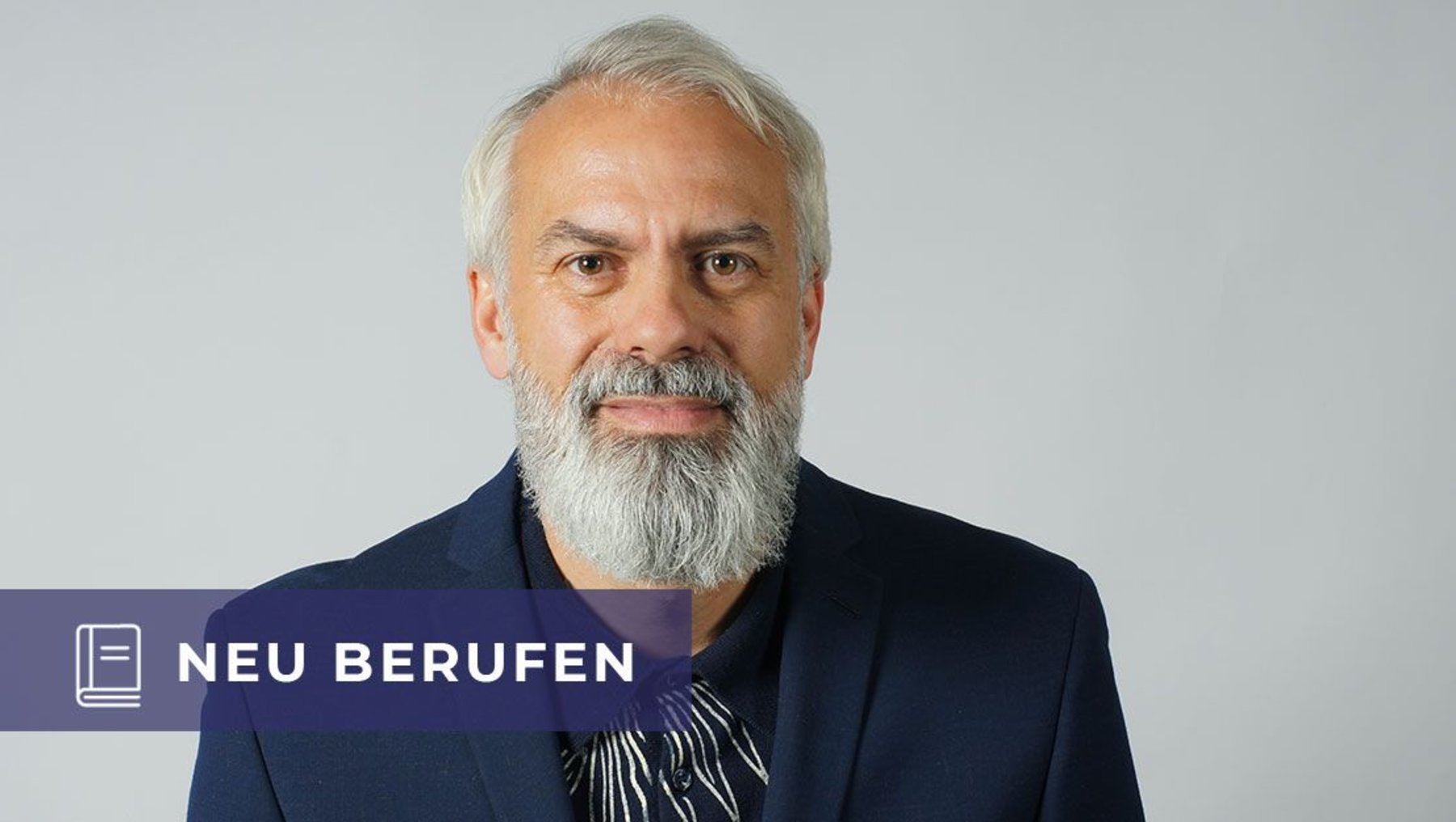
Professor Sears, we normally greet newly appointed professors with a "Welcome to Anhalt University of Applied Sciences", but you have been here for a long time. How long have you been in Bernburg?
I started as an instructor in Bernburg in 2010 and supervised students on the international master's degree program.
What was your first impression?
My first impression was shaped by my experiences with the international students. At the time, I found it particularly exciting to deal with the students' different perspectives on landscape architecture. As I come from another country myself, it was also an examination of my own history and view of our professional field, which is also shaped by cultural circumstances.
In October 2021, you then became a deputy professor and since mid-June 2022, you have been Professor of Landscape Architecture at the Department of Agriculture, Ecotrophology and Landscape Development. Before we go into the new tasks, let's take a brief look back. What motivated you to choose landscape architecture?
I wanted to study something creative. I was also very interested in natural sciences such as biology and geography. I then completed a Bachelor's degree in Environmental Planning at art college in my home country of Nova Scotia in Canada. This covered a very broad spectrum of landscape planning, environmental protection, landscape architecture and urban design, all with an environmentally conscious focus. Visual communication and the teaching of artistic fundamentals such as drawing, color theory and photography were important here. To further deepen my interest in design, I then decided to do a master's degree program in Landscape Architecture (all courses taught in English) in Ontario.
What were the most important stages of your career afterwards?
I started my professional life with a lab in Germany. I came to Berlin in 1995 and started in Professor Gabriele Kiefer's office, later working there as a student trainee. The Kiefer office awakened in me an enthusiasm for urban design and the relationship between Architecture, urban planning and landscape architecture. I was also very impressed and influenced by the spirit of optimism in Berlin in the 1990s. I ended up staying in Germany to experience the further development of the city and to get involved professionally. After a year in Amsterdam, I returned to Berlin in 1999 and started working as a project planner at ST raum a. Landschaftsarchitekten. Here I worked for 23 years as a project manager and team leader on complex projects in all fields of activity in cooperation with renowned architectural firms. It was also important for me to be involved in international projects and competitions.
What key aspects of your work do you take with you into the lecture hall?
These are the artistic and design skills - in my opinion a fundamental building block of training in landscape architecture. A creative approach to lines, shapes, colors, structures and the selection of materials and plants is important to me. There are semester projects and term papers in which these design basics are practiced and developed. For me, the challenge of teaching in the planning and development of open spaces is to create an aesthetic harmony of these elements in conjunction with usability. As I come from a practical background, I also teach the necessary contemporary skills for a successful career start.
What is your "personal signature" when working with students? Can you briefly describe your teaching philosophy?
During my own studies in Canada, the relationship between students and instructors had a personal touch, which was good for me and certainly influences my teaching. As a person, I'm very open and enjoy sitting down with students to ask questions about their work, engage in conversation and encourage a culture of feedback. This feedback culture is very important to me, as is exchanging ideas on site and developing my own attitude. I also encourage a lot of group work. You have to experience this on site, which has suffered a lot in the last two years. There was a real lack of contact and exchange, and I also noticed that among the students.
Can you give us an insight into your field of research? What fascinates you most about your scientific specialty?
I would like to deepen my interest in design topics and planning processes. I've been very practically bound for many years now and there hasn't been enough time to delve further into these topics. This is a new challenge, which I find very exciting. I would like to expand networks with my colleagues on the Nature Conservation and Landscape Planning degree program and work together on an interdisciplinary basis.
Please answer with a personal reference or in general: what discovery, invention or insight would you like to see in the next ten years?
In general, I would like to see a focus on simple things and less consumerism.
Do you have a motto that you would like to give students to take with them on their journey through life?
Yes, landscape architecture is a versatile and creative profession - find out what you enjoy and what inspires you, because that's what you need in this profession.
Professor Sears, thank you very much for the interview!
