Heatwaves, drought, heavy rain - how do perennials survive climate change? Prof. Dr. Wolfram Kircher explains what makes a resilient garden on the Anhalt University of Applied Sciences climate blog. He contributes his expertise in botany to numerous projects on and off Campus Bernburg-Strenzfeld. Together with his team, he looks after the Strenzfeld show and teaching gardens, tests new varieties for the German-speaking market and was one of the first to develop mixed perennial plantings for landscape gardeners and green space authorities - a simplified approach to planning plantings.
Perennials under stress: adapting gardens to climate change
-
 © hs anhalt | kircher
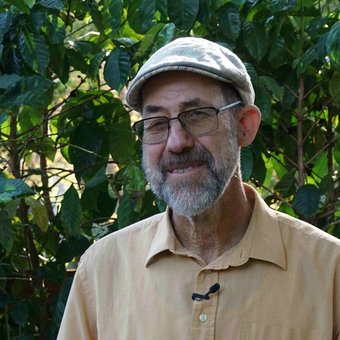
In general, it is important to consider the ecological optimum of the plants: Under which location factors does a variety occur in nature. And then I make use of that.
Prof. Dr. Wolfram Kircher
Prof. Kircher, how do perennials react to climatic changes such as prolonged drought and extreme heat?
First of all, I advocate not looking at perennials in isolation, but also including woody perennials, which can be combined with perennials to good effect. This applies equally to annual plants. In botany, we differentiate between strategies for dealing with stress. There are the R-strategists, named after ruderal sites that are often disturbed by human intervention or in nature by animals such as wild boar. They offer ideal prerequisites for fast-growing plants such as field weeds, but also for cereals and vegetable crops. There are also the "C" and "S" strategies - named after the words "competition" and "stress" or stress tolerance strategy. C-strategies can assert themselves well and suppress weeds, but usually do not like drought and need a good supply of water. These include classic perennials such as coneflowers.
Does that mean you recommend the S-Strategists?
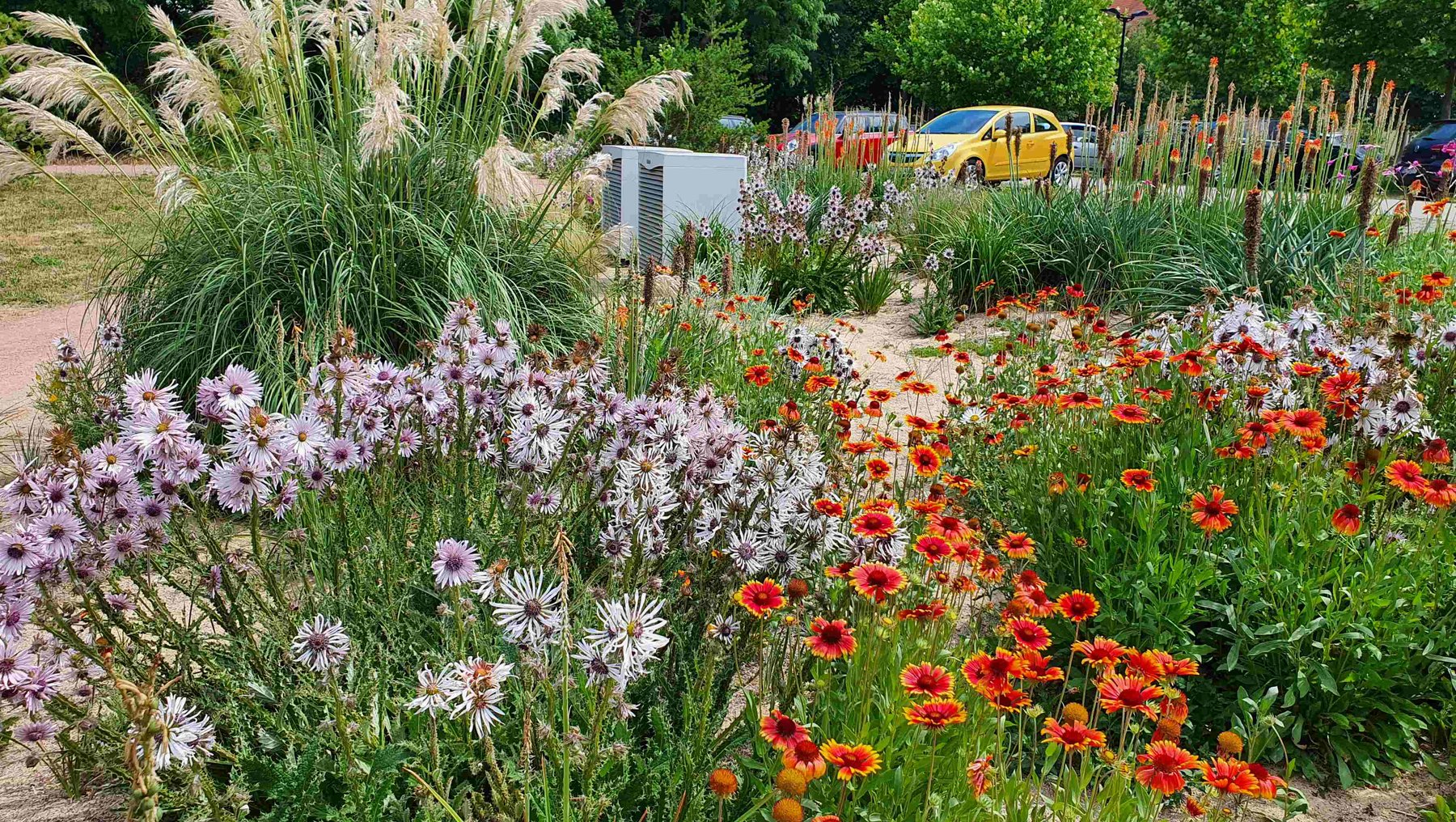
Yes, although you always have to look carefully at which stress factors each species tolerates. There are species, especially among the S-strategists, that can cope very well with drought. However, they also need longer than others to grow, form beautiful associations and produce an attractive overall appearance. But in return, I don't have to water them, or only in the first growing season until they are well rooted. That doesn't mean that I only have to rely on cacti. We also have beautiful native species that have developed on dry or semi-dry grassland: for example, the diptam or the blood-red cranesbill and also the grape lily and the knotted grass lily, which even grow well on the roof garden. The knapweed is particularly interesting for late summer because not so many native species flower at this time. For flowering in early summer, I would recommend the rough elecampane. If you like the color blue, take the peach-leaved bellflower. I also recommend the snow heather, which flowers for a very long time, even in winter.
-
 © hs anhalt | kircher
-
 © hs anhalt | kircher
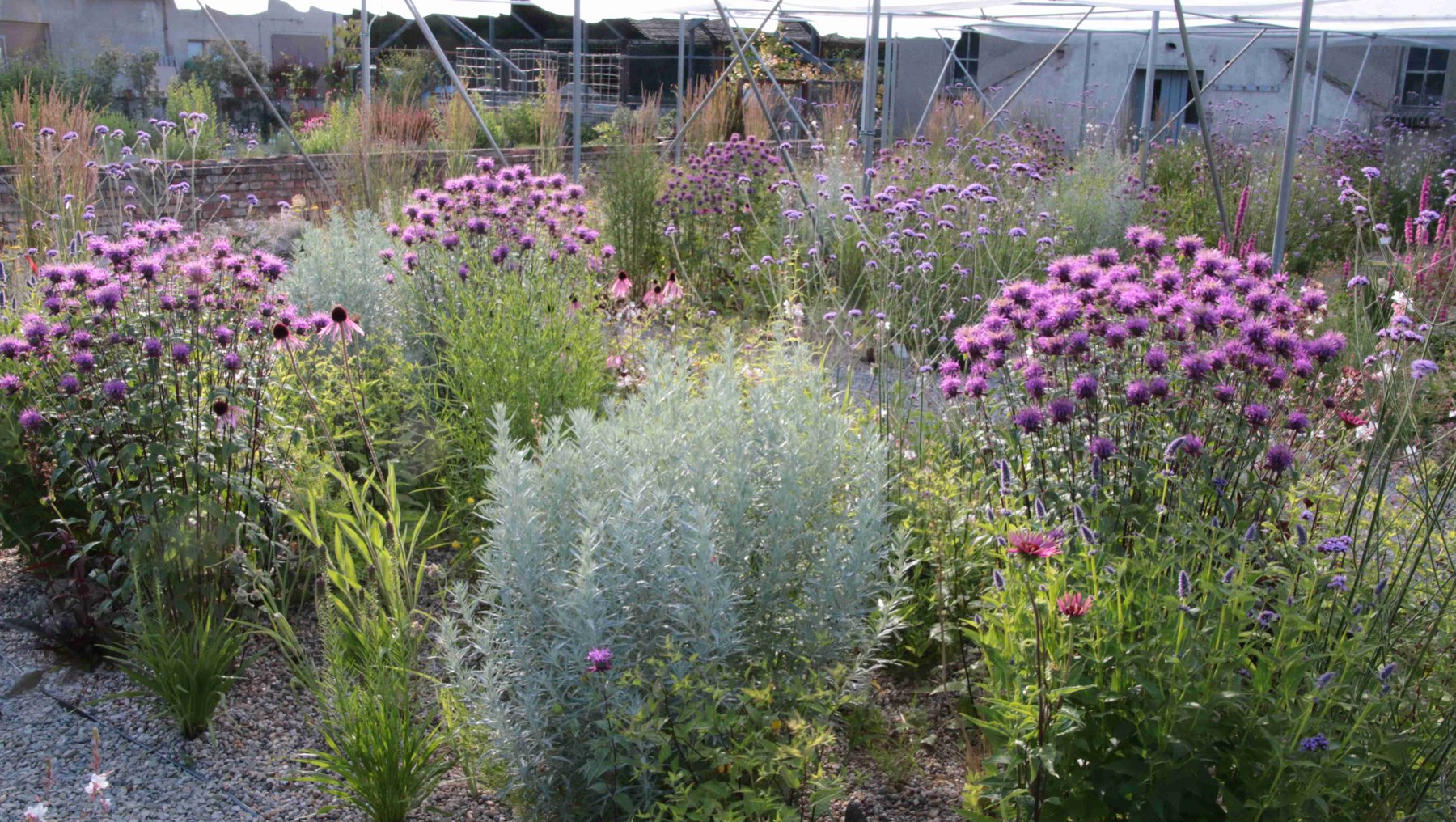
Plant use and vegetation technology in urban areas: Prof. Dr. Wolfram Kircher's working group at the Campus Bernburg-Strenzfeld of Anhalt University of Applied Sciences is conducting research in this area. New varieties are also being tested here.
Are native species generally better suited to adapting gardens to climate change?
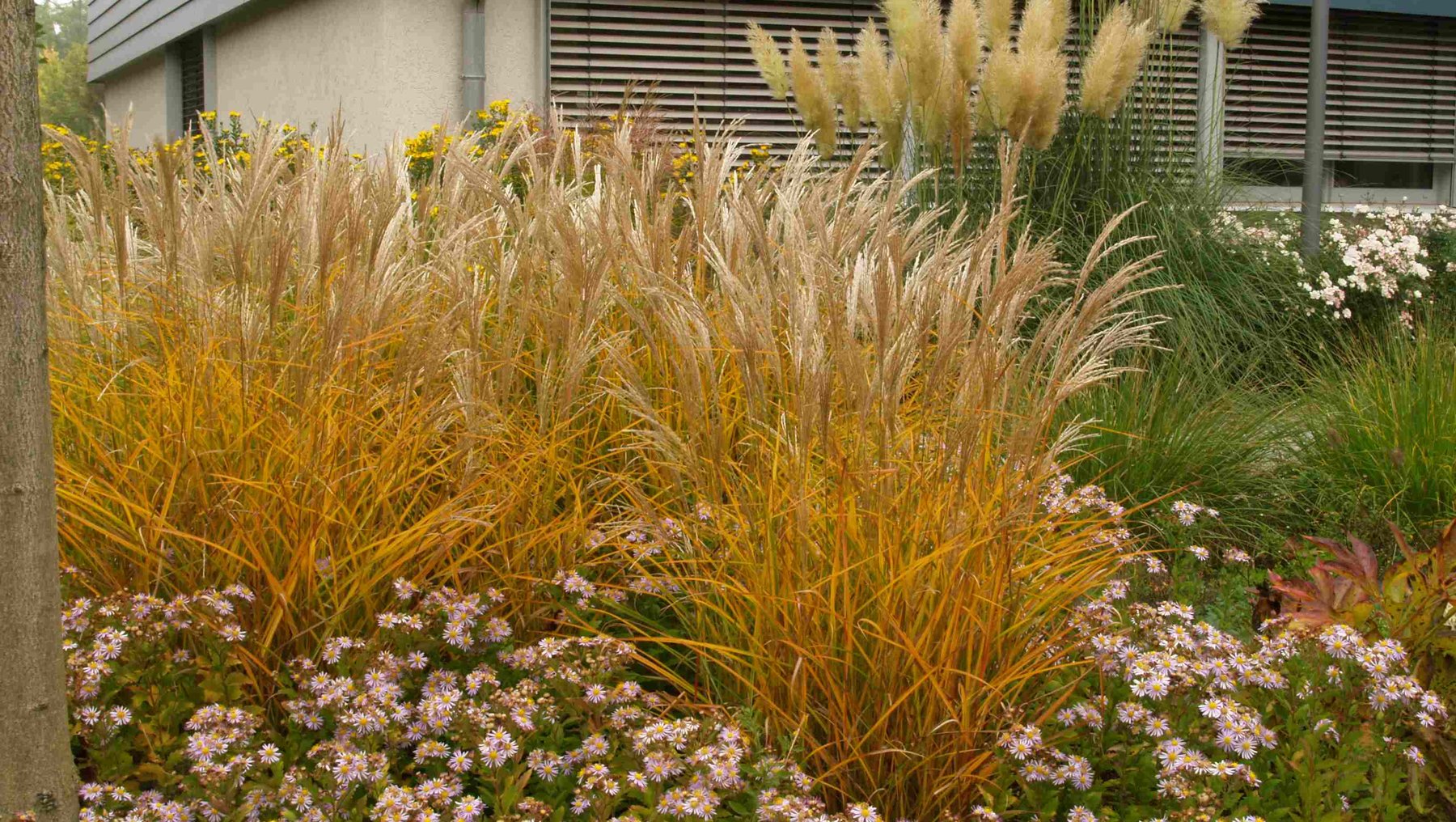
I advocate taking inspiration from other parts of the world, especially when it comes to summer flowering plants. Not in the landscape, of course, but really in urban green spaces. It also makes sense for the insects to add one or two North Americans from the dry prairies. The asters from there in particular flower in August, September and late into the fall. They also go very well with the native species mentioned. One of my favourite plants is the aster variety "Dark Pink Star", which has its origins in the prairies, is very drought tolerant, but again needs fertilizer. This is often the case with cultivated forms.
Are you already observing species that will no longer be able to withstand the conditions?
Yes, this includes the delphinium, a very popular garden plant. However, there are varieties that have been crossbred with the larkspur and can therefore tolerate a little more heat. But all species that tend to come from damp, cooler areas, i.e. high mountain plants, are difficult. I also include phlox in this category. But here, too, you have to differentiate: Those who like phlox can hope for new varieties, which we also tested in Bernburg-Strenzfeld for the Perennial Sighting Working Group. The Phlox paniculata varieties "Christine" and "Minnehaha" were among the winners. If you are looking for the best varieties for your garden, you can view all the tested varieties on the website www.staudensterne.de of the Association of German Perennial Gardeners and select them according to star categories.
What about roses?
Roses are basically deep-rooted plants and can draw moisture from deep in the soil if necessary. The general problem with roses is their susceptibility to disease. And this increases with stress factors such as heat. I recommend using tested varieties here too. The Allgemeine Deutsche Rosenneuheitsprüfung "ADR" provides a certain degree of certainty as to which varieties are good at coping with our climatic conditions, which can be found at www.adr-rose.de.
Is there a kind of golden rule to follow when planting perennial gardens?
In general, it is important to consider the ecological optimum of the plants: Under which location factors does a variety occur in nature. And then I make use of that.
You already mentioned a favorite plant from your own garden. Are there any others?
That's difficult because I like a lot of them very good. But in winter, the Hesperantha coccinea was definitely one of them, which flowered from September until well into January at one of our swimming ponds. I also find Echinocereus reichenbachii on our dry wall fascinating - a cactus that grows on shallow soils in Texas and can withstand temperatures as low as minus 30 degrees.
Information & Contact
Prof. Dr. Wolfram Kircher
...teaches and researches at the Department of Agriculture, Ecotrophology and Landscape Development at Anhalt University of Applied Sciences.
- An overview of his projects can be found on the pages of the working group "Gala construction and plant use": https: //www.hs-anhalt.de/hochschule-anhalt/loel/forschung/pflanzenverwendung/ueber-uns.html
- Here he explains in a video what needs to be considered when greening facades - using the example of the "Living Wall" at the Campus Bernburg-Strenzfeld of Anhalt University of Applied Sciences: https: //www.youtube.com/watch?v=LHYcC_ij9OQ
Further information on the topic of perennials
The Perennial Plant Sighting Working Group has its own website and presents information on the independent examination of new varieties and results: https://www.staudensichtung.de/ak-staudensichtung-sichtungsstandorte.html. You can search for suitable perennials on the website www.staudensterne.de.
A "perennial planner" for the creation of perennial gardens, which also incorporates the concepts of Prof. Dr. Wolfram Kircher and his team, can be ordered on this website: https://staudenring.com/stauden-planer.html
Redaktion
Prof. Dr. Wolfram Kircher
... can be contacted for questions and inquiries by phone: +49 (0) 3471 355 1150 or by e-mail: wolfram.kircher(at)hs-anhalt.de
... current projects on the website of his working group Galabau und Pflanzenverwendung.
... more about his topics and tasks at Anhalt University of Applied Sciences at the end of the interview.
