Where peatlands and ideas come together – Alexander Bieß combines climate protection, materials research and regional transformation. His dream: Turning a coal mining district into a carbon reservoir.
Grown on peatland, built into your house
-
 © Hochschule Anhalt - Uwe Jacobshagen
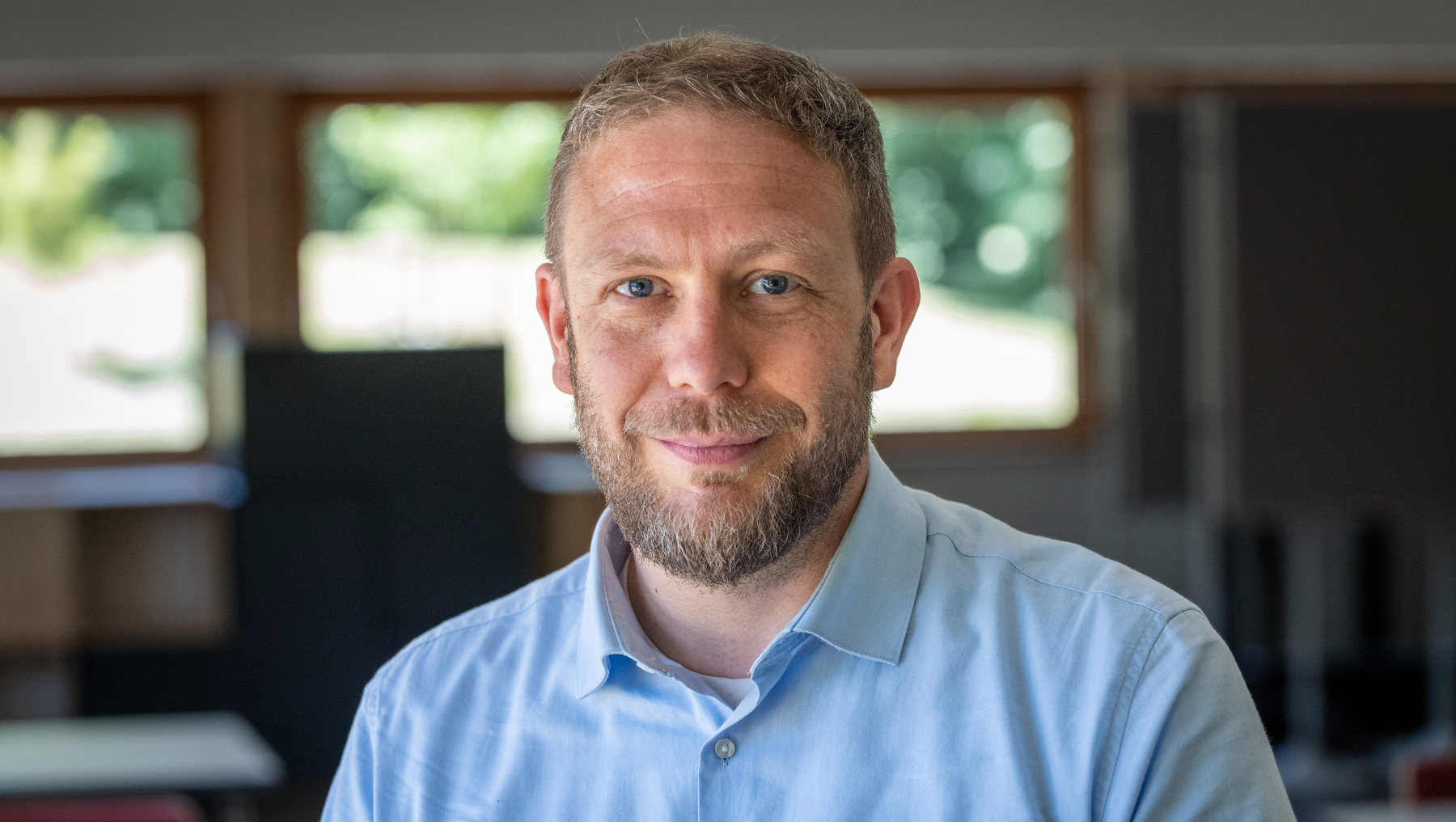
The name says it all: 'Paludi-Alex' (Alexander Bieß, certified engineer) is already two steps ahead while others are still googling what a ‘moor’ actually is. As a technical-strategic all-rounder, the 45-year-old turns complex interrelationships directly into projects. Technology, processes, people – he doesn't lose sight of any of the three, tries to keep all the balls in the air. What about rewetting peatlands? For him, this is not a conservation issue, but the signal for thinking about regional value creation and organic building materials.
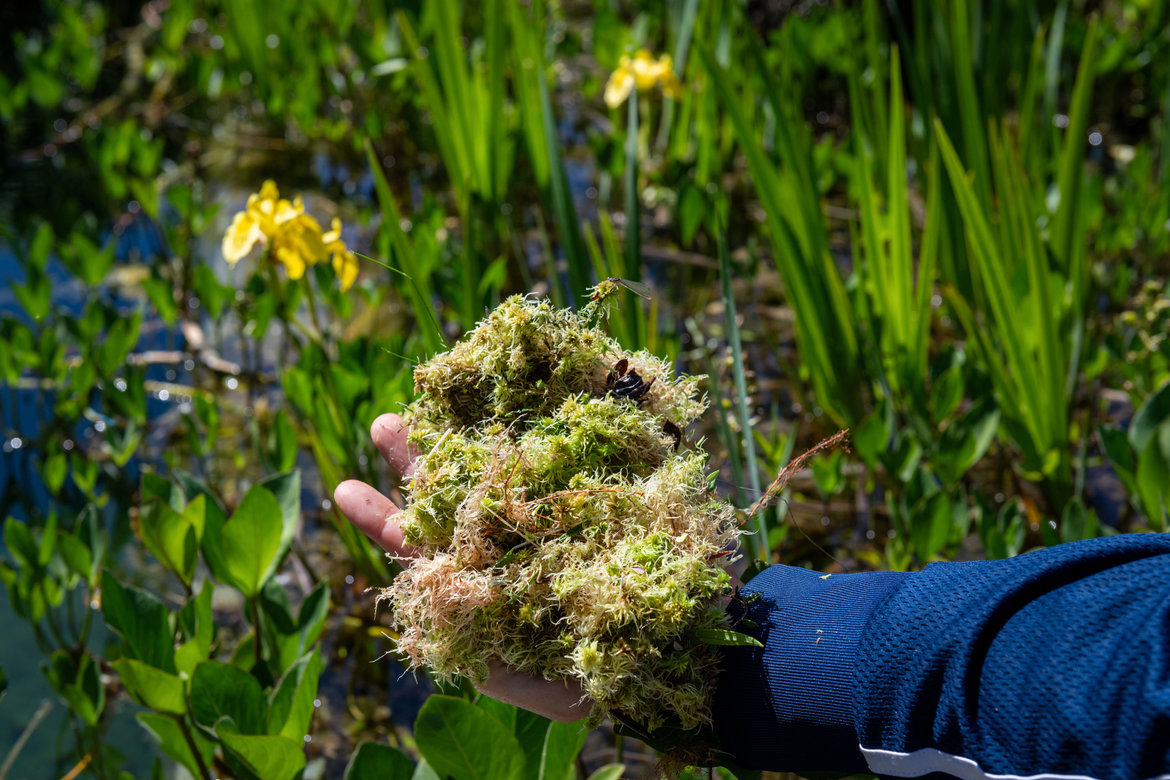
Peatlands can do their bit in the ‘revolution’ of the building sector. Alexander Bieß does not dismiss ecological aspects. He takes a broader view. Combining seemingly different goals, such as climate protection, material innovation and regional value creation, is what interests him. The research assistant is part of the berg research group at Anhalt University of Applied Sciences. His focus is on material innovation and tests, on the use of peatland mosses as a substrate for ‘living walls’ as well as on logistical and business management issues relating to biomass hubs. His work makes him part of three of Anhalt University’ seven departments – a stellar example for how interdisciplinary cooperation can succeed.
Rewetting peatlands: A strategy for value creation
 © Hochschule Anhalt - Uwe Jacobshagen
Peatlands are one of the key areas that determine the development of our climate. They store more carbon than all forests worldwide, yet they make up only about three percent of the land area. If they are drained, this effect is reversed. In Germany, around 95 percent of the peatlands have been drained. They are responsible for around 53 million tons of CO₂ equivalents every year – around 7.5 percent of total emissions. This corresponds, roughly, to the emissions of Germany’s cement industry.
"At the same time, there is enormous leverage here: Peatlands only make up around seven percent of all agricultural land, but are responsible for around 40 percent of emissions in the agricultural sector. Considering their size, that’s a lot. Climate protection needs to factor in peatlands. It won’t work without. Rewetting is the first step," says Alexander Bieß.
"Climate protection needs to factor in peatlands. It won’t work without. Rewetting is the first step."
Alexander Bieß
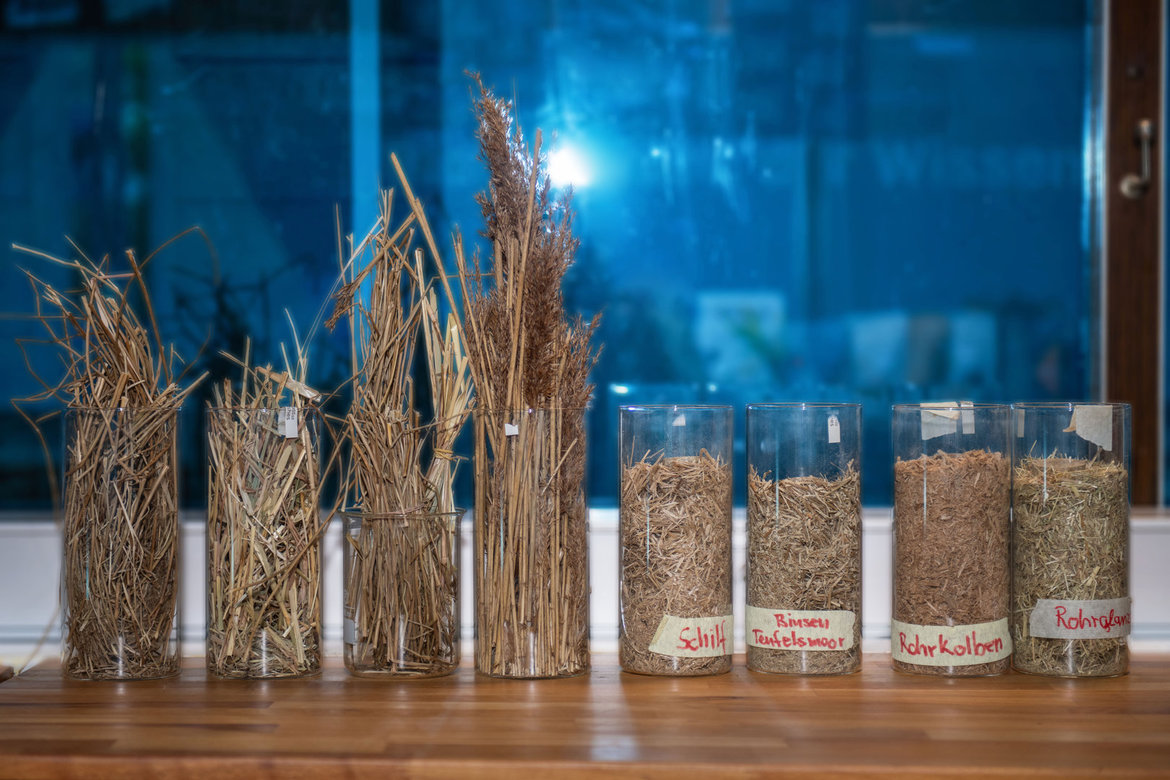
And this is where paludiculture comes into play – making use of use of wetlands. "Biomass grows on rewetted areas: Reeds, typha (bulrushes), cotton-grasses, sedges or sphagnum mosses. These are regionally sourced, renewable, and have hardly been used in construction. I work on ‘translating’ these raw materials into building materials. Not as a simple copy of existing products, but as ones that follow a new material logic. Plant fibers change structure, weight and behavior – thus opening up new possibilities," he explains. This could transform buildings into carbon sinks. "To me, paludiculture is more than just agriculture – it is a lever for establishing new links between the construction industry and climate protection."
The market structures are not there yet
 © Hochschule Anhalt - Uwe Jacobshagen
Although much is technically possible, the market structures have yet to catch up. "The construction sector is responsible for around 40 percent of global emissions, yet bio-based building materials have hardly played a role to date," says Alexander Bieß. "There is a lack of markets, value chains and clear framework conditions. It’s a classic chicken-or-egg conundrum. The Paludi Media Lab’s idea is to provide a link here, an interface between research, application and communication."
"To me, paludiculture is more than just agriculture – it is a lever for establishing new links between the construction industry and climate protection."
Alexander Bieß
In the central German mining district, few peatlands are being rewetted. And this is where ‘Paludi-Alex’ sees an opportunity: The region can reposition itself by shifting from a source of raw materials to a hub for climate-neutral materials management. What used to stand for fossil energy can now become part of a new logic. A region formerly synonymous with fossil fuels is embracing a new era, where the transition away from coal meets the future of carbon storage. The biomass comes from rewetted peatlands and stays in the region to be processed there: "We turn landscape into material – and material into the future."
Without Alexander Bieß, Anhalt University of Applied Sciences would lack the bridge between peatlands and the construction market.
He is convinced that wet soils can be turned into climate-neutral building materials and a sustainable future for the region.
