Cereal husks that would otherwise rot in the field and a plant that overgrows gardens and riverbanks: In the mechanical engineering laboratory at Anhalt University of Applied Sciences, they end up in a hydraulic press. In the future, they could be used to produce bio-based building materials for walls and furniture, because they develop a surprisingly solid structure without synthetic resin.
What are chaff and knotweed doing in the mechanical engineering laboratory?
-
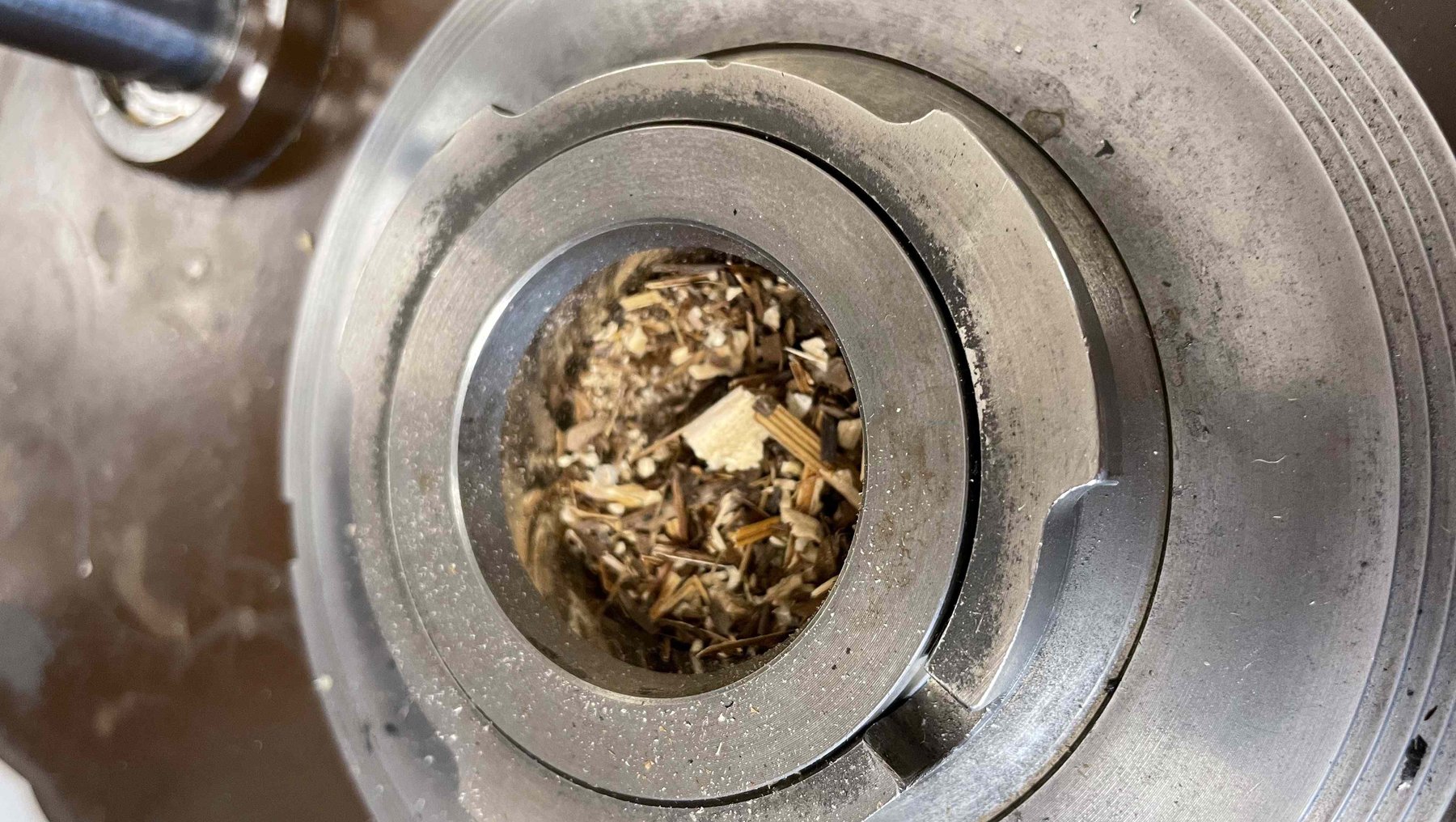 © hochschule anhalt | martin wiesner
Japanischer Staudenknöterich im Labor für Werkstofftechnik und Kunststofftechnik: Neuer biobasierter Baustoff?
When we took the solid plates out of the press, we were pleasantly surprised ourselves.
Martin Wiesner
"Initially, it was just an idea because we knew the composition of the raw materials. When we took the solid plates out of the press, we were pleasantly surprised ourselves," says Martin Wiesner. He teaches CAD design in the Mechanical Engineering degree program at Anhalt University of Applied Sciences and carried out the experiments together with Oliver Quoos in the Materials Engineering and Plastics Technology laboratories at Campus Köthen.
Lignin: the glue that the plant itself provides
The binding principle is in the plant cell itself. Under pressure and heat, lignin, a natural structural substance in plant cell walls, dissolves and binds the particles together. This creates a strong composite material that does not require synthetic resin or plastic binders.
The team initially tested two materials: Wheat chaff, the dry husks that are produced when grain is threshed and often remain unused in the field. In addition, Japanese knotweed, an invasive plant that is spreading rapidly in Germany and has so far mostly been burned. Both materials were processed at 180 to 190 degrees Celsius and a high pressing pressure of 250 bar for between five and thirty minutes, depending on the target value.
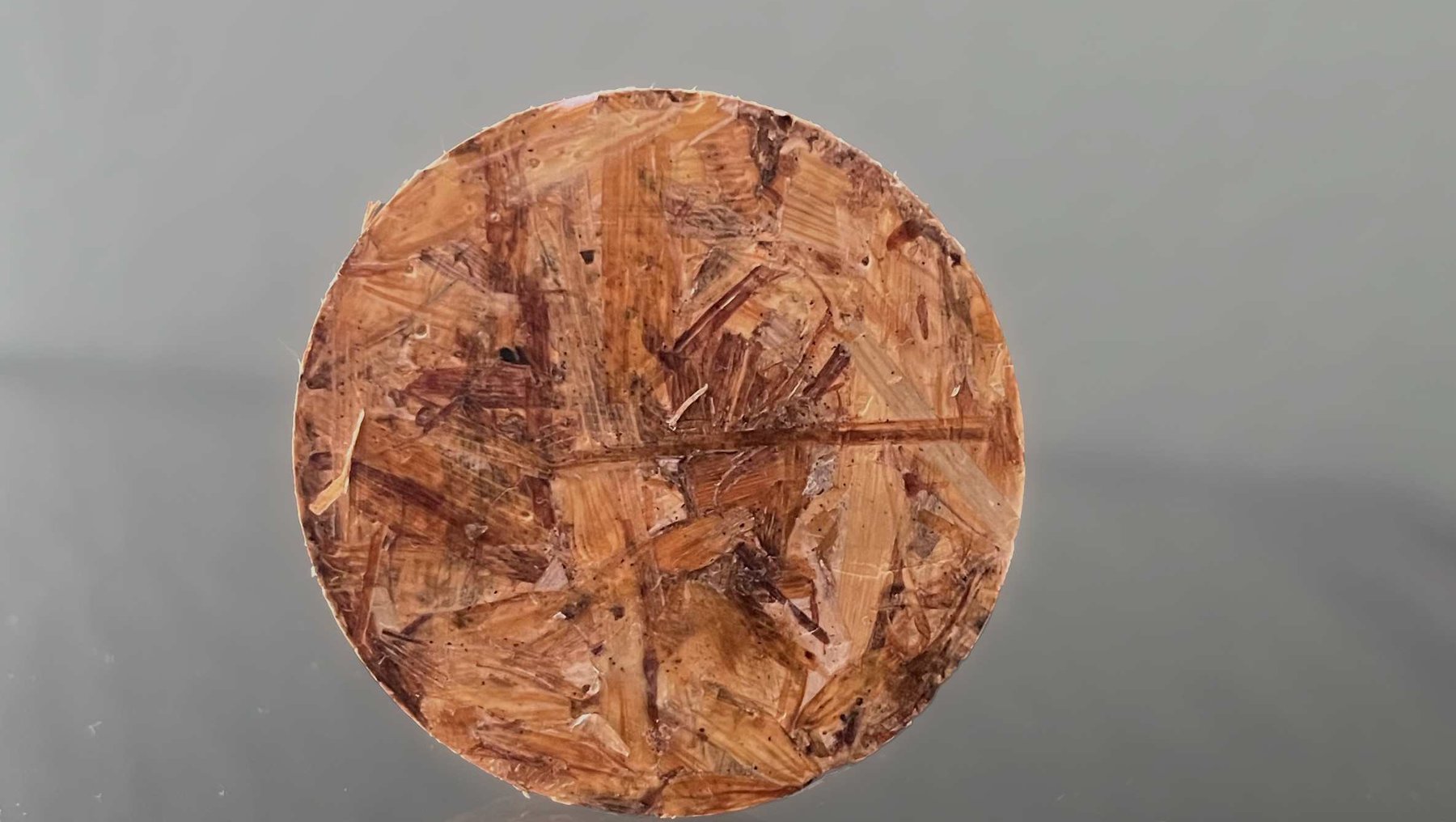
The results are visibly different. The chaff flakes have a comparatively even surface, similar to an OSB board. In the case of the knotweed, the irregular particles produce more lively structures, almost terrazzo-like. Strength, surface and water resistance are tested further.
Bio-based building materials as an alternative to plasterboard
The workpieces from the first test are small panels, still a long way from a construction product. Nevertheless, this search for alternative materials is logical. Gypsum plasterboard, which is now widely used in interior construction, is based on a raw material whose availability in Germany is decreasing. Gypsum is primarily a by-product of coal-fired power generation, which is to be phased out by 2038. After that, one of the cheapest sources will be missing.
Martin Wiesner and his team therefore want to build on the initial pressing tests. The next questions include the mechanical properties of the panels, i.e. flexural strength, bending stiffness and transverse tensile strength, and how the materials behave in the event of moisture and temperature fluctuations. Tests are also planned with plants from paludiculture, i.e. cultivation on rewetted moorland. Alexander Bieß is contributing his expertise here. It will also be investigated whether different residual materials can be combined or specifically adapted via particle size and moisture content.
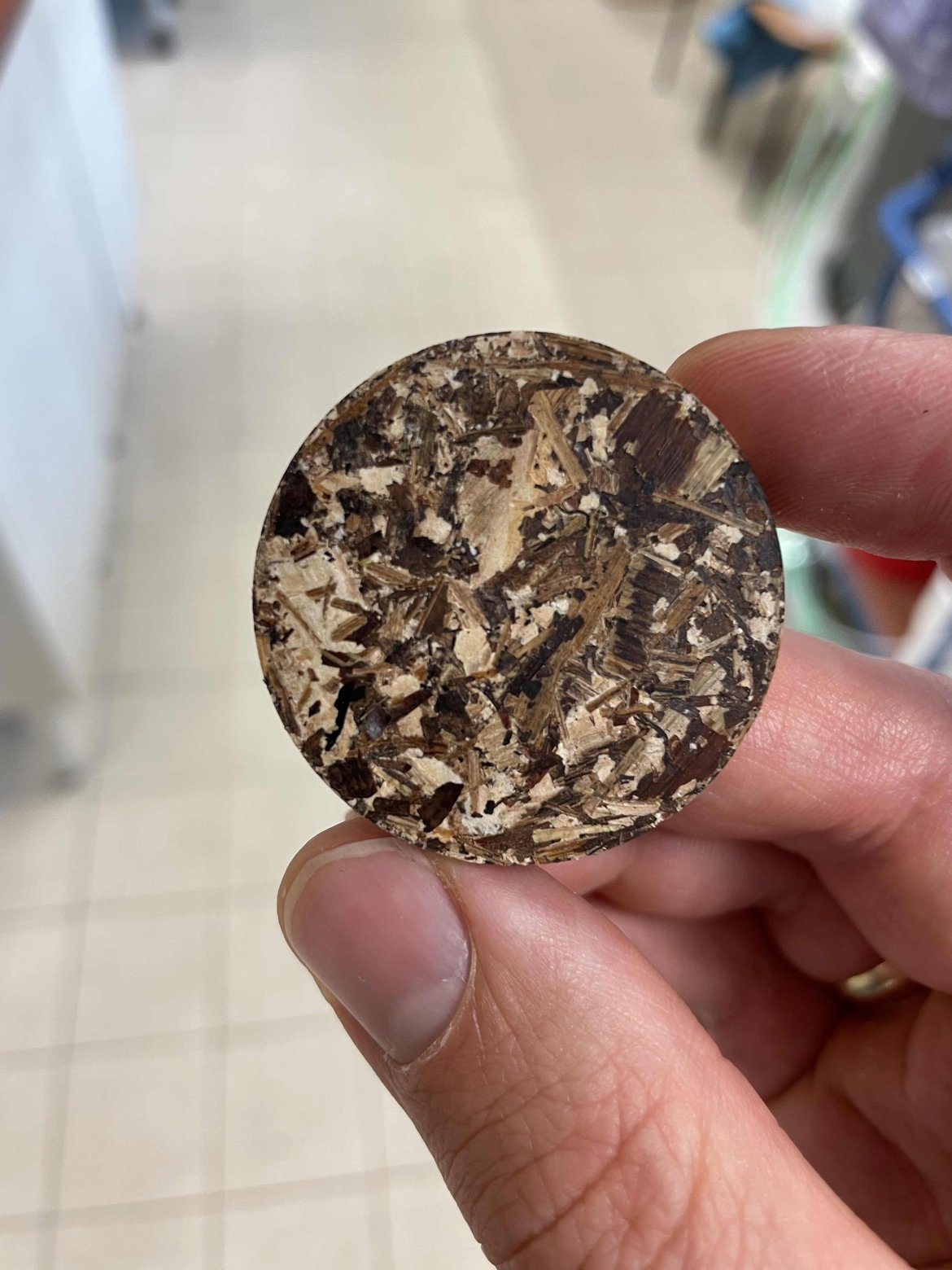 © hochschule anhalt | martin wiesner
-
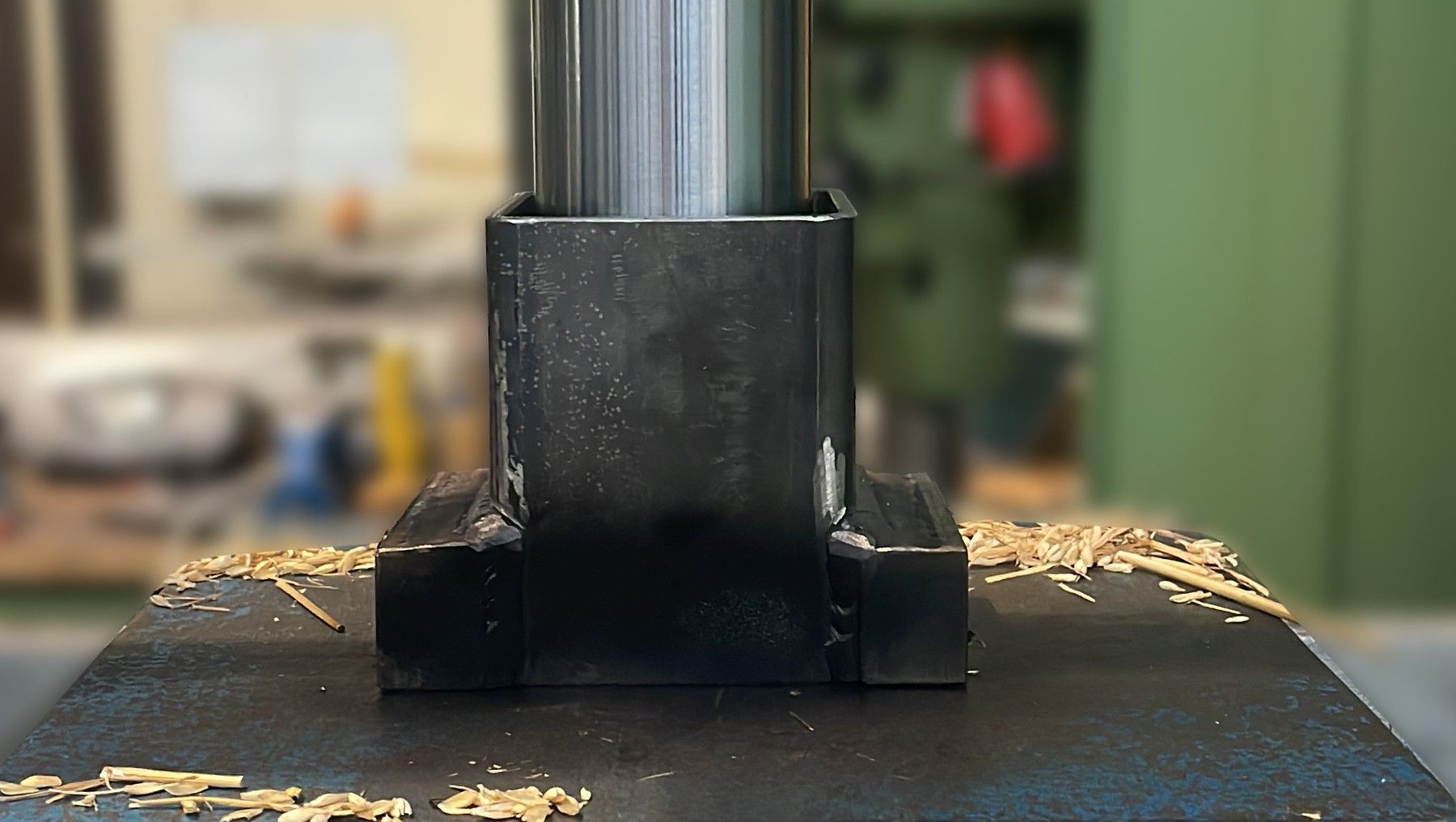 © hochschule anhalt | martin wiesner
-
 © hochschule anhalt | martin wiesner
-
 © hochschule anhalt | martin wiesner
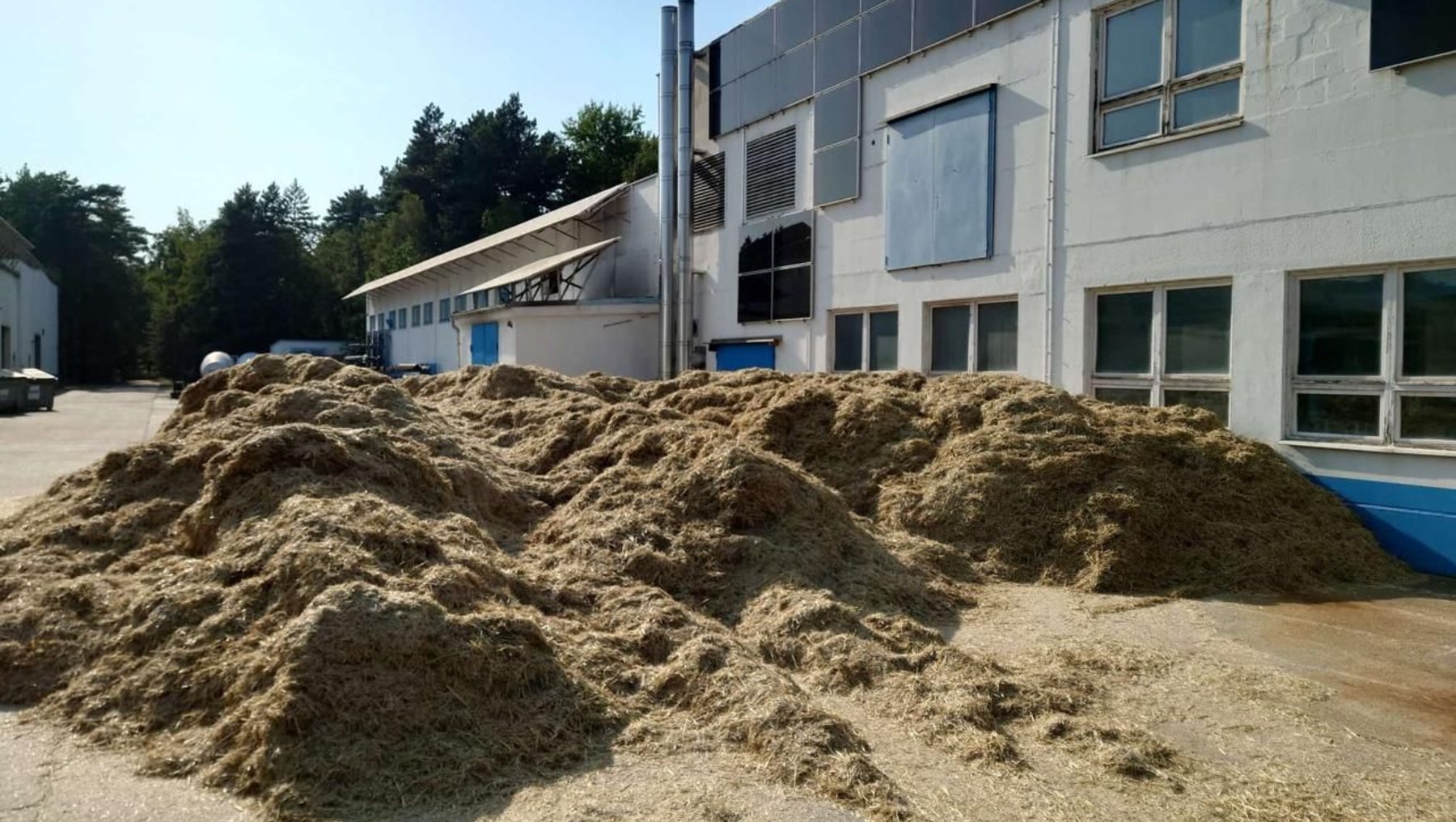
Chaff: Processed in the laboratory as it is normally delivered and in pressed form.
An experiment as part of the ZEKIWA real-world laboratory
The trials are part of the ZEKIWA project, short for: Sustainable Energy Efficient Circular Innovations for Building, Living and Working. The project is part of the New European Bauhaus (Building 10 - Dessau), an EU initiative that combines sustainable building and design.
In Zeitz, the historic ZEKIWA site, a former industrial area, is to be transformed into an urban quarter that makes the circular economy visible. Material experiments are at the heart of the approach: Which bio-based and recyclable building materials can be produced regionally, without toxins and from residual materials?
Anhalt University of Applied Sciences is designing several sub-projects within the project. Martin Wiesner is involved in both coordination and implementation. Design, Mechanical Engineering and the university's berg (building envelope research group) are working together on the material tests. Martin Wiesner contributes the design perspective and, together with Oliver Quoos, the mechanical engineering testing practice. This includes the sub-projects "Design, Sustainability and Technology" and "Digital Participation and Material Sharing".
Idea from an old collaboration
The idea for the chaff test came from a collaboration with Dr. Johann Rumpler, an engineer whom Martin Wiesner knows from his time at Otto von Guericke University Magdeburg. Rumpler developed a new harvesting method and a combine harvester that captures not only the grain but also the grain husks. The laboratory tests were supported by Oliver Quoos, who is in charge of the materials engineering and plastics technology laboratories at Anhalt University of Applied Sciences.
Why this is also interesting for mechanical engineering students
Anyone developing machines and products today is increasingly working with bio-based materials, which have their own processing and examination requirements. Martin Wiesner sees this in his teaching: "Sustainability issues, which are already integrated into the design concept, are becoming increasingly important." His experiments with chaff, knotweed and, in future, plants from paludiculture show how the subject is changing.
For students, the experiments can lead to concrete topics for projects and theses: from the use of new materials and material testing to process optimization and the development of pressing systems. An initial student project is already underway with the aim of using these bio-based construction materials as an embedding agent for ground samples.
If you would like to find out more about studying mechanical engineering, visit the university information day in Köthen on June 13, 2026: https://www.hs-anhalt.de/hochschule-anhalt/aktuelles/hochschulinformationstage/hitsanhalt.html?gad_source=1&gad_campaignid=10330953556&gclid=EAIaIQobChMIuJLtppbtlAMV4J2DBx2TiAxUEAAYASAAEgIVr_D_BwE
You can find out more about Martin Wiesner and the topic of "Sustainable design today" here on the KlimaBlog: https://www.hs-anhalt.de/hochschule-anhalt/aktuelles/neuigkeit-1/nachhaltiges-design-heute-fuer-aesthetik-und-umweltschutz.html
We spoke to Prof. Dr. Stefan Reich about sustainable alternatives to plaster here: https://www.hs-anhalt.de/hochschule-anhalt/aktuelles/neuigkeit-1/wenn-gips-knapp-wird-kalkpappe-als-klimaschutz-material.html
Redaktion
Claudia Aldinger
Martin Wiesner... can be contacted for questions and inquiries by phone: +49 (0) 340 5197 1748 or by e-mail: martin.wiesner(at)hs-anhalt.de
... also writes about his topics and tasks at Anhalt University of Applied Sciences on his personal LinkedIn channel.
