From Naturefriends Youth to Bosch to doctorates: Carolin Rautenberg combines Economics, Computer Science and Sustainability. She works on solutions that make data-driven sustainability possible in companies. In an interview on Anhalt University of Applied Sciences' KlimaBlog, she explains why the field needs more science and how digital systems can drive socio-ecological change.
When data drives change: How digital ESG systems are transforming businesses
-
 © Kvetka.design/stock.adobe.com
No one seems to be measuring the success of this software for sustainable business transformation. But I want to know more precisely whether the use of data actually changes anything.
Carolin Rautenberg
Ms. Rautenberg, you have an unusual background: business school leaving certificate, voluntary ecological year, business studies at Bosch, Master's degree in Technology Management, commitment to environmental education in Tanzania. How did these different
I think I was also lucky because various developments came together. When I was doing my cooperative master's degree at Eigenherd, a market for ESG management software was developing. The EU had presented new legislation that companies had to respond to - both in terms of sustainable and digital transformation. Eigenherd already had a lot of experience with data-based solutions and the topic of sustainability had always been with me. This is how I came to the topic of my master's thesis: using Salesforce's software solution for ESG data management to develop a business model for the introduction and successful use of such ESG management software so that companies can successfully manage their sustainability initiatives in a data-driven way: Sustainability as a Service.
 © C. Rautenberg
At Eigenherd GmbH, you have developed solutions to implement ESG software in corporate practice. Can you explain specifically: What do digital ESG systems do and why do companies need such tools?
This is used to record sustainability data such as energy consumption, emissions and waste data. But also from the social and governance area, such as the age structure of the workforce or incidents of corruption. This is why we speak of ESG software, as sustainability is recorded in the three pillars E - Ecologic (ecological), S - Social (social) and G - Governance (proper corporate management). Such ESG software now has the capacity to record and consolidate data across the entire company up to real-time processing, calculate consumption values in emissions and visualize ESG data in a way that is relevant to management. As this enables the management of sustainability beyond pure reporting, it is also referred to as ESG management software. They therefore have the potential to become a genuine transformation tool for more sustainable corporate practices. Or to put it more simply: once such software has been introduced, companies have a central ESG data source that they can use to define targeted measures and, according to the theory, successfully generate impact.
You decided to do a doctorate in order to bring more scientific rigor to the field. Why do you think this is necessary?
As part of my master's thesis and sales activities last year as a specialist for ESG management software, I spoke to numerous sustainability managers, built up a network and realized that the world of software solutions for digital and sustainable transformation is heavily sales-driven. There is hardly any research on this topic. Yet up to 15,000 companies in Germany alone are directly and indirectly affected by the mandatory collection of ESG data. This has led to a market of an estimated 200 providers of such ESG management software in Germany alone. And no one seems to be measuring the actual success of this software for sustainable corporate transformation. But I want to know more precisely whether the use of data is actually changing anything in sustainability management. This need for more research for practice also exists in my network and at conferences. The need for more scientific research is enormous.
 © C. Rautenberg
Her dissertation examines the potential contribution of such ESG management software to socio-ecological corporate transformation. What are the initial findings?
I'm currently writing my first paper and can't reveal everything yet. But this much can already be said: it mainly contains the results of the systematic literature research. In it, I have brought together known technologies and derived software functionalities for the transformation. This theoretical framework forms the basis for the in-depth interviews that I want to conduct from October onwards in order to challenge theory with practice and derive relevant hypotheses. In doing so, I can use my network and combine practice and research.
The doctorate is possible through the International Graduate Academy, a European Green Deal initiative in which Anhalt University of Applied Sciences participates. How did you come across it without any previous contact with the university?
That was a coincidence. A previous contact of mine had shared the advertisement for the doctoral position. The idea of doing a doctorate on innovative ideas related to achieving the goals of the European Green Deal really appealed to me. I was then able to talk to my doctoral supervisor Daniel Michelis relatively quickly and then started my doctorate.
 © C. Rautenberg
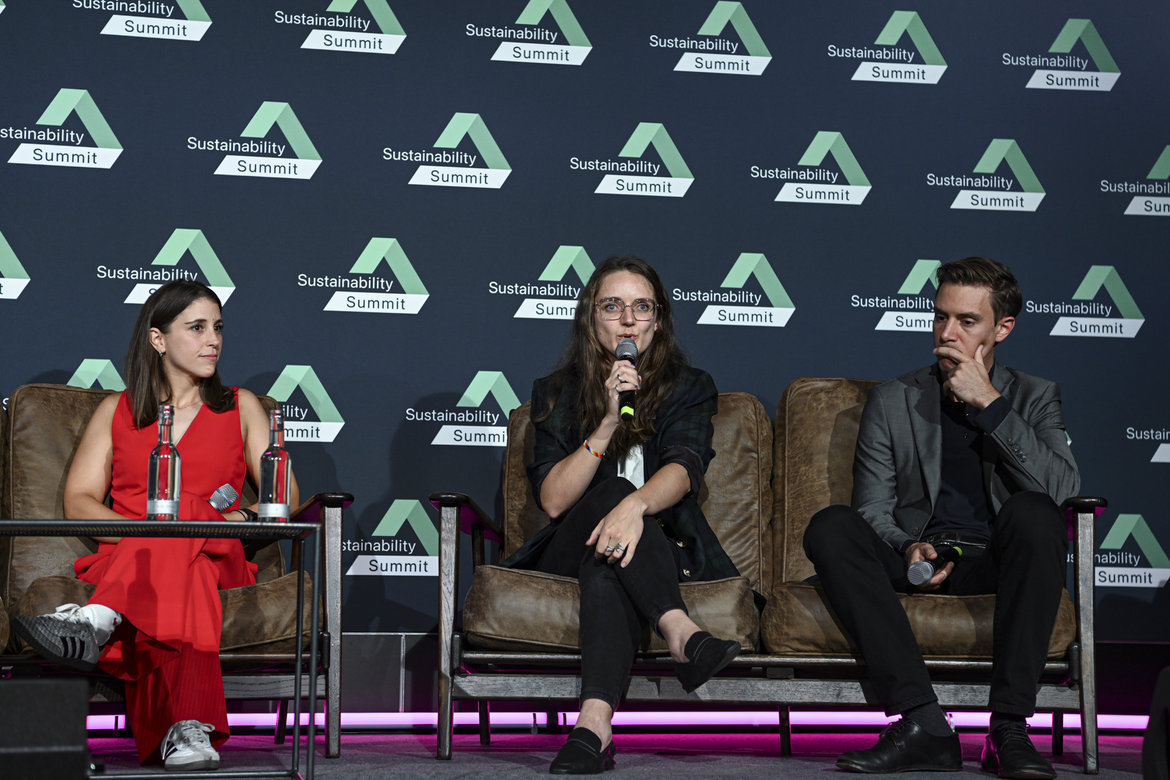
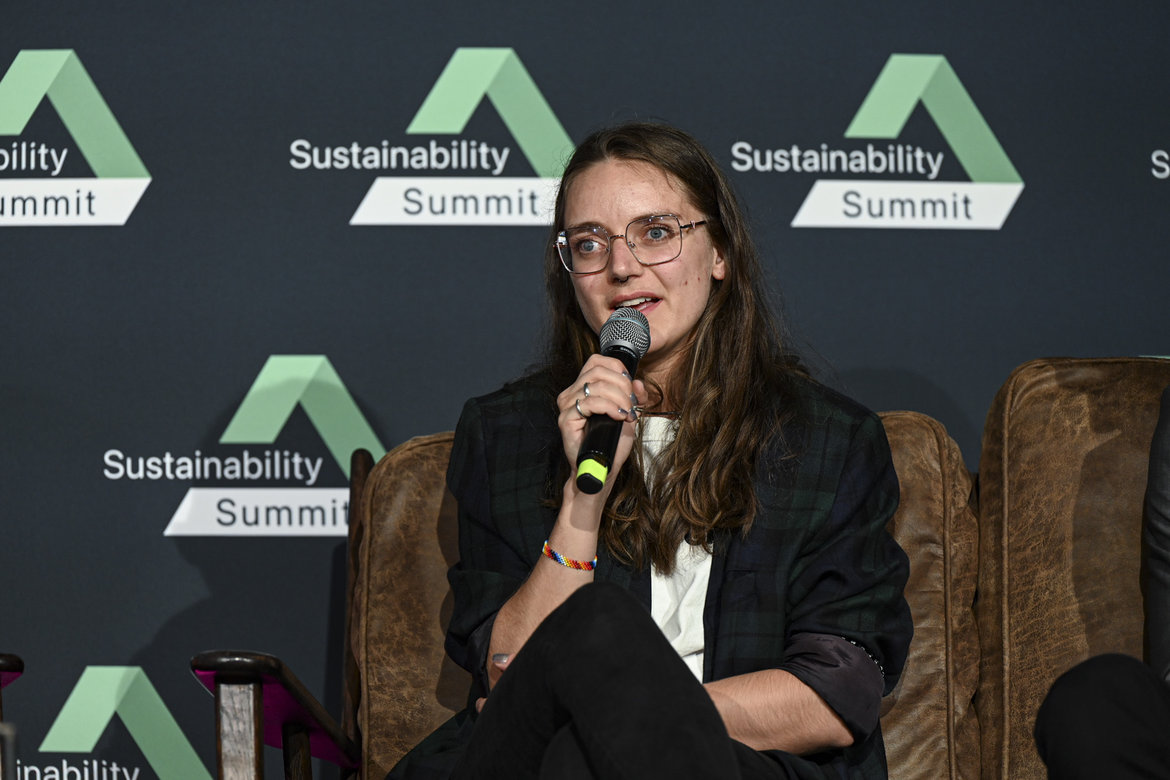
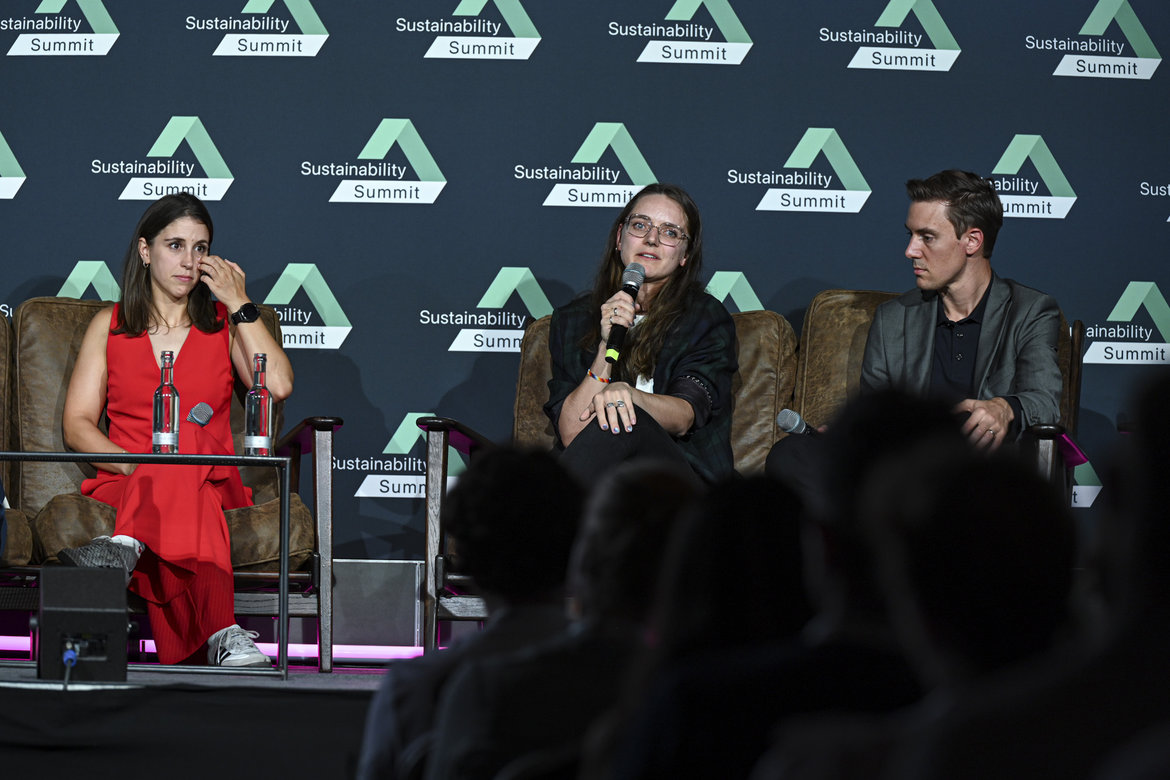
You publicly advocate your position - from the Sustainability Summit 2025 to the upcoming Handelsblatt Live Annual Conference "ESG Management & Reporting" on September 22. Why is public discussion so important to you?
When I started to focus on the topic of regulation and sustainability from a data perspective because I had become an expert in ESG management software, I was suddenly at the very beginning of a new development, and I actively grew into its network. With the emergence of this regulation, the CSRD, the profession of sustainability manager became more and more present on management boards from 2022. CIOs and system architects stood next to sustainability professionals and suddenly had to come to a common understanding. On the other side were system providers and sustainability consultants. Everyone had and has to constantly exchange ideas and grow together in this challenge of sustainable transformation of companies and I have the incredible good fortune to be part of it all. Now I want to use this network both online and offline to put my research findings into practice. This is exactly what I find so unique and exciting about applied research. The invitations to panels, such as the Sustainability Summit 2025 and the Handelsblatt Live annual conference, also show that the interest is there. When I go public, I receive a lot of appreciation for my scientific work.
Looking to the future: Where do you see yourself after your doctorate?
That's a difficult question, especially as I'm still in the first year of my doctorate. However, I will definitely continue to strive for a combination of science and practice. I'm always surprised myself at how much added value flows in both directions. I am pursuing a research question, identified from a gap in practice. In science, there is a need for research on this and I can take a scientific approach to ESG management software, turn software providers' transformation promises on their head and get to the bottom of the topic in a deep and, above all, well-founded way. Sharing research and knowledge from theory with practice and constantly challenging and developing it in both directions through dialog, so that real change is created. I think that's the added value, which is why the results are so much in demand, and of course that's what drives me.
What are ESG systems?
ESG stands for Environmental, Social and Governance. These three areas have developed into the pillars of sustainable corporate management. In a narrower sense, digital ESG systems are IT software solutions that automatically collect, analyse, visualize and report relevant key figures - fromCO2 emissions to working conditions and compliance issues.
Why ESG is becoming increasingly important
In the context of the EU's sustainability initiatives, companies are increasingly being required to integrate and report on sustainability. Regulations such as CSRD (Corporate Sustainability Reporting) are forcing companies to provide transparent sustainability reporting. Investors and customers demand measurable evidence of sustainable business practices.
Doctoral program
The four universities of applied sciences in Saxony-Anhalt have joined forces in 2024 to promote international doctorates with European partners. The scientific basis is the European Green Deal, as all doctoral centers are already researching topics related to this European strategy. The International Graduate Academy - InterGrad supports dissertations that raise and expand this profile. More information: https: //www.hs-anhalt.de/forschen/promovieren/graduiertenakademie/intergrad.html
Eigenherd GmbH
The company has been an IT Consultant Partner for digitalization on the Salesforce Platform since 2017. In the "Green bang" corporate project, it advises on and implements ESG management software for ESG data management and sustainability reporting. The solution is designed to help companies measure, manage and communicate their sustainability performance.
Contact
Carolin Rautenberg PhD student in Department 2 of Anhalt University of Applied Sciences, International Graduate Academy - InterGrad
LinkedIn: https://www.linkedin.com/in/carolin-rautenberg/
Email: carolin.rautenberg@hs-anhalt.de
Lectures:
- Handelsblatt Live Annual Conference ESG Management & Reporting, September 25 and 26, 2025: https://live.handelsblatt.com/event/esg-reporting-und-steuerung/referenten/
- Sustainability Summit in June 2025 on youtube: https: //eigenherd.com/eigenherd-panel-transparenz-nachhaltigkeitsberichterstattung-sustainability-summit-2025
Redaktion
Carolin Rautenberg
... can be contacted for inquiries and requests by e-mail: carolin.rautenberg@hs-anhalt.de or via LinkedIn profile.
... is doing her doctorate on the topic "Impact of digital ESG systems on socio-ecological corporate transformation" at Department 2 of Anhalt University of Applied Sciences. Her supervisor is Prof. Dr. Daniel Michelis.
... will speak about her research at the "Handelsblatt Live Annual Conference ESG Management & Reporting" on September 25.
Cover picture: Kvetka.design/stock.adobe.com
