The energy transition poses various challenges for the construction industry. One of these is that Germany will need more than half of its gypsum by 2038. Prof. Dr. Stefan Reich from the Department of Architecture, Facility Management and Geoinformation at Anhalt University of Applied Sciences is researching alternative building materials that are climate-friendly and recyclable. In this interview, he explains why a look at the history of construction helps and how a promising material is created from waste paper and lime.
When gypsum is in short supply - lime board as a climate protection material
-
 © hsanhalt | stefan reich
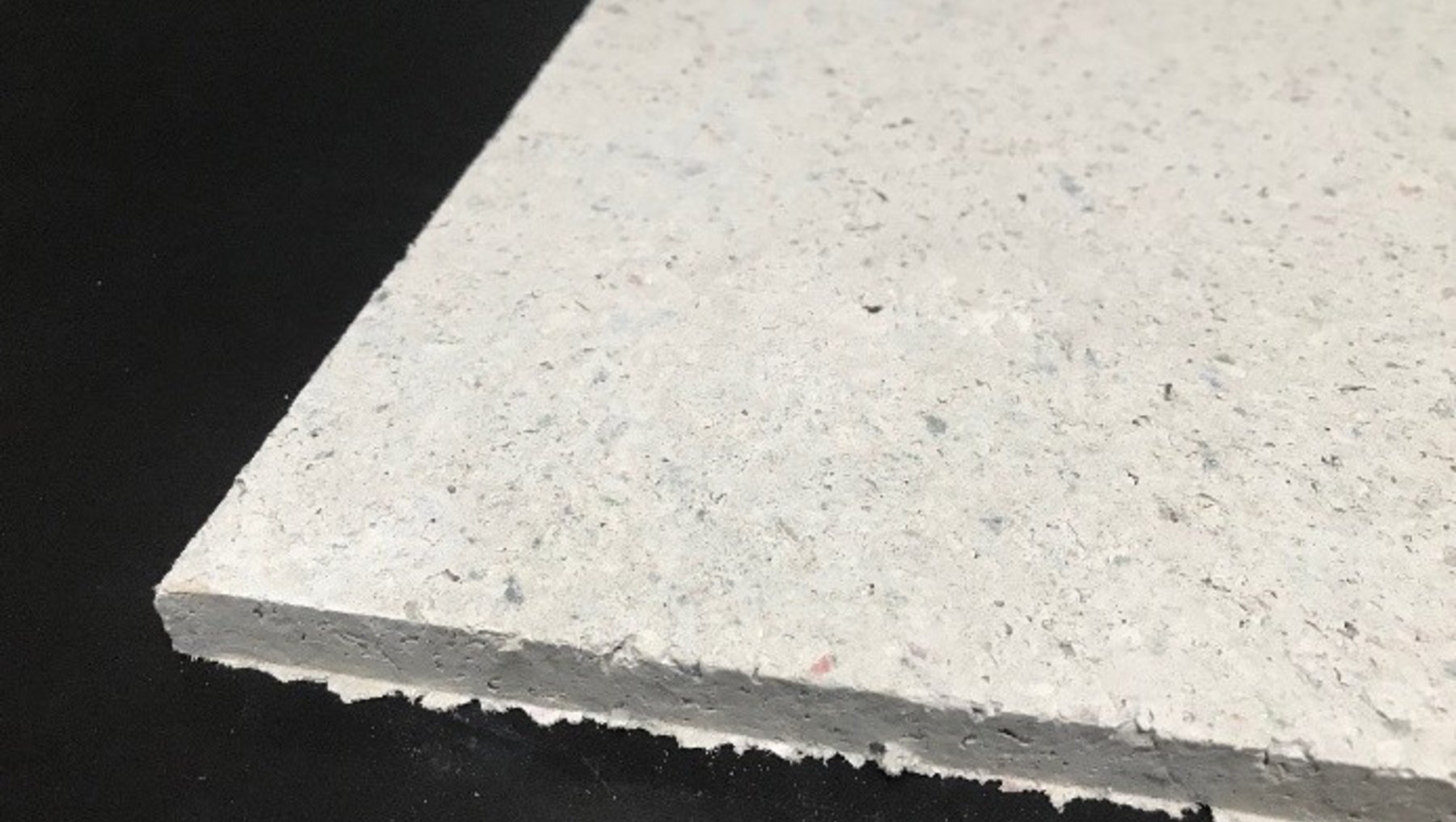
We are investigating lime-paper composites, which consist of recycled paper, lime as a binder & mineral fillers. The paper provides volume, the mineral components strength.
Prof. Dr. Stefan Reich
Prof. Reich, what is the connection between climate protection and gypsum?
The connection is not obvious at first glance. Around 60 percent of the gypsum used in Germany comes from flue gas desulphurization in coal-fired power plants - a by-product that is created when sulphur dioxide is filtered out. With the phasing out of coal-fired power generation, this cost-effective source is disappearing. At the same time, the extraction of natural gypsum causes massive interference with nature and the landscape. In addition to a significant increase in gypsum recycling, we also urgently need alternatives that are both climate-friendly and resource-saving.
You look to the past in your research. Why do you do this?
Historical building materials show us that creative solutions existed long before modern materials were available. In the 19th century, Martin Gropius developed a so-called stone board made of paper, lime and mineral aggregates. After the Second World War, the shortage of materials led to intensive experimentation with paper concrete or wood concrete. These materials fell into oblivion, but contain valuable approaches for today's challenges. We do not have to reinvent the wheel, but can learn from proven concepts and develop them further with today's knowledge.
What exactly are you testing on the Campus Dessau?
We are investigating lime-paper composites, which consist of recycled paper, lime as a binder and mineral fillers. The paper provides the volume, while the mineral components such as limestone powder or grinding residues provide strength. Crucially, these materials are free of plastics, can be composted or recycled and consist mainly of secondary raw materials. The initial results are promising - the test specimens are lighter than plaster and achieve strengths that could well be suitable for interior fittings.
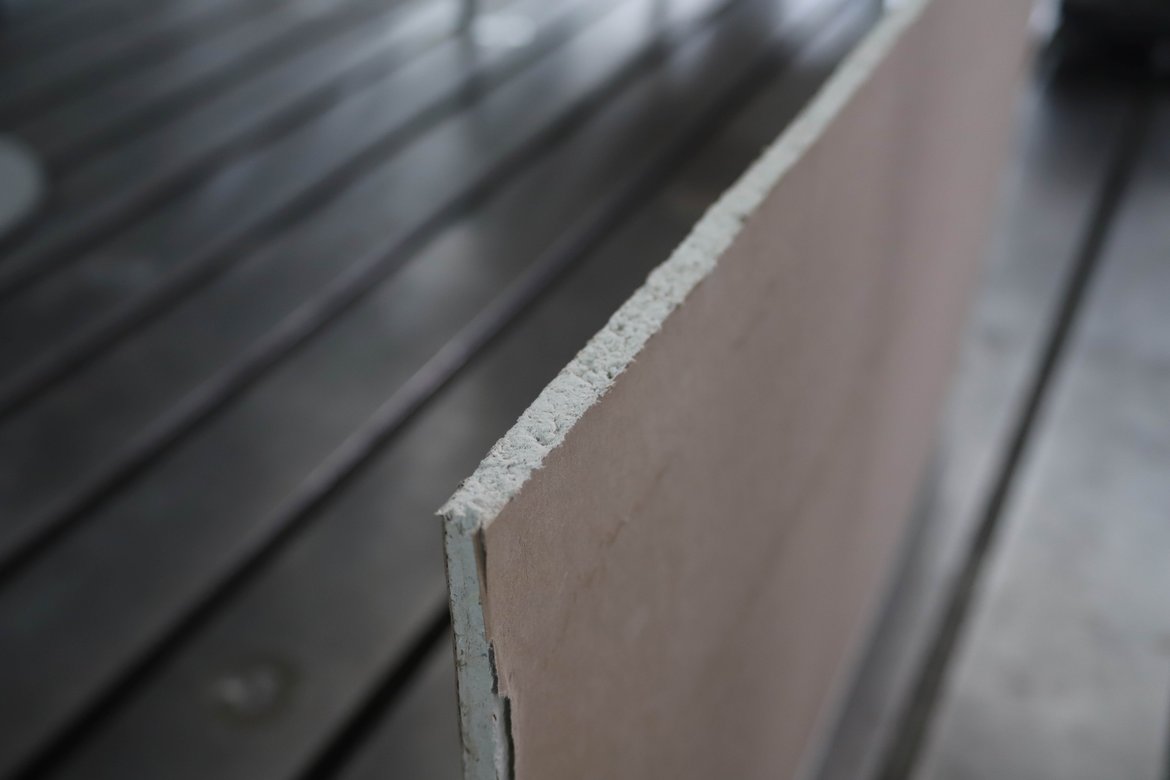 © hs anhalt | stefan reich
Lime board from studies at Anhalt University of Applied Sciences: the material could be of practical interest for interior fittings.
How does this contribute to climate protection?
On several levels. Firstly, we use a large proportion of recycled materials and only require a small amount of primary raw materials. Secondly, we avoid the energy-intensive and landscape-destroying extraction of natural gypsum. Thirdly, the materials can still be used at the end of their life cycle, for example for liming forest soils - in other words, a genuine circular economy. In addition, interior construction offers ideal conditions for testing: the physical and structural requirements are lower than for load-bearing components and we can gather experience more quickly. What works here can later be further developed for other applications.
What happens now?
We have completed the initial basic research and published the first results. Now we need to optimize the mixing ratios, incorporate natural fibres to improve the flexural strength and test the materials under real conditions. At the same time, we are working on prototypes, such as boards with a cardboard coating similar to plasterboard. There is still a long way to go before we are ready for the market, but the impending shortage of gypsum gives us little time. That is why we are also looking for partners from industry who want to work with us to develop practical solutions.
Information & Contact
Personal details: Prof. Dr. Stefan Reich teaches and researches at the Department of Architecture, Facility Management and Geoinformation at Anhalt University of Applied Sciences. His research focuses on climate-friendly construction and the development of alternative building materials.
Publication: Reich, S., Pfütze, C. (2025): Learning from Predecessors: Alternative Formulations for Drywall Materials. In: 9th International Conference on Civil Engineering and Materials Science (ICCEMS 2024). Link: https://link.springer.com/chapter/10.1007/978-981-96-1574-2_17
Research group and contact: www.hs-anhalt.de/berg/forschungsgruppe/prof-dr-stefan-reich.html
Redaktion
Claudia Aldinger
Prof. Dr. Stefan Reich... is available for inquiries and requests by phone: +49 (0) 340 5197 1580 or by e-mail: stefan.reich(at)hs-anhalt.de
... Directly to the publication: Reich, S., Pfütze, C. (2025): Learning from Predecessors: Alternative Formulations for Drywall Materials. In: 9th International Conference on Civil Engineering and Materials Science (ICCEMS 2024): https://link.springer.com/chapter/10.1007/978-981-96-1574-2_17
... more about his topics and tasks at Anhalt University of Applied Sciences at the end of the interview.
