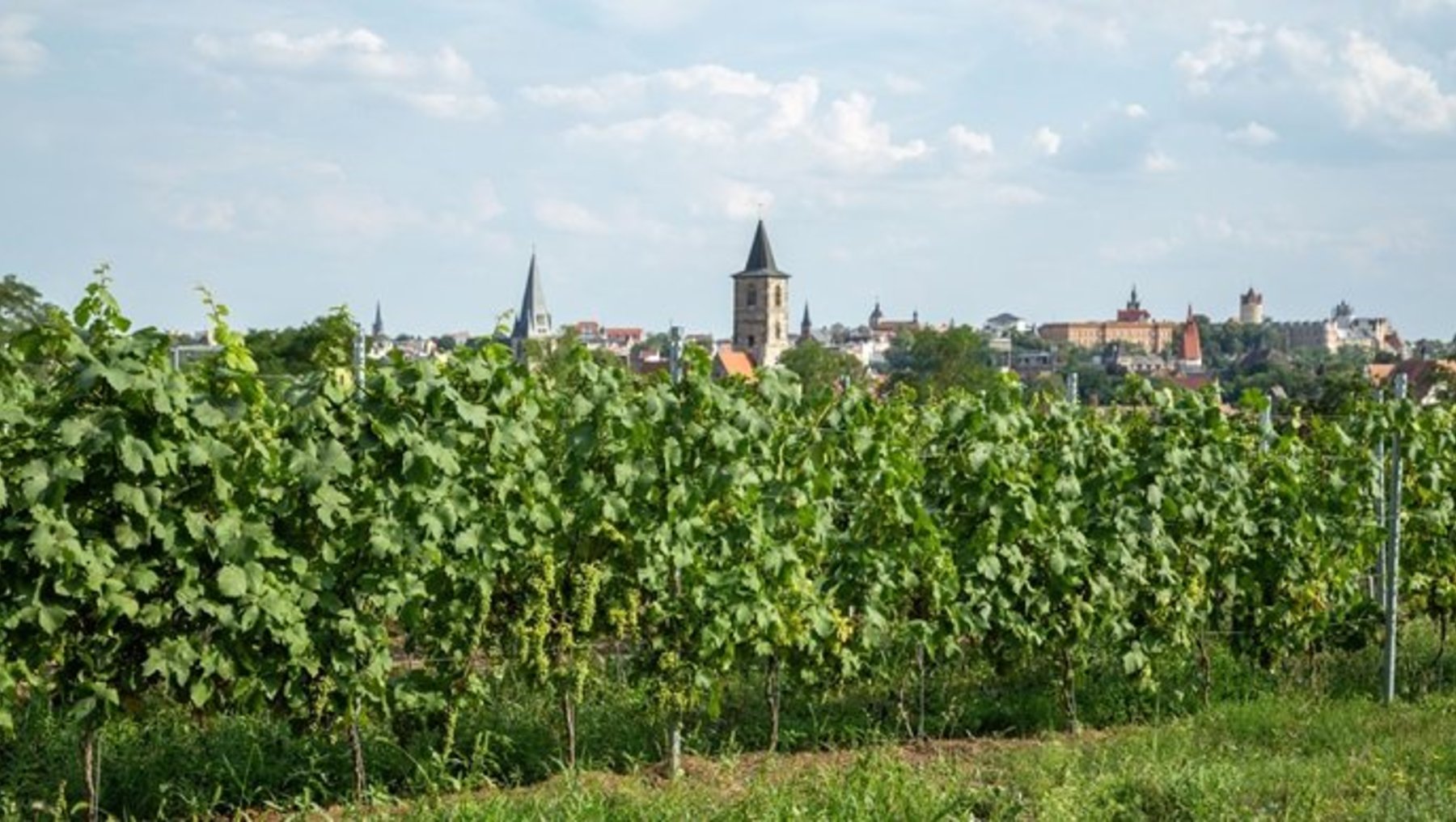
Since July 14, 2026, Anhalt University of Applied Sciences has been an official member of the Saale-Unstrut Winegrowers’ Association (Weinbauverband Saale-Unstrut e. V.). At its regular meeting, the association’s board unanimously approved the university’s membership. This gives the Central German Institute for Wine Research (MIW) at Anhalt University of Applied Sciences direct access to the association’s network and expert resources, enabling it to address the practical challenges faced by wineries in the Saale-Unstrut region even more intensively.
The MIW was founded in 2008 at the suggestion of representatives from the Saale-Unstrut wine-growing region. Its primary mission is to conduct applied, transfer-oriented research to develop solutions for the further development of viticulture under changing climatic conditions in the Central German wine-growing regions.
To this end, professors from Anhalt University of Applied Sciences in fields such as nutritional sciences, Food Technology, Biotechnology, and Process Engineering collaborate to leverage synergies and enhance the effectiveness and practical impact of complex research projects.
Joining the Saale-Unstrut Winegrowers’ Association (Weinbauverband Saale-Unstrut e. V.) is a central element of the MIW’s strategic realignment. In October 2025, the newly elected board defined four guiding principles: increased applied research, targeted marketing, expansion of collaborations, and intensive knowledge exchange.
The primary focus is on strategies for winemaking that meet new consumer trends. However, another key focus is the development of viticulture under changing climatic conditions in the lower Saale Valley. Initial interesting results from experiments at the university’s teaching and research vineyard are being used to facilitate knowledge transfer. By launching an annual workshop series, the Wine Institute has made a good start in facilitating knowledge transfer and the exchange of experiences. The high level of interest in viticulture and wine culture in the region demonstrates that Anhalt University of Applied Sciences has set an important development in motion through its activities.
Contact for inquiries:
Sabine Thalmann
Central German Institute for Wine Research (MIW)
Anhalt University of Applied Sciences
Phone: 03496 67 4001
sabine.thalmann@hs-anhalt.de
