The demand for land is growing in Saxony-Anhalt - both for Agriculture and for the expansion of renewable energies. There is a particular focus on the combination of Agriculture and photovoltaics. In order to avoid conflicts of use and identify suitable locations, a team from Anhalt University of Applied Sciences has developed methods that make it easier to determine priority areas and potential for open space and agrivoltaic systems.
The research project was carried out under the direction of Prof. Dr. Matthias Pietsch at Campus Bernburg - in cooperation with the Saxony-Anhalt State Institute for Agriculture and Horticulture. It was funded by the Ministry of Science, Energy, Climate Protection and the Environment of Saxony-Anhalt.
The work focused on analyzing how valuable agricultural land can be protected and new potential for open space and agrivoltaics can be tapped at the same time. To this end, data on soil quality and water storage capacity was evaluated for each contiguously farmed area at field block level. In addition, a special evaluation ensured that all regions could be examined according to comparable standards - regardless of their location.
The results were transferred to a digital map application. Experts can set threshold values there - for soil quality, for example - and see directly which areas would be affected. It is also possible to display special site characteristics. Publication in the state portal is planned for 2025. After that, the digital tool will be available to all interested users.
"Using this method and making it available in a WebGIS will help to protect climate-resilient soils, taking into account the natural features of Saxony-Anhalt, and support the designation of priority agricultural areas," says Prof. Dr. Pietsch. "At the same time, conflicts of use in the search for locations for (agri)-photovoltaic systems can be identified at an early stage and areas for the combined use of Agriculture and energy generation can be derived."
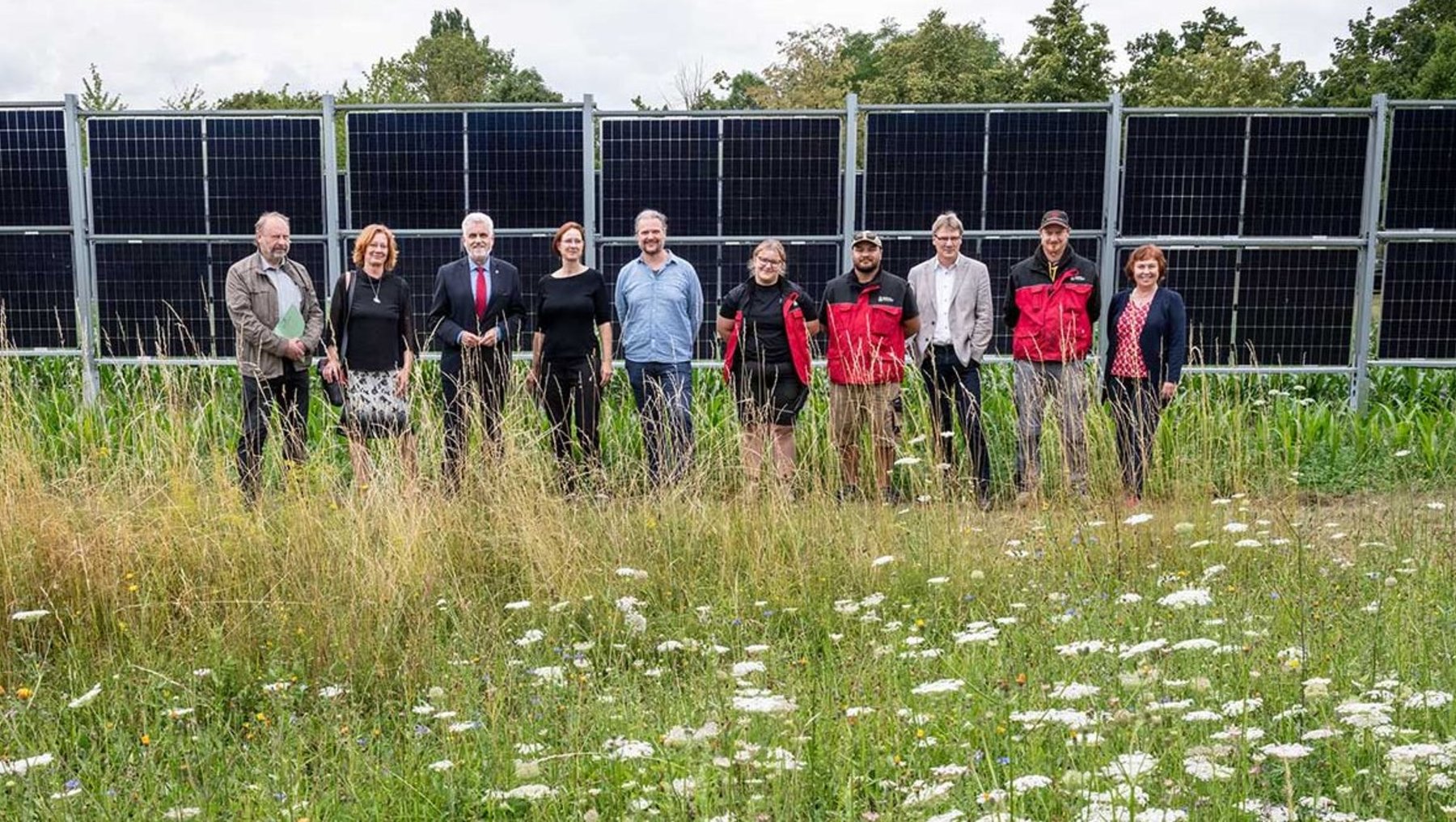
On Friday, July 18, 2025, Science Minister Prof. Dr. Armin Willingmann personally informed himself about the results as part of his summer tour and visited the test facility on the Campus Bernburg-Strenzfeld.
