How can students actively contribute to shaping a more sustainable future? We talk to Professor Klaus Günzel, the newly appointed Professor of Engineering Simulation at Anhalt University of Applied Sciences, about his vision and the opportunities available to students in his field. Born in Villingen, he shares insights into the role of the "Conscious Engineering" approach and tells us which projects students can implement together with him in the field of environmentally friendly technology development.
Prof. Dr. Klaus Günzel
-
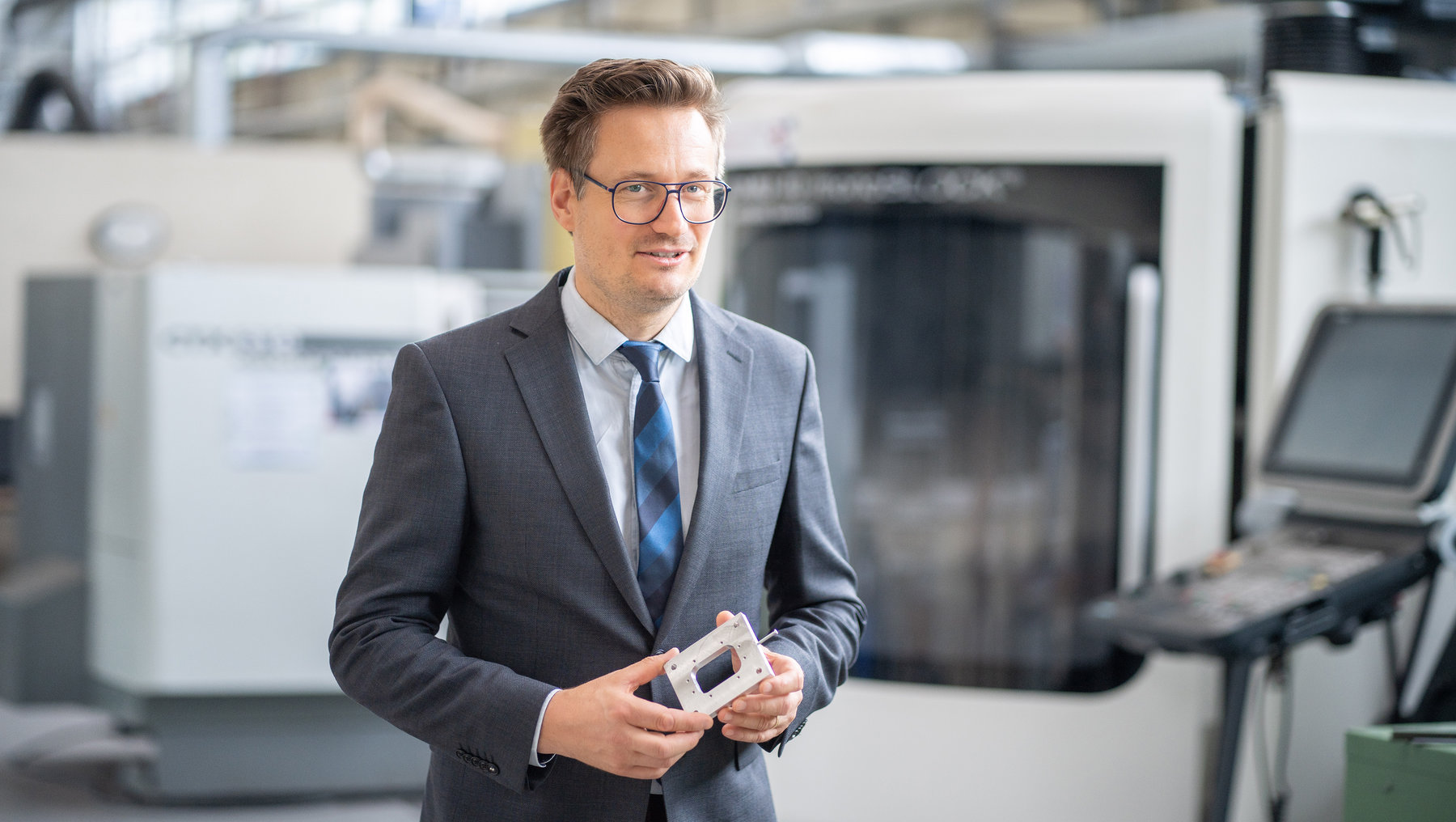 © Sascha Perten
As a cross-sectional discipline, design-accompanying simulation is closely linked to many engineering disciplines, such as production engineering.
Professor Günzel, welcome to Anhalt University of Applied Sciences. What inspired you to specialize in the field of design-accompanying simulation?
My passion for technology began early in my youth, when I built my own little machines with friends. That's when my enthusiasm for construction began. But my enthusiasm for design-related simulation, the goosebumps feeling, started during my studies, especially with the dynamics and FEM lectures. FEM is a numerical technique for solving differential equations that is used in many engineering applications, especially in structural analysis - and will be one of the focal points of my teaching at Anhalt University of Applied Sciences. It enables a complex mechanical system to be broken down into smaller, simpler parts (elements) in an automated computer process. These can then be used to create an overall model in order to analyze the behavior of the entire system.
I have often compared the passion associated with design-related simulation to "going around investigating" like a detective and having to "solve the case" under increasing pressure. This is also one of the narratives that I would like to convey as part of my work at Anhalt University of Applied Sciences. It is worth persevering with open questions. Particularly in relation to the climate crisis, I believe it is necessary to teach engineering students this exciting part of a developer's job.
How did you pursue your fascination?
As part of my PhD, I developed a novel numerical model for the head-neck system, which helps to mitigate the consequences of accidents for people by being used in the design of automotive restraint systems. Knowing that this will feed into the further development of passive safety systems in the automotive sector was fulfilling and inspired me to do the following work.
I am therefore happy that I have been able to work on a wide range of topics in development practice so far. Incidentally, I think it's also very easy to join forces with game designers or developers of the metaverse, the digital space.
To what extent do you see the potential of design-accompanying simulation to promote sustainable and environmentally friendly solutions in product development?
Design-accompanying simulation is a key element in the development of sustainable and environmentally friendly solutions, as it helps to make product development more efficient. The first thing I think of is that this effect is very helpful when it comes to decarbonization, for example. This is a great opportunity for Mechanical Engineering in view of the existing resource and environmental issues. My goal: our students and I are addressing this by helping to shape the ongoing transformation of our engineering infrastructure through our own way of Mechanical Engineering and by using the relevant simulation disciplines.
Design-accompanying simulation is a key element in the development of sustainable and environmentally friendly solutions.
Prof. Dr. Klaus Günzel
How could students make a contribution in this area?
I am thinking of an academic approach that I call Conscious Engineering. Our students are part of this research and teaching concept as actors. They, most of whom belong to Generation Z, contribute their views on the requirements of the modern and environmentally friendly product world, while I share my experience of industrial innovation processes from the last two decades with them.
My idea is that we forge plans together as part of this synthesis process. These should also integrate technology impact assessments to promote a deeper understanding of the effects of economic growth on the shared habitat for humans and animals.
I think that the concept of decoupling should be used for this, of course always including consideration of all possible consequences. So-called green steel is such an exciting technology in my view.
I also think that our students can make a significant contribution to research through their theses and dissertations.
In summary, there are many possibilities and opportunities for students to actively contribute to sustainable technology development - and the simulation helps them to do this, right?
Exactly, in my role as a professor I want to promote the vision of sustainable technology development and encourage students to play an active role in shaping a more environmentally friendly future. For example, I am aware that the vast majority of current industrial products could not be manufactured without petroleum products. However, I see my role as an opportunity to live the visionary in this area together with the students, so that they feel encouraged to take the necessary steps towards more sustainable technology themselves.
Integrating simulation modules into their studies helps them to take these steps, achieve their goals and make a positive impact in the industry.
Prof. Günzel, thank you very much for the interview.
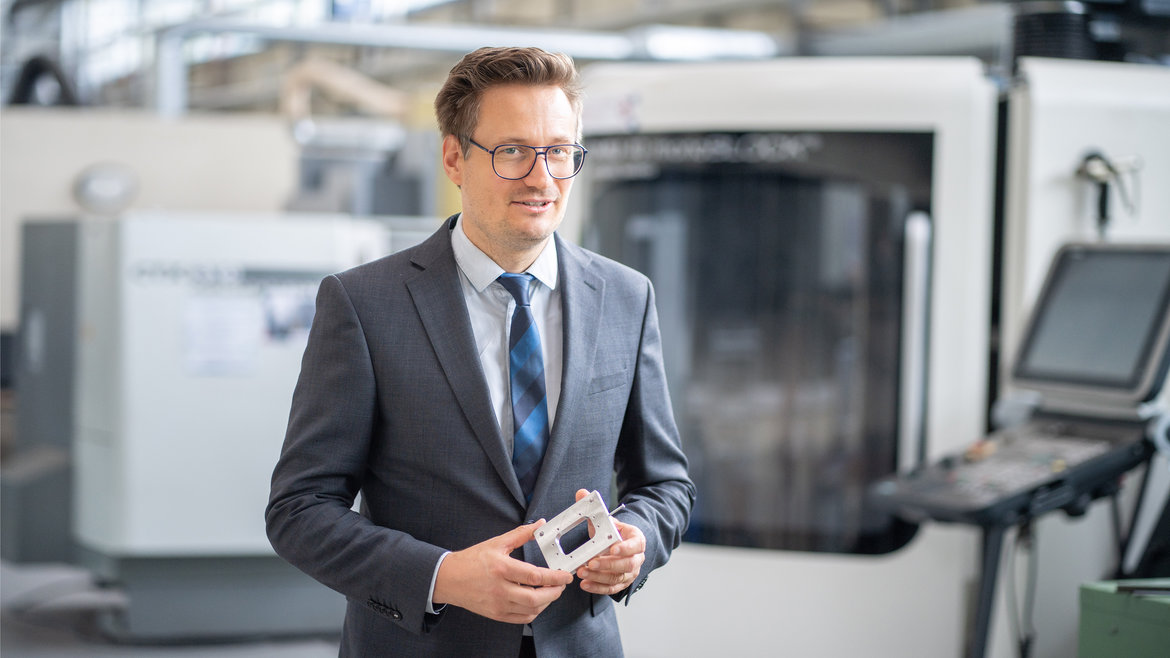 © Sascha Perten
Prof. Dr. Klaus Günzel - The focus of his teaching activities:
- Very good teaching in the field of simulation in both the Bachelor's and Master's degree programs, the content of which is based on experience and research activities and is also dedicated to the issues of the energy transition
- Research work in the field of simulation-based device development on a self-organized third-party funding basis
- The promotion of women in technology
- The promotion of diversity
- Strengthening the regional mechanical engineering industry through cooperation
- Environmentally friendly Mechanical Engineering that is firmly anchored in society and brings broad benefits
