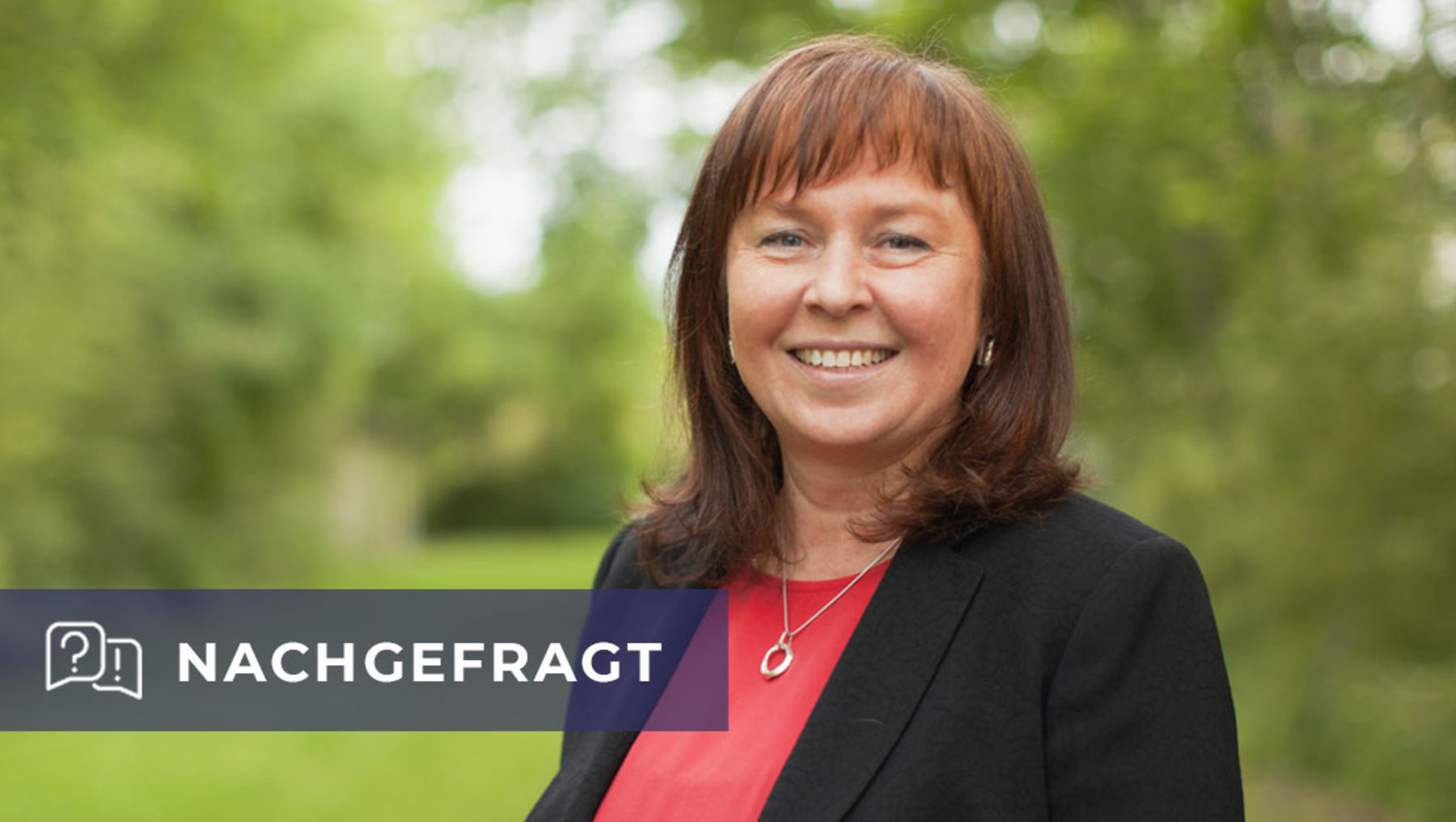
Prof. Dr. Elena Kashtanova, Dean of the Department of Agriculture, Ecotrophology and Landscape Development (Department 1) at Anhalt University of Applied Sciences, talks about fundamental issues of economic policy and quality of life.
Prof. Kashtanova, what can students expect at Department 1 in Bernburg?
We work on key issues for the future of our environment and our food. Agriculture, food science, ecology, nature conservation and landscape architecture are keywords that are related to industrialization, urbanization and population growth. Innovations in agricultural production, product development, safeguarding biodiversity or designing urban and landscape areas - our campus with 50 hectares of test fields on fertile soils in one of the oldest cultivated landscapes in Central Europe is predestined for applied research.
You can also expect a particularly beautiful campus...
Our Campus Bernburg with its numerous project gardens and open spaces is fantastic and unique. Our laboratories are equipped in such a way that students can use modern experimental stations directly for practical questions. We enable project-oriented studies that focus on technology transfer and interdisciplinary know-how. Our students also benefit from local collaborations, including with the German Agricultural Society (DLG) and the Saxony-Anhalt State Institute for Agriculture and Horticulture.
You studied economics and finance. Did you already have a sense of Economics as a student?
I was fascinated by the interplay between economic policy decisions and social developments from an early age - possibly triggered by conversations with my father, who was an economic policy maker himself. I later did my doctorate on tax reforms to increase the investment potential in transition countries. I then worked as an investment policy consultant for international organizations such as the World Bank, the UN and international companies.
What excites you about your field?
Economics is an analytical tool. It makes it possible to evaluate and forecast how economic policy decisions can increase the prosperity of many people. It is also interesting to see how the understanding of prosperity, values and quality of life is changing, as is the view of monetary and social values. A simple example: in the EU, a targeted agricultural policy has helped to make Agriculture an interesting investment sector, ensure that the population has access to food and enforce sustainable land use. In a global context, it is also about fundamental questions - how to feed people while not destroying natural resources and keeping jobs in the agricultural and food sector attractive.
Are questions like these close to your students' hearts? Do their ideas about the subject match the reality?
Not all newcomers have already dealt with issues relating to global agricultural and food markets, economic policy or investment strategies. But our students quickly learn that a national market is dependent on global events. A good harvest in the USA or an increase in demand in Egypt have an immediate effect on the price of wheat here in Saxony-Anhalt. This is why students are given market forecasting tools that enable them to jointly develop applications for international business - with a view to exports, direct investments or even the international transfer of technology and knowledge to countries with low food security. What we also observe, however: The students' most lasting emotional experiences, however, have always come from projects they have carried out for companies. This can be exporting small tractors to Cameroon as well as exporting quality seeds to the People's Republic of China, or a crowdfunding project for direct investment in sustainable soy production in Uruguay.
