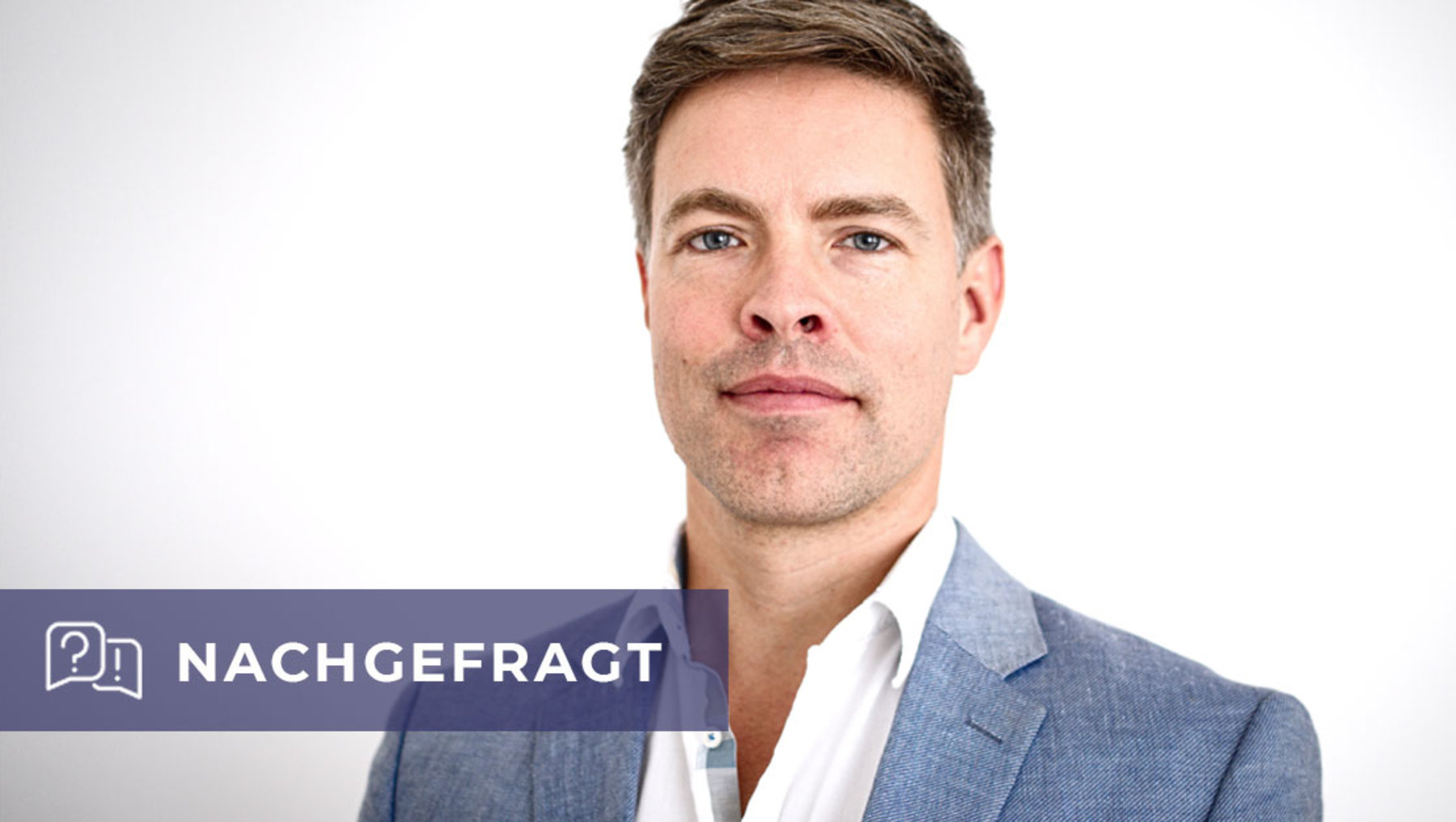
Professor Hendrik Send, Degree Program Advisor for the Online Communications master's degree program on the restructuring of the degree programs in the Department of Economics.
Professor Send, what are the new focal points for the business degree courses at Anhalt University of Applied Sciences for the coming semester?
Digital Economics is becoming increasingly important for Germany. It urgently needs good, well-trained specialists and is developing rapidly. For the practice-oriented universities in Germany, this is a major task and an opportunity if they accept this challenge and respond to the development with new courses at the necessary speed. This will enable us to create attractive study programs for young people in contemporary professions. Our new specializations respond to the development of increasingly complex areas of knowledge in business administration with important specializations.
The new specializations are General Business Administration, Logistics, IT Management, Digitalization, Management, Human Resource Management, Change Management, Sustainability Management and Compliance as well as Quantitative Methods and Risk Assessment and Law and Taxes. Another focus that is particularly close to my heart is Digital Business, because this is where my colleagues from the Online Communications Master's program and I are actively involved with many subjects.
Does the Department of Economics have a home advantage when it comes to Digital Business thanks to the expertise of the Online Communications master's degree program? Can it benefit from this experience?
We have built up important resources with the Master's in Online Communications: a network of practice partners, very good instructors for many subjects and a portfolio of software that is used in practice. We also need these in the Digital Business specialization and will use them there. In addition, we have gained experience in teaching many topics that we can now translate into suitable Bachelor's programs. We have teaching formats for how to set up an advertising campaign on Facebook, how to carry out search engine optimization or how the business model of digital platforms works.
Is the focus on digitalization part of the university's digitalization strategy?
In my perception, one of Anhalt University's organizational strengths is that the Board of Management and the University's Administration have strong control over important processes and at the same time provide good support to the Departments in their own activities. This makes it possible for us to make use of the good new digital infrastructure, the internationalization strategy and central software procurement, for example. The exact content of the curriculum focus will come from the Department of Economics and the expertise of the Deans and colleagues involved, and will then be agreed again in the university committees.
What does the new focus mean for students?
Students now have the opportunity to work on current digital Economics topics in their area of interest with clear support from the university.
The many new subjects that we offer as part of the specializations are very visible to students and applicants. Here, students prepare for a future in new fields of work that are no longer covered by general business studies. A positive side effect is the networking among the students in the respective specialization. The common interests lead to focused cooperation and networks that can also be helpful and useful later in their careers.
What specific changes will result from the new focus?
At the university, such a portfolio of specializations means a considerable workload. We have to prepare lectures and seminars for each specialization. We have to find suitable new types of examinations and frequently organize practical lectures and excursions that fit in with the focus areas. But we are also in a better position to recognize the students' interest profile and can get more specific reregistration from the students on this wide variety of content. The university's task is to create a match between the interests of applicants and the needs of the job market. The perceptions and interests of the students are always very important to us.
Is the Department of Economics playing a pioneering role here at the university? Are there plans to pass on this experience to the other departments?
Every department at the university has to be a pioneer in its subject area. Just as the computer scientists in Köthen and the designers in Dessau are helping to shape developments in their fields, it is our job to do the same in economics. The exchange of experience in the further development of study programs at the university is essential. On the one hand, experience is passed on informally through cooperation between instructors and is formally programmed into the structure of the university through the self-regulation of its committees.
